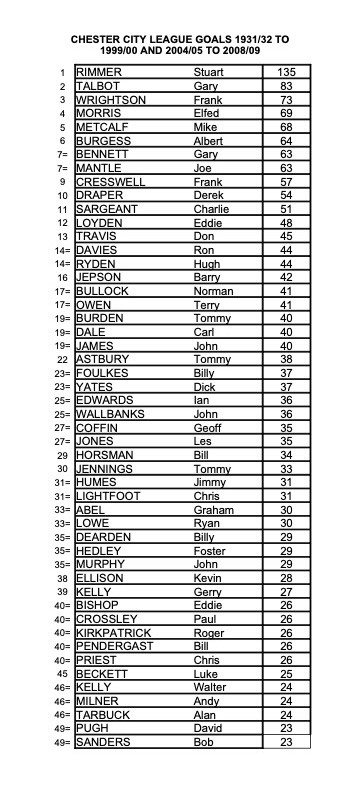
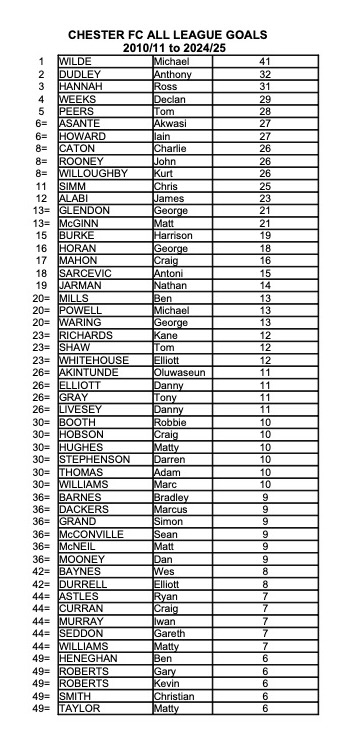
Having listed the top 50 appearances for Chester in the Football League along with Chester FC since 2010 it seemed reasonable to list the top 50 goalscorers during the same period.
The Football League details cover the period from the 1931/32 season to 1999/200 and then from 2004/05 to 2008/09. Once again the figures do not include the Conference years. During this period there were 4127 league goals and 424 different goalscorers. 89 of the goals were own goals.
League goals scored between 2010/11 and 2024/25 includes the 32 goals from the aborted 2020/21 campaign bringing the total number of goals scored to 1020 of which 17 were own goals. The remaining 1003 were split amongst 166 players and these are the top 50 (actually its top 53).
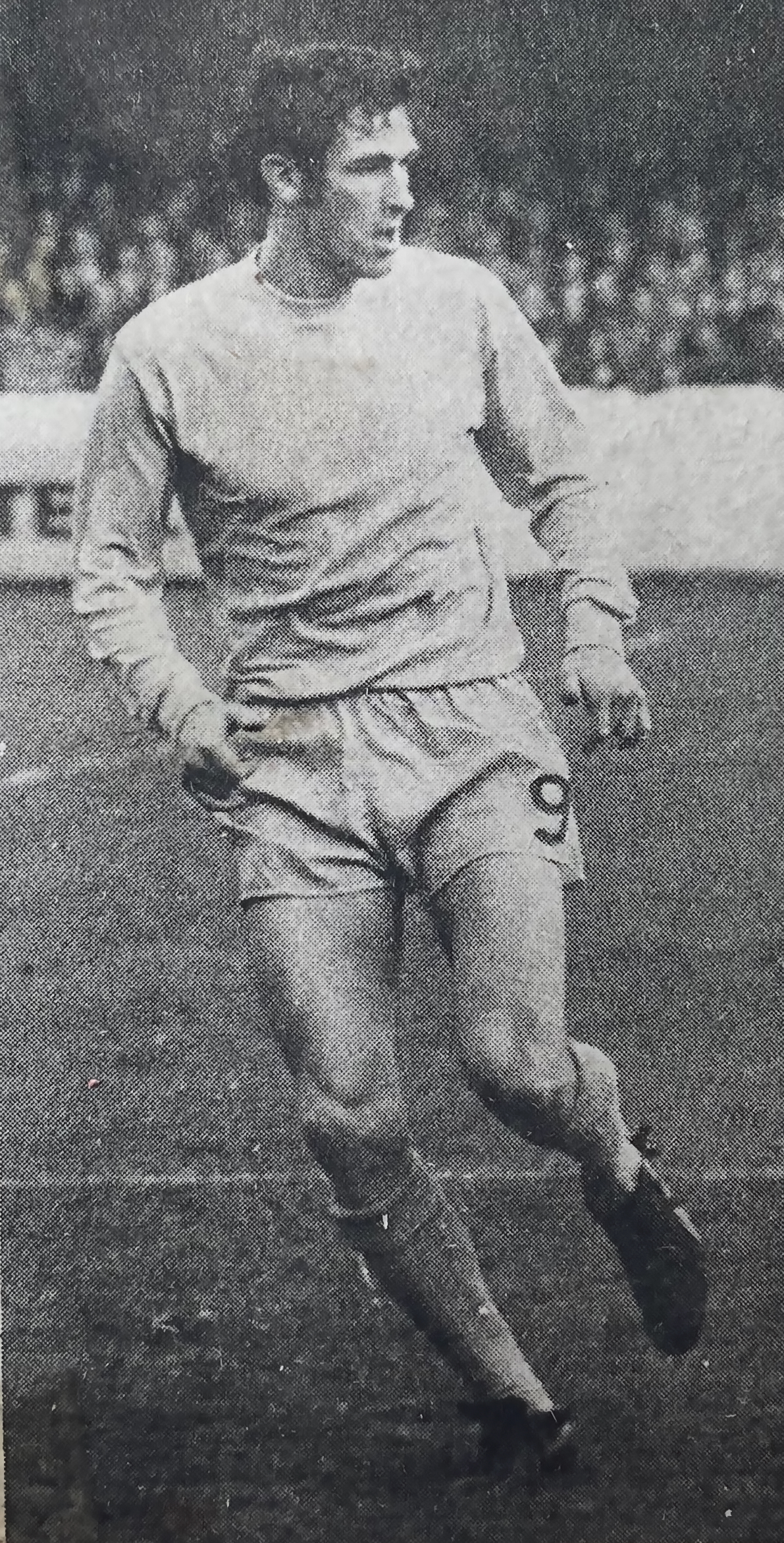
Barney Daniels, who became Chester’s record signing in summer 1975, has passed away at the age of 74. A stocky striker with a powerful shot Chester never saw the best of the centre forward and he only managed nine Football League appearances for the club before departing for Stockport County where he was more successful.
Signed as an amateur by Manchester United Barney spent two years at Old Trafford before moving on to Salford Amateurs but it was his goalscoring prowess at Ashton United that attracted the attention of Manchester City who signed him for £1,000. He made an explosive start at Maine Road with two goals on his debut in a 4-1 televised win against Leicester City and went on to make 10 appearances in the 1974/75 season.
In July 1975 Ken Roberts brought Barney to Sealand Road in order to bolster the attacking options following promotion to Division Three. Chester paid a reported £25,000 for the Salford born player and Roberts saw him as a strong and quick striker who could cause defences problems. After making his debut as a substitute, in a League Cup tie at Wrexham, Barney made his first full start in Chester’s opening Division Three home fixture against Southend United. Although he was on target with a 25 yard effort this was as good as it got and his only other goal for the club came in an 8-1 thrashing of Kidderminster in the Welsh Cup. Four days after the Southend game Barney was substituted in the return leg of the League Cup tie against Wrexham and reacted angrily by throwing his shirt to the ground and storming into the dressing room. Although he apologised for the gesture he was disciplined by the club and thenceforth found it difficult to make an impact.
At the end of the 1975/76 campaign Barney was released by Chester and joined Stockport County where he showed Chester what they had been missing by scoring 11 goals in his first 11 league games. He went on to finish leading scorer for County and after dropping out of the Football League had further spells with Ashton United, Hyde United and Prestwich Heys.
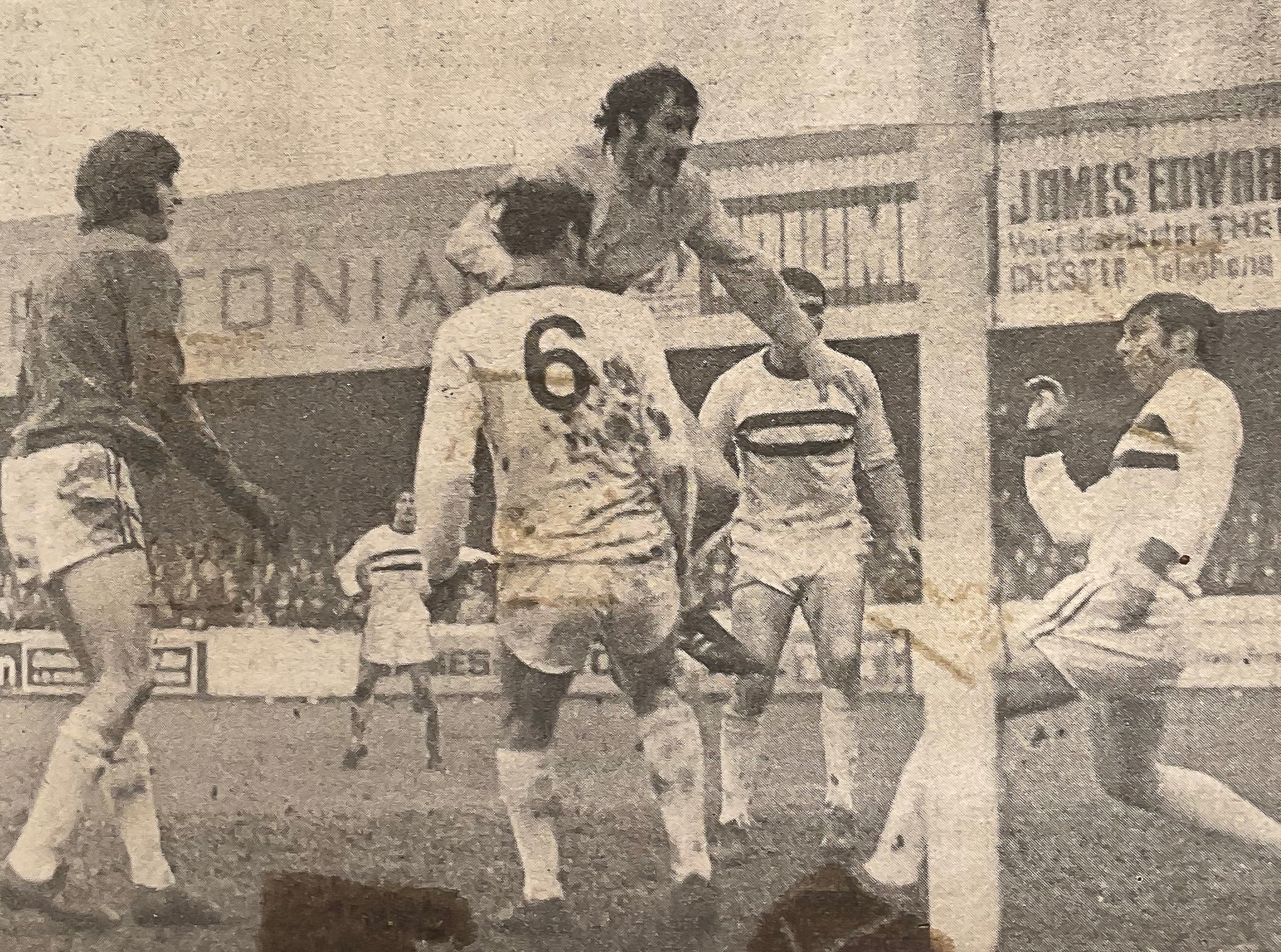
Former Chester striker Eddie Loyden, who had two spells with the club during the late sixties and early seventies, has sadly passed away at the age of 79.
A traditional centre forward Eddie was an out and out goalscorer and not the sort of player to track back or link up play. This is reflected in an impressive goal scoring record that saw him score 48 goals in 99 Football League appearances. Dominant in the air, many of his goals were scored with his head and his tall and rangy physique made him an awkward presence and a handful for defenders.
Born in Liverpool, Eddie started his career as a junior at Blackpool and made his debut during 1965 in a Division One fixture against Liverpool. After a season at Carlisle Eddie was snapped up by Peter Hauser, in July 1967, on a free transfer and made a dream debut with two headed goals in a 2-1 victory at Notts County. He went on to score 22 goals in 37 games that season, including four in a 6-0 win over Lincoln City, and comfortably finished leading scorer for a struggling team that had to apply for re-election. At the end of the campaign Ken Roberts, looking to raise funds to rebuild the team, made the pragmatic decision to sell Eddie to Shrewsbury Town for a club record fee of £13,000.
After only six months Eddie was on the move again when Barnsley signed him for £10,000 but he returned to Sealand Road in November 1970 in unusual circumstances as Ken Roberts looked for a tall goal grabber to play alongside Alan Tarbuck and Derek Draper. Although an agreement had been reached for Eddie to move to Chester the Yorkshire side selected him to play against a full strength Sheffield United team in the Yorkshire Senior Cup. Eddie promptly put the cat among the pigeons by scoring an eight minute hat-trick to overturn a 2-0 half time deficit and give Barnsley second thoughts. Nevertheless Chester insisted a gentleman’s agreement had been in place and handed over £7,000 to the reluctant Yorkshiremen.
The move proved successful as the big man formed an effective partnership with Tarbuck and managed 15 goals in 28 games as Chester finished just outside the promotion places. Unfortunately a missed penalty by Eddie, in a crucial Easter fixture against York City, proved decisive and although the game finished 1-1 Chester missed out on a top four spot by a single point.
The 1971/72 season saw Eddie once again finish as leading scorer with 11 goals but, as a whole, the team struggled to find the back of the net and after the start of February appearances were limited as Ken Roberts sought to find the answer to the goalscoring dilemma. In June 1972 Eddie signed for Tranmere Rovers for £4,000 and will be remembered at Prenton Park for scoring the only goal in a famous League Cup victory over Arsenal at Highbury. After two years at Tranmere Eddie moved to South Africa to play for Highlands Park and then on to Hong Kong before retiring in 1978.
In later life Eddie resided in his home town city but suffered from Alzheimer’s disease and passed away on June 5th.
A typical goal against Northampton – January 1971
Scoring the first goal in a 2-1 win over Notts County – January 1971
Eddie in action in the FA Cup 2nd Round tie against Crewe – Dec 1970
Playing in the FA Cup 3rd Round tie against Derby County – Jan 1971
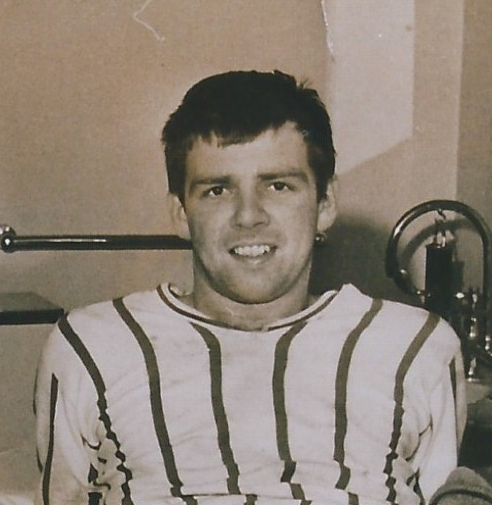
Former Chester full-back Bryn Jones, who made 30 Football League appearances for the club between 1964 and 1967, sadly passed away in January at the age of 85. Bryn will be remembered for an incident on New Year’s Day 1966 when he and fellow full back Ray Jones ended up in Chester Royal Infirmary together after both suffered a broken leg in the league match against Aldershot at Sealand Road.
Born in Bagillt Bryn started his career with local club Holywell Town, becoming a Welsh amateur international in 1961. At the start of the 1962/63 season Bryn signed for Bangor City but his stay proved brief and he returned to Holywell after only a few months. In January 1963 he was offered the opportunity to turn professional with third Division Watford but only made two Football League appearances for the Hornets before being released in summer 1964.
Peter Hauser brought Bryn to the Stadium in August 1964 and was quickly given his debut at right back against Bradford City as a replacement for the experienced Johnny Molyneux. His stint in the first team proved short-lived and following the next game against Torquay he was replaced by Ray Jones and spent the remainder of the season in the Cheshire County League team.
In September 1965 Bryn returned to the first team at left back establishing an effective partnership alongside Ray Jones before the New Year’s Day tragedy when both players broke a leg. With neither player adequately replaced the strong promotion challenge faded and it was December 1966 before Bryn was able to return to first team action. Unfortunately a further leg injury against Lincoln in February proved to be his final first team match and Bryn was amongst eight players given free transfers at the end of the campaign when he signed for New Brighton.
Mike Metcalf’s grandson Daniel is working on an interesting documentary about a charity match played at South Liverpool’s ground in 1967. If you think you can help then please get in contact with him and check out his website http://www.metcalfvspuskas.com.
I’m Daniel Metcalf, grandson of Chester FC legend Mike Metcalf, and I’m excited to share with you a project that’s very close to my heart. First, I’d like to thank Chas Sumner for allowing me to share this announcement on his blog and for his invaluable assistance in the pre-production of my upcoming documentary.
The Documentary
I’m directing a documentary called “Metcalf vs Puskás: The Forgotten Game,” which explores a remarkable yet little-known charity football match from 1967. This film will chronicle how some of Britain’s biggest footballing stars, including my grandfather Mike Metcalf, took on a Ferenc Puskás International XI for charity.
Our production aims to uncover a forgotten piece of football history that’s particularly significant to Chester FC fans. We’ll not only reconstruct the charity match but also delve into my grandfather’s broader career – from his beginnings as an adopted child to his successful stints at Wrexham and, of course, his prolific time at Chester FC.
I’m grateful that the club has granted us access to their archival material and permission to film at the stadium. This support will be crucial in faithfully representing Chester FC’s heritage in our documentary.
Call for Contributions
We’re actively seeking contributions from the Chester FC community. If you or someone you know fits any of these categories, we’d love to hear from you:
Family members/relatives of players involved in the Puskás charity match
Spectators from the 1967 game
Anyone with materials/memorabilia relating to the game
Former teammates of Mike Metcalf with stories to share
Football historians knowledgeable about Chester FC in the 1960s
How to Get Involved
If you have information, stories, or memorabilia to share, or if you’re interested in supporting this project, please don’t hesitate to reach out: