A Study of a Soccer Club – 1963

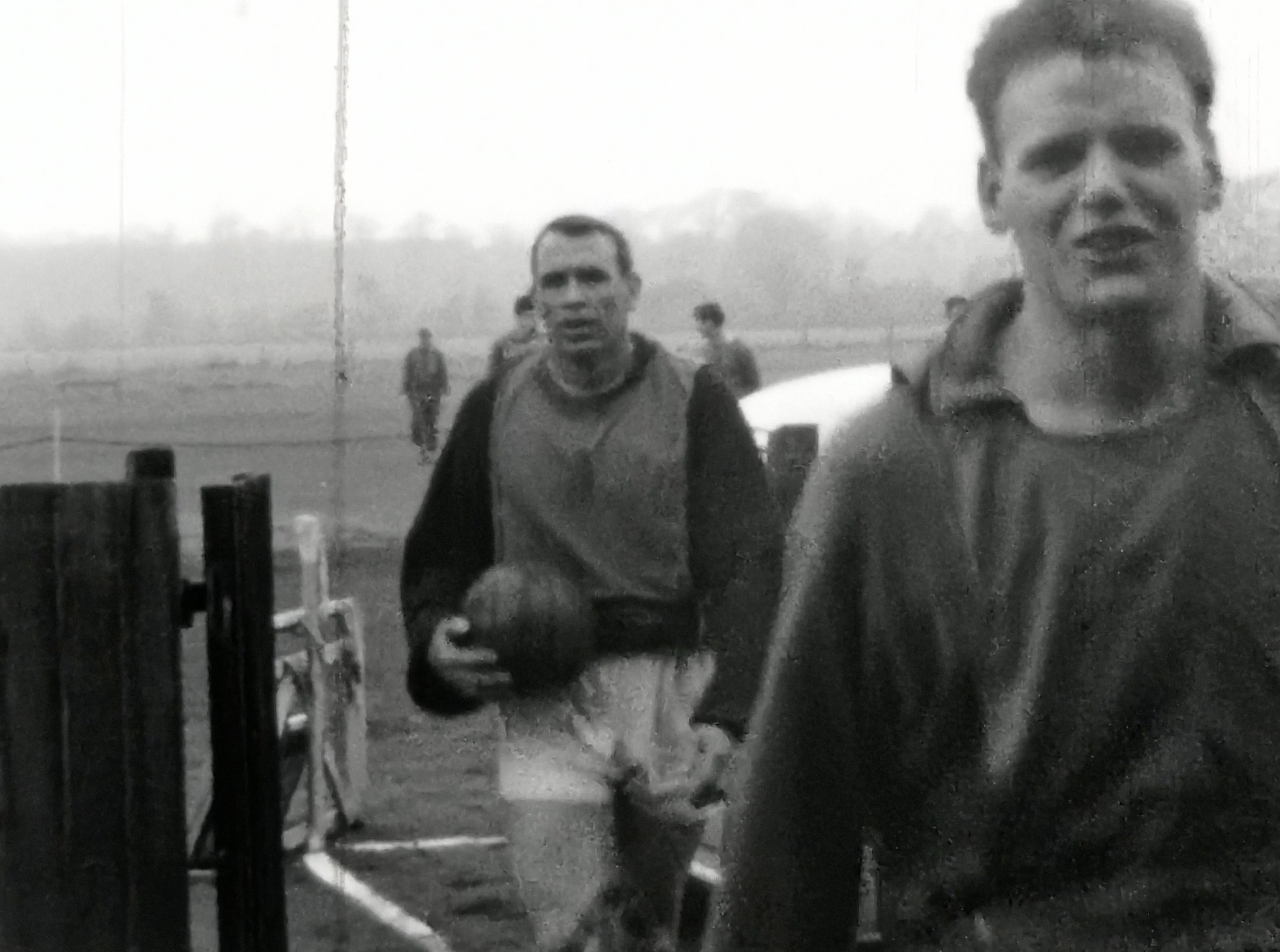
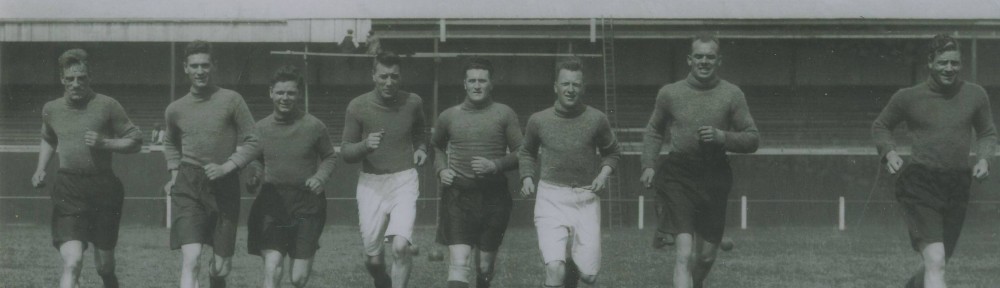
In May 1963 two students, Tom Carter and Rod Underwood, were given the task of producing a film as part of their teacher training course. As a last minute decision they bought a cheap cine camera and went down to the Sealand Road ground to film both inside and outside the ground. In addition they recorded a training session on the Annexe before ending with action from an evening game against Chesterfield.
After 60 years this superb 22 minute film has been unearthed and I will be showing it at a meeting of the Senior Blues at the football club on Friday March 5th at 10:30am. I hope to follow this up with a general showing at a later date.

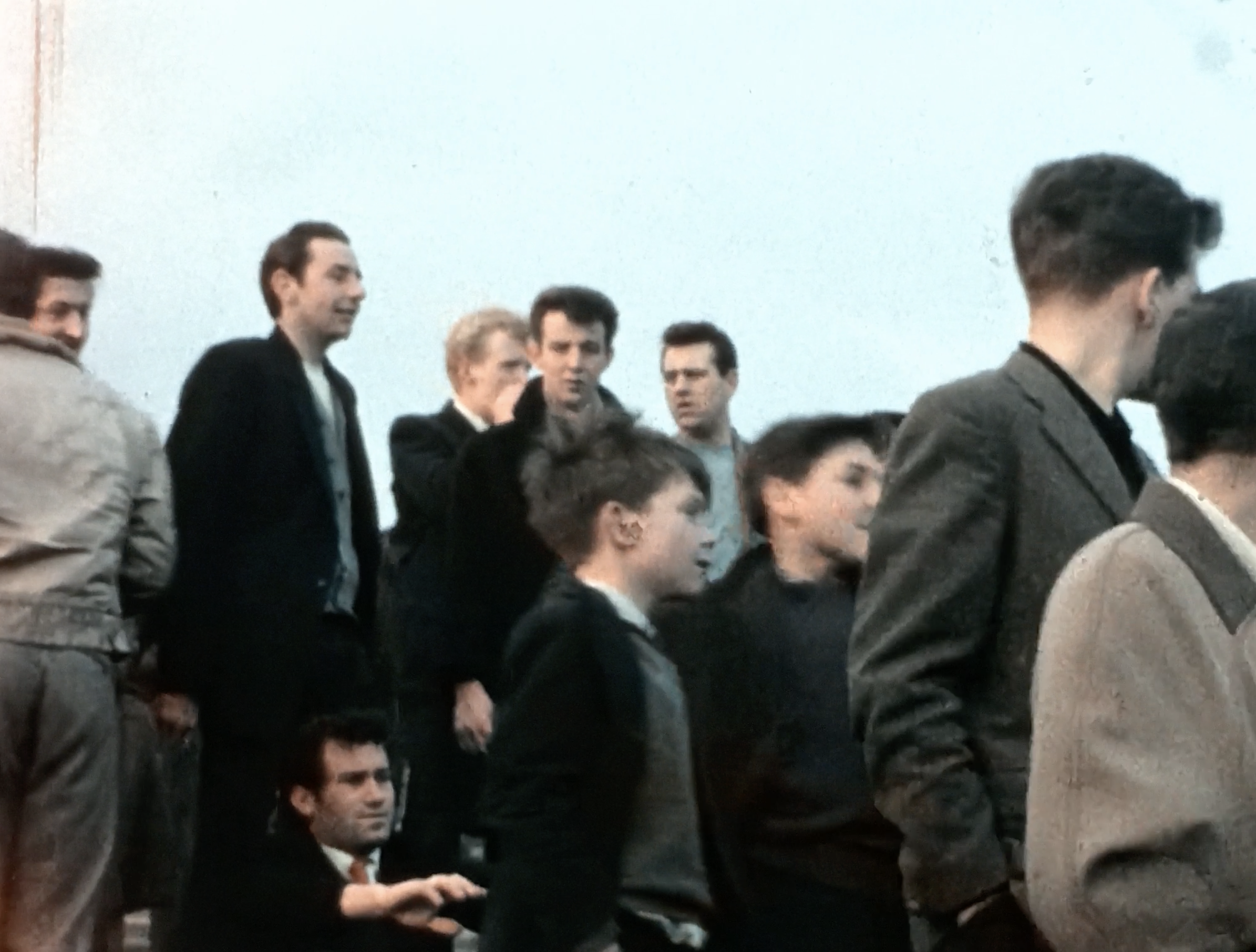
What makes this film so special to my mind is that it is unedited. Although there are some experimental sections in the middle I feel that the film would have lost a lot of its impact if it had been edited down to a few minutes. The footage is certainly very raw but this is advantageous because you get so see unusual views of the whole stadium which would in all likelihood have been cut out.

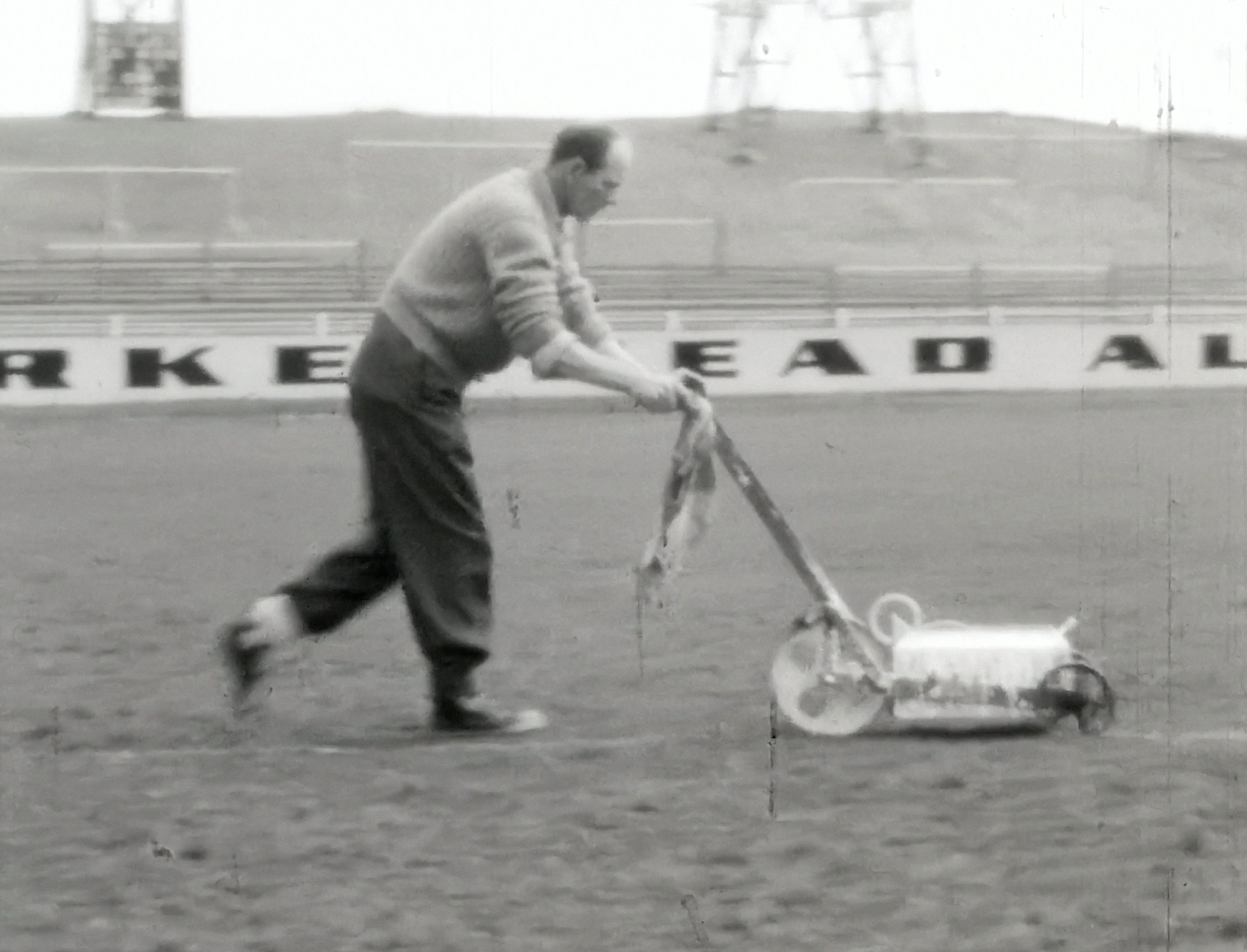
The film opens with footage of the pitch being marked out before moving to the outside of the ground. There are views of the back of the stand as well as the floodlights which were still a novelty as they had only been in place for three years.
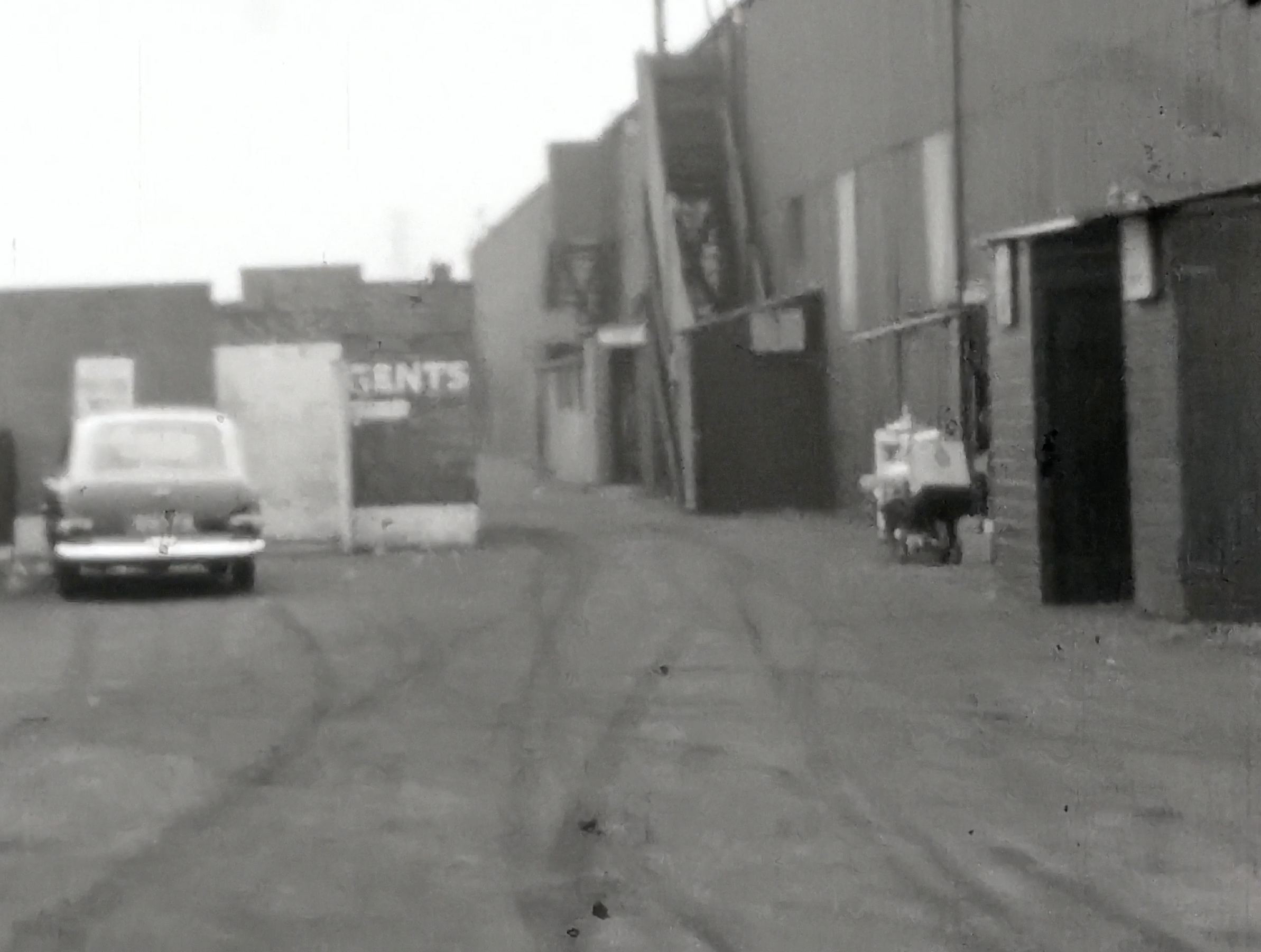
We then move to film of Bill Myerscough arriving at the Stadium in his Volkswagen Beetle before moving inside the ground to see the treatment room and a variety of views inside the old wooden stand.

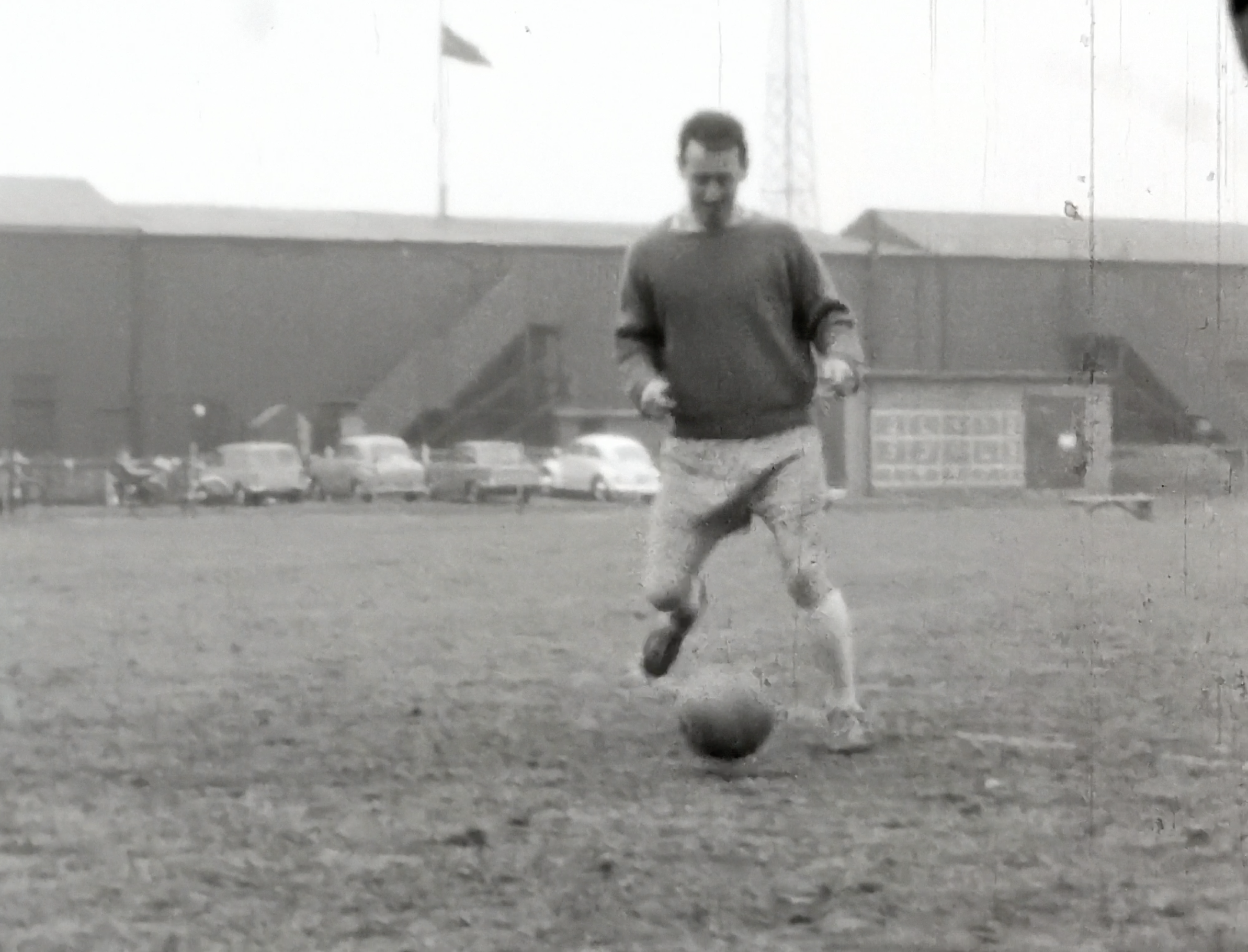
After six minutes we move out to the Annexe to see the players training with the likes of John Molyneux, John Butler, John Hardie, Elfed Morris Colin Corbishley and Ron Hewitt amongst many others in view. There are great views of the back of the main stand with the greyhound stadium and buildings on Sealand Road also in evidence.
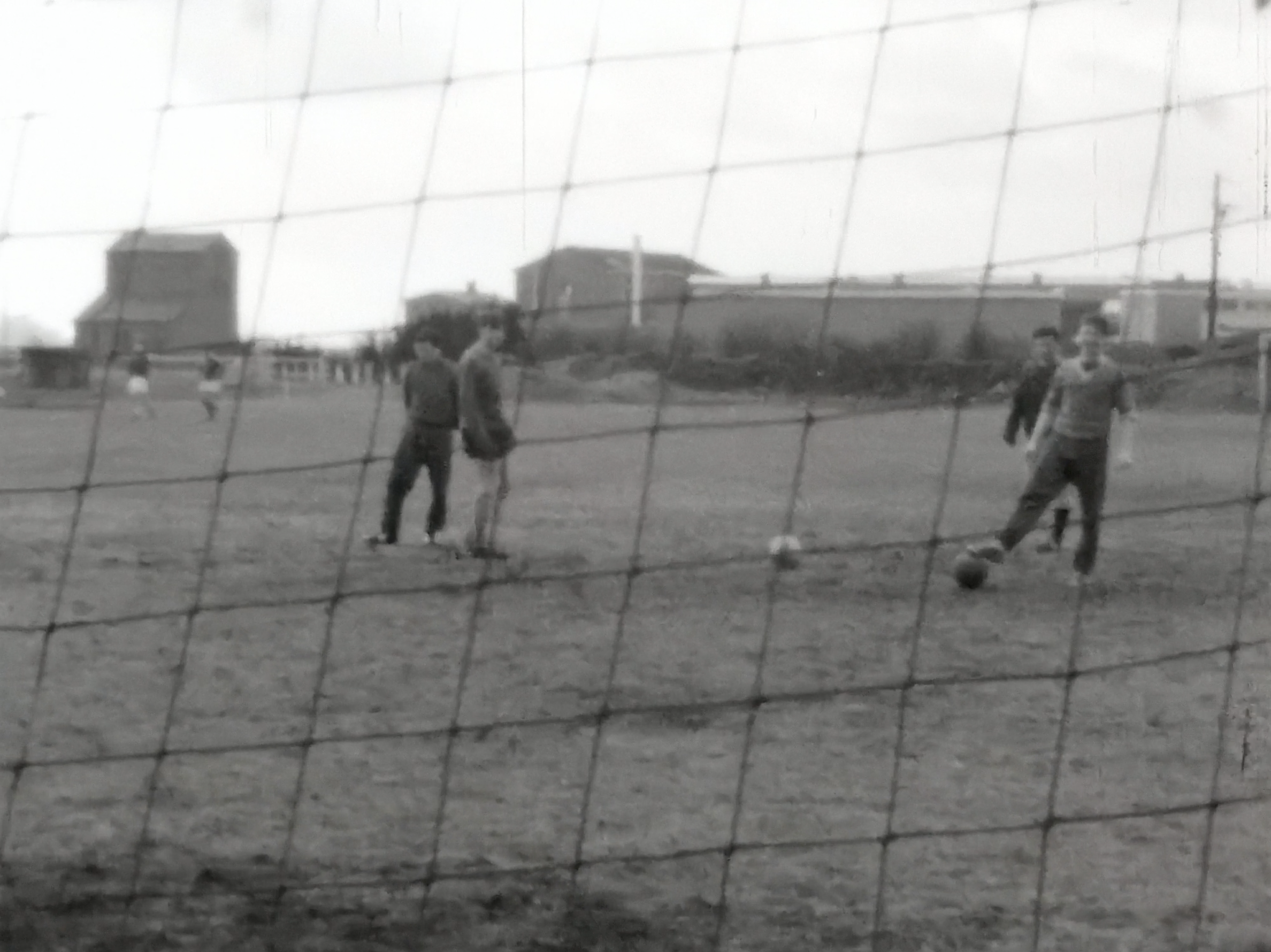
There is a glimpse of Bill Lambton during training and this marked the end of his 18 months as manager. The 1962/63 campaign culminated in another application for re-election as Chester finished 4th from bottom in Division 4. At one point in the film you can see ‘Iron Man Bill’s’ motto “Keep Fighting” on the dressing room door. His training methods were not popular with the players as they reflected his background as a Sergeant Major who had worked with the Army Physical Training Corps.

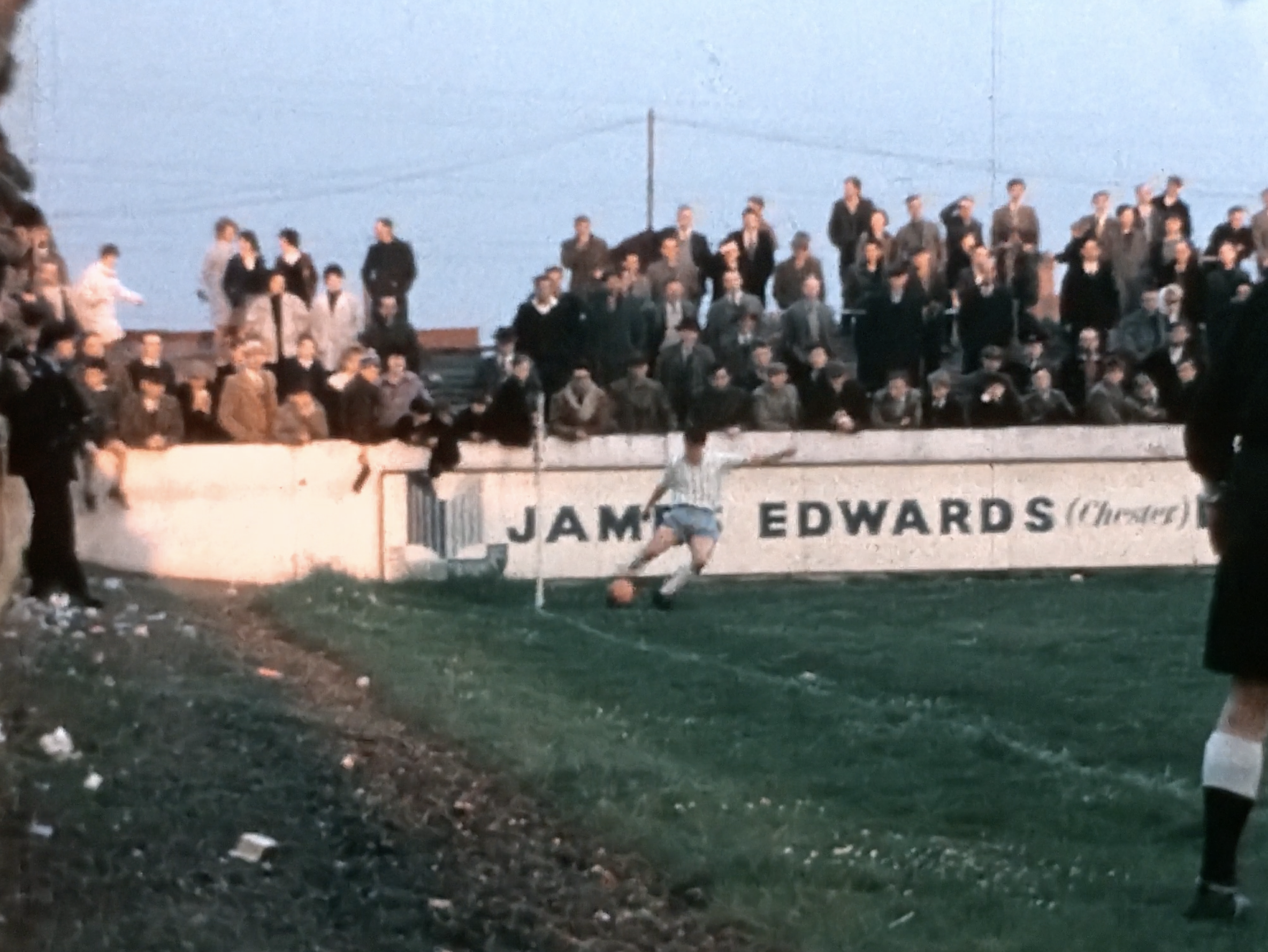
The next section of the film is more experimental before we switch to the final sequence which is eight minutes colour footage taken from behind the goal at the Kop end of the ground.

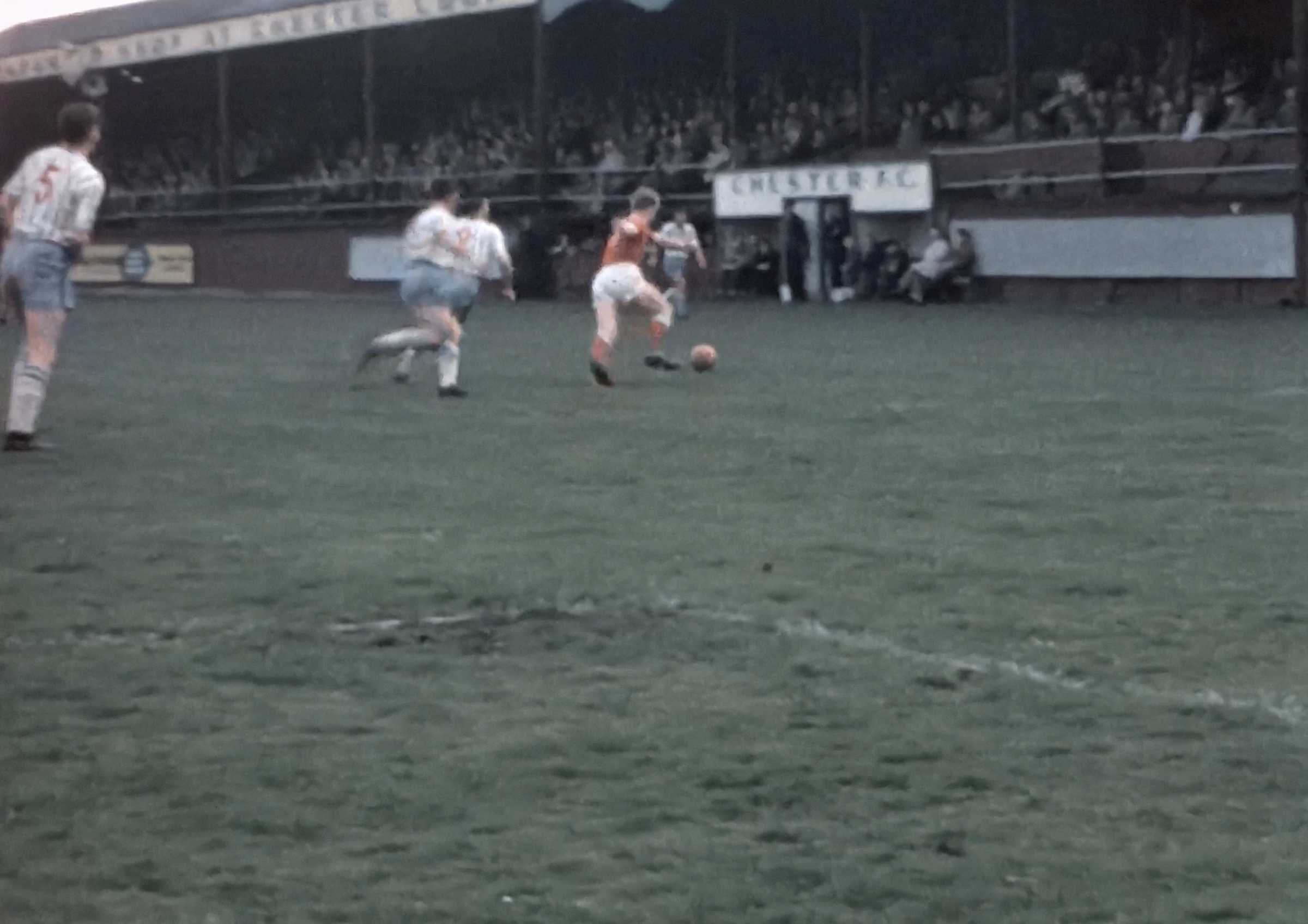
My research indicates that this is the last game of the season, a midweek fixture against Chesterfield on May 22nd, with the Spireites playing in an unfamiliar red kit. The visitors won the game 2-0 and there is a view of the first goal within the footage. The attendance was 3920.
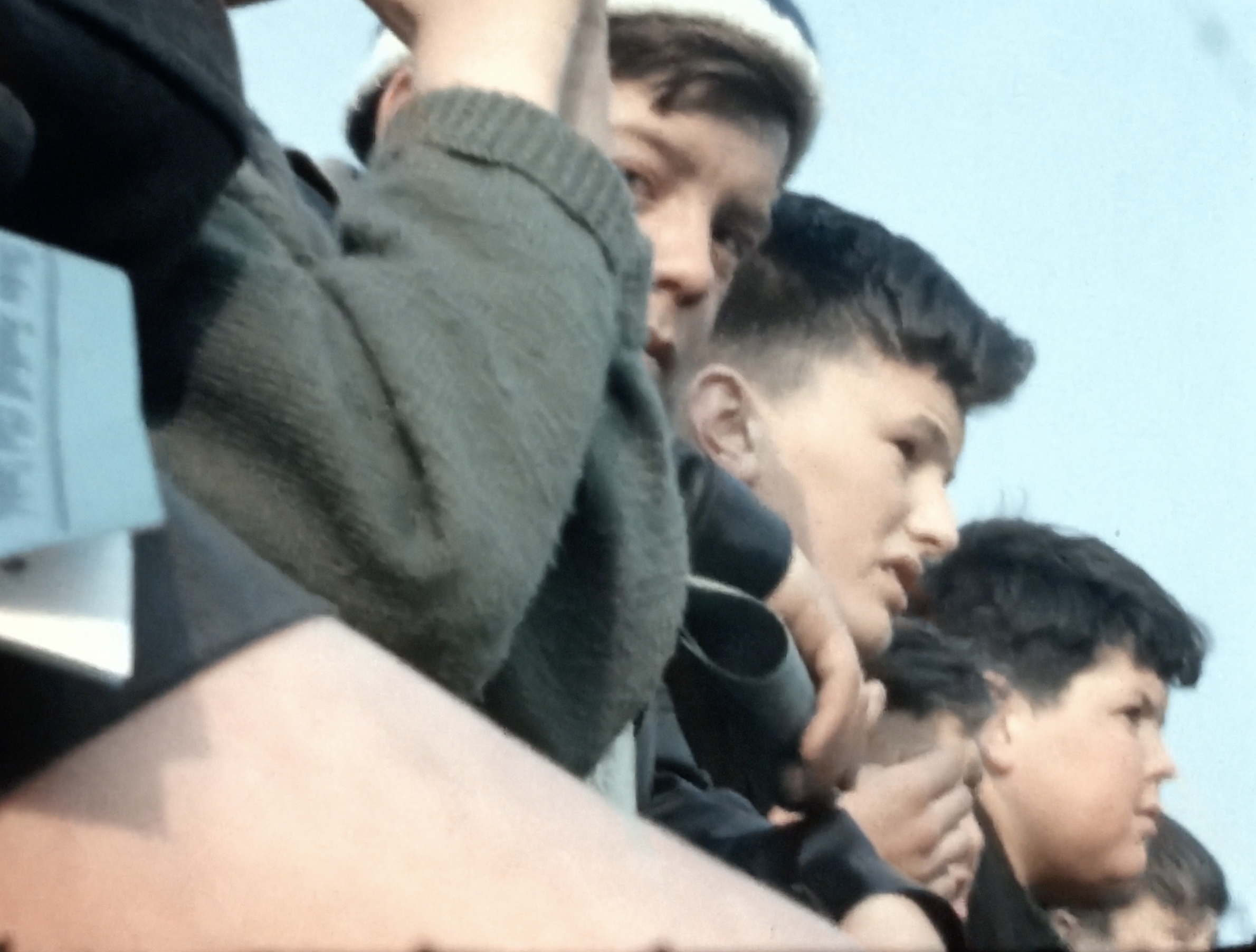
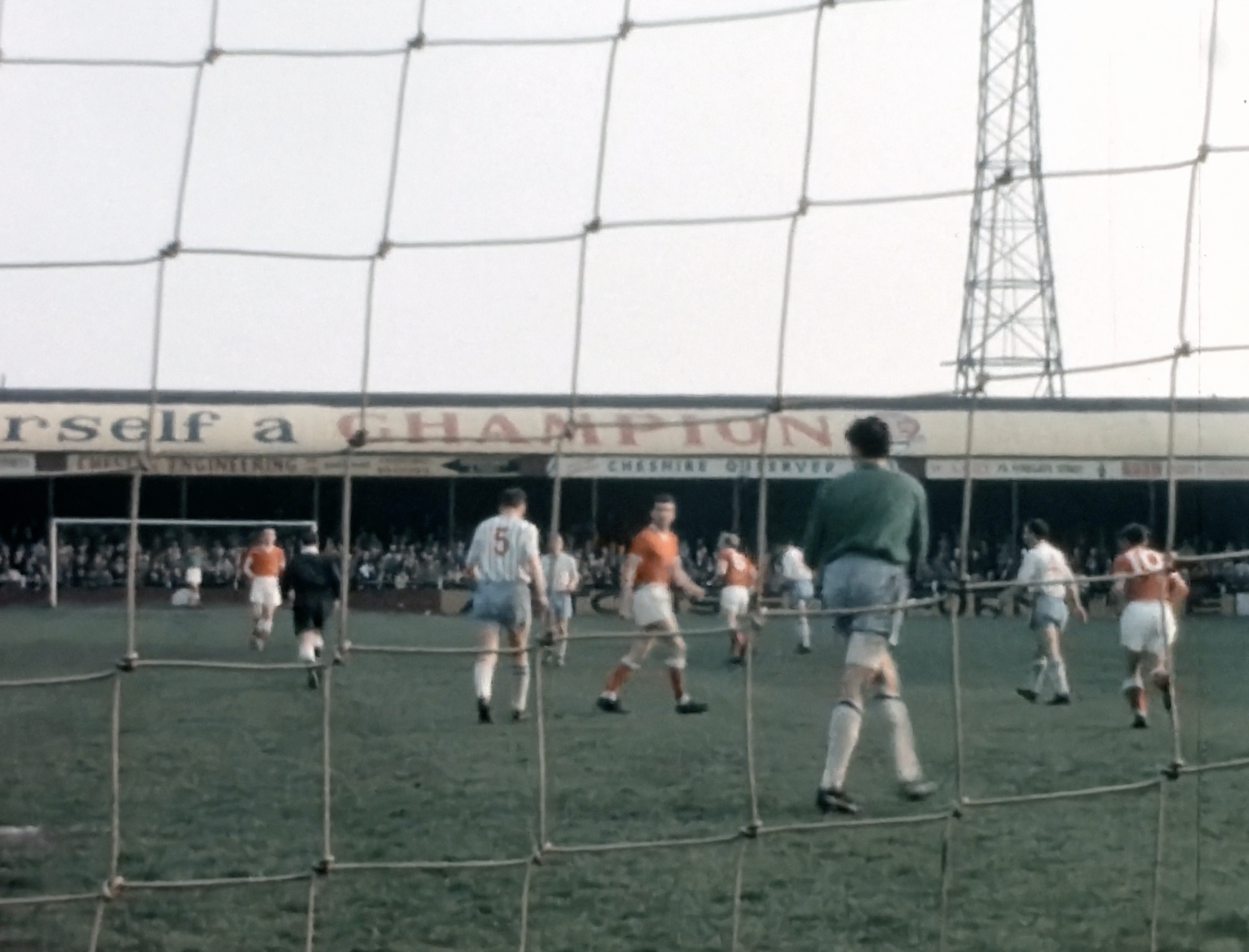
In the second half Chester are attacking the Kop with little success. The Cheshire Observer is particularly scathing of the performance calling it poor in both attack and defence with Chesterfield deserving their 2-0 victory. As an attacking force reporter Ralph Houdley stated that at no time did the forward line show any signs of being capable of winning the game. After Chesterfield had scored their second goal centre half John Butler was moved to the attack at which point Chester looked more threatening and the defender can be seen up front in the later stages of the film.

All in all it is a gem of a film and captures the era superbly. It is interesting to see different training methods and the action is very different from the current day especially the speed in which the goalkeeper releases the ball. The views of the ground will certainly bring back memories for supporters who watched the club in the 1960s.

Copyright ©  Chas Sumner http://www.chesterfootballhistory.com All Rights Reserved

The Ground That Never Was

At the end of the 19th century the large scale housebuilding in Hoole was beginning to encroach on Chester’s ground in Faulkner Street and it became clear that a new home would be needed if the club was to continue. One of the options was the nearby Lead Works Field sandwiched between the Shropshire Union canal and the railway line. In the end the plan, for an all purpose athletics field, never got off the ground but had the project gone through it could have altered the whole history of the club.. 

The completion of the 1896/97 season saw Chester Football Club in turmoil, not for the first or last time. The club seemed to be drifting along aimlessly with no committee meetings taking place and it was essentially being run by the secretary and players. No accounts had been produced for several weeks and the debts were mounting while the players, who had been unpaid, were refusing to continue into the new season if the current committee was still in place. On top of all this the Faulkner Street ground itself was becoming a major headache as new housing edged ever closer. Ironically, all this upheaval came at a time when the club was achieving some success on the field of play having just won the Cheshire Senior Cup for a second time. Such were the internal problems that a couple of the players refused to appear in the team photograph taken with the cup at the end of the campaign.

The 1897 Cheshire Cup winners minus a couple of boycotters

The formation of a new committee during the summer saw some sense of normality return to the club although they controversially refused to take on the debt overseen by the previous regime. One of the reasons for adopting this stance must have been the costs involved in preparing for the forthcoming 1897/98 campaign. The landlord of the Faulkner Street ground wanted to increase the rent but the club also faced the prospect of moving the hoardings closer to the pitch at a cost of £50, a move which would only have been a temporary measure. The alternative was to find a new ground with two or three options available. A field by the Lead Works looked the most viable choice but in the end the club decided to remain where they were for another season as it was felt that the cost implications of erecting new hoardings, moving and levelling the pitch were even more prohibitive than staying where they were. 

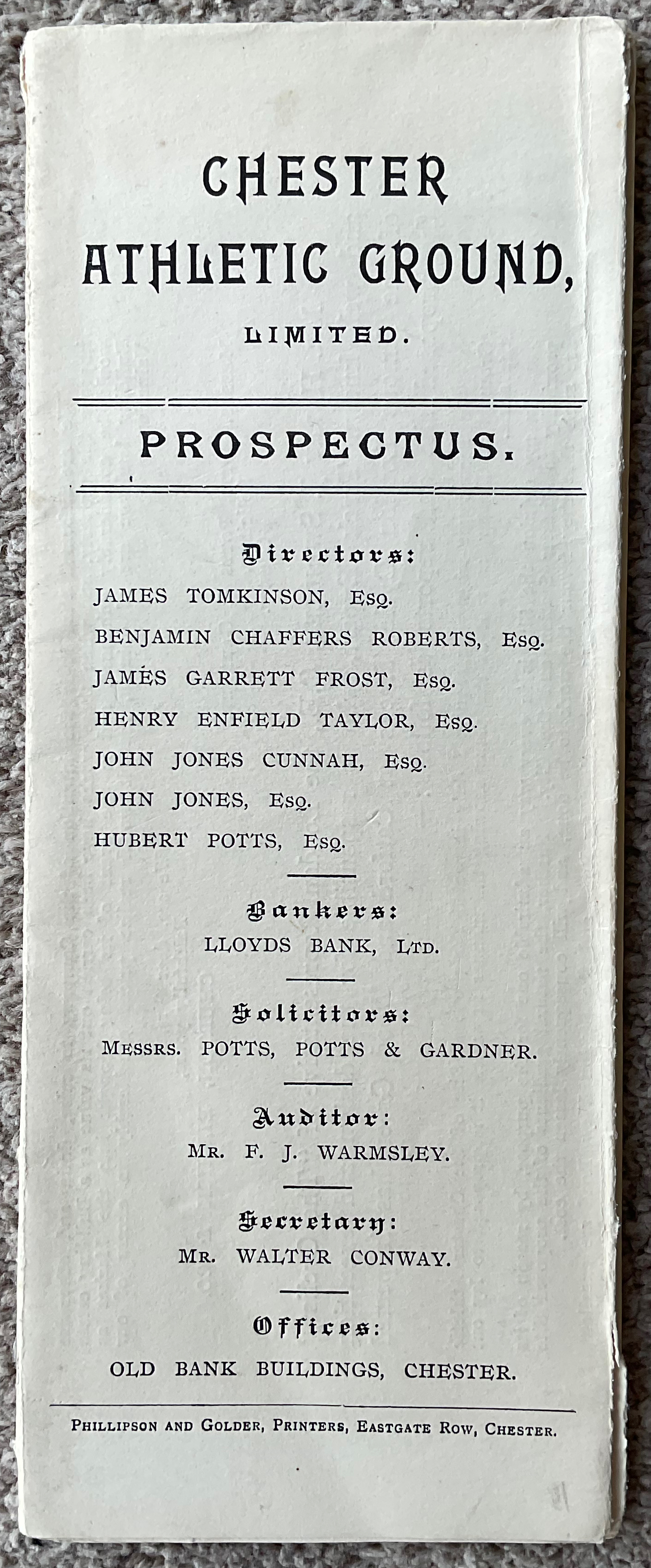
Nevertheless the Lead Works Field looked an attractive option for sport and in April 1898 a share prospectus was issued by a new company called the Chester Athletic Ground Limited. They proposed issuing 700 shares at £10 each in order to purchase the land and fund a high class athletic ground adapted and equipped for a range of sports and pastimes. The company estimated that their ambitious venture would cost around £8,800 with the balance met through mortgaging the property.

Although the football club was not directly involved they had come to an agreement with the Athletic Company to play their matches at the ground and were a key component if the scheme was to succeed. 

James Tomkinson

The men behind the company were all prominent figures in the area. The chairman, James Tomkinson, was a bank director who owned Willington Hall near Tarporley and later went on to become Liberal MP for Crewe until his death in 1910. Others involved included Benjamin Chaffers Roberts, a retired tea merchant who had built and lived at Oakfield house, which now stands at the heart of Chester Zoo. Another director was James Frost, a corn miller and JP who lived at Boughton Hall while other directors included solicitor Hubert Potts, Land Agent John Cunnah and Civil Engineer Henry Taylor. 

While football was important to the pioneering project the main focus was on cycling which was going through a boom period with new technology seeing a surge in activity. The introduction of the “safety bicycle” with equal, smaller sized wheels as well as the inflatable tyre both helped fuel this interest. The local papers had regular columns on the sport and the Faulkner Street ground had hosted the first race meeting of Chester Cycling Club which attracted more than 1000 people on a Wednesday evening in July 1897.

The scale and range of the project was certainly ambitious because as well as football and cycling there were also plans to include a running track, inside the banked cycle track. In addition the prospectus also mentioned lawn tennis courts for the summer as well as cricket and croquet alongside horticultural and other shows and entertainments.

The prospectus highlighted the proximity of Chester General Station which was “less than five minutes walk” away with access from City Road down what is now Queen’s Road. From the other direction there would have been entrances by the canal bridge on the junction between Station View Road and Hoole Lane. Part of the proposed site is now covered by the extension to Westminster Road which has by-passed Station View Road and made it into a cul-de-sac. 

The proposed 6 acre site of the Chester Athletic Ground

Within the prospectus it was suggested that the ground would hold 20,000 people and as well as stands, dressing and bath rooms there would also be other recreation and amusement facilities.

Despite the best intentions and high profiles of the people involved the project never got off the ground and the share application only realised around £4,000 of the £7,000 needed. One of the drawbacks is that the price of £10 a share was felt to be well out of the range of the working man and it was felt that there might have been a better take-up if they had been priced at a more reasonable £1. Meanwhile the men behind the Chester Athletic Ground company had come to the conclusion that the ground was not large enough to make it pay and it is difficult to see how they could have accommodated the suggested number of spectators in the limited space after a football pitch, cycle track and athletics track had been installed.

As far as the football club was concerned it seems that it was more a case of jumping at the only opportunity available. The imminent loss of the Faulkner Street enclosure created a sense of urgency and purchasing and converting the Lead Works Field would have been outside Chester’s financial capabilities. Having someone else construct a ground and then renting it from them would have been an ideal solution but the football side of the project seems to have been of secondary importance to the cycle track. It is hard to believe that the ground would have been suitable for watching football with spectators a long way from the action and I’m sure the drawbacks of sharing a ground with multiple sports would have soon become problematical. It certainly wouldn’t have been a long term solution. 

In the event Chester were forced to vacate Faulkner Street in 1898 and decamped a few hundred yards down the road to what was only a temporary home at the Old Showground in the Panton Road and Vicarage Road area of Hoole. That ground only existed for one season when housing again took over and for two seasons the club temporarily disbanded before emerging on the other side of the city on Whipcord Lane in 1901.

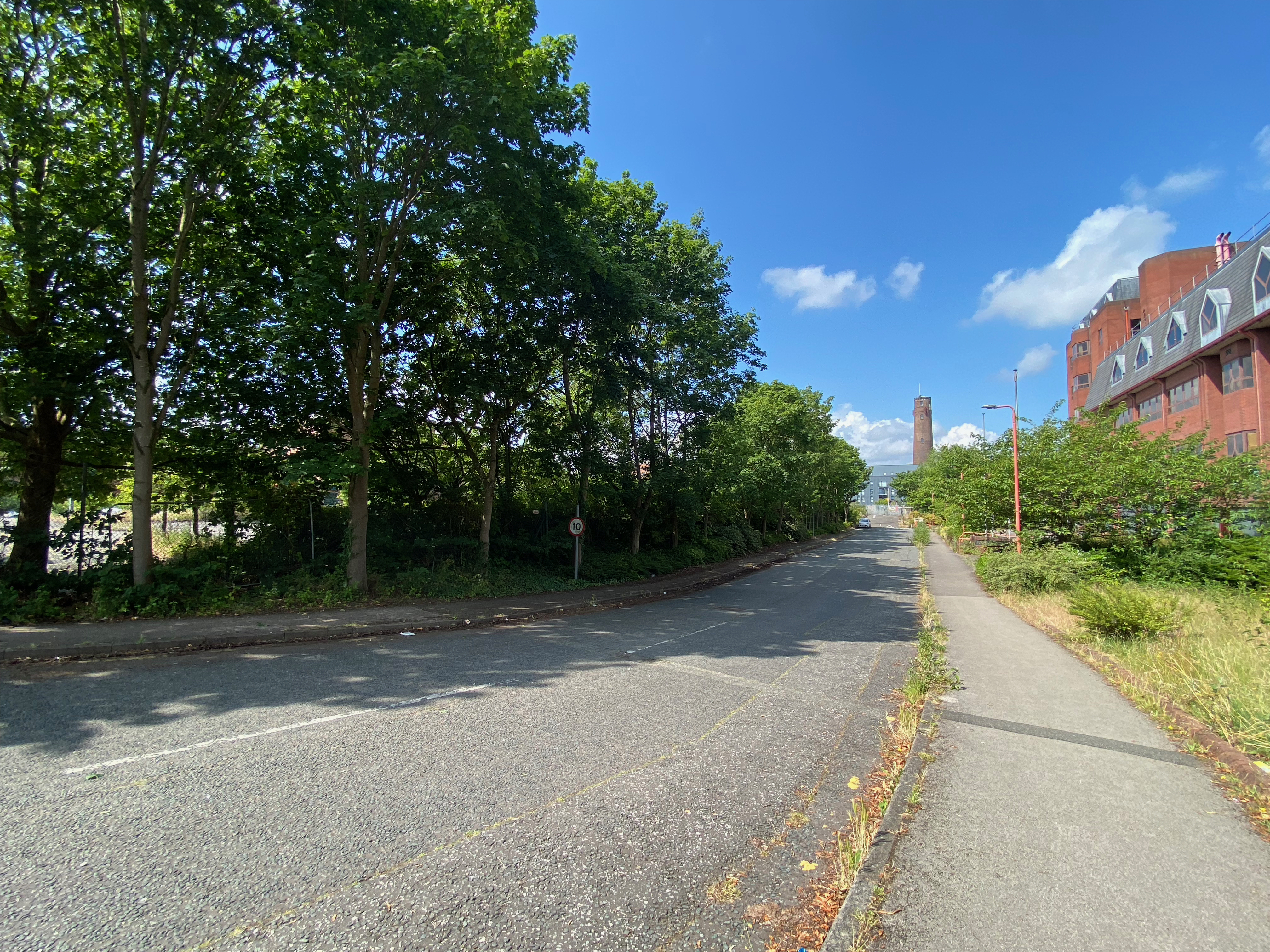
As an afterthought I went down to the area to see if I could get a couple of photographs to accompany the article. The old Lead Works Field is currently covered by two derelict office blocks and an overgrown car park and is for sale although the area available is now 4.34 acres. It did occur to me that if there are any multi-millionaires with money to burn and a huge amount of imagination it would still make a terrific but impractical site for a Stadium, minus a cycle and running track of course.

The old Lead Works Field currently For Sale giving a good view of the area sandwiched by the railway and canal

The junction of Hoole Lane, Station View Road and Westminster Road where one of the entrances to the Athletic Ground would have been located
Looking down Charterhall Drive across the centre of what was the Lead Works Field

Sealand Road Floodlights – Part 2

Although the introduction of the training floodlights in 1956 was deemed a success no progress was made towards a more permanent solution over the following two campaigns. The club was still struggling financially, with gate receipts down by the end of 1956, and the Supporters Association were bridging the gap with a range of social functions such as dances.

The big breakthrough occurred in May 1958 when the Supporters Association offered to make an initial donation of £1,500 towards the cost of permanent floodlights. Installation estimates now put the cost at around £12,000 and, even allowing for this generous contribution, it was still seen as beyond the financial capacity of the club. Nevertheless chairman Sam Argyle promised that they would look at alternatives with an awareness that inflationary pressures would only increase costs.

There was now some momentum towards floodlights and there was more positive news a couple of months later when the club announced a profit of £2,616 for the 1957/58 season, despite a large increase in costs. This was largely down to the repeal of the Entertainments Tax as well as donations of over £7,000 from the Supporters Association. It prompted the setting up of a Floodlight Fund with the directors matching the initial donation from the supporters who also handed over another cheque for £350 at the end of 1958 followed by £750 in summer 1959 when the fund reached just under £5,000. Despite the positive funding news the directors still did not feel in a position to progress in 1959 as the club was once again running at a loss and the estimated costs had now escalated to between £16,000 and £18,000. However, with questions been asked about an installation date, the directors said they would start work once the fund reached £10,000.

By the 1959/60 season floodlights were being seen as a necessity rather than a desire and with local rivals, Crewe and Tranmere, both becoming floodlit Chester were one of the few remaining clubs without facilities. It was generally felt, in the days when gate receipts were shared, that they would soon become a mandatory requirement as clubs with lights would complain about smaller gates at clubs without them. At Chester it was thought that the ability to have a later kick-off time and night games could be worth as much as £3,000 a year so, although there was a high initial cost, they would pay for themselves in the long run. As an example a Wednesday fixture against Hartlepool in October 1958, kicking off at 3pm, had a ‘meagre’ attendance of 3,220 compared with the home game against Aldershot the following weekend which attracted 6,655. In addition the chairmen of the Division 1 and 2 clubs were talking about the possibility of running a floodlit cup competition which would effectively exclude the unilluminated teams like Chester. 

The Supporters Association continued to drive the project forwards and the weekly lottery fund was reported to have a membership of 11,000 raising around £200 a week for the club. The importance of the group cannot be underestimated and, as well as contributing to the Floodlight Fund, they also funded a new half-time scoreboard, development under the main stand and a donation to cover the cost of a postponed fixture at Gillingham.

At the end of May 1960 the long awaited announcement was made that the club were in a position to finally go ahead with the installation. The contract was awarded to the Edinburgh engineering company, Miller and Stables Ltd, who undertook to have the lights in place and operating by mid-September. The drench lighting system was considered to be the best available, due to the height of the towers, which were 126ft tall instead of the usual 80ft and it was estimated that the ball could be kicked 50ft in the air without players the players losing sight of it. The delay in installing the lights had worked in Chester’s favour as the 25 degree beam angle towers and intensive lighting easily exceeded the requirements of the Football Association and were considered future proof. The system had first been introduced seven years ago with the first set implemented at Easter Road, Hibernian. Since then they had been installed at Celtic, Newcastle United, Queen of the South, and Windsor Park amongst others while systems at Raith Rovers and Motherwell were completed just before Chester’s. 

The fact that the club felt in a position to install the lights was due to another cheque for £5,000 from the Supporters Association who also gave a pledge that no other schemes would be undertaken until the lights were paid for. Nevertheless it was a brave move by the directors on the back of overall losses of over £3,000 in both 1958/59 and 1959/60. When the club released the financial accounts for the 1960/61 season it was revealed that the final installation had cost £15,417. 

Cutting the first sod July 20th 1960 – Chester Chronicle photograph
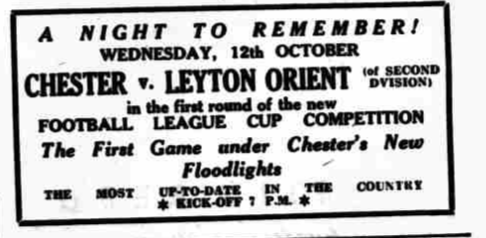
Cheshire Observer advert for the first game under lights

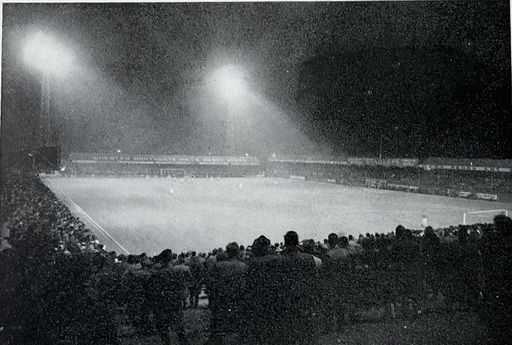
Surveying took place in June and July 1960 while the first sod was cut on Wednesday July 20th and the lights were ready for Chester’s first ever League Cup tie, against Leyton Orient, on October 12th. The official switch on was undertaken by Supporters Association chairman Reg Moore and the crowd of 9,074 was treated to a dramatic cup tie. The Division Two visitors held a comfortable 2-0 lead at half-time but Stan Pearson’s side made a fight of it after the interval and in the final four minutes Ron Davies and Jimmy Cooper scored in a stirring comeback. Chester lost the replay in London by a single goal and there was nothing to celebrate in the league as the club finished bottom of Division Four and had to apply for re-election. 

Fortunately the introduction of floodlights gave Chester a good case when they went cap in hand to the League and they finished comfortably top in the re-election vote. In addition there was a boost to finances with friendlies against Manchester United and Third Lanark attracting attendances of 8,673 and 3,621 respectively. However, the novelty of floodlight friendlies quickly wore off and matches against Stirling Albion and German side Hamborn the following year only drew relatively small crowds of 841 and 2,318.

Chester v Manchester United – March 1961

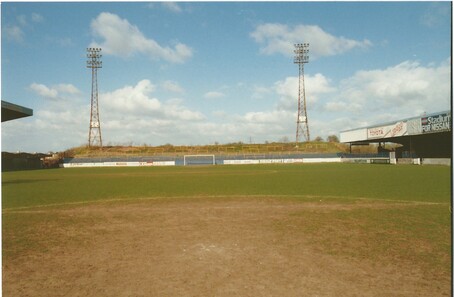
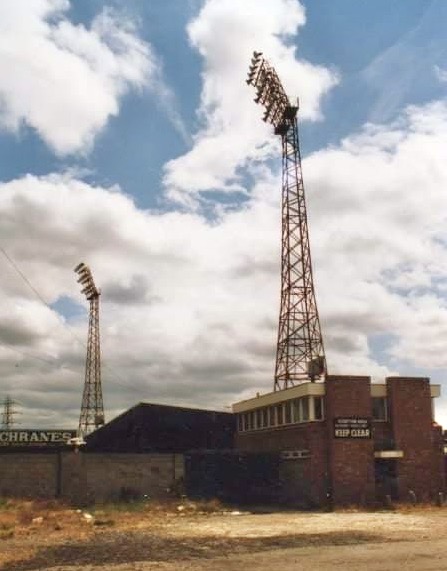
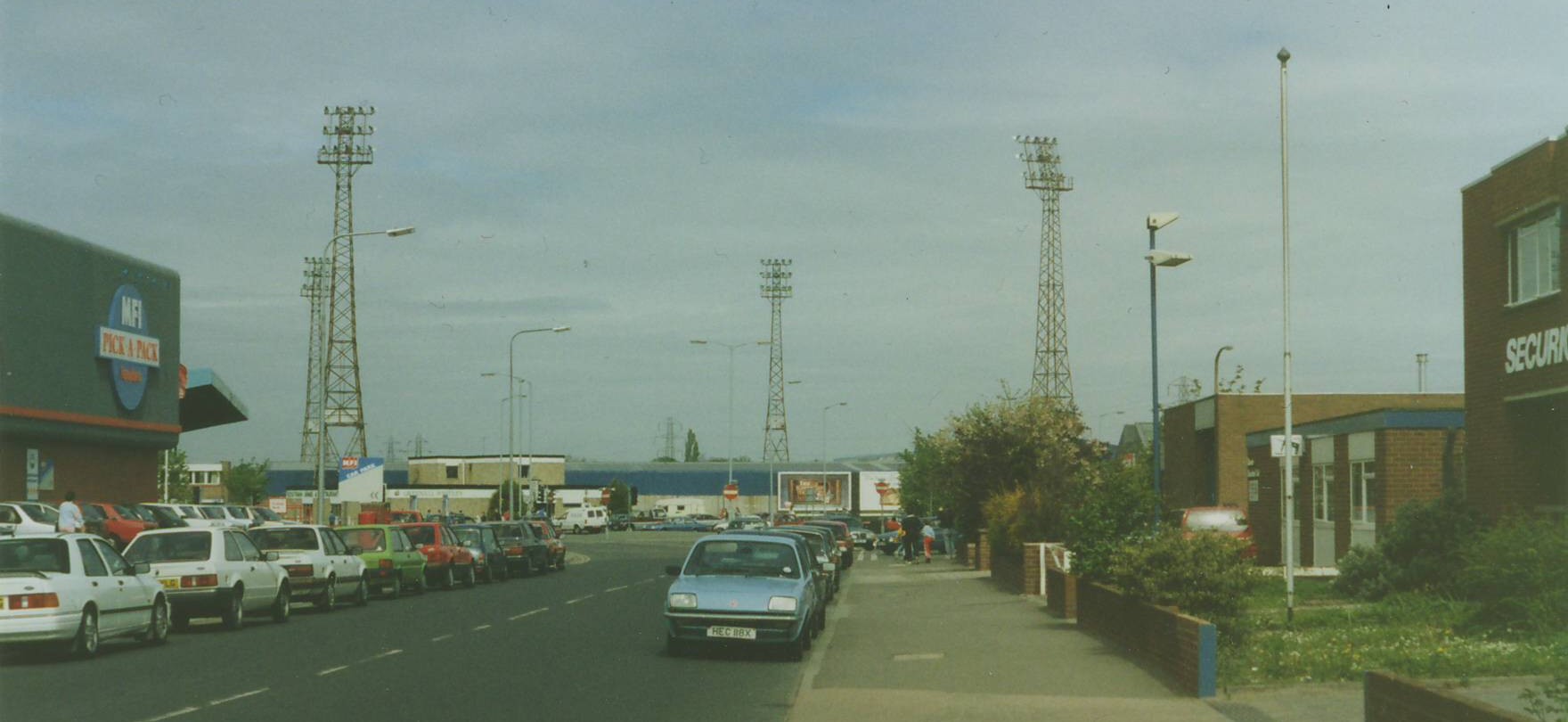
The floodlights remained a landmark until the ground was demolished in 1992 and those supporters who were fortunate to see evening games at the Stadium will fondly remember the approach to the ground down Sealand Road with the giant structures lighting up the area and visible for miles around. Matches under the Stadium lights always seemed to hold a special magic and remain an indelible memory of the 1974/75 League Cup games against Leeds, Newcastle and Aston Villa standing as a tribute to the hard work of the directors and Supporters Association who made it all possible. 

League Cup Semi-Final v Aston Villa under the lights in Jan 1975 – Chester Chronicle photograph
The Kop 1990 – Copyright photo © Chas Sumner
The Kop from the Popular Side corner – Copyright photo © Chas Sumner
Sealand Road End 1990 – Copyright photo © Chas Sumner
Sealand Road End – Photo Ron Triggs
View from Bumpers Lane 1990 – Copyright photo © Chas Sumner

Copyright © Chas Sumner http://www.chesterfootballhistory.com All Rights Reserved

Sealand Road Floodlights – Part 1

One of the most distinctive features of the old Sealand Road ground was the impressive set of floodlight which bowed down over the Stadium. The lights were state of the art when they were constructed in 1960 and the fact that they were ever erected at all was almost entirely down to the efforts of the Chester FC Supporters Association. 

Although there had been experiments with floodlights going back to the 19th century it wasn’t until the 1950s that they began to be widely installed at grounds. In the 1930s Arsenal had placed permanent lights at Highbury but the Football League only allowed there use in friendlies and unofficial games. It wasn’t until 1956, when Portsmouth hosted Newcastle United at Fratton Park, that the first Football League match was played under lights. 

Chester’s first experience of floodlit football occurred when the youngsters played a Youth Cup 2nd Round tie at Preston North End in November 1954 with the Deepdale side winning 4-1. The following October the seniors played their first game under lights, winning a thrilling Lancashire Cup encounter at Accrington Stanley’s Peel Park ground by three goals to two. 

The Chester board of directors, under chairman Sam Argyle, recognised that times were changing and at the AGM in August 1956 the subject of floodlights was raised. The club realised they would be invaluable for training and allow later kick off times for cup ties and attractive friendlies against foreign opposition. However, Argyle explained that a sub-committee established to look at the cost of floodlights felt that a sum of at least £9,000 was currently beyond the club’s financial capabilities.

Under the circumstances this announcement was hardly a surprise given recent financial tribulations. In March 1955 the board had called a crisis meeting at the Town Hall amidst a real fear that the club would be forced out of the Football League. The club was in the red to the tune of around £7,500, a situation not helped by falling attendances caused by a bottom place finish in the Third Division North in 1953/54, a position set to be repeated in 1954/55. An attempt to raise £3,000 through a share issue had received a very muted response as local businesses showed little enthusiasm. At the Town Hall meeting a call was made to urgently raise £5,000 through a 100,000 shillings fund. This received a positive initial response but by the end of the season only £1,750 had been reached. 

Despite the doom and gloom there was one very positive consequence of the 1955 meeting and that was the formation of the Chester FC Supporters Association. The group was a merger of the Supporters Club and Supporters Committee and charged a 2s 6d subscription. By the end of the 1954/55 season membership had already reached 2,500 and the group would have a considerable impact over the subsequent years. When the dynamic Association celebrated their fourth anniversary in 1959 it was reported that they had raised a phenomenal £21,072 for the club which included the original shilling fund as well as money from a hugely successful weekly football pool. 

The Supporters Association had a strong bond with the board of directors so although Sam Argyle had announced that floodlights were financially out of reach in August 1956 the board must have felt some cause for future optimism through the strength of this new group and their fund raising activities. In addition attendances had shown an improvement during the 1955/56 campaign and the club had made a small profit to reduce the overall overdraft to just under £5,000. The summer had also seen the appointment of ex Chelsea centre-half John Harris as player manager and the return of popular Welsh international winger Billy Foulkes so there were reasons for positivity on the field of play.

One idea being considered was to ask 60 supporters to contribute £150 each repayable over 5 years with 5% interest and although this failed to get off the ground the first steps towards illuminating the ground took place in October 1956. 

With half the squad either amateur or part time the club were experiencing difficulty giving them the necessary ball practice so the club planned to install a modified form of floodlighting to aid those who could only train in the evening. The idea was to illuminate one end of the ground by putting lights on the grandstand and on the shelter on the popular side. If the light wasn’t sufficient there was an intention to increase the number. This was intended as the start of a scheme to illuminate the whole ground and the cost of “hundreds” was aided by a donation of £750 from the Supporters Association. 

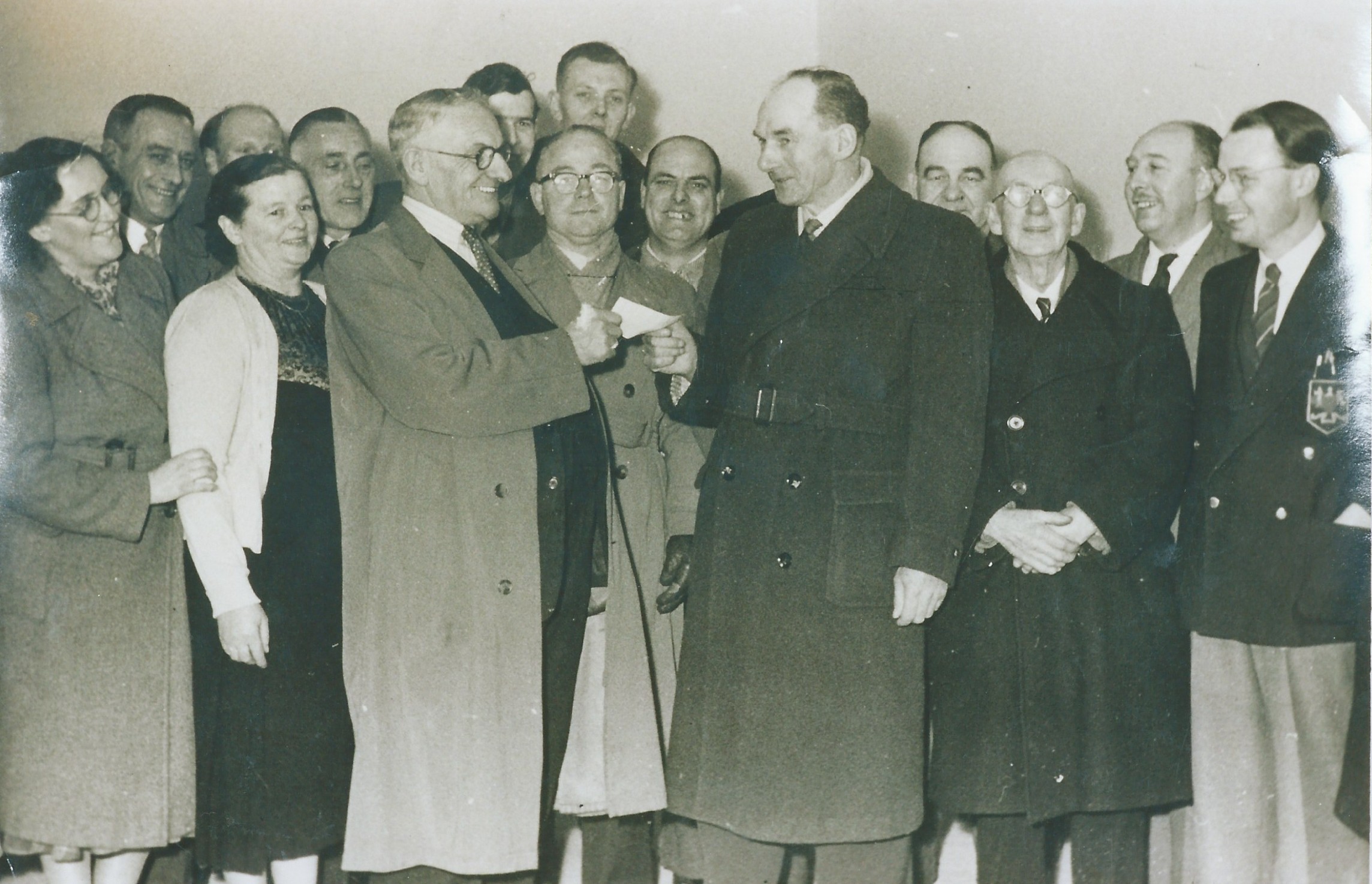
Supporters Association chairman Reg Moore (right) hands over a cheque for £750 to Chester FC chairman Sam Argyle in November 1956

The official switch on took place in November with one of the directors stating that they were “almost good enough to play a match” but it was clear that more substantial floodlighting was needed if Chester wanted to keep up with the rest of the Football League. 

The first training session under the training lights in November 1956 – Chester Chronicle cutting

Copyright ©  Chas Sumner http://www.chesterfootballhistory.com All Rights Reserved

Sealand Road Re-creation

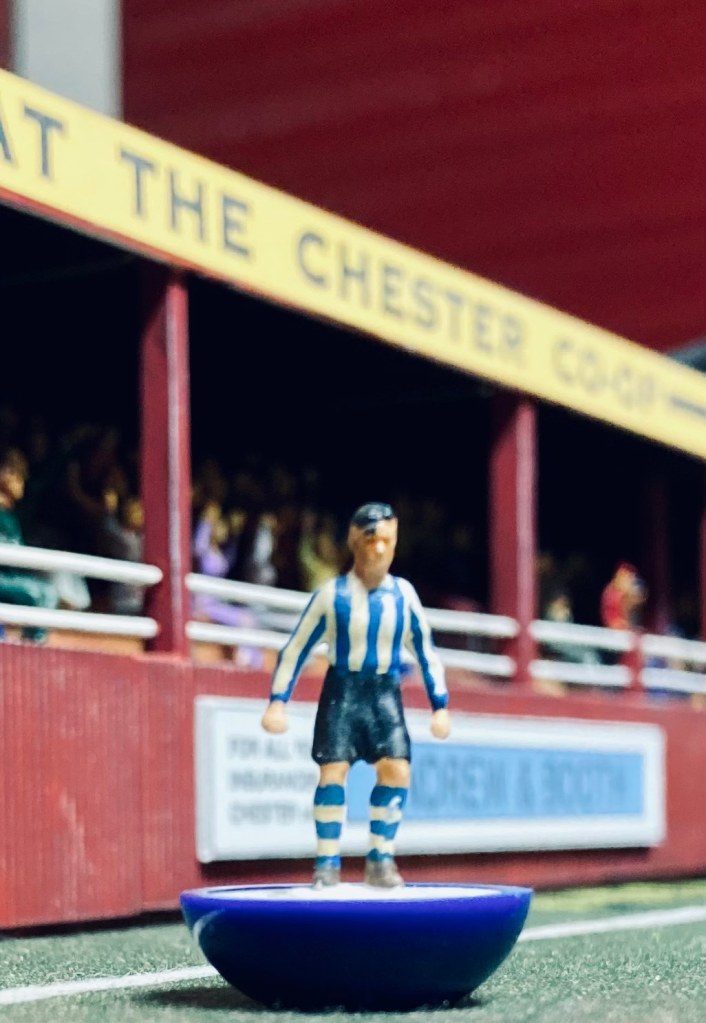
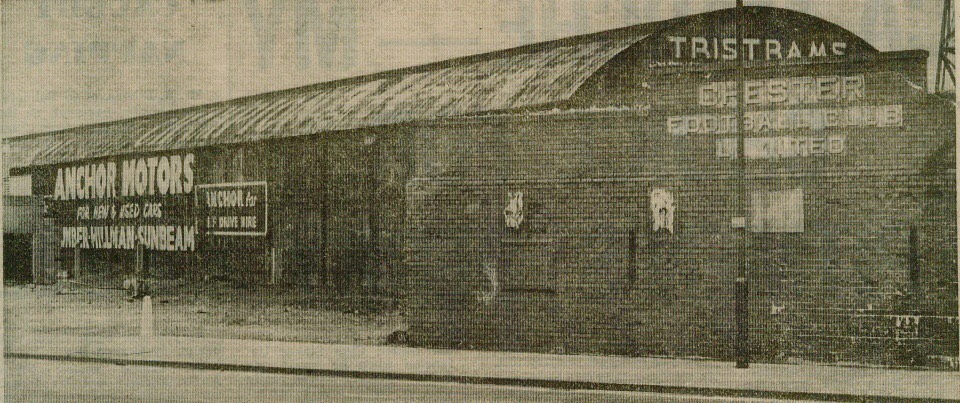
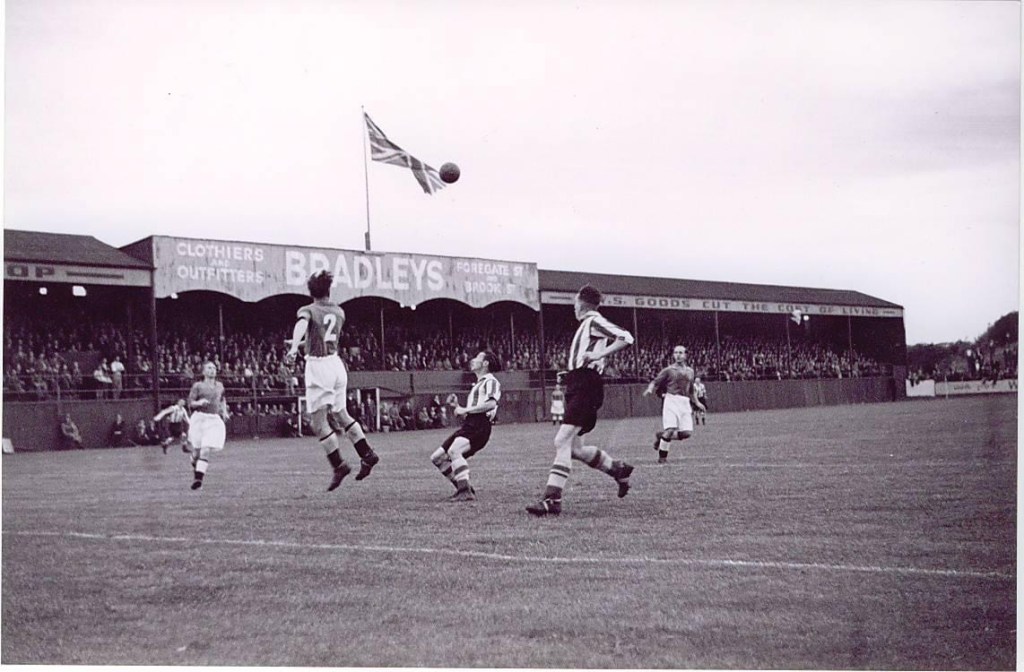
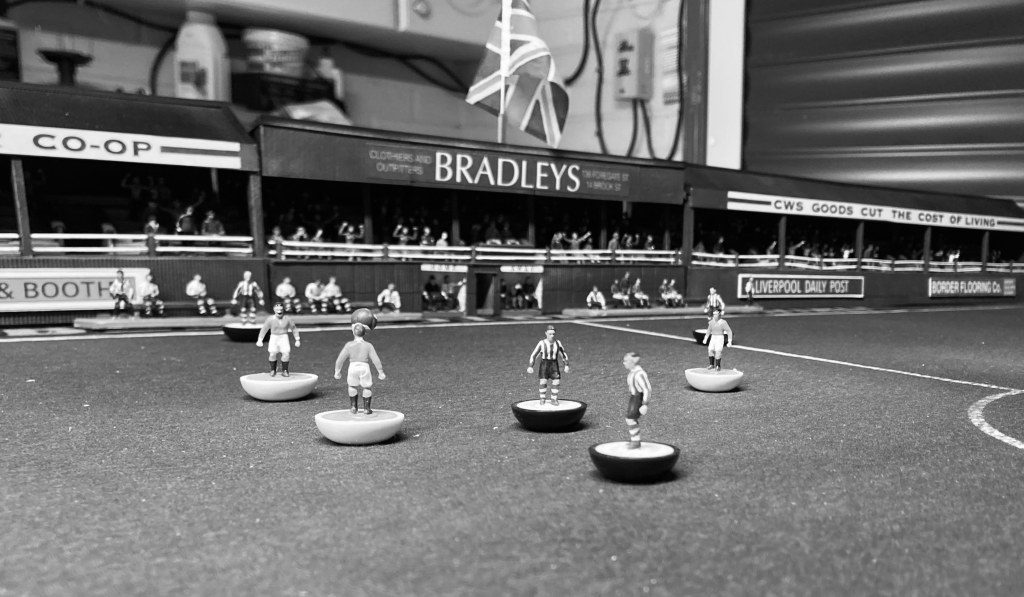
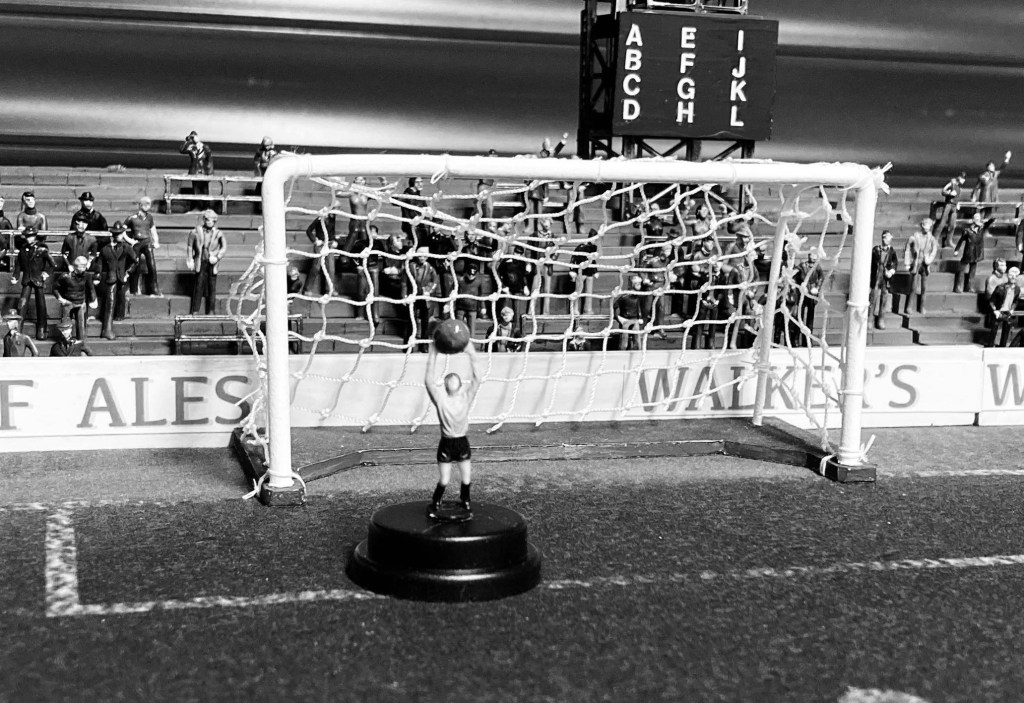
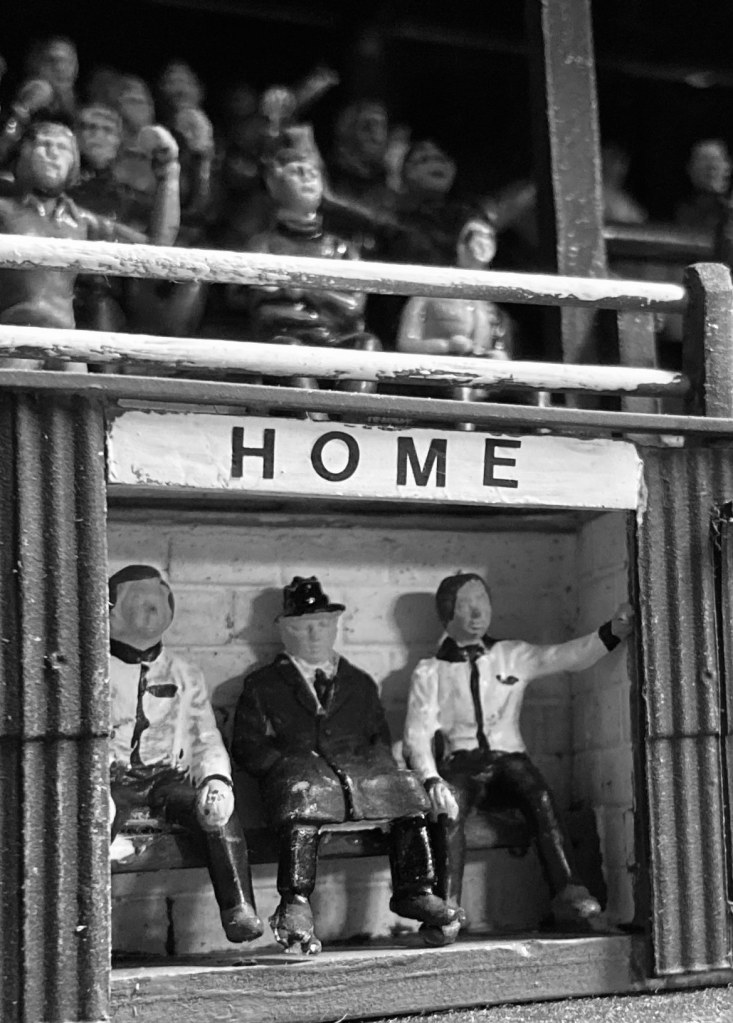
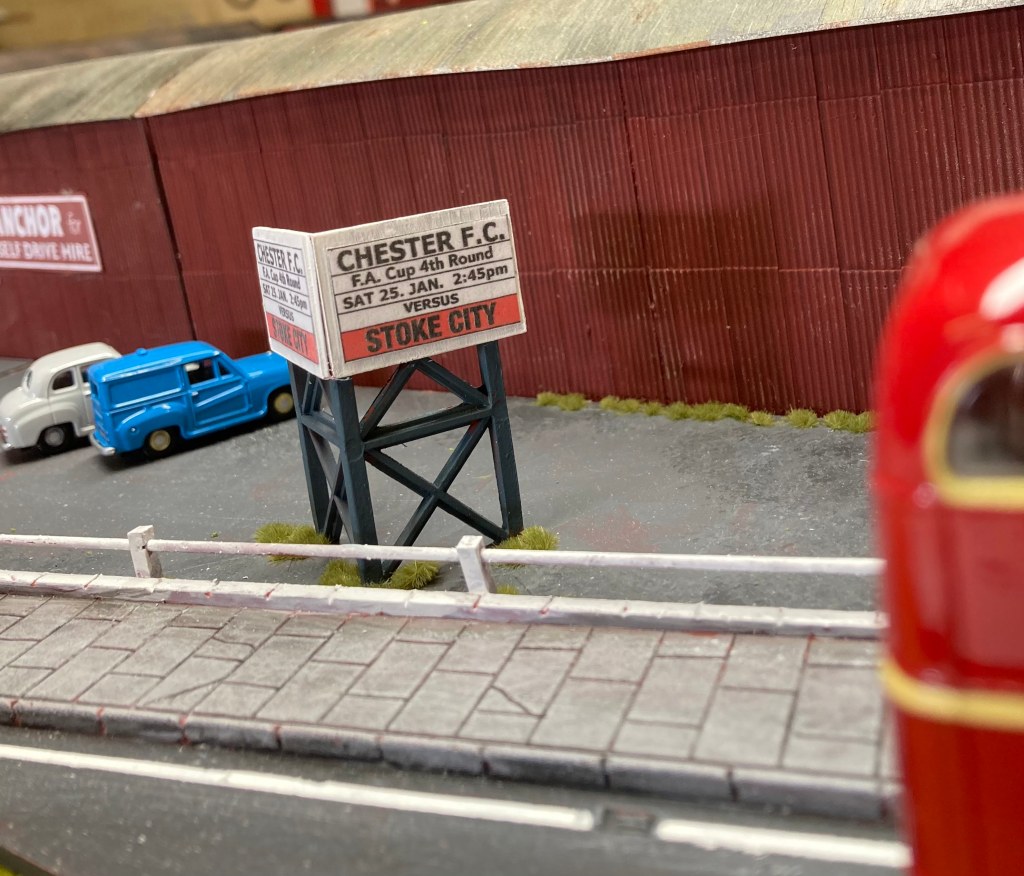
A few weeks ago I published a post displaying pictures of the Sealand Road model created by Derek Astbury. Derek is the son of former player Tommy Astbury, who played 303 league games for the clubs in the 1940s and 1950s. He has now re-created a selection of pictures taken from his late father’s collection, the Chester City Images of Sport book and the Chester Football History Facebook page.