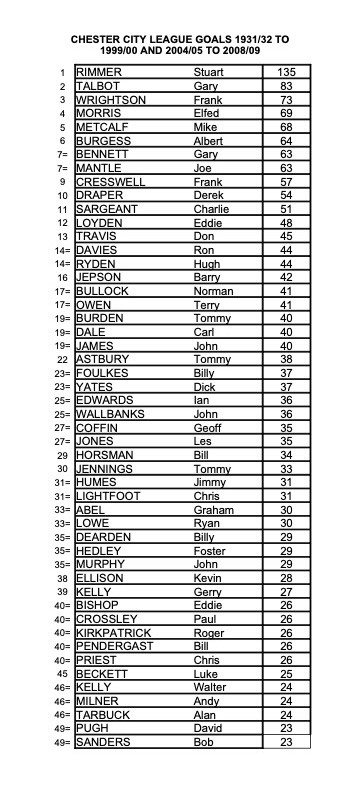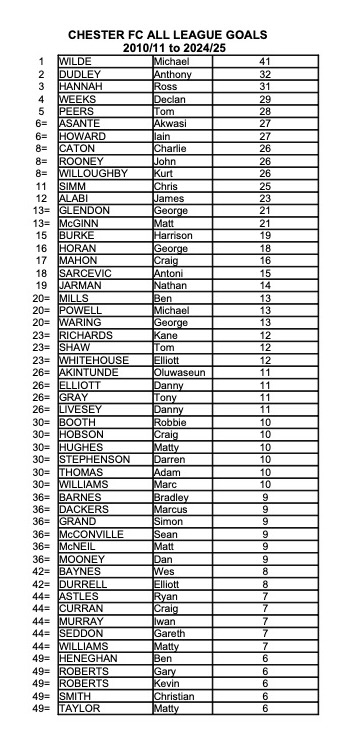
Having listed the top 50 appearances for Chester in the Football League along with Chester FC since 2010 it seemed reasonable to list the top 50 goalscorers during the same period.
The Football League details cover the period from the 1931/32 season to 1999/200 and then from 2004/05 to 2008/09. Once again the figures do not include the Conference years. During this period there were 4127 league goals and 424 different goalscorers. 89 of the goals were own goals.
League goals scored between 2010/11 and 2024/25 includes the 32 goals from the aborted 2020/21 campaign bringing the total number of goals scored to 1020 of which 17 were own goals. The remaining 1003 were split amongst 166 players and these are the top 50 (actually its top 53).
It is difficult to think of a player who has made such a lasting impression at any football club than Grenville Millington who has sadly passed away at the age of 73. The much-loved former goalkeeper made more than 300 first team appearances for Chester between 1969 and 1983 and was widely recognised as the best number one to have played for the club. However it wasn’t just on the field of play that he will be remembered as Grenville was an active supporter and volunteer at the Deva Stadium proving to be a hugely popular host in the Legends Lounge on match day. In addition he also acted as chairman of Chester FC during the 2010s and was a founder member of the Chester Former Players Association for which he served as both chairman and president.
Grenville signed for Chester as an amateur from Rhyl and made his debut in the final home game of the 1968/69 season against Lincoln City in a match that also marked the debut of Nigel Edwards and the final appearance for his friend Gary Talbot.
Grenvile on his debut against Lincoln in 1969 with Nigel Edwards and Gary TalbotReuniting the players in 2011
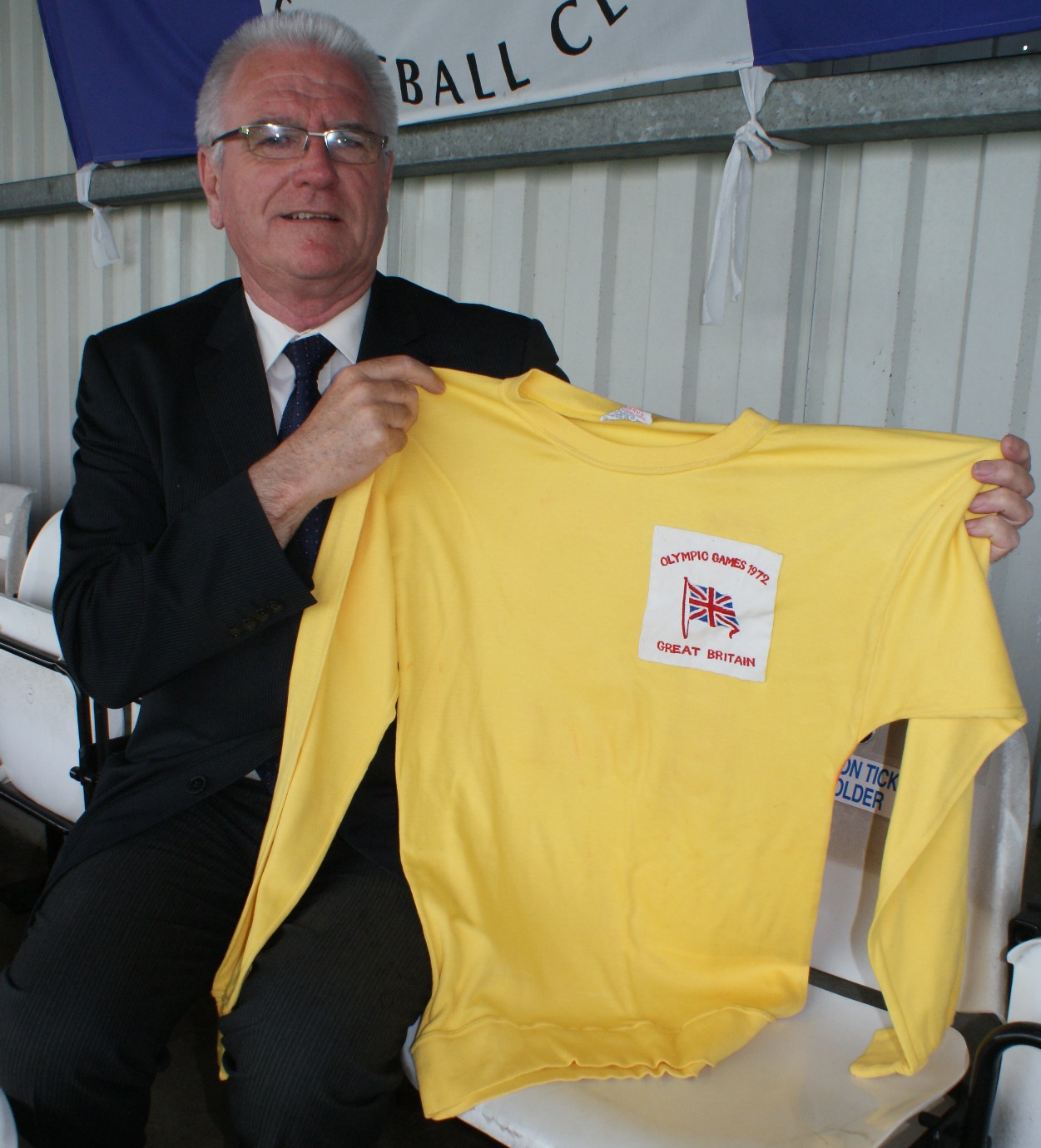
Returning to Rhyl, he started to build a name for himself earning nine amateur caps for Wales and represented the Great Britain Olympic team while also working for British Steel in Shotton.
Grenville with his Olympic shirt
After a period with Witton Albion he joined Brighton in summer 1973 but the move didn’t work out and when he returned to Chester he went to see manager Ken Roberts, a man he always admired, and was offered a 12 month contract as understudy to John Taylor.
In November 1973 he replaced the sick Taylor in an FA Cup tie against Telford United, never put a foot wrong and became the first choice keeper. The 1974/75 season proved to be a momentous season for both Chester and Grenville with the club earning a first ever promotion and reaching the semi-final of the League Cup. In the Fourth Round of the competition the Seals crushed league champions Leeds United 3-0 at Sealand Road with Grenville making a crucial save from Terry Cooper with the score at 1-0.
Grenville saves from Terry Cooper in the League Cup tie against Leeds United in 1974
He was again in outstanding form when Chester travelled to Newcastle United in the next round and drew 0-0. In the replay at Sealand Road a world class save from Malcolm MacDonald early in the game paved the way for a monumental 1-0 victory. It was during the same season that Grenville had the game of his life when a string of remarkable saves at Barnsley helped secure a 1-0 victory and earned Grenville a 10 out of 10 rating in one national paper
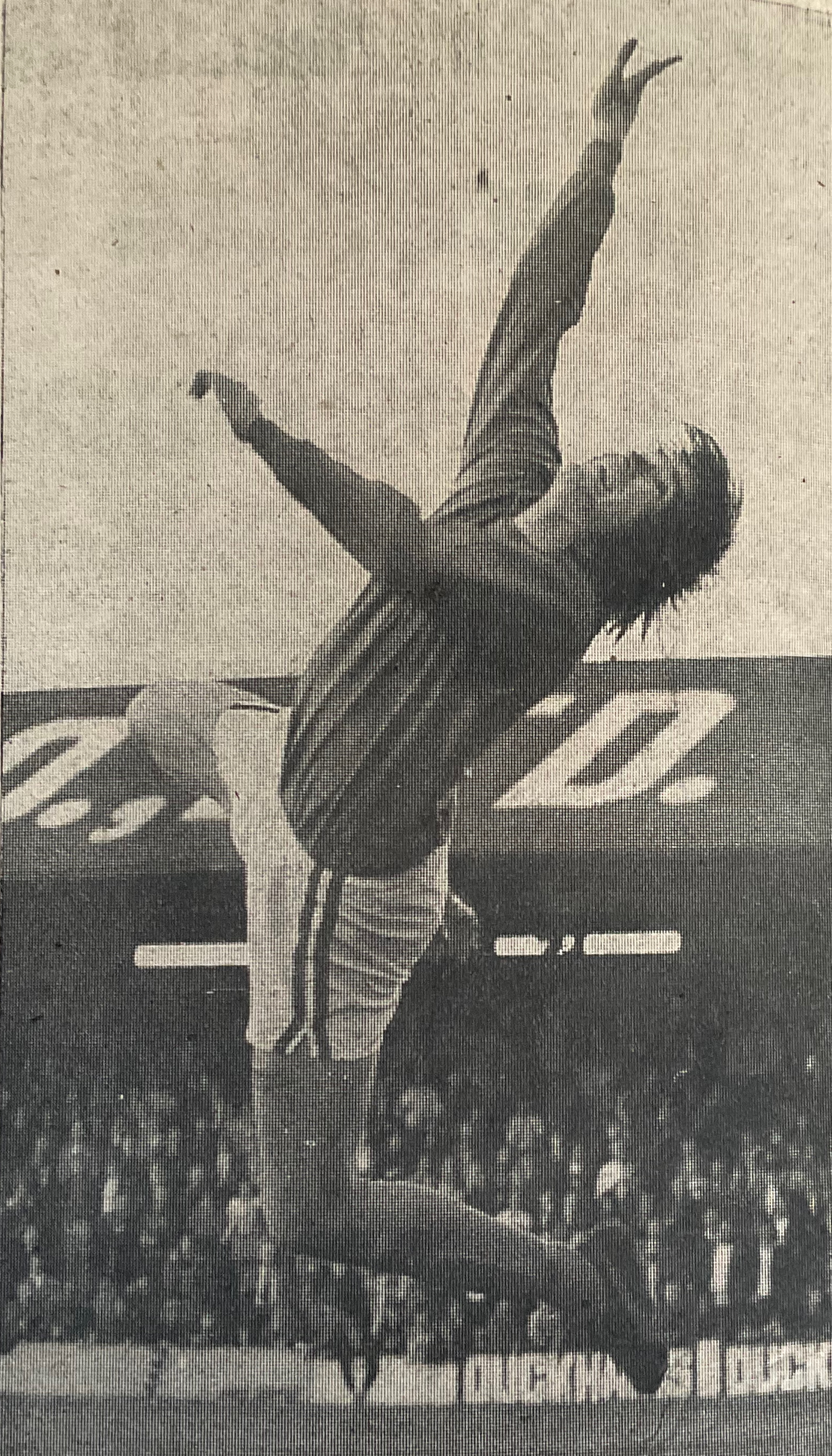
Grenville in action against Barnsley in 1974
Chester’s first season in Division Three saw Grenville presented with the Player of the Season award, a feat that he repeated in both 1980/81 and 1981/82. He would have made more than 290 Football League appearances had it not been for a period under Alan Oakes at the end of the 1970s when he shared goalkeeping duties with Brian Lloyd.
Grenville’s last game for the club was in the final home game of the 1982/83 season against Scunthorpe and the following season he linked up with Ken Roberts at Oswestry. In 1983/84 he briefly returned to the Football League with Wrexham to help them through an injury crisis and also played for Holywell Town, Connah’s Quay Nomads and Buckley.
After the club reformed as Chester FC in 2010 Grenville became a key figure at the Deva Stadium and during the 2010s served on the board and even had a short spell as chairman. He was always keen to be involved in any activity that would improve the profile of the club and was reliably on hand to assist any organisation associated with Chester. For many years he was the driving force behind the Former Players Association and always did his best to help any player who he thought might be struggling with health or other issues. In later years he will be remembered for his role as host in the Legends Lounge where his natural enthusiasm, positivity and rapport with the fans proved to be a massive hit.
Reunited with the 1974/75 team in November 2024
Grenville’s passing will leave a huge hole in the lives of everyone that knew him and the club send out their deepest condolences to his family and friends.
On the face of it there is nothing to connect winger Jack Lipsham, who played for Chester at the start of the last century, and current defender and midfielder Kevin Roberts. However the two players have the distinction of having the longest career span representing the club. In Kevin’s case this has spanned both Chester City and Chester FC, and is still ongoing, but both players have their first and last games for the club separated by 18 years.
Jack played his first game in the opening game of the 1903/04 season, a Combination fixture against Witton Albion, with his last game coming after the First World War in March 1921. Kevin made his debut in the first away fixture of the 2007/08 season at Rochdale and is, of course, still a regular member of the team in 2024/25.
An outside left John Lipsham, better known as Jack or Jacky, was one of four brothers to play for the club. The most successful of these was Bert Lipsham who represented Chester in 1896 and 1897 and went on to play 235 times for Sheffield United winning an FA Cup winners medal in 1902 as well as an international cap for England. William, who was five years older than Bert, played twice for the club during the 1897/98 season while younger brother Tommy made his debut in 1901 and played at outside right until the end of 1904. The latter’s career overlapped that of his older brother Jack at Whipcord Lane while during the 1902/03 campaign both Tommy and Jack also played for Sheffield United Reserves where their brother Bert was in the first team.
Jack was born in Chester in October 1881 and started his football career with Chester St John’s in the Chester and District League. At the end of the 1901/02 campaign St John’s were taken over by Chester and run as their reserve team with Jack a regular alongside brother Tommy. In September 1903 he made his first team debut at Whipcord Lane scoring one of the goals in a 5-0 win over Witton Albion. Over the next three seasons he only missed two Combination fixtures and was leading scorer in 1905/06. Although only 5ft 6in tall he was a well-built player and his speed down the wing and accurate crosses attracted the attention of First Division Liverpool who signed him in summer 1906. However, Jack only made three appearances for the Anfield club before returning to Chester the following year.
By this time the club were playing at Sealand Road and Jack rarely missed a game as the club won the Welsh Cup for the first time in 1908 and the Combination League in 1909. By 1913 he had amassed more than 250 league games, a great achievement given that the number of fixtures per season ranged from only 24 to a maximum 38. In March 1913 the league fixture against Hyde was designated as a benefit for Jack and his colleague Billy Matthews in recognition of their great service and the princely sum of £82-10s was raised. Surprisingly Jack signed for Wrexham during summer 1913 but nevertheless remained a popular figure and returned to Sealand Road after the war when Chester became founder members of the Cheshire County League. He played his last game for the club in March 1921, against Stalybridge Celtic Reserves, at the age of 39 having made more than 300 first team appearances. Jack was also an enthusiastic cricketer and represented Chester St John’s while at the end of his football career he was a cashier clerk at the Army Pay Office and later became general manager of the Chester Steam Laundry in Boughton. He died in 1959.
Jack Lipsham – (Front Row 2nd from left) – Chester St John’s Cricket Club 1907
Of more recent vintage Kevin Roberts graduated from the Chester youth team and was given his debut by Bobby Williamson in central midfield, having just turned 18, in a 2-1 victory at Rochdale in August 2007. Two weeks later he went on to score his first goal in a 1-1 draw at Rotherham. Over the next three seasons he became an established first team regular making 81 Football League appearances in total. Following relegation he featured in all 28 Blue Square Premier league games in the aborted 2009/10 season and was a member of the team that lost 2-1 to Ebbsfleet United in the final game for Chester City.
Kevin Roberts 07/08Kevin Roberts – 24/25
Following the old club’s demise Kevin played for Cambridge United, Brackley Town (on loan), FC Halifax and Wrexham before returning to the Deva Stadium in 2019. Since then he has been a crucial member of the Blues squad and is fast closing in on his 200th first team appearance. On current form it would be hard to bet against him extending his record into 2026 although it is worth noting that Connell Rawlinson played his first game for the club in the dying days of Chester City, against Oxford United in August 2009, and currently has a span of 16 years.
Mike Metcalf’s grandson Daniel is working on an interesting documentary about a charity match played at South Liverpool’s ground in 1967. If you think you can help then please get in contact with him and check out his website http://www.metcalfvspuskas.com.
I’m Daniel Metcalf, grandson of Chester FC legend Mike Metcalf, and I’m excited to share with you a project that’s very close to my heart. First, I’d like to thank Chas Sumner for allowing me to share this announcement on his blog and for his invaluable assistance in the pre-production of my upcoming documentary.
The Documentary
I’m directing a documentary called “Metcalf vs Puskás: The Forgotten Game,” which explores a remarkable yet little-known charity football match from 1967. This film will chronicle how some of Britain’s biggest footballing stars, including my grandfather Mike Metcalf, took on a Ferenc Puskás International XI for charity.
Our production aims to uncover a forgotten piece of football history that’s particularly significant to Chester FC fans. We’ll not only reconstruct the charity match but also delve into my grandfather’s broader career – from his beginnings as an adopted child to his successful stints at Wrexham and, of course, his prolific time at Chester FC.
I’m grateful that the club has granted us access to their archival material and permission to film at the stadium. This support will be crucial in faithfully representing Chester FC’s heritage in our documentary.
Call for Contributions
We’re actively seeking contributions from the Chester FC community. If you or someone you know fits any of these categories, we’d love to hear from you:
Family members/relatives of players involved in the Puskás charity match
Spectators from the 1967 game
Anyone with materials/memorabilia relating to the game
Former teammates of Mike Metcalf with stories to share
Football historians knowledgeable about Chester FC in the 1960s
How to Get Involved
If you have information, stories, or memorabilia to share, or if you’re interested in supporting this project, please don’t hesitate to reach out:
Although the introduction of the training floodlights in 1956 was deemed a success no progress was made towards a more permanent solution over the following two campaigns. The club was still struggling financially, with gate receipts down by the end of 1956, and the Supporters Association were bridging the gap with a range of social functions such as dances.
The big breakthrough occurred in May 1958 when the Supporters Association offered to make an initial donation of £1,500 towards the cost of permanent floodlights. Installation estimates now put the cost at around £12,000 and, even allowing for this generous contribution, it was still seen as beyond the financial capacity of the club. Nevertheless chairman Sam Argyle promised that they would look at alternatives with an awareness that inflationary pressures would only increase costs.
There was now some momentum towards floodlights and there was more positive news a couple of months later when the club announced a profit of £2,616 for the 1957/58 season, despite a large increase in costs. This was largely down to the repeal of the Entertainments Tax as well as donations of over £7,000 from the Supporters Association. It prompted the setting up of a Floodlight Fund with the directors matching the initial donation from the supporters who also handed over another cheque for £350 at the end of 1958 followed by £750 in summer 1959 when the fund reached just under £5,000. Despite the positive funding news the directors still did not feel in a position to progress in 1959 as the club was once again running at a loss and the estimated costs had now escalated to between £16,000 and £18,000. However, with questions been asked about an installation date, the directors said they would start work once the fund reached £10,000.
By the 1959/60 season floodlights were being seen as a necessity rather than a desire and with local rivals, Crewe and Tranmere, both becoming floodlit Chester were one of the few remaining clubs without facilities. It was generally felt, in the days when gate receipts were shared, that they would soon become a mandatory requirement as clubs with lights would complain about smaller gates at clubs without them. At Chester it was thought that the ability to have a later kick-off time and night games could be worth as much as £3,000 a year so, although there was a high initial cost, they would pay for themselves in the long run. As an example a Wednesday fixture against Hartlepool in October 1958, kicking off at 3pm, had a ‘meagre’ attendance of 3,220 compared with the home game against Aldershot the following weekend which attracted 6,655. In addition the chairmen of the Division 1 and 2 clubs were talking about the possibility of running a floodlit cup competition which would effectively exclude the unilluminated teams like Chester.
The Supporters Association continued to drive the project forwards and the weekly lottery fund was reported to have a membership of 11,000 raising around £200 a week for the club. The importance of the group cannot be underestimated and, as well as contributing to the Floodlight Fund, they also funded a new half-time scoreboard, development under the main stand and a donation to cover the cost of a postponed fixture at Gillingham.
At the end of May 1960 the long awaited announcement was made that the club were in a position to finally go ahead with the installation. The contract was awarded to the Edinburgh engineering company, Miller and Stables Ltd, who undertook to have the lights in place and operating by mid-September. The drench lighting system was considered to be the best available, due to the height of the towers, which were 126ft tall instead of the usual 80ft and it was estimated that the ball could be kicked 50ft in the air without players the players losing sight of it. The delay in installing the lights had worked in Chester’s favour as the 25 degree beam angle towers and intensive lighting easily exceeded the requirements of the Football Association and were considered future proof. The system had first been introduced seven years ago with the first set implemented at Easter Road, Hibernian. Since then they had been installed at Celtic, Newcastle United, Queen of the South, and Windsor Park amongst others while systems at Raith Rovers and Motherwell were completed just before Chester’s.
The fact that the club felt in a position to install the lights was due to another cheque for £5,000 from the Supporters Association who also gave a pledge that no other schemes would be undertaken until the lights were paid for. Nevertheless it was a brave move by the directors on the back of overall losses of over £3,000 in both 1958/59 and 1959/60. When the club released the financial accounts for the 1960/61 season it was revealed that the final installation had cost £15,417.
Cutting the first sod July 20th 1960 – Chester Chronicle photograph
Cheshire Observer advert for the first game under lights
Surveying took place in June and July 1960 while the first sod was cut on Wednesday July 20th and the lights were ready for Chester’s first ever League Cup tie, against Leyton Orient, on October 12th. The official switch on was undertaken by Supporters Association chairman Reg Moore and the crowd of 9,074 was treated to a dramatic cup tie. The Division Two visitors held a comfortable 2-0 lead at half-time but Stan Pearson’s side made a fight of it after the interval and in the final four minutes Ron Davies and Jimmy Cooper scored in a stirring comeback. Chester lost the replay in London by a single goal and there was nothing to celebrate in the league as the club finished bottom of Division Four and had to apply for re-election.
Fortunately the introduction of floodlights gave Chester a good case when they went cap in hand to the League and they finished comfortably top in the re-election vote. In addition there was a boost to finances with friendlies against Manchester United and Third Lanark attracting attendances of 8,673 and 3,621 respectively. However, the novelty of floodlight friendlies quickly wore off and matches against Stirling Albion and German side Hamborn the following year only drew relatively small crowds of 841 and 2,318.
Chester v Manchester United – March 1961
The floodlights remained a landmark until the ground was demolished in 1992 and those supporters who were fortunate to see evening games at the Stadium will fondly remember the approach to the ground down Sealand Road with the giant structures lighting up the area and visible for miles around. Matches under the Stadium lights always seemed to hold a special magic and remain an indelible memory of the 1974/75 League Cup games against Leeds, Newcastle and Aston Villa standing as a tribute to the hard work of the directors and Supporters Association who made it all possible.
League Cup Semi-Final v Aston Villa under the lights in Jan 1975 – Chester Chronicle photograph