Former Chester winger Jimmy Rolfe has passed away at the age of 93. Jimmy made 50 Division Three North appearances for the club between 1953 and 1955 and also played in the Football League for Crewe Alexandra and Barrow.
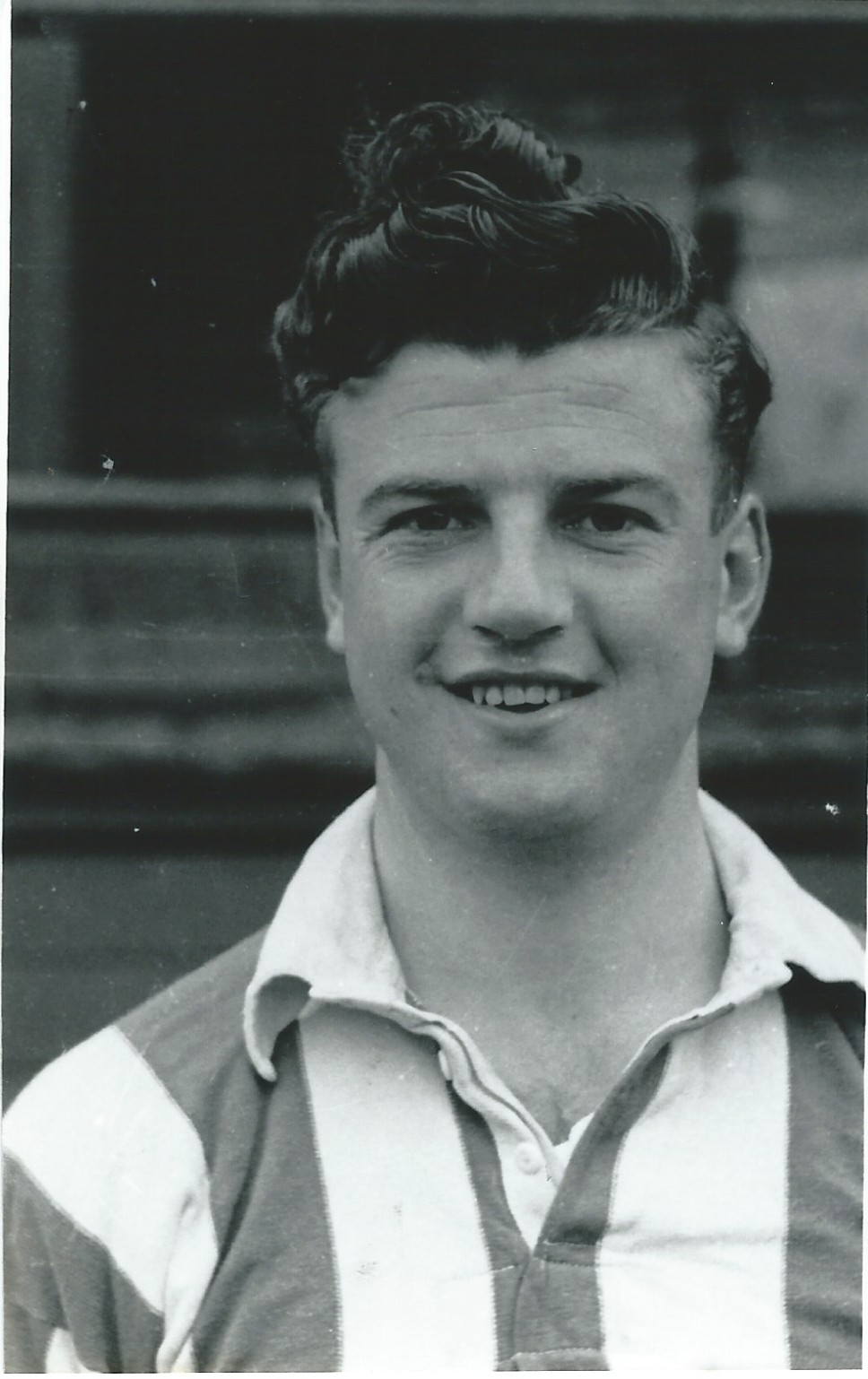
Jimmy Rolfe
Jimmy started his football career at Eastham Athletic where his performances attracted the attention of Liverpool who signed him on amateur terms. Over the next two years he featured in both the A and B teams before being called up for National Service. While serving in Germany he represented the Combined Services and also played for Munster 08. After being demobbed, in July 1952, Jimmy returned to Anfield and signed as a professional before being released in summer 1953.
Debut v Workington in September 1953
The Liverpool born player became one of Louis Page’s first signings for Chester and he made his Football League debut in a 3-0 win over Workington at Sealand Road in September 1953. After playing in the following game at Darlington Jimmy returned to the reserves but nine goals in five games, including hat-tricks in consecutive games against Northwich Victoria and Mossley, saw him return to first team action in a side desperate for goals. Unfortunately Jimmy couldn’t translate his goalscoring form for the reserves to the first team and by February he was back in the Cheshire County League team before being reinstated at the end of the campaign when he won a Welsh Cup runners up medal after featuring in the final against Flint Town United.
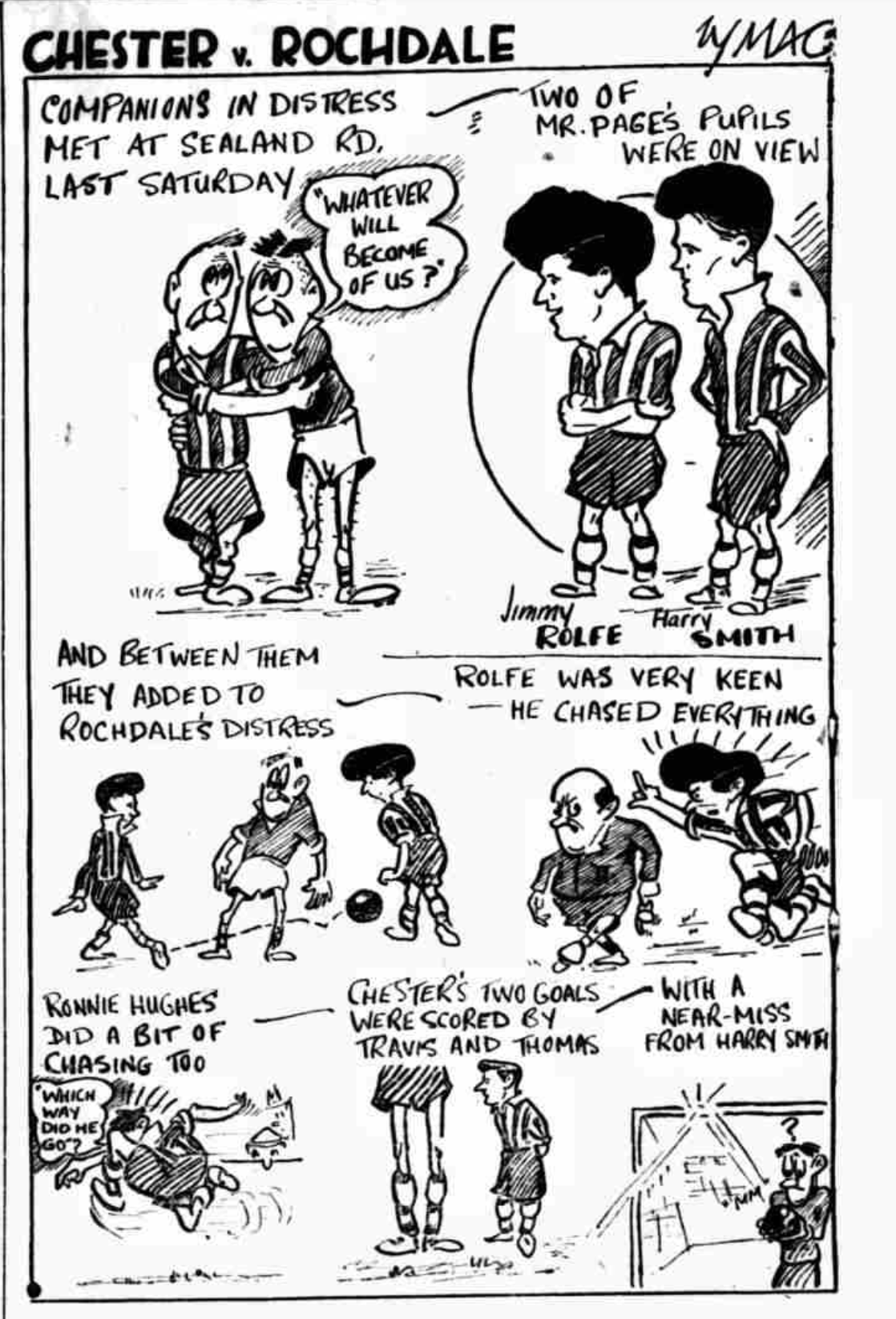
Jimmy Rolfe returns to the team against Rochdale
The following season Jimmy featured 33 times on the right wing, adding one goal to his previous season’s tally of three, before surprisingly being given a free transfer in 1955. Standing at just over 5ft 6ins he made up for his lack of height with energy and enthusiasm but was probably unlucky to feature in a struggling team that finished bottom of the table in both 1953/54 and 1954/55.
Jimmy Rolfe in rightmost pale top 1954
After departing Sealand Road Jimmy went on to play more than 100 games for Crewe followed by Barrow and then had a very brief spell at Southport. Dropping into non-league football, in 1959, he featured for Runcorn, Buxton, Holyhead and New Brighton. After leaving the game he worked for Littlewoods.
George Davies, who played 35 league games for Chester between 1956 and 1957, has sadly passed away at the grand age of 97. Playing as a wing back at Sealand Road he made 35 league appearances between 1956 and 1957 and, gifted with a powerful shot, was the club’s regular penalty taker with three of his four league goals coming from the spot. After leaving the game he was a familiar figure in Hoole where he worked as a window cleaner.
Born in Rednall in 1927 George started his career in local football with village team Llanymynech then joined Oswestry Town where he spent the next four years becoming a regular during the 1949/50 season. In June 1950 he secured a move to Sheffield Wednesday and over the next six years made almost a century of Football League appearances for the Yorkshire club. During his time at Wednesday he featured in the team that lost 2-0 in the 1954 FA Cup semi-final against Preston North End at Maine Road, Manchester in front of 75,000 supporters.
In July 1956 George became one of John Harris’ first signings for Chester for what was described as a considerable fee. He made his debut in the first game of the season, a 2-2 draw at Wrexham, and went on to make 33 league appearances during the 1956/57campaign. The following season he appeared in the first two games but was then relegated to the reserves in favour of Aled Williams following a 3-2 victory over Crewe. After a short spell in the Cheshire County League team George joined Wellington Town in the Southern League for a small fee in November 1957. His stay at Wellington lasted one season at which point George left the game.
Interviewed about his career in 1995 George said that on the whole he preferred the game when he was an amateur at Oswestry. When he became professional he felt that some of the fun and enjoyment was lost from the game as money became a more important factor. His preferred position was left half and most of his games at Sealand Road were in this position. He recalled that his most memorable game at Chester was a Welsh Cup 6th Round game at Cardiff City who were then in the First Division. It was a major shock when Chester won 2-0 at Ninian Park with George scoring the first goal, blasting home from 25 yards.
He admitted that he was a bit of a dirty player and would have been sent off a few times in the current climate. Because he was a heavy set individual he had a tendency to use his shoulder a lot and he found that referees often needed to have a quiet word with him although, despite this reputation, he was never booked or sent off throughout his career.
A friend was recently telling me about an article he had written for the Prescot Cables programme a few years ago which mentioned a player called Wally Hughes who briefly featured in Chester colours. While his stay at Sealand Road was restricted to three games for the Cheshire County League team he had a fascinating career managing both the New Zealand and Fiji national teams. The following article is reproduced with Roy McDonald’s kind permission and can also be seen on his Tales From Hope Street blog page. It is well worth checking out his other articles which can be found at:
I researched his ‘career’ at Chester and Wally was signed by Stan Pearson on a one month trial in August 1959 after playing in the Possibles v Probables public trial match. The 25 year old outside right made his first start in the opening Cheshire County League of that season at home to Ellesmere Port Town. It proved to be a memorable debut as, after an uneventful first half, he scored the only goal of the game against the reigning Cheshire County League champions.
Also making his debut for the reserves that day was 17 year old Ron Davies who, of course went on to have a long career with Luton Town, Norwich City, Southampton and Manchester United amongst others and was capped 29 times by Wales.
Wally then played in the 1-1 draw at Bangor City followed by a 4-0 defeat at Northwich Victoria where he switched to the left wing to make way for promising 17 year old youngster Jimmy Cooper. Although he was described as ‘lively’ against Vics it proved to be his last game and he was released in September at the end of his trial.
The following is a reproduction of Roy McDonald’s ‘Cables to Kiwis’ article:
Walter Cyril Joseph Hughes was born in Dingle, Liverpool in 1934. Wally was an extrovert character who began his career on the groundstaff at Liverpool F.C. and, at 18, earned a playing contract. He was signed on professional forms on returning from the Forces shortly after the start of the 1954/55 season, but did not make the progress anticipated. He failed to make an appearance for the first team, and in April 1955 he was given a free transfer.
He became the archetypal journeyman footballer when he moved on to Stockport County where he, again, failed to make the first team squad and drifted on to Winsford United in the Cheshire League. Hughes returned to league football when he joined Sheffield United in early 1956, to become new manager Joe Mercer’s first signing. Injuries meant that within two weeks Wally was promoted to the first team, where he impressed on his debut, creating two goals for the Blades. However, he made just two first team appearances, before he was sent on loan to Midland League side, Wisbech Town in October 1956
In April 1957 he moved to Bradford Park Avenue (20 appearances), and on to Southport in February 1958 (11 appearances), making it seven clubs in three years. After Southport, Hughes continued his nomadic roam around football, returning to Winsford United, then Bangor City and Rhyl, before earning a month’s trial with Crystal Palace in early 1959. In August 1959 he landed at Chester. By the start of the 1960/61 season he was at Earlestown in the Lancashire Combination, and he began the 1961/62 with Prescot Cables – by my reckoning, his fourteenth club in eight seasons.
During these later years, Wally had taken his F.A. coaching badges and worked in coaching clinics for the F.A. and the Liverpool Coaching Association and also worked part-time for Cheshire Education Authority. In December 1961 Harry Topping was sacked as Manager of Cables and Wally was appointed player-coach. It is very likely that Prescot Cables was Wally’s first role in team management.
However, things did not go well for Hughes at Hope Street and within 3 months he, too, was replaced this time, by ex-Cable, Dick Platt.
In February 1962, the Liverpool Echo reported that, “Prescot Cables have released two of their professionals, inside forward and player-coach Wally Hughes and goalkeeper Jack Critchley. Hughes was at one time on Sheffield United’s books and has played in Italy.” [I have, so far, been unable to verify his time in Italy]
Wally went on to play for Cambridgeshire side, St Neots Town in the Metropolitan League before coming back to Merseyside, again, to join New Brighton for the 1963/64 season. Unsurprisingly, his stay with the Rakers didn’t last long and in March 1964 it was reported that his contract had been cancelled.
In 1973, Wally Hughes emigrated to New Zealand, where he took up the role of head coach of Dunedin City in the Southern League. At Dunedin he worked alongside another Prescot old-boy, Alan A’Court and took them to promotion in his first season.
After two seasons he became Director of Coaching for the New Zealand Northern Region and took charge of the Auckland representative side that played visiting teams like Manchester United and Tottenham Hotspur. In late 1976 he was appointed coach of the Kiwi’s national football team, for the 1978 FIFA World Cup qualifying campaign. On his appointment Hughes set his sights high, saying, “We are going to have a different attitude. We have been negative in the past but this time we will be positive and aiming high. My ultimate aim is to reach the last 16 of the competition and that means we have to win the Oceania group qualifying games first”.
Hughes first took charge of the New Zealand side in February 1977, winning six, losing five of his 12 games in charge, with one draw.
However, New Zealand failed to qualify for the 1978 World Cup and after Hughes stepped down from the National team he coached in the New Zealand National league, before taking an appointment with the Al Ahli club in Dubai for 2 years, where he worked closely with the former Leeds United and England manager Don Revie, who was then in charge of the UAE National side. Wally said, “Of course, there were a few problems. There was the language problem for one thing. About 90 per cent of the players don’t speak a word of English. You lose something in imparting your message through an interpreter”. Revie gave Wally a glowing reference, writing, “I have watched him work and worked with him in coaching sessions, and I have no doubt in my mind that he is a very good coach indeed”.
After his stint in UAE he returned briefly to Merseyside, and was offered the chance to coach a Norwegian side. He said, “I am looking for a challenge. That’s what football is all about”. That challenge came when he took charge of the Fiji national side in 1981 for their first entry into the World Cup qualifying campaigns. After opening up with a four goal defeat against New Zealand, they drew 0 – 0 with Indonesia, before defeating Chinese Taipei 2–1. However, that was as good as it got, with crushing away defeats against Australia (10 – 0) and New Zealand (13 – 0) in the space of 48 hours. Hughes resigned after the Australian game, claiming that there was interference from Fiji team management and that he did not have a free hand in team selection, talks and tactics.
“I wouldn’t wish on any coach what I have been through,” he said. He claimed that some of his officials were working against him and that the match against the Socceroos was thrown away with one defender being responsible for letting in at least seven goals. He added that this defender went on a drinking spree with a team official after the drubbing at the hand of the Aussies. New Zealand eventually went on to reach the World Cup finals in 1982 in Spain. Hughes returned to New Zealand to coach at East Coast Bays AFC, Auckland University and Manurewa AFC.
As a coach, Wally Hughes was well regarded by contemporaries for his skills and knowledge of the game and for the standards he set, and is given much credit within New Zealand for laying the groundwork for the national side’s eventual qualification for the World Cup finals.
Wally Hughes died in Auckland, New Zealand in January 2011.
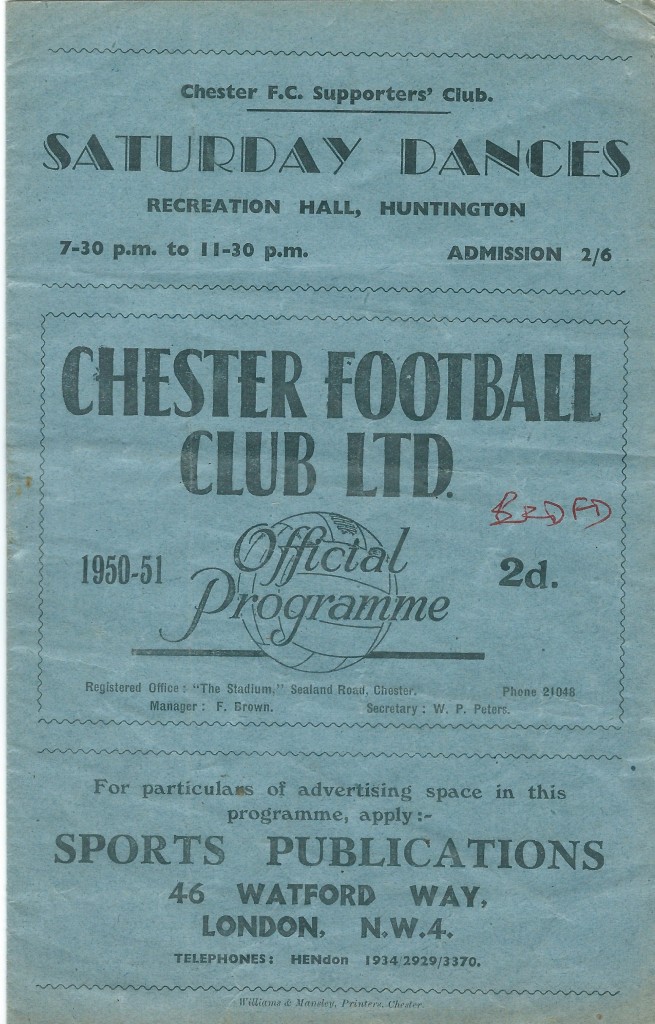
The 1st Round of the 1950/51 FA Cup paired Chester with fellow Third Division North side, Bradford PA. There was little to choose between the teams in the league with the visitors in 8th position and Chester two points behind in 12th place. However Frank Brown’s side were considered favourites having beaten Avenue 2-0 three weeks earlier at Sealand Road in what had been the first ever competitive meeting between the clubs.
The Yorkshiremen had been relegated from Division Two the previous season and this was their first campaign at this level since 1927/28. They had the reputation as a big spending club and the Cheshire Observer noted that over £60,000 had been spent in aggregate transfer fees on those players who had represented the club so far during the season. Perhaps the most notable name in the Bradford team was Jack Haines who had signed from West Bromwich Albion the previous season for £12,000. A pre-war Liverpool player he had won an England cap against Switzerland only two years earlier and had also played for Swansea Town and Leicester City. Despite this pedigree he had been in and out off the Bradford team and had recently asked to be placed on the transfer list.
A more familiar face to Chester supporters was left back Stan James who had made a number of guest appearances at Sealand Road during the war when he was stationed at Blacon Camp. He won a runners-up medal for Chester in the Third Division North Cup Final against Rotherham United in 1946 and the club had hoped to sign him from Bradford but the fee had proved prohibitive.
Bradford had been convincingly beaten in the league encounter at Sealand Road, thanks to first half goals from Tommy Astbury and Geoff Coffin and Avenue manager Fred Emery had recognised that his team had played badly and were capable of far better things. Meanwhile, Frank Brown was quoted in the Cheshire Observer as saying: “We are anticipating a hard game and must not under-estimate Bradford’s cup fighting ability…..We have ground advantage and our own supporters to cheer us on.”
Chester Chronicle cartoon
Unfortunately Chester had failed to build on their commanding performance league win against Bradford. It had been followed by a 3-1 defeat at top of the table Tranmere and then a dismal home showing against Barrow resulting in a 2-1 setback. Frank Brown had boldly experimented by playing three centre forwards against Barrow. Ralph Morement, Tommy Tilston and Geoff Coffin had all donned the number 9 shirt during the campaign but the experiment failed to pay off as Chester wasted a host of chances to give the visitors their first away win of the season.
The big news in the week leading up to the game was the transfer of goalkeeper Ted Elliott to Halifax Town. The former Wolves man, had picked up an early season injury and lost his place to Harry Threadgold who had seized the opportunity with both hands and put in some brilliant performances. As a result Elliott had asked to be put on the transfer list and the deal was completed two days before the cup tie. Tattenhall-born Threadgold was not the only local player to be making the news as Cestrians Tilston and Coffin both signed professional terms prior to the Barrow game after being part-time at Sealand Road since 1944 and 1946 respectively.
There was no special training for the players before the cup tie which had a 2:15 kick-off.
2 – The Match
After the failure against Barrow, Frank Brown took a pragmatic approach for the cup tie by reverting to the same side that had defeated Bradford in the league game three weeks earlier. Jimmy Hankinson and leading scorer Albert Burgess were both recalled while Geoff Coffin took over the number 9 shirt from the injured Tommy Tilston and utility man Ralph Morement dropped to the reserves.
Despite taking an early lead Chester succumbed to a much improved Bradford team who had lost their three previous matches. In the end Chester were perhaps unlucky not to draw and were left to rue Frank Hindle’s missed penalty with the score at 1-1.
Geoff Coffin
Chester got off to a perfect start and took the lead in 4 minutes when Coffin headed in a cross from Les Devonshire. Instead of building on the lead Chester surrendered the initiative and allowed the visitors back into what developed into an end to end encounter. Bradford came close to scoring when Hindle cleared a John Smith shot off the line with Harry Threadgold out of position while, at the other end, Mitchell Downie pushed away a Devonshire free kick and a fierce drive from the same player just passed wide of the post.
In the 29th minute Bradford capitalised on Chester’s failure to extend their advantage when the ever dangerous Billy Elliott came inside to head a Bill Deplidge cross past Threadgold. Chester had the perfect opportunity to regain the advantage on the stroke of half-time when Arthur Wheat was harshly adjudged to have handled the ball. Hindle was the man who stepped up to take the penalty but his weak effort passed wide of the post. The decision to hand responsibility to the normally reliable full-back was questioned by the Chester Chronicle who pointed out that this was his first ever penalty kick.
Bradford took the lead in the 66th minute when Smith headed down an Elliott cross for Deplidge whose shot gave Threadgold no chance. The Yorkshire side also struck the crossbar while Threadgold made a good save from Smith. Meanwhile Downie saved well from Astbury and both Burgess and Coffin missed good chances when well placed. The best opportunity for an equaliser came in the later stages when Billy Foulkes went on a mazy run from his own penalty area and slipped the ball to Coffin who shot straight at Downie. Bradford had to contend with a number of goalmouth scrambles but Downie continued to make some excellent saves and Chester were left to face an early cup exit.
Bradford’s outstanding player proved to be outside-left Billy Elliott who caused problems all afternoon with a brilliant exhibition of wing-play which right-back John Molyneux could not match. While an uncoordinated Chester defence struggled to cope with a potent Bradford strike force the visitors proved stubborn at the opposite end with centre half Les Horsman particularly dominant. Wingers Devonshire and Foulkes were arguably Chester’s best forwards but they lacked service with neither Burgess and Hankinson being particularly effective. Wing-backs Tommy Astbury and Peter Greenwood were not as impressive as usual and Coffin should have scored more than one goal had he displayed more steadiness.
The attendance of 8,255 drew gate receipts of £701.
Chester’s defeat cost them a meeting with the man who had lead them into the Football League in 1931. Charlie Hewitt had moved to Millwall after leaving Sealand Road in 1936 and the London side were drawn against Bradford in the 2nd Round. Hewitt’s side went on to win this encounter after a replay. In the league Bradford climbed to 6th place, seven places above Chester who struggled to maintain any consistency and neither troubled the top or bottom of the table.
Astonishingly the 1st Round elimination was the first time that Chester had been defeated at this stage of the competition since a defeat to Lincoln City in 1890.
Chester Chronicle cartoon
Bradford man of the match, the promising Billy Elliott, had asked to be put on the transfer list before the FA Cup tie and went on to greater things. The following summer he moved to Burnley for £23,000 and was awarded the first of five England international caps in 1952. He later spent six seasons at Sunderland. Another man on the transfer list at Park Avenue was inside-forward Jack Haines. He remained with the club until 1953, when he was transferred to Rochdale, before signing for Chester in 1955 at the age of 35.
Four players featured in their final FA Cup game for the club. The man who missed the penalty, full-back Frank Hindle, ironically moved to Bradford in the summer after two seasons at Sealand Road. He never managed to find the back of the net for Chester in any of his 81 appearances and, despite making more than 200 appearances for his new club, he also failed to score at Park Avenue. Hindle died in Scotland in 2013.
Former Preston inside-forward Jimmy Hankinson failed to establish himself at Sealand Road and only made 15 appearances for the club. Although he was retained at the end of the season he appears to have left Chester during the summer.
Jimmy Hankinson
Another player who only spent one season at Chester was outside-left Les Devonshire. The Londoner was a regular at outside left and only missed two league games in 1950/51. Like Hankinson he was retained in the summer but returned to London and signed for Crystal Palace where he remained for a further four years. He later played for Margate and Canterbury City and died in Middlesex in 2012. He was the father of future West Ham and England player Alan who has been a visitor to the 1885 Arena in recent years as manager of Braintree Town and Maidenhead United.
Les Devonshire
Another player who signed for Crystal Palace was Birkenhead-born Albert “Cam” Burgess who managed an impressive average of more than a goal every two games at Chester. He was leading scorer in each of his three seasons at Sealand Road and moved to Selhurst Park for £3,000 in September 1951. The nippy forward continued to find the back of the net regularly for Palace including a hat-trick in his 2nd game and 18 in his first 15 league starts. In a four game spell the following season he netted three hat-tricks. In July 1953 he moved back north, to York City for £850, and after one season returned to Cheshire with Runcorn. He died in 1978.
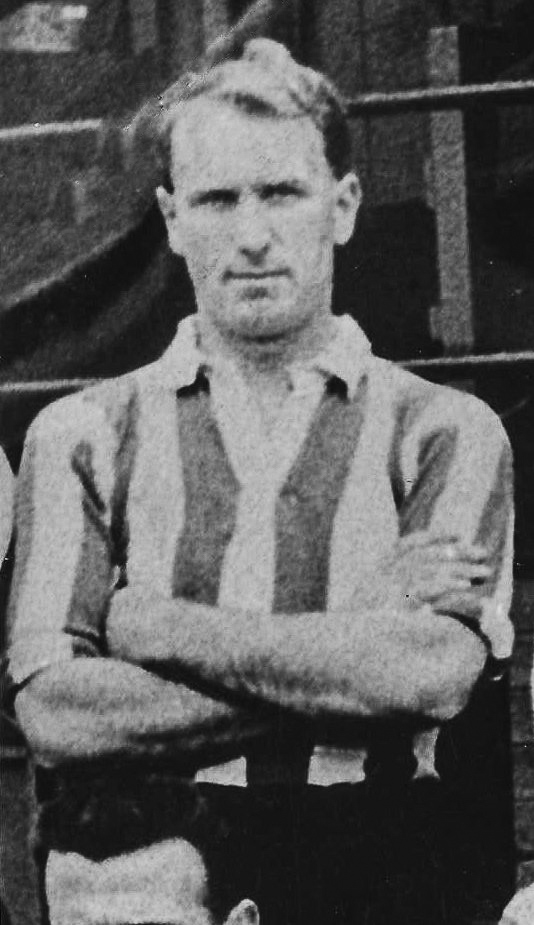
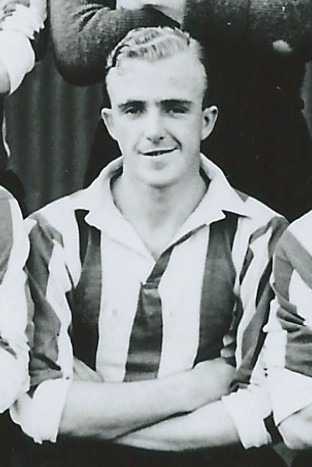
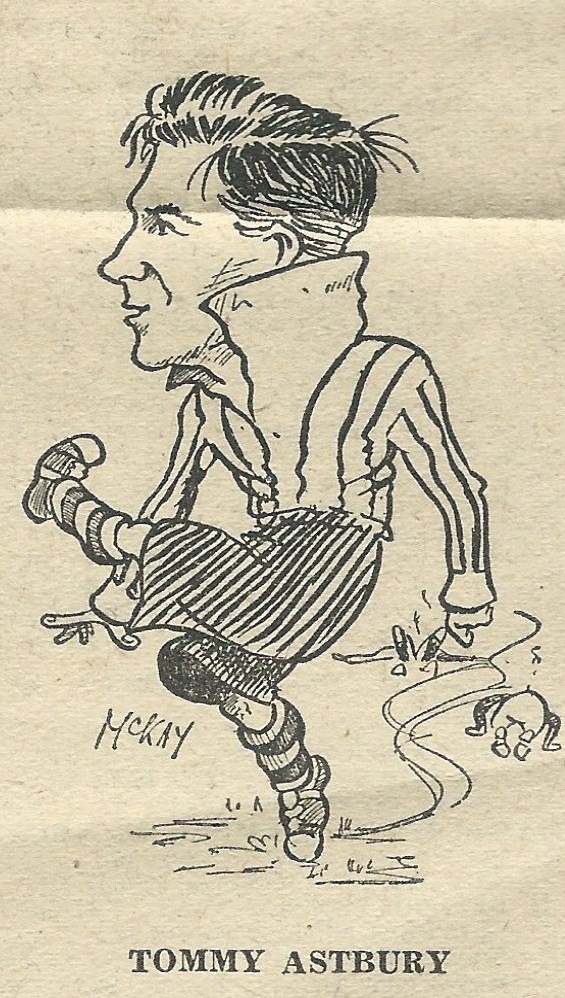
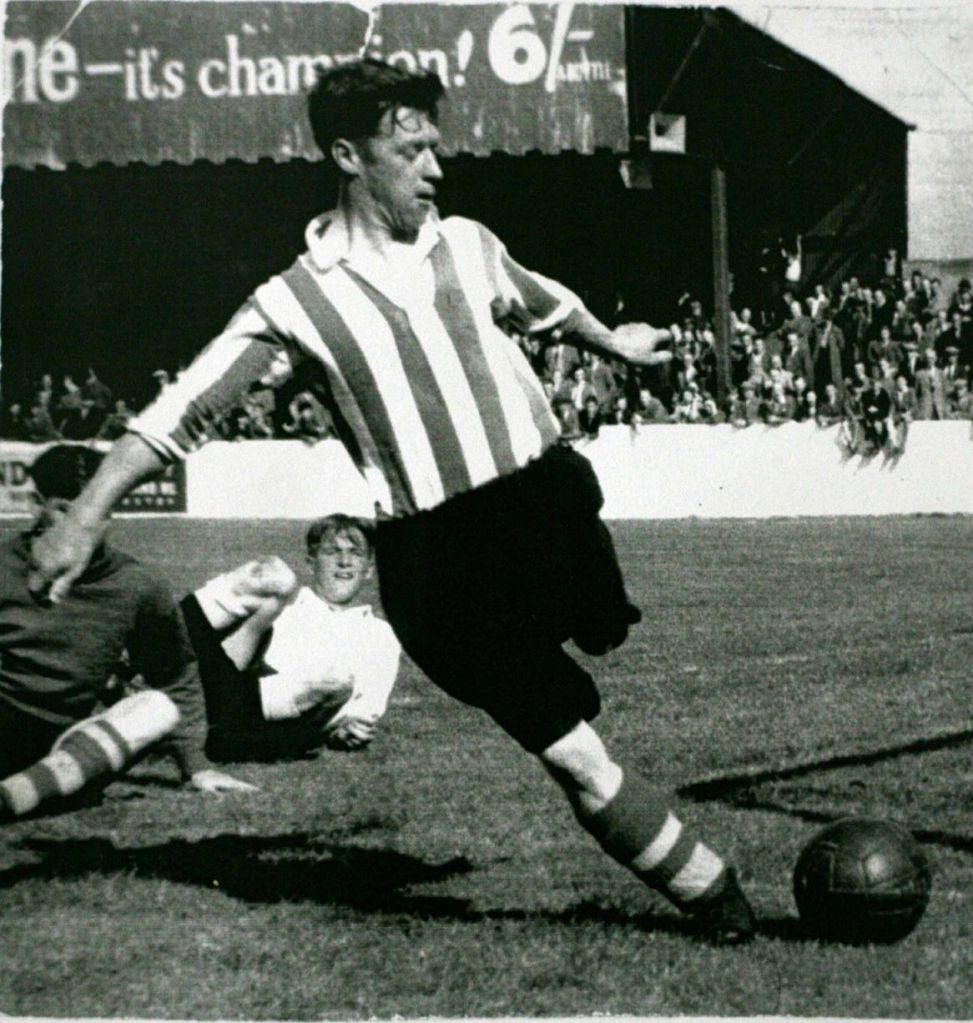
One of Chester’s most notable players, Tommy Astbury, would have celebrated his 100th birthday on February 9th 2020. The inside-forward or half-back, who died in October 1993, spent 17 years with the club from 1938 to 1955 making 303 Football League appearances. There is no doubt that Buckley-born Tommy would have gone on to greater things had it not been for the outbreak of war and although clubs came in for him after the hostilities he remained loyal to Chester. Despite being only 5ft 6ins he made up for a lack of height with his energetic performances and non-stop running. A great passer of the ball he never ceased to give his all and proved to be a popular player at Sealand Road.
Tommy was initially spotted in 1938 by manager Frank Brown. He was playing for Mold Alex at Helsby BI in a West Cheshire League game and as a result of his performance signed as an amateur for Chester. Quoted in a Chester programme in 1972 Brown said: : “There on Helsby Green, I came across that great gift to the game – a natural player. I watched a boy footballer whose eyes never left the ball, weaving his way with all the tricks of a natural body swerve and throughout remaining cool, calm and collected.”
Chester Chronicle cartoon
After appearing for the reserves in the Cheshire County League Tommy signed professional in 1939 and was on the verge of making the first team when war broke out. He made a promising start in the first home friendly of the war years, against Liverpool, and quickly built up a reputation with his clever displays. In 1942 he played for a Wales X1 against the Western Command and was further rewarded in 1945 when he featured in two wartime internationals, against England. During the war Tommy also guested for Wrexham, Everton and Manchester United. In fact United had wanted to sign him in 1943 and he was a member of their side that was beaten 4-3 by Bolton Wanderers in a two-legged wartime Cup Final in front of an aggregate of 100,000 spectators.
Image Chester Chronicle
In the 1946/47 season Tommy was a member of the Chester team that famously gave Stanley Matthews’ Stoke a good run for their money in the 4th Round of the FA Cup and finished 3rd in Division Three North. The form of Tommy, and fellow forwards Dick Yates and Tommy Burden, attracted interest from Sheffield Wednesday who came in with an offer for all three players but the Yorkshire team couldn’t meet Chester’s valuation. His form during this season lead to suggestions in the local papers that he might be chosen for full international honours and he can probably count himself unlucky not to have been selected. Tommy finished the season with a Welsh Cup winners medal after Chester defeated Merthyr Tydfil and he also appeared as a losing finalist in 1953 and 1954.
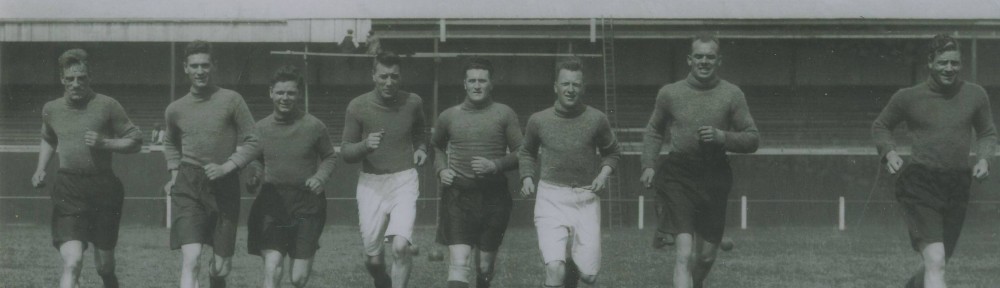
Tommy leapfrogs Dave McNeil in training for the FA Cup tie against Crystal Palace in 1948 Image – Chester Chronicle
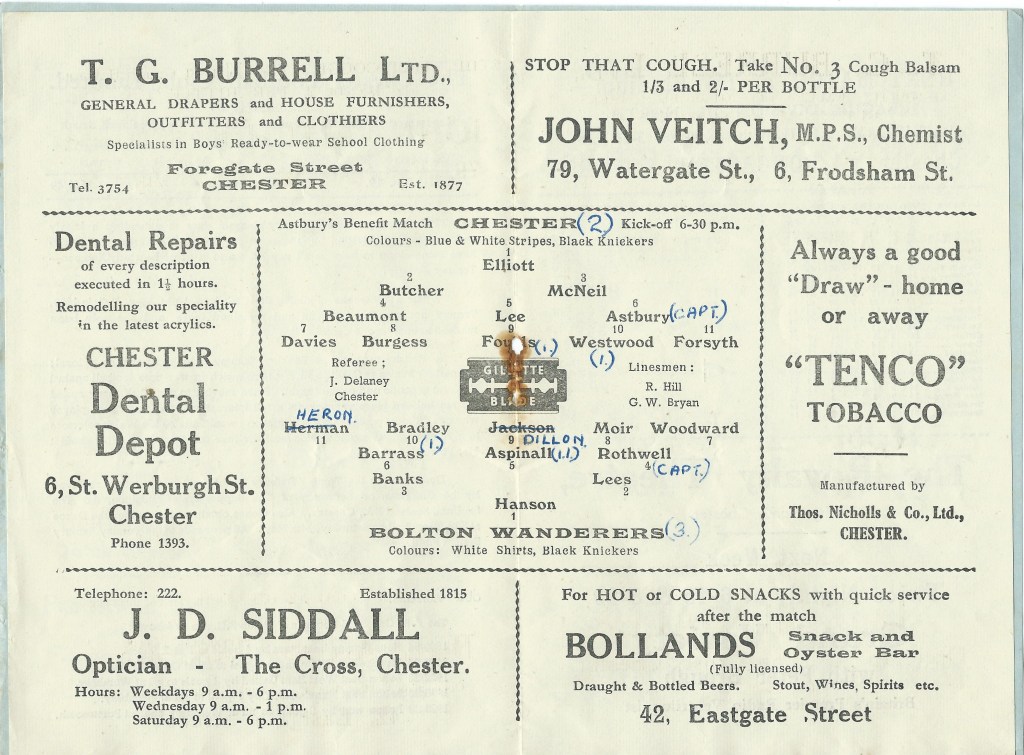
In 1949 his 11 year service was rewarded with a testimonial against Bolton Wanderers which attracted 5000 fans on a wet April evening with the visitors winning 3-2. In January 1952 Tommy played in the FA Cup replay against Chelsea which attracted Sealand Road’s largest ever crowd and he continued to be a first team regular until 1953 when appearances became more intermittent. He played his final game for the club at Rochdale in February 1955 before hanging up his boots.









 Chester Football History