A Study of a Soccer Club – 1963

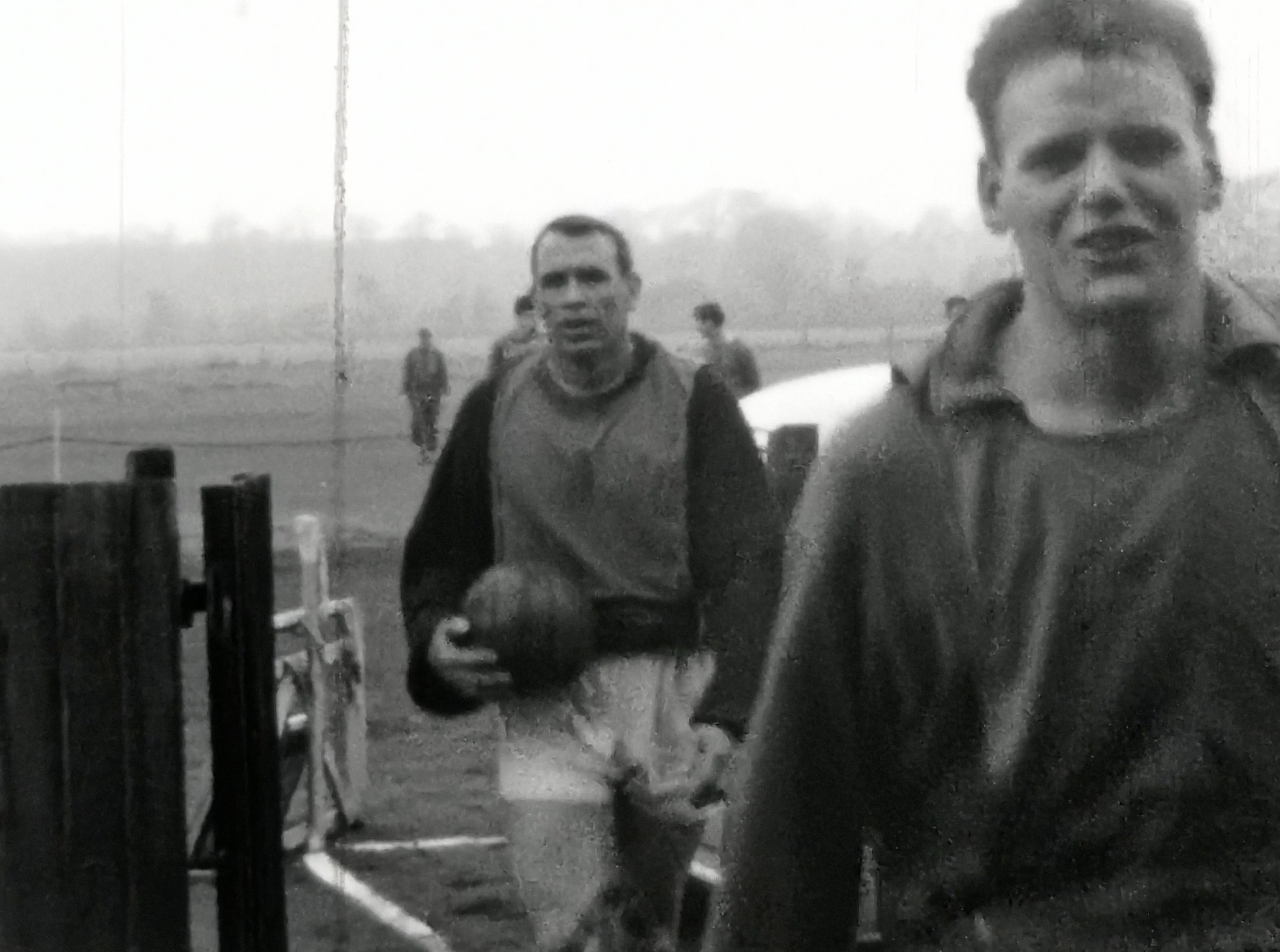
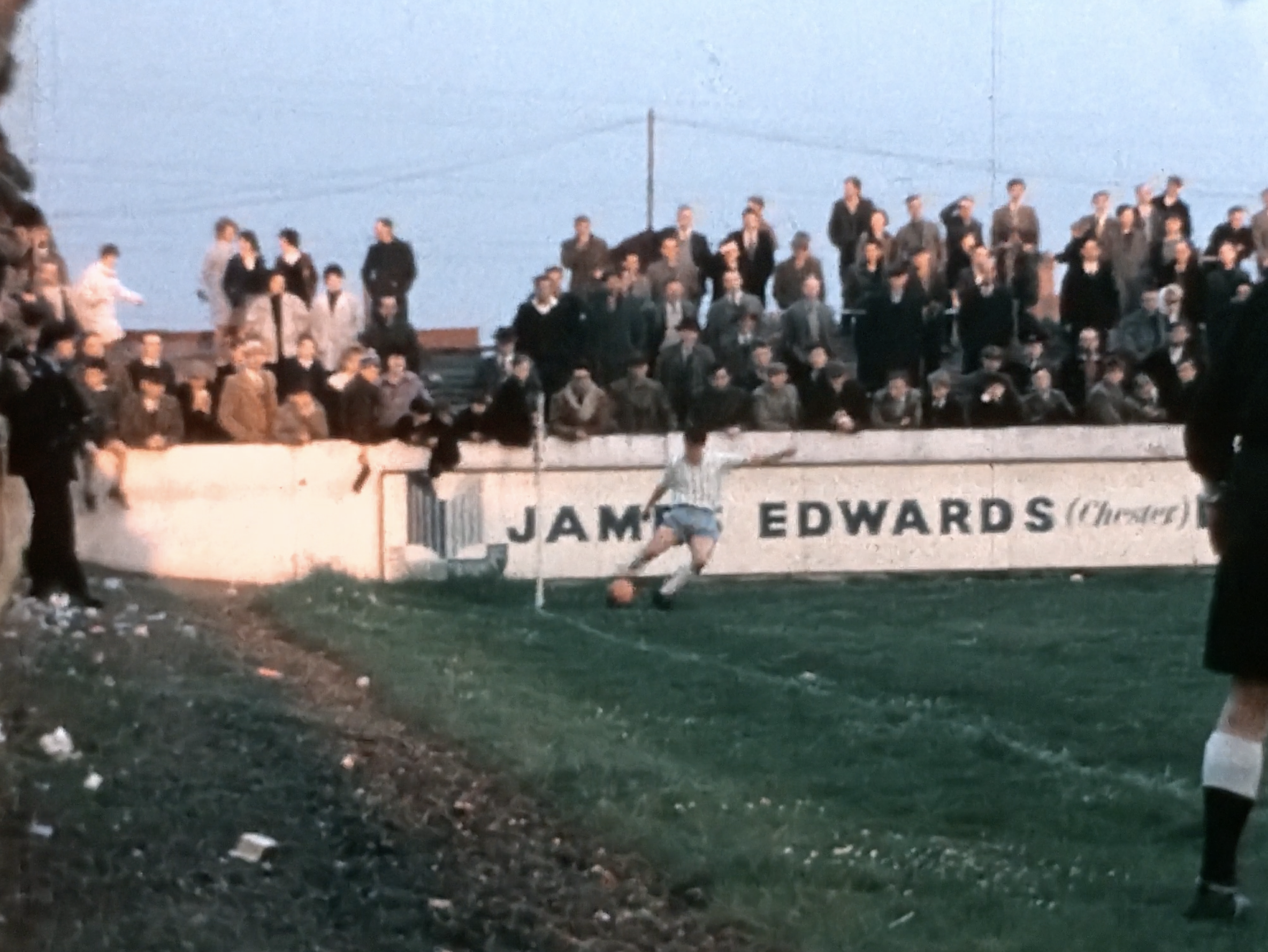
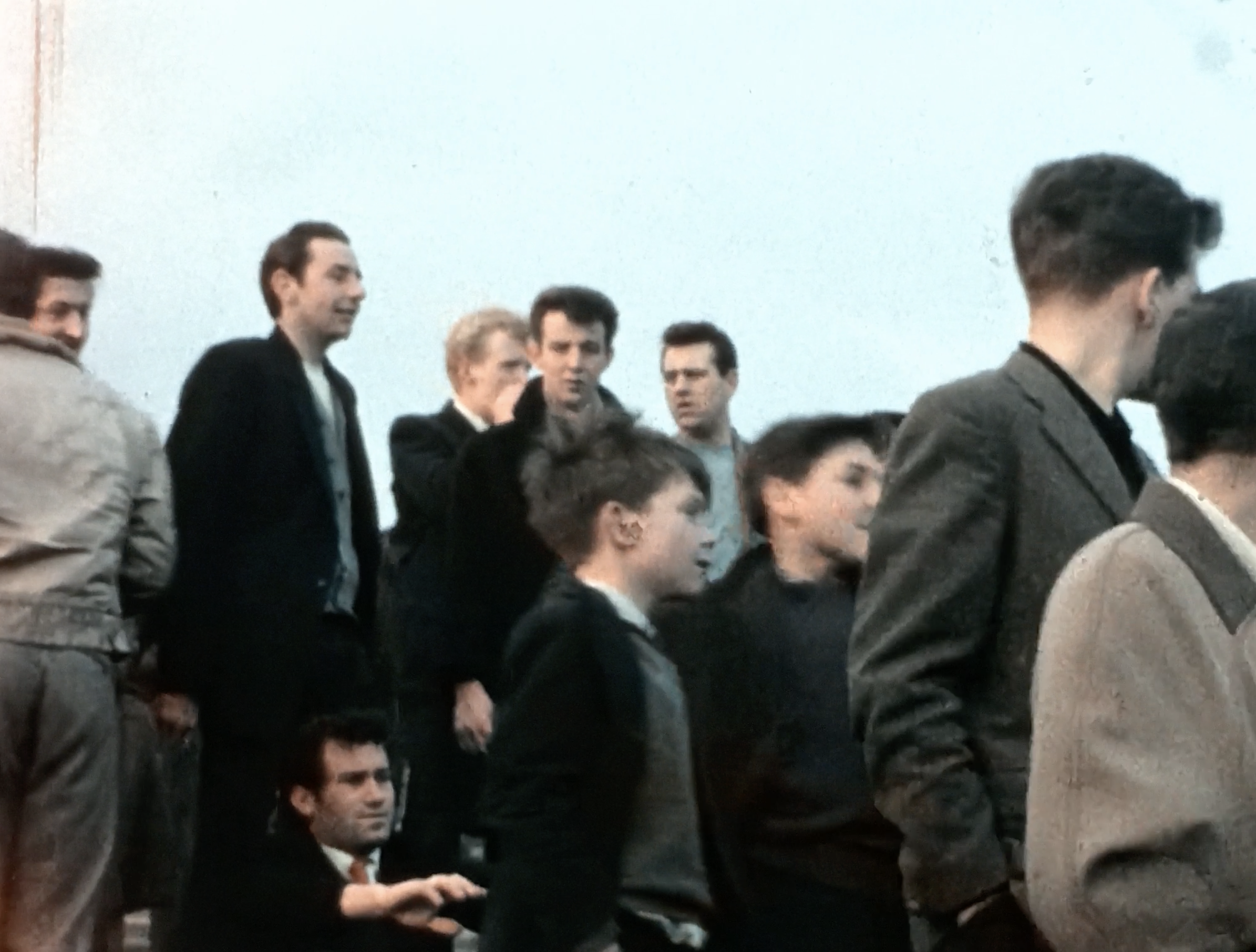
In May 1963 two students, Tom Carter and Rod Underwood, were given the task of producing a film as part of their teacher training course. As a last minute decision they bought a cheap cine camera and went down to the Sealand Road ground to film both inside and outside the ground. In addition they recorded a training session on the Annexe before ending with action from an evening game against Chesterfield.
After 60 years this superb 22 minute film has been unearthed and I will be showing it at a meeting of the Senior Blues at the football club on Friday March 5th at 10:30am. I hope to follow this up with a general showing at a later date.

What makes this film so special to my mind is that it is unedited. Although there are some experimental sections in the middle I feel that the film would have lost a lot of its impact if it had been edited down to a few minutes. The footage is certainly very raw but this is advantageous because you get so see unusual views of the whole stadium which would in all likelihood have been cut out.

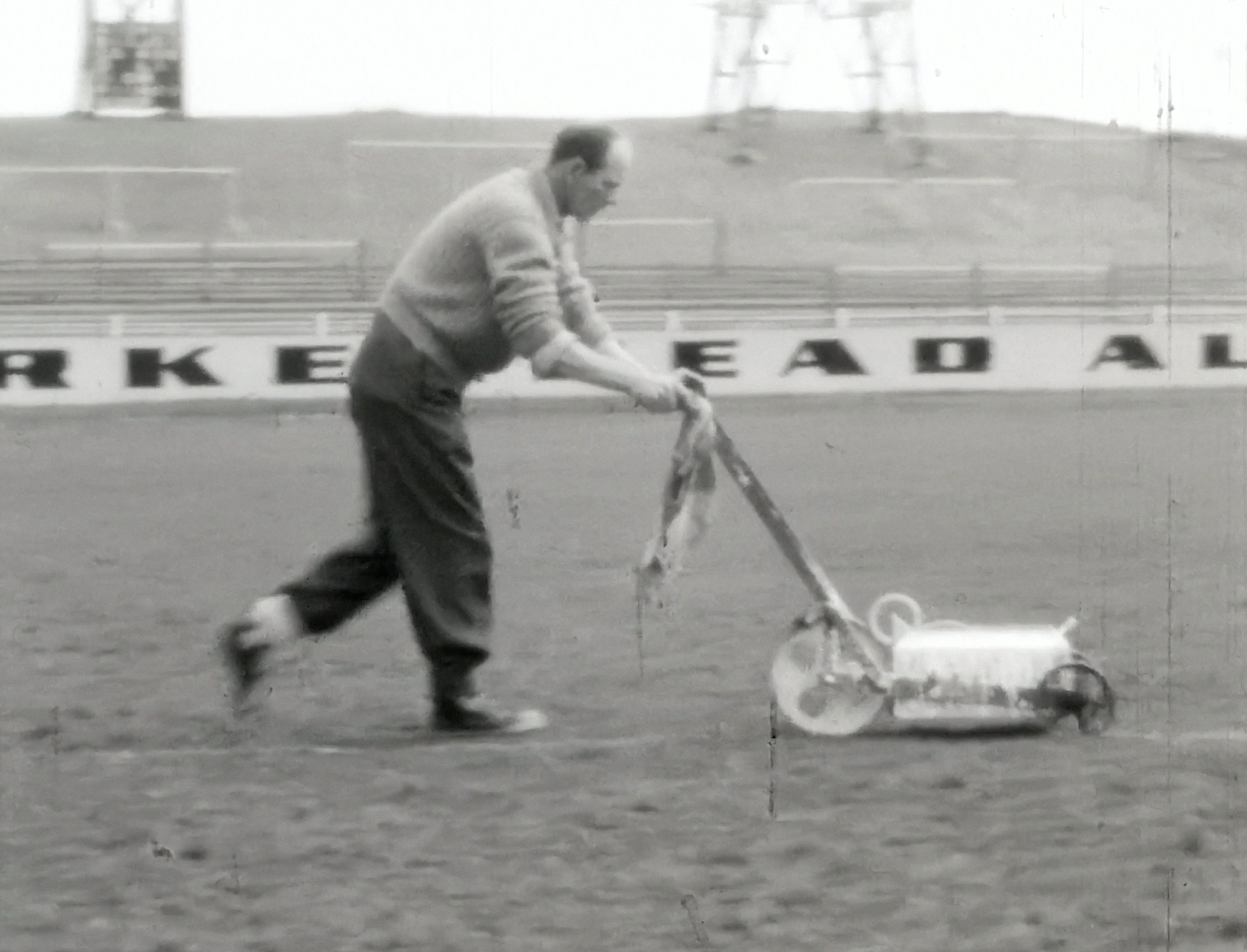
The film opens with footage of the pitch being marked out before moving to the outside of the ground. There are views of the back of the stand as well as the floodlights which were still a novelty as they had only been in place for three years.
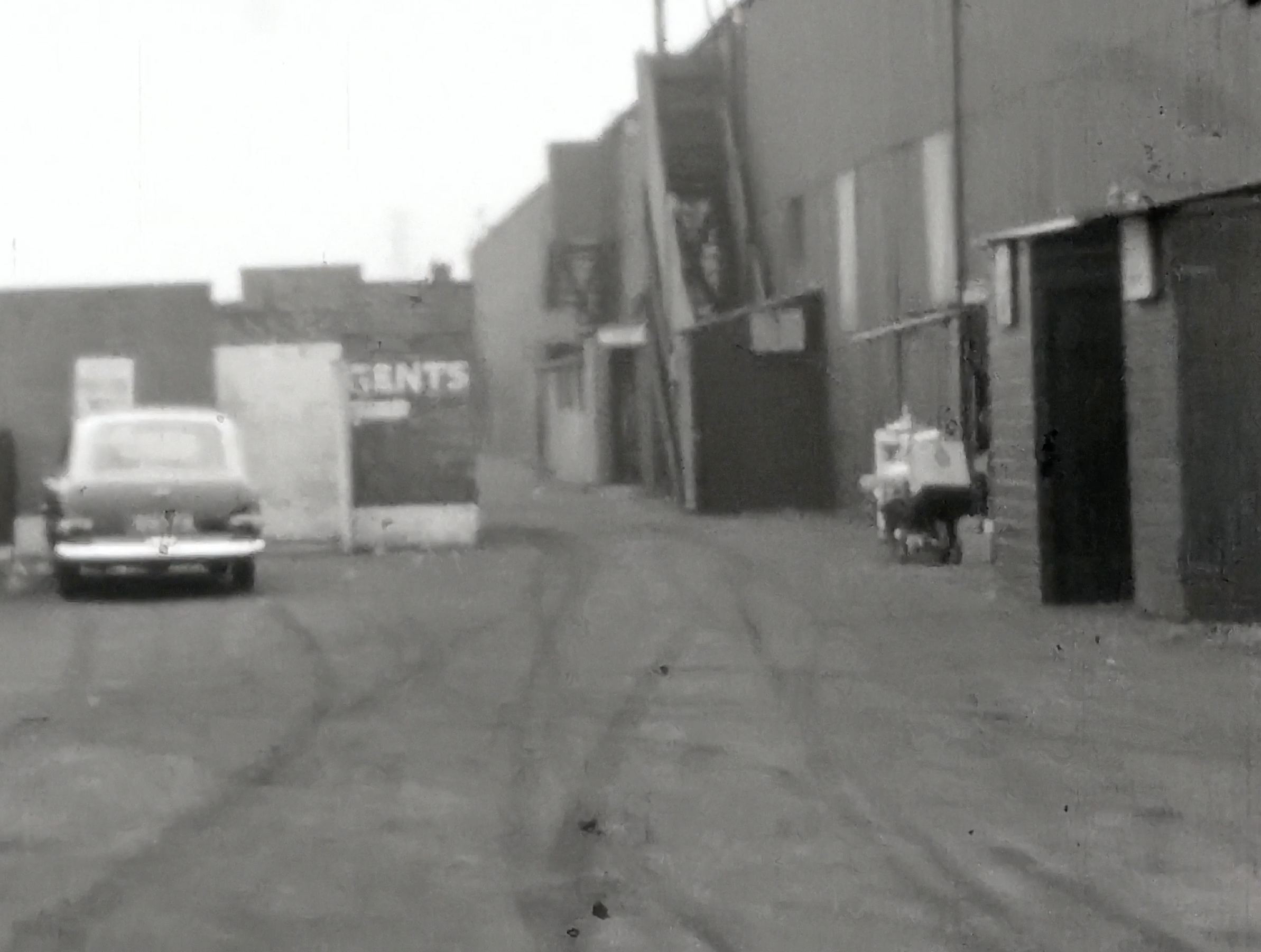
We then move to film of Bill Myerscough arriving at the Stadium in his Volkswagen Beetle before moving inside the ground to see the treatment room and a variety of views inside the old wooden stand.

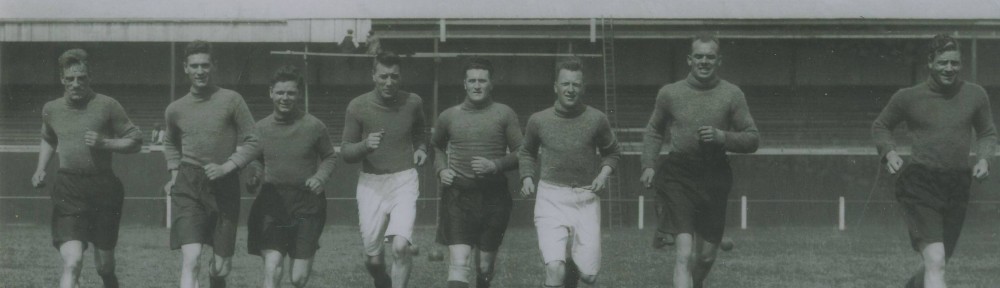
After six minutes we move out to the Annexe to see the players training with the likes of John Molyneux, John Butler, John Hardie, Elfed Morris Colin Corbishley and Ron Hewitt amongst many others in view. There are great views of the back of the main stand with the greyhound stadium and buildings on Sealand Road also in evidence.
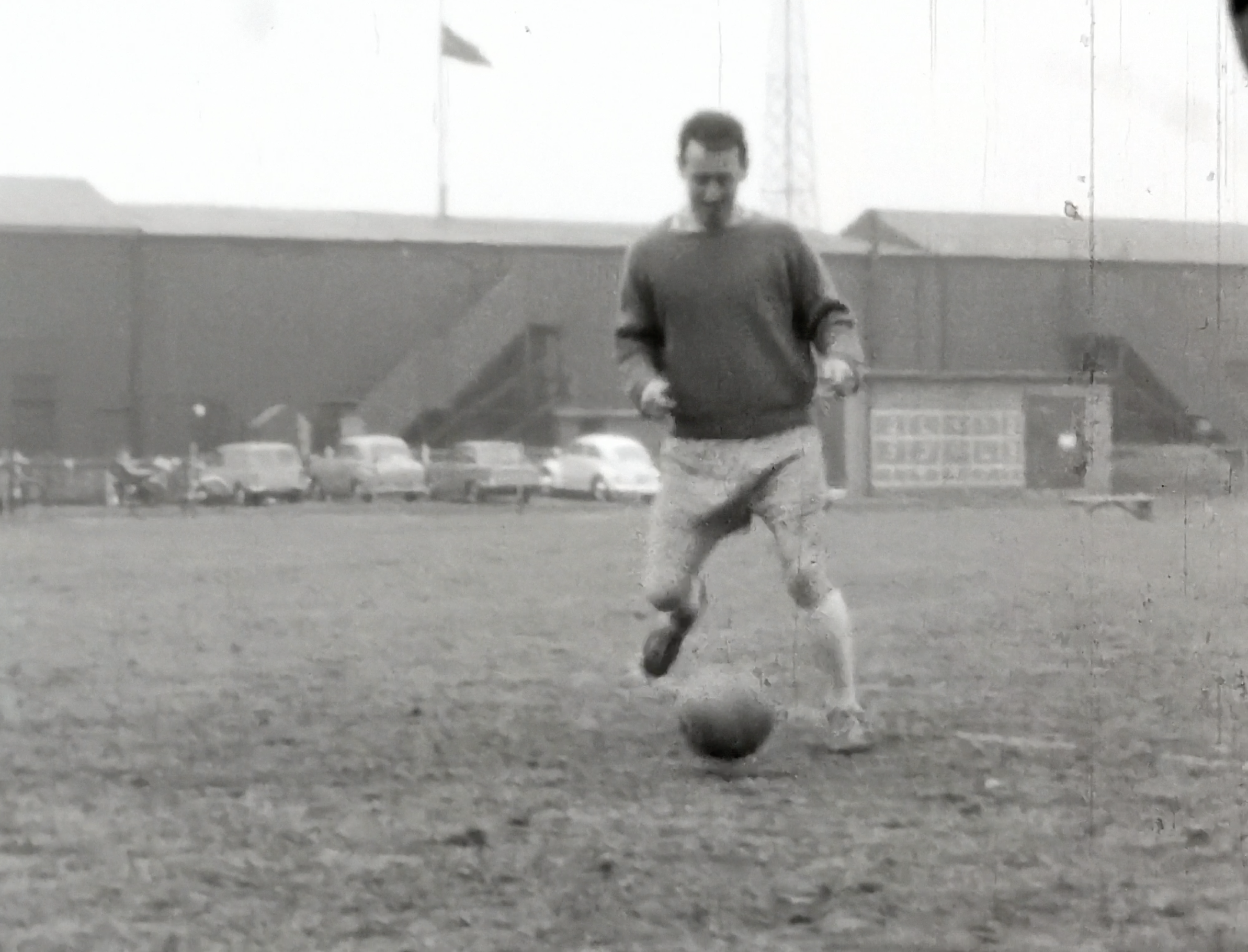
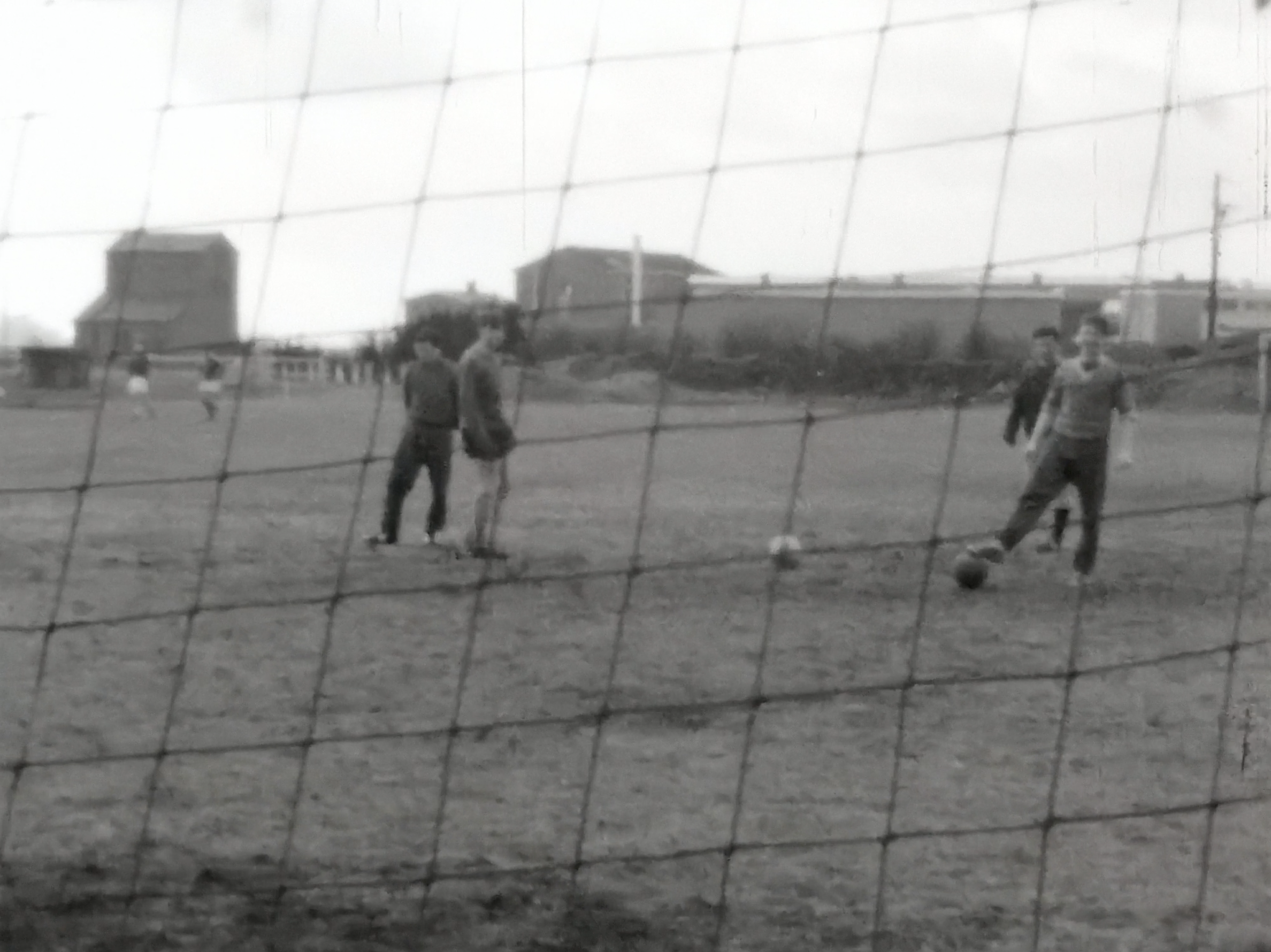
There is a glimpse of Bill Lambton during training and this marked the end of his 18 months as manager. The 1962/63 campaign culminated in another application for re-election as Chester finished 4th from bottom in Division 4. At one point in the film you can see ‘Iron Man Bill’s’ motto “Keep Fighting” on the dressing room door. His training methods were not popular with the players as they reflected his background as a Sergeant Major who had worked with the Army Physical Training Corps.

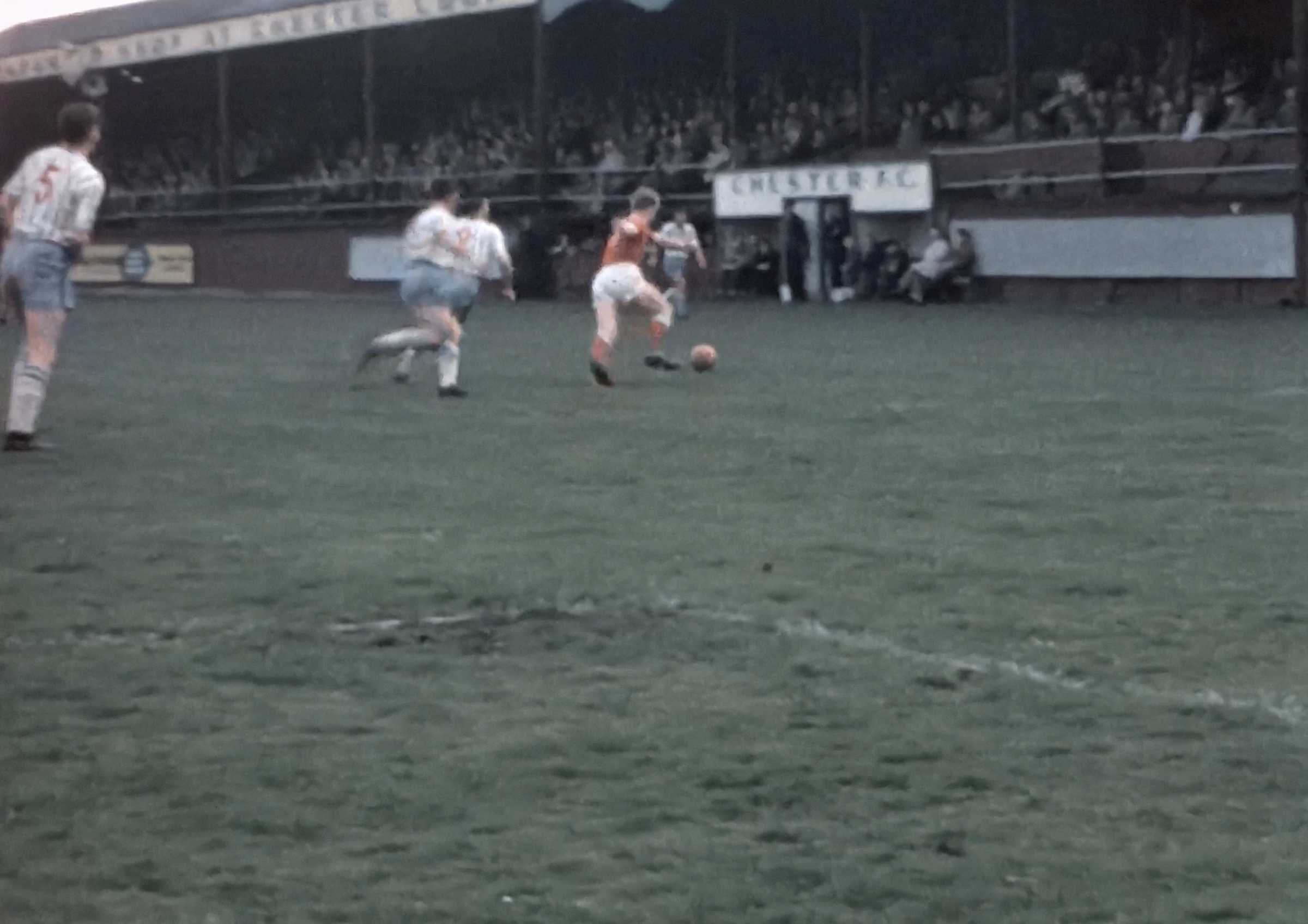
The next section of the film is more experimental before we switch to the final sequence which is eight minutes colour footage taken from behind the goal at the Kop end of the ground.

My research indicates that this is the last game of the season, a midweek fixture against Chesterfield on May 22nd, with the Spireites playing in an unfamiliar red kit. The visitors won the game 2-0 and there is a view of the first goal within the footage. The attendance was 3920.
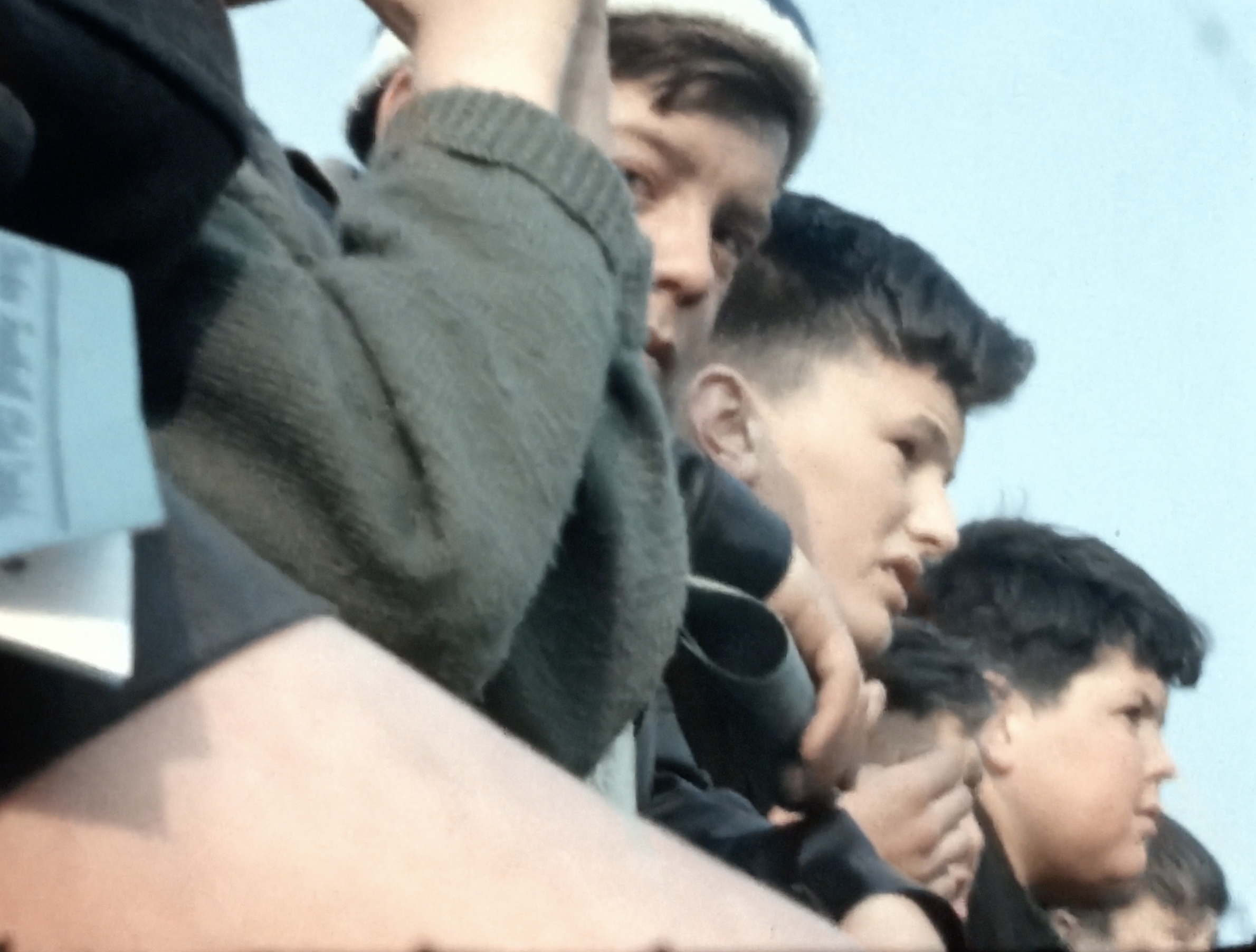
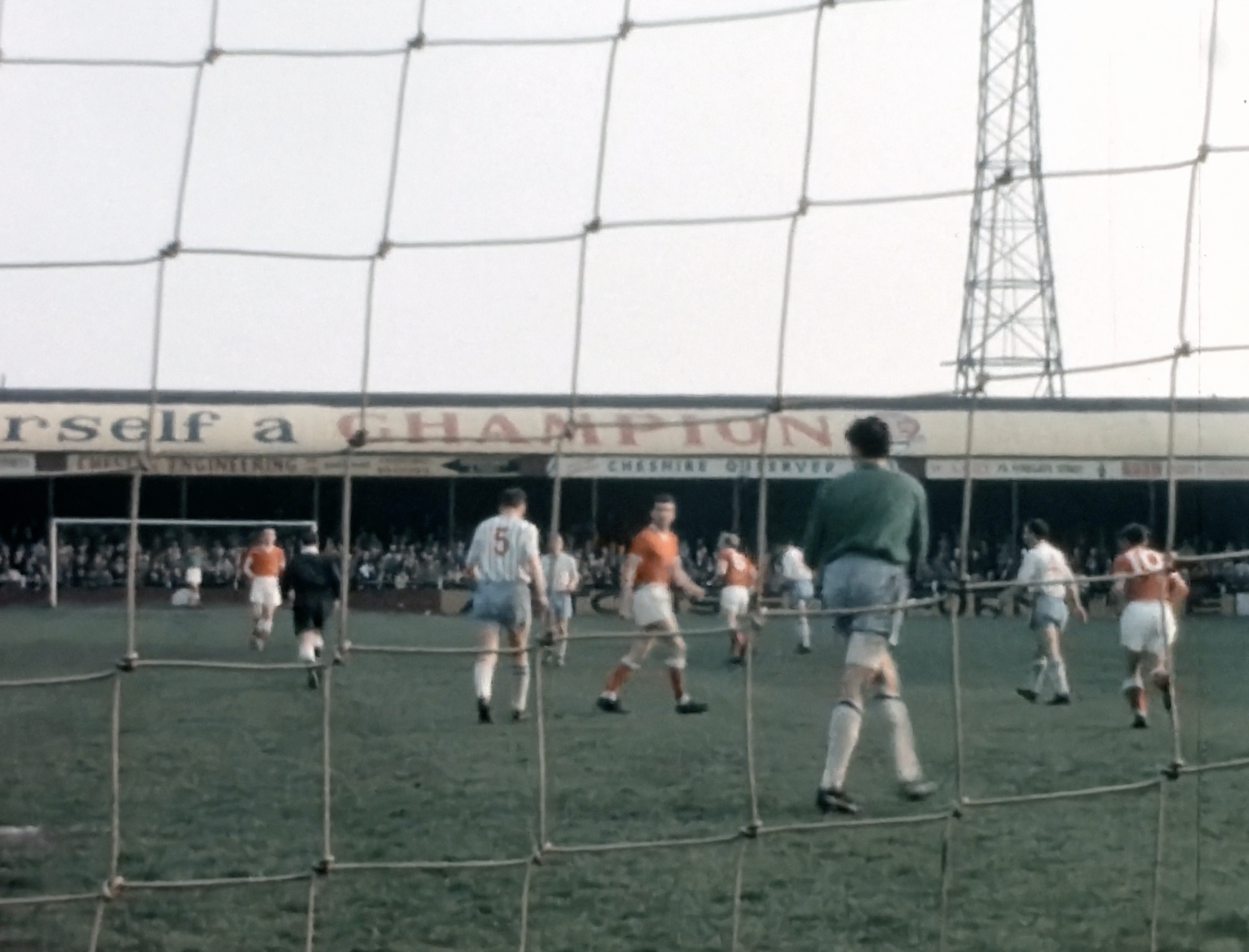
In the second half Chester are attacking the Kop with little success. The Cheshire Observer is particularly scathing of the performance calling it poor in both attack and defence with Chesterfield deserving their 2-0 victory. As an attacking force reporter Ralph Houdley stated that at no time did the forward line show any signs of being capable of winning the game. After Chesterfield had scored their second goal centre half John Butler was moved to the attack at which point Chester looked more threatening and the defender can be seen up front in the later stages of the film.

All in all it is a gem of a film and captures the era superbly. It is interesting to see different training methods and the action is very different from the current day especially the speed in which the goalkeeper releases the ball. The views of the ground will certainly bring back memories for supporters who watched the club in the 1960s.

Copyright ©  Chas Sumner http://www.chesterfootballhistory.com All Rights Reserved
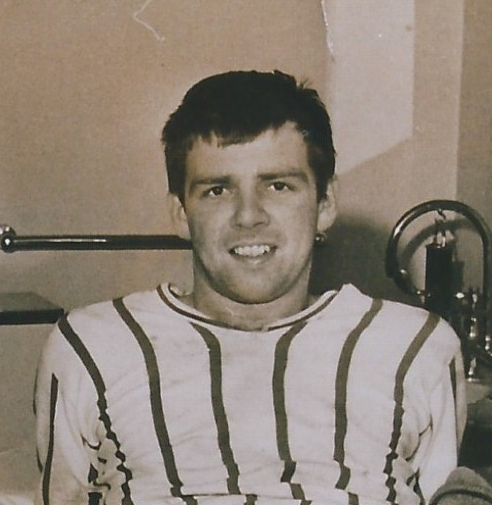
Bryn Jones (1939-2025)

Former Chester full-back Bryn Jones, who made 30 Football League appearances for the club between 1964 and 1967, sadly passed away in January at the age of 85. Bryn will be remembered for an incident on New Year’s Day 1966 when he and fellow full back Ray Jones ended up in Chester Royal Infirmary together after both suffered a broken leg in the league match against Aldershot at Sealand Road.

Born in Bagillt Bryn started his career with local club Holywell Town, becoming a Welsh amateur international in 1961. At the start of the 1962/63 season Bryn signed for Bangor City but his stay proved brief and he returned to Holywell after only a few months. In January 1963 he was offered the opportunity to turn professional with third Division Watford but only made two Football League appearances for the Hornets before being released in summer 1964.

Peter Hauser brought Bryn to the Stadium in August 1964 and was quickly given his debut at right back against Bradford City as a replacement for the experienced Johnny Molyneux. His stint in the first team proved short-lived and following the next game against Torquay he was replaced by Ray Jones and spent the remainder of the season in the Cheshire County League team.

In September 1965 Bryn returned to the first team at left back establishing an effective partnership alongside Ray Jones before the New Year’s Day tragedy when both players broke a leg. With neither player adequately replaced the strong promotion challenge faded and it was December 1966 before Bryn was able to return to first team action. Unfortunately a further leg injury against Lincoln in February proved to be his final first team match and Bryn was amongst eight players given free transfers at the end of the campaign when he signed for New Brighton.

Player Profile – Dick Howard

Over the years there have been a number of players whose first team career at Chester has failed to extend beyond a brief 90 minutes of league action. Players like Peter Donnelly, Phil Williams and Gary Tallon may not have made the impact of Stuart Rimmer and Grenville Millington but they remain part of the fabric of the club and have their own stories to tell. This is the strange tale of one of those lesser known Blues whose football career took an unlikely turn after leaving Sealand Road.

Goalkeeper Dick Howard played a single Football League game for Chester in the 1965/66 season. It proved to be an ignominious occasion as he conceded four goals against Bradford Park Avenue and was given a free transfer at the end of the campaign. There can’t be many supporters who recall the name and those who do remember the Wirral youngster will perhaps be surprised to hear what happened next.

Goalkeeper Dick Howard in the Possibles team that faced the Probables in the 1965 trial match – Cheshire Observer newspaper cutting

Born in Bromborough in 1943 Dick came to Chester’s attention while playing for Chester College where he was studying on a three year teacher training course. Known as Richard or Richie in his Chester days he signed for the club in summer 1965, as cover for Dennis Reeves, and was seen as a good prospect. After playing for 45 minutes in a friendly at Colwyn Bay he featured in the Probables v Possibles Public Trial where he impressed Cheshire Observer football reporter Ralph Houdley who wrote: “A six footer and strong with it, Howard bought off a number of spectacular saves. A completely relaxed looking sort of character his reflexes were sharp and he earned deserved approbation for the decisive way in which he dealt with determined scoring efforts from Talbot, Metcalf, Durie and Morris” With Reeves firmly established as first choice Dick started the campaign in the reserves at Hyde where Chester drew 1-1.

At that time the Cheshire County League was being dominated by the increasingly strong north west non-league sides like Macclesfield Town, Altrincham, Wigan Athletic and Runcorn. Chester had failed to finish in the top half of the table since the 1958/59 season and the first team only just scraped past Wigan in the FA Cup. Unsurprisingly interest in the the Cheshire County League side had tailed off and attendances were regularly below 1000. As an example there were barely 100 spectators in the ground for the fixture against Winsford United so it was a difficult situation for a young goalkeeper. Dick appeared in 35 reserve game that season in a side that conceded 116 goals and he himself was between the sticks when New Brighton, Altrincham and Stafford scored five, Runcorn and Oswestry hit six and Wigan hammered in seven. His very last game saw Altrincham inflict a humiliating 8-1 massacre to clinch the title.

Dick Howard in action in the Probables v Possibles triail game in August 1965 – Cheshire Observer newspaper cutting

Dick seems to have had a mixed campaign at the back of what would have been a busy defence. When Chester beat Ellesmere Port the match report stated: “Towns failure to find the net resulted mainly from the excellent display by goalkeepeer Richard Howard who made several spectacular leaps across his goal.” Similarly, against Crewe in the Cheshire Senior Cup, he “played a great game in the Chester goal making a number of spectacular saves” and against Stalybridge Celtic he “had a splendid game, his handling of high crosses was first class.

On the down side, against Witton Albion, it was reported that “he will persist on standing well off his line exposing himself to the lob. Several times he was fortunate to see such efforts just drop over the bar.” In the league fixture against Wrexham Reserves, he was at fault for one of the goals when he threw the ball to the inside left who scored and against Rochdale, in the Lancashire Cup, he dropped a 30 yard lofted shot over his own line.

In April 1966 Dick was given his only first team opportunity when Dennis Reeves was dropped for the Good Friday fixture against Bradford Park Avenue at the Stadium. Sadly it didn’t go well for the youngster as Chester slumped to a 4-2 defeat. Ralph Houdley, reporting in the Cheshire Observer, stated: “Making his league debut, Richie Howard did not inspire confidence and, with all the good will in the world, I cannot exonerate him for some share of the responsibility for the first two Bradford goals at least.” The following day Reeves was reinstated for the 1-1 draw at Doncaster Rovers and on Easter Monday the first choice keeper kept a clean sheet in a flawless display as Chester won the return game at Bradford by a single goal. Meanwhile Dick was back in the Cheshire County League and on the end of a 5-2 home defeat to Stafford Rangers.

Under the circumstances the fact that he was given a free transfer would have come as no surprise and having been released you would have perhaps expected him to follow the trail of many former Chester players of the 1950s and 60s by moving into the Welsh leagues. However this is where the story takes an interesting twist.

Having successfully completed his teacher training and earned a diploma in Physical Education Dick emigrated to Canada to take up a teaching role and reinvigorate his playing career. A keen student of the game he ended up playing for the Hamilton Primos before moving down to Rochester to play for the Lancers where he remained until 1971 apart from a short stint with Detroit Cougars.

Returning to Toronto he played for the Metros where his displays caught the attention of the national team and he won five international caps for his adopted country including games against USA and Mexico in the 1974 World Cup qualifiers.

In the 1970s Dick also became a PE teacher and director of athletics in Toronto and when he retired from playing, later in the decade, he utilised his coaching skills by becoming a coach for the Canadian national youth teams. Further advancement followed and in 1981 he became an assistant coach for the senior Canadian national team that just missed out on qualifying for the 1982 World Cup. From 1986 to 1992 he was technical director of the Canadian Soccer Association and also became a long-serving FIFA coaching instructor in North America.as well as a member of the FIFA technical committee.

At the same time as he was making a name for himself as a coach Dick also made the move into broadcasting where he became a Canadian Gary Lineker, First of all he created a show called “Road to Wembley” which received accolades for bringing football into the forefront in Canada. As a result of this he was given the opportunity to cover the 1978 World Cup in Argentina for BBC Canada and ended up regularly covering the premier international competition on television until 2014.

Quite a career for a player who conceded nearly 100 goals for Chester Reserves in his one season in the Cheshire County League.

Dick Howard in 2008 – Photo by Djuradj Vujcic, CC BY 2.0, Link


Information on Dick Howard’s career in Canada from https://peoplepill.com/people/dick-howard and https://northernstartingeleven.com/peles-crazy-canadian-dick-howard-and-a-lifetime-of-soccer/

Copyright ©  Chas Sumner http://www.chesterfootballhistory.com All Rights Reserved
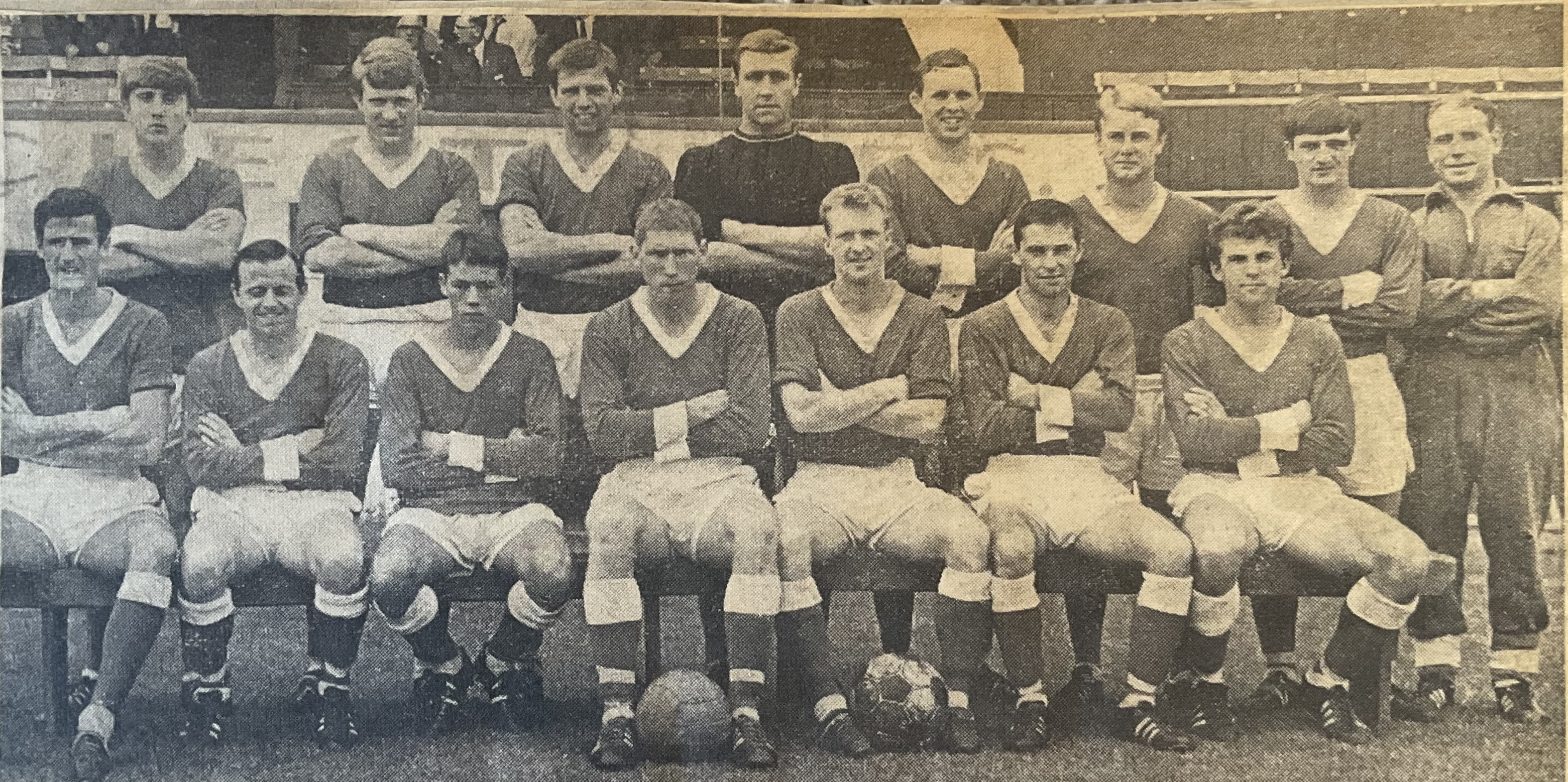
Photo Feature 2 – Pre-season 1969/70

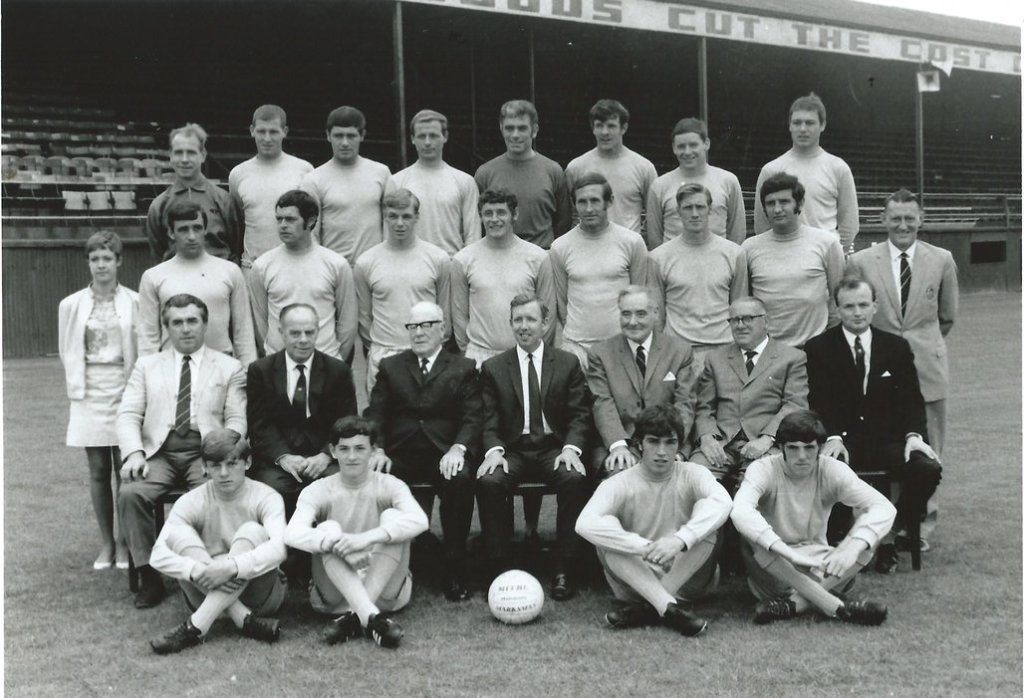
These photographs were taken at the start of the 1969/70 season as Chester prepared for their 12th season in Division 4. As the longest serving member of the league, alongside Aldershot, there was the usual degree of optimism that this would be Chester’s year as Ken Roberts’ started his second full campaign in charge. Roberts had gradually transformed the side and only four players, Terry Carling, Barry Ashworth, Mike Sutton and Graham Turner remained from when he had been appointed manager in February 1968. It was also the second season of the all sky blue kit which gave a fresh look to the team, evident from the pictures.

Although Roberts had been unable to prevent another application for re-election in 1967/68 there had been an improvement the following year with a 14th placed finish and this continued into the 1969/70 season as Chester ended the campaign in a comfortable 11th position. However it was cup competitions where the team excelled and they reached the 4th Round of the FA Cup for the first time since 1948 after victories over Third Division Halifax Town and Doncaster Rovers followed by Second Division Bristol City. The run was halted when an injury ridden team was beaten 4-2 at Swindon Town. Meanwhile there was another appearance in the Welsh Cup Final where they were beaten by Cardiff City over two games.

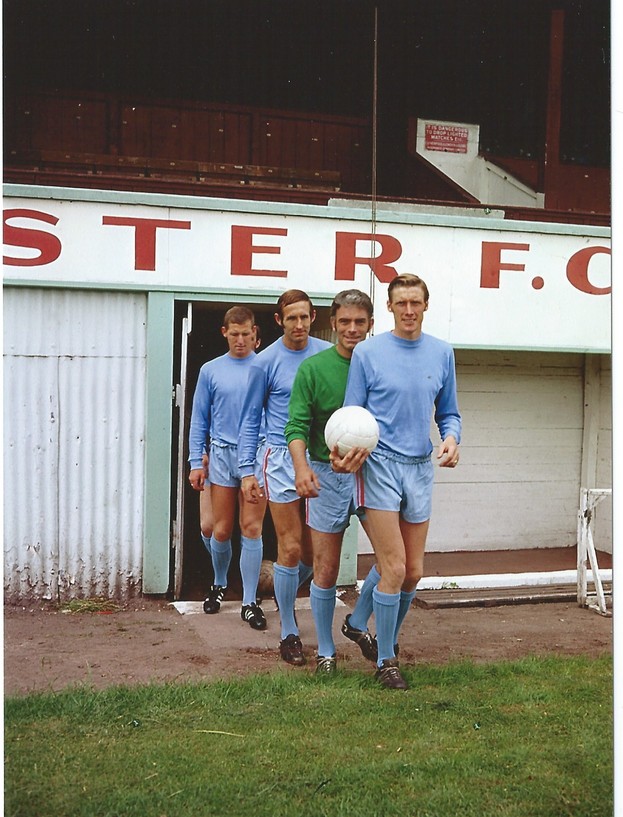
The first photograph shows captain Cliff Sear emerging from the tunnel of the old wooden stand followed by Terry Carling, Roy Chapman and Mike Sutton. Sear, a former Wales international and Manchester City full back, had signed the previous season and went on to have a long association with the club that continued until 1987. As well as a reluctant spell as manager at the start of the 1982/83 campaign he had two spells as caretaker manager but will be best remembered for his work with the youth team which included the development of Ian Rush.

Ken Roberts, Terry Bradbury, Albert Harley, Roy Chapman, Keith Webber – Chester Chronicle photograph

In the second photograph Ken Roberts is shown welcoming his four new signings to Sealand Road. Terry Bradbury, a former England schoolboy international, joined from Wrexham while Albert Harley was a local lad who had previously been with Stockport County. The experienced 35 year old Roy Chapman had made his Football League debut with First Division Aston Villa as long ago as 1953 and scored nearly 200 league goals. His Chester career started with a brace in a 3-2 win over Scunthorpe United but by October he had moved on to become player-manager at Stafford Rangers. The fourth player, Keith Webber, also features in the picture below and was bought from Doncaster Rovers.

Keith Webber – Chester Chronicle photograph

The Cardiff born inside forward had started his career with Barry Town before signing for Everton where he made a goalscoring debut in a 3-1 League Cup win over Walsall. A stocky player, he managed only four First Division appearances at Goodison Park before moving to Brighton in 1963, where his exceptional pace proved an asset. A spell with Wrexham was followed by a move to Doncaster in 1966 and after coming to Sealand Road he managed 14 goals in 74 Football League games as well as scoring one of the goals in the 2-1 giant-killing of Bristol City. In 1971 he joined Stockport County and also played non-league football for Morecambe, Northwich Victoria, Oswestry Town and Rhyl. He was later licensee at the Grosvenor Arms in Handbridge but sadly died of a heart attack in September 1983 at the early age of 40.

Back Row – Vince Pritchard (trainer), Mike Sutton, Keith Webber, Derek Draper, Terry Carling, Billy Dearden, Andy Provan, Albert Harley
Middle Row – Miss Elaine Clover, Eric Brodie, Terry Bradbury, Graham Turner, Roy Cheetham, Roy Chapman, Cliff Sear, Barry Ashworth, Stan Gandy (secretary)
Seated – Mr K M Jones, Mr J H Auckland, Mr A E Cheshire, Ken Roberts (manager), Mr M W Horne, Mr R A Rowley, Dr M Swallow
Front – Neil Griffiths, Alan Davies, Alan Caughter, Nigel Edwards

Copyright ©  Chas Sumner http://www.chesterfootballhistory.com All Rights Reserved

Green Day 2

Following on from the Everything’s Gone Green article and Fraser’s reminiscences I’ve uncovered additional information about the green kit and further evidence of its unpopularity, this time with the players.

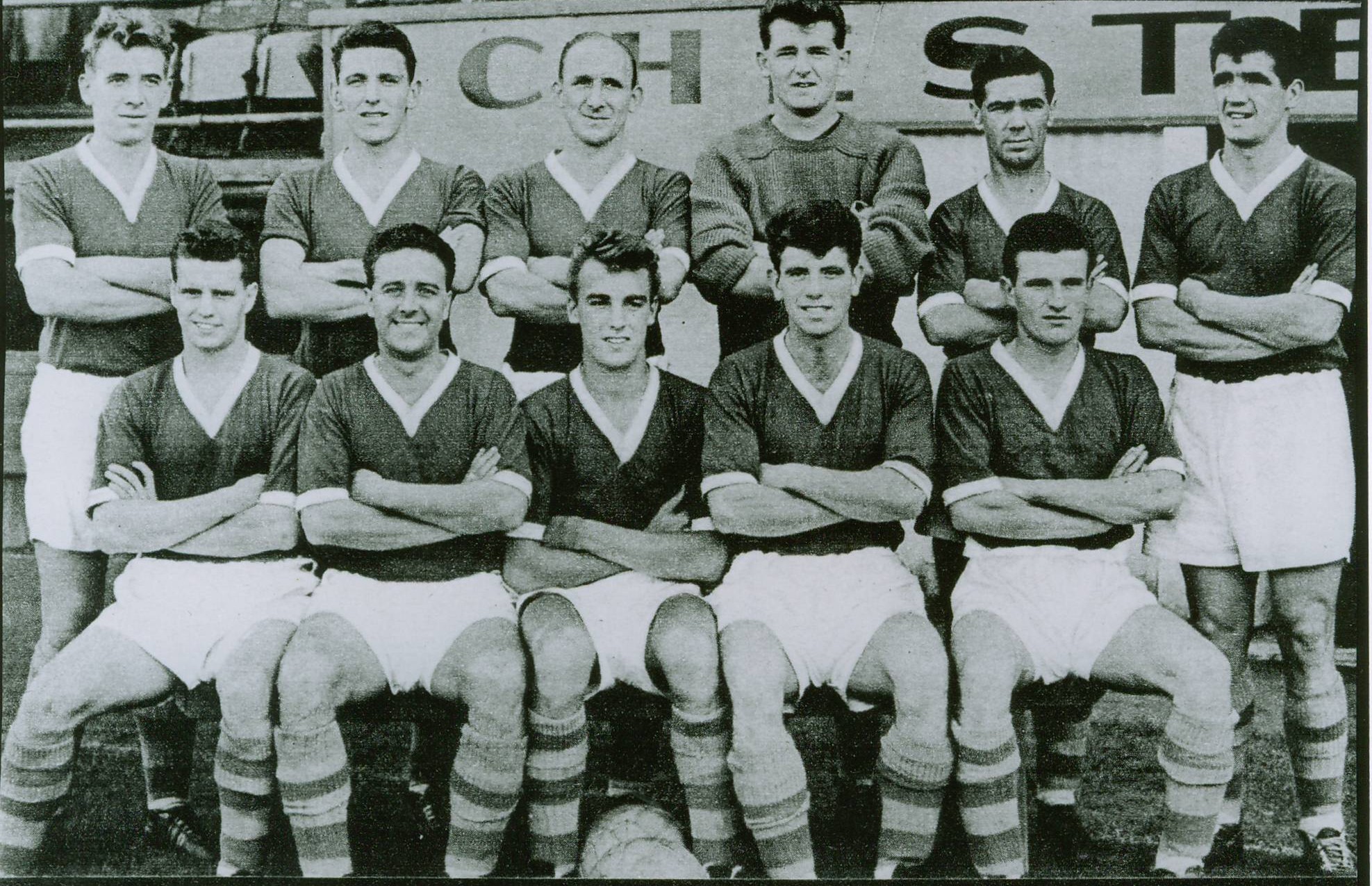
I mentioned that the introduction of the green and gold shirts coincided with Stan Pearson’s appointment as player-manager in March 1959 and I have now learnt that the colours were chosen by Stan’s wife. While it’s easy to appreciate the new manager wanting to create an impression it seems astonishing that the move away from the long established blue and white should happen in this way. Perhaps understandably this information was not publicised at the time and there is little doubt that a similar move today would be met with a massive outcry.

I was speaking to Ronnie Hughes at a charity game in Mold on Sunday and he described the shirts as terrible. Ronnie, who played more than 400 times for Chester between 1951 and 1962 said that the switch from blue and white did not go down well with the players and the dressing room was very quiet for two or three weeks after the announcement.

Full back John Evans was a regular in the Cheshire County League side until he made his full league debut in 1961. According to John the reserves used to inherit the first team’s shirt at the end of the season which were then passed down to the A team the following year and eventually used in training. He thought the shirts were awful and because the material was a mix of wool and cotton they didn’t feel good or wear well. In addition the colours were a dull green and faded in the wash so never looked smart. With such a negative feeling towards the colours it’s perhaps unsurprising that performances on the pitch also suffered. It’s easy to see why supporters should associate the green with bad luck and why they were hastily dropped after Pearson was sacked.

The green shirts were provided by Hack’s who had a shop in the arcade, on the right hand side as you enter from Bridge Street, and were regular kit suppliers for many years.

In the earlier article I included a photograph of a scarf which is on display at the Exacta and was donated by an old supporter. Both Ronnie and John remember that they were given similar scarves by the club one Christmas. John recalls that the players were always well looked after by the board of directors and received ties and scarves which were supplied by Bradley’s, an outfitters on Foregate Street. Meanwhile chairman Reg Rowlands always presented the players with a bowl of hyacinths from his florist’s shop at the festive period. Clearly a different era and difficult to imagine Manchester City handing similar gifts to Carlos Tevez and Mario Balotelli.

Copyright © 2012 http://www.chesterfootballhistory.com All Rights Reserved