Return of the Plaque

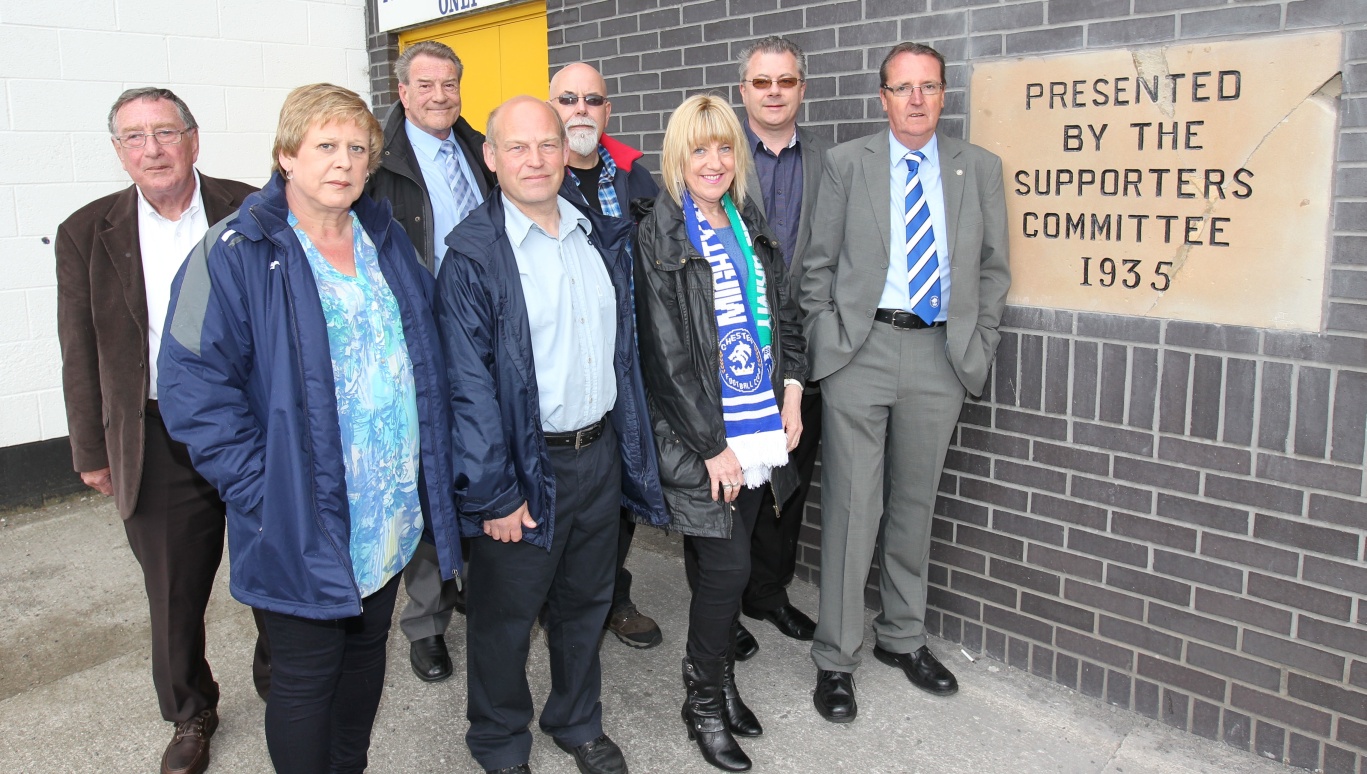
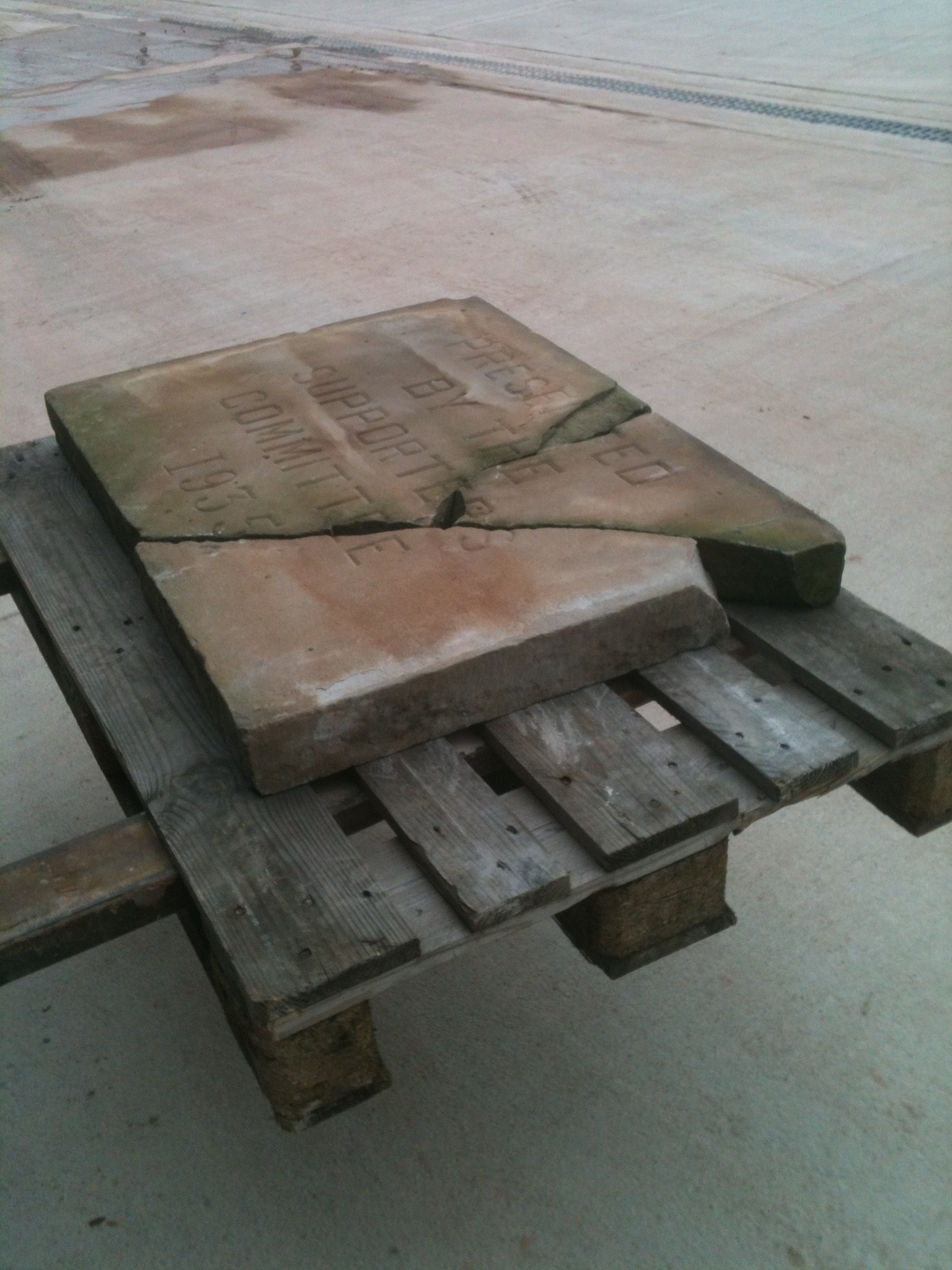
After 21 years the Supporter’s Plaque has returned home and been positioned on the outside of the ground by the main office.

Altomont Townsend and the students at the college have done a superb restoration job and three students from the Bricklaying Level 1 course, Joe Lawrence, Jamie Morgan and Danny Dowling put the plaque in place on the wall today.

Finished plaque at the college. Photo - Altomont Townsend

Finished plaque at the college.
Photo – Altomont Townsend

Installing the plaque Photo - Tony Pate

Installing the plaque
Photo – Tony Pate

Putting the plaque in place Photo - Tony Pate

Putting the plaque in place
Photo – Tony Pate

Bricklaying students with the finished plaque - Joe Lawrence, Jamie Morgan, Danny Dowling Photo - Tony Pate

Bricklaying students with the finished plaque – Joe Lawrence, Jamie Morgan, Danny Dowling
Photo – Altomont Townsend

The information board has been completed, thanks to sponsorship from the Chester Exiles, and this is expected to be erected alongside the plaque later this week.

In my previous posting I speculated that the plaque may have been made by Clegg’s stonemasons on Bumpers Lane but a more plausible explanation has since come forward.  Steve and Colin Mansley, whose grandfather’s cousin was Chester chairman at the time, tell me that there was a Mansley’s stonemasonry business at Handbridge, where Blackwell’s Stonecraft Ltd is now located, and it seems more likely to me that the plaque originated from there.

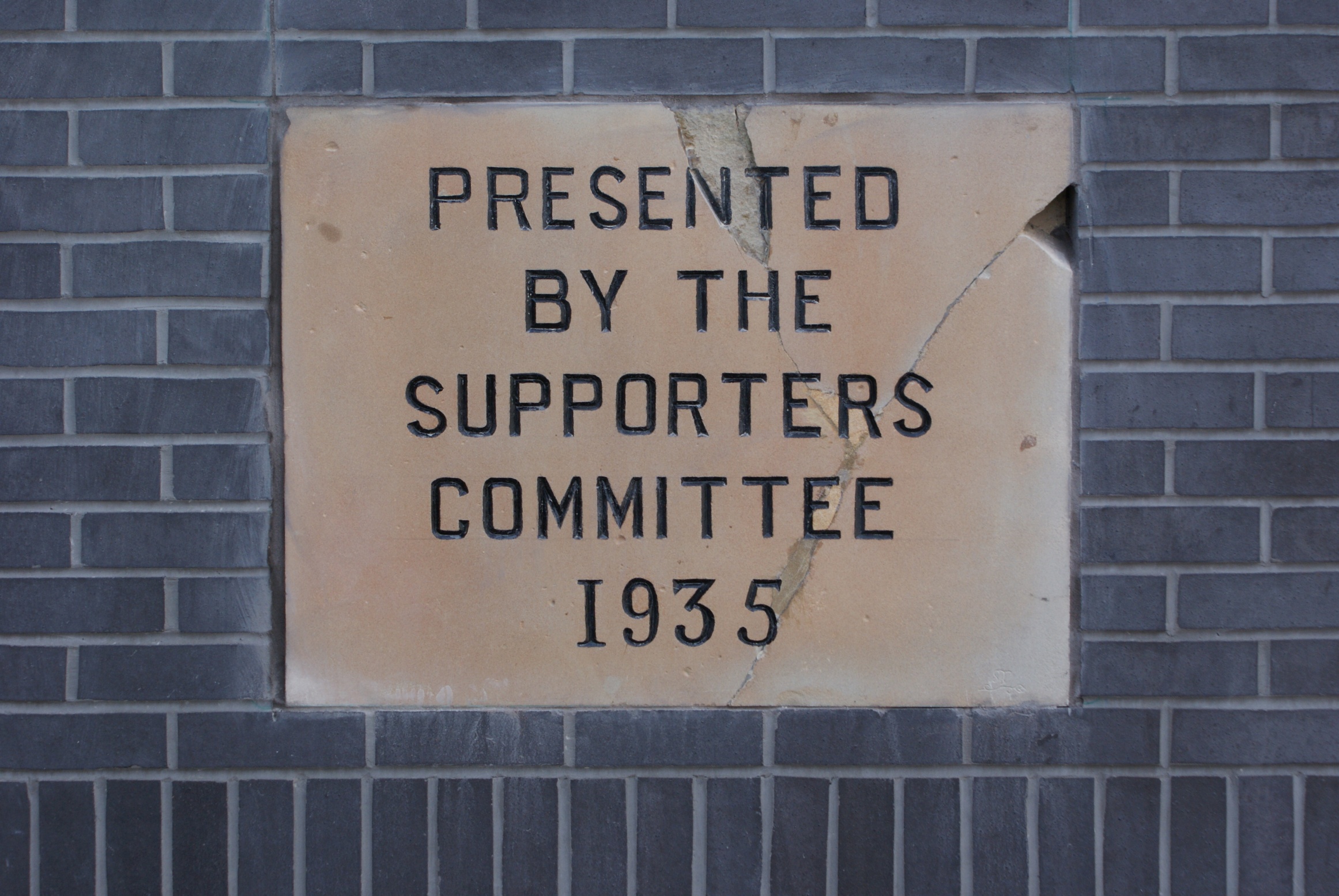
The finished plaque in place

The finished plaque in place

The finished article

The finished article

On Saturday May 11th, at 12:30 pm, there will be an official unveiling of the plaque which is scheduled to take place before the players embark on their open-top bus trip to the town hall. Supporters are welcome to attend.

For the full story behind the restoration there have been three previous posts on the topic which can be found in the archives under Grounds.

Copyright © 2013 http://www.chesterfootballhistory.com All Rights Reserved

Plaque Restoration Progress

Last week I went along to West Cheshire College to see how work on the Supporters Club plaque was progressing. In fact the stone is now almost finished and they are currently painting the letters. The department estimates that it will need between one and two days to complete the job although you need to bear in mind that restoration work can only take place once a week.

Plaque restoration progress at Chester College

Plaque restoration progress at Chester College

We have been looking at a location for the plaque and hope to install it on the wall between the player’s entrance and the ticket office window, close to the supporter’s bricks.

There is a small piece missing from the right hand side of the plaque and stonemason Altomont Townsend thought it would be better to leave this rather than patch it up. I am in complete agreement with this as it serves to emphasise the restoration work that has been performed. Altomont also pointed out to me the symbolism in the broken plaque and the football club with the repair and return of the plaque imitating the work that the supporters have done in re-building and restoring the new Chester FC.  It also acts as a strong link with the supporters from the 1930s who did so much to help the club in their early years in the Football League.

As well as spotting the paintwork on the lettering, which would have only lasted for a few years, Altomont also had some interesting theories on the making of the plaque. First of all he thinks it would have been made by someone associated with Clegg’s who were based in Bumpers Lane (no relation to tannoy announcer Robbie Clegg). They were the only stonemasons in the city but went bust in the 1970s or 1980s. It is also likely that the engraving was done by an apprentice, perhaps a Chester supporter, rather than by a professional stonemason. He bases this theory on the fact that he identied one or two flaws in the original work and  it is certainly possible to spot that the five in the year does not quite match up with the rest of the date.

If anyone has any further information on the original making of the plaque then Altomont and myself would be very interested to hear from you.

Copyright © 2013 http://www.chesterfootballhistory.com All Rights Reserved

Supporters Club Plaque Restoration

Since my February post there has been significant progress in the project to restore the sandstone plaque to its former glory. West Cheshire College has agreed to do the restoration work at no cost to the club. This has been made possible through Chester’s Volunteer Learning Co-ordinator Carol Bennett’s connection with the college.

Plaque just before ground demolition in 1992 Copyright © Steve Mansley

Plaque just before the ground demolition
Copyright © Steve Mansley

At the end of February we took the three sections down to the college in Handbridge and since then the students, under the leadership of master mason Altomont Townsend, have been hard at work on its re-construction.

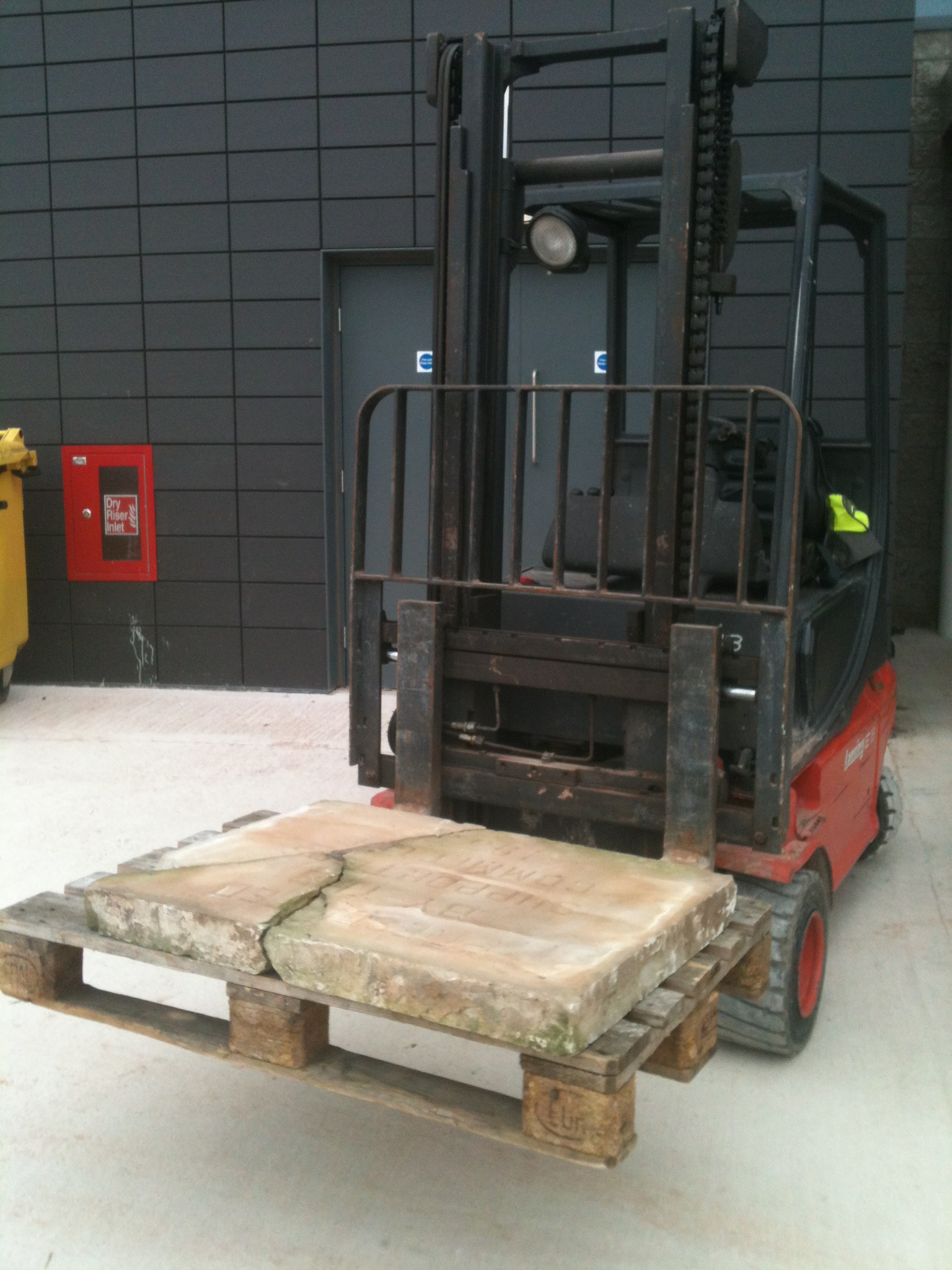
Delivering the plaque Copyright © http://www.chesterfootballhistory.com

Delivering the plaque
Copyright © http://www.chesterfootballhistory.com

Plaque ready for restoration Copyright © http://www.chesterfootballhistory.com

Plaque ready for restoration
Copyright © http://www.chesterfootballhistory.com

This project has proved beneficial to all parties and Altomont described how the college became involved:

“Carol approached us and said she had a small project to do with the football club. She asked if we could take it on so we asked her to bring it along and we would see what we could do. For us it was interesting to do something for the club and I like to pass on any jobs to the students so that they can work on it and gain more experience in stonemasonry.”

The college are trying to get a stonemason’s department up and running and are aiming to find a venue within the campus for their work. So far the project has been restricted to a Thursday evening and Altomont explained the processes involved in the restoration:

“First of all, we had to clean up all the stone and remove all the algae so that we could glue it together. Using steel dowels we drilled the stone and epoxy-resined them together to make sure it was flat. The second process was to rub the stone down so that we had a nice polished surface and then we will move on to carving into it. I want the students to re-carve the letters so they stand out a bit more.”

Master mason Altomont Townsend supervises student John RobertsCopyright © http://www.chesterfootballhistory.com

Master mason Altomont Townsend supervises student John Roberts
Copyright © http://www.chesterfootballhistory.com

Work is expected to take another two or three weeks although Altomont is trying to make more time available so it can be finished a bit quicker. As he says it has been an interesting rather than a tough job to work on:

“We are looking for more projects like this that we can learn from so that we can see how it was done years ago and then re-create it. It’s a learning curve for us, we enjoy doing it and we learn how these old projects were done.”

One detail that has emerged from the work so far is that the letters were initially painted black and the intention is to restore the paintwork to match the original.

Restoration in progressCopyright © http://www.chesterfootballhistory.com

Restoration in progress
Copyright © http://www.chesterfootballhistory.com

Once the restoration has been completed the next stage will be to return it to the club and arrange for it to be re-mounted on one of the walls at the ground.

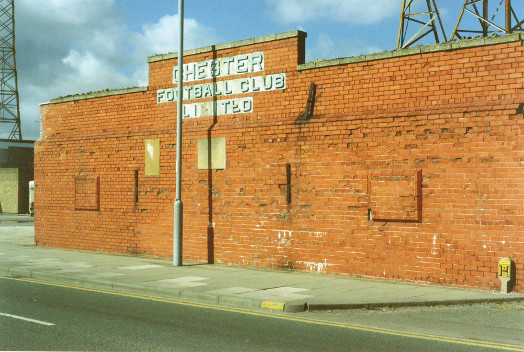
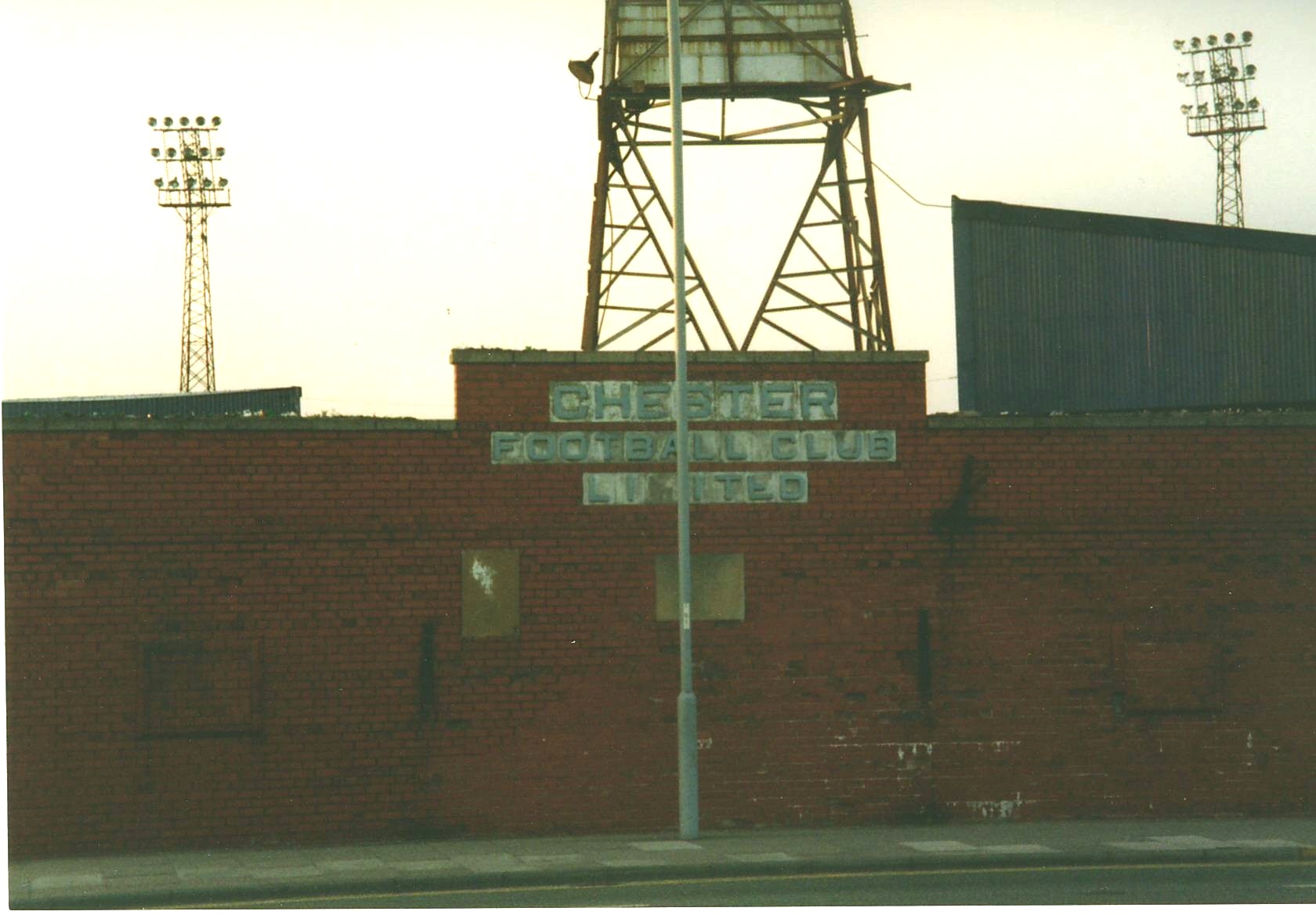
The Sealand Road End in 1990 showing the brickwork that was added in 1935. The plaque is just visible by the lamppost. Copyright © http://www.chesterfootballhistory.com

The Sealand Road End in 1990 showing the brickwork that was added in 1935. The plaque is just visible by the lamppost.
Copyright © http://www.chesterfootballhistory.com

Copyright © 2013 http://www.chesterfootballhistory.com All Rights Reserved

Sealand Road Supporters Club Plaque

The Sealand Road stadium was demolished in 1992 with the club already in situ on Bumpers Lane. One remnant of the stadium that was believed missing was a plaque presented by the Supporters’ Club in 1935. The sandstone plaque was situated on the brick wall at the front of the ground, facing Sealand Road, but partially obscured by a badly placed lamppost.
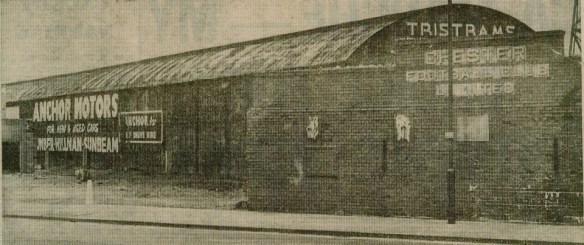
Sealand Road End in 1976

Sealand Road End in 1976 – Cheshire Observer

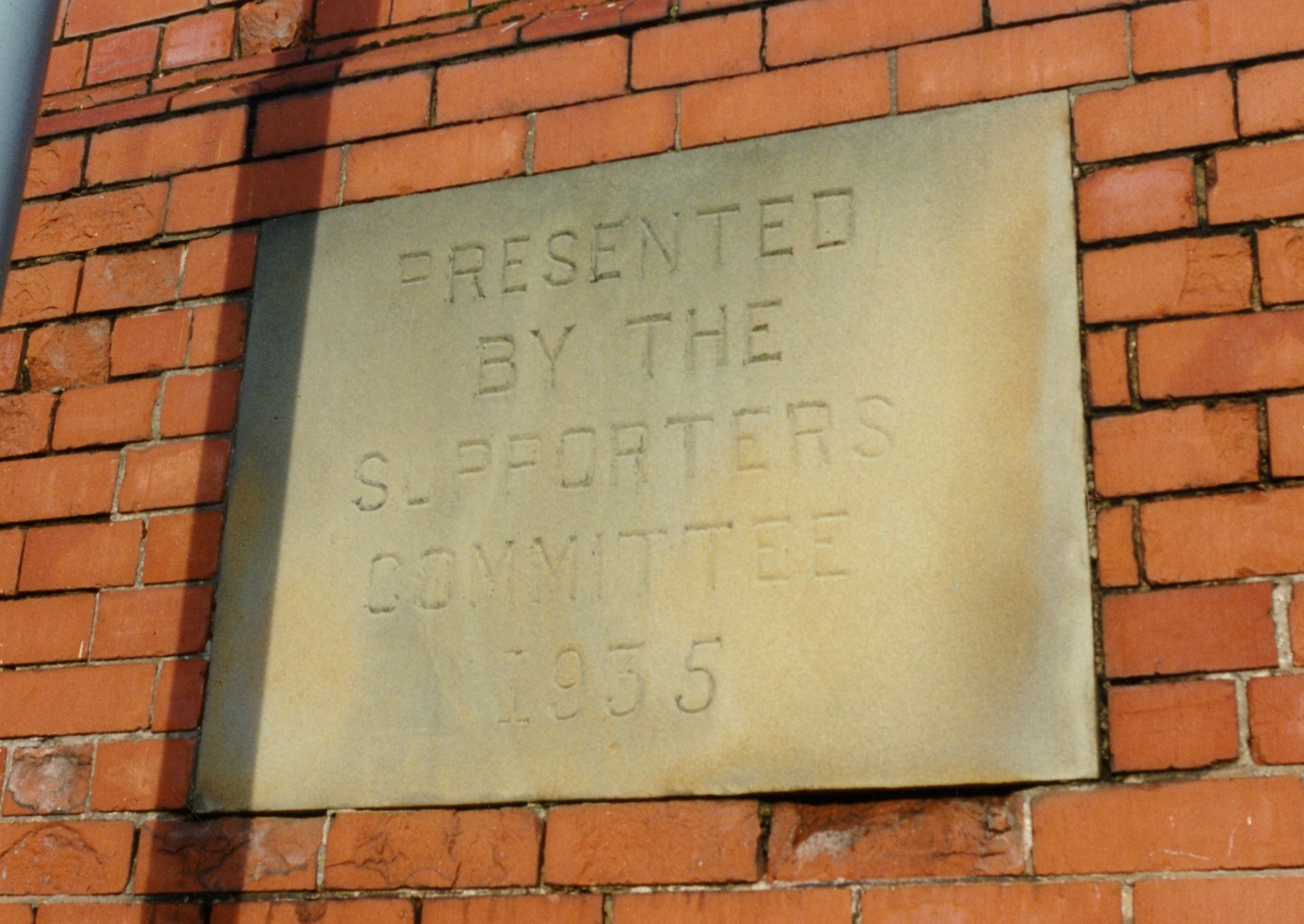
The plaque in 1990

The plaque in place in 1990
Copyright © http://www.chesterfootballhistory.com

Sealand Road End 1990

Sealand Road End 1990
Copyright © http://www.chesterfootballhistory.com

Sealand Road 1990 Copyright © www.chesterfootballhistory.com

Sealand Road 1990
Copyright © http://www.chesterfootballhistory.com

Although the demolition men were asked to preserve the plaque it came down with the wall and was smashed into three segments. However all the pieces were salvaged by a supporter who handed them over to the Independent Supporters Association (ISA) at the start of the last decade. With continued uncertainty surrounding the club the broken plaque was stored away at the home of ISA chairman George Rogers. Now that the club is back in safe hands George attended a recent meeting of the Senior Blues and returned the plaque to the club.

The plaque, which is inscribed “Presented by the Supporters Committee 1935”, has flaked in places and a very small piece is missing but is otherwise in reasonable condition under the circumstances. The current intention is to possibly restore the plaque and re-instate it somewhere around the ground.

Most of the development on the Sealand Road game took place in the 1930s with an active Supporters’ Club contributing funds to help finance the changes. A total of nearly £3,000 was handed over between 1930 and 1935 and chairman Harry Mansley acknowledged that “without the efforts of the committee the ground would look bad.”

After a burst of activity in 1930 and 1931, when the main stand was extended and the Sealand Road End covered, the supporters were instrumental in the changes in the middle of the decade. In 1934 the rails around the pitch were replaced by a concrete wall. In “On The Borderline” I suggest this was done at the end of the 1934/35 season but I now believe this was done slightly earlier as the wall caused major drainage problems resulting in a poor pitch and many postponements during the 1934/35 and 1935/36 seasons. The problems with the pitch were exacerbated by the construction of terracing on the popular side. This new terracing accommodated 6,000 and was completed in time for the FA Cup tie with Nottingham Forest in January 1935.

At the start of July 1935 a meeting was held between the directors and the Supporters’ Committee in order to discuss further ground improvements. It was resolved to erect boundary walls on the city side of the ground (popular side) and at the Sealand Road End to take the place of the existing galvanised iron sheets. It was also proposed to fit steel girders in the walls of the popular side to prepare for further extension of the covered accommodation. The architect (Mr A J Hayton), on behalf of the supporters, was instructed to prepare the plans and invite tenders from local firms with the intention of completing the work in time for the first game of the 1935/36 season.

In the event the surrounding walls and popular side cover were both completed during the summer although the cover did not extend the full length of the pitch. It is this work that resulted in the plaque being placed on the new wall at the Sealand Road End.

As a postscript, in the first week of January 1936 the city was battered by a severe gale which caused several hundred pounds of damage to the ground. The new wall, erected by the Supporters’ Committee at the Sealand Road End, was severely damaged and the large entrance gate completely smashed with a side wall also demolished. Fortunately the section of wall directly facing Sealand Road (where the plaque was erected) remained undamaged. In addition a 90 yard section of fencing behind the Spion Kop, which had not been included in the summer changes, was completely flattened and had to be boarded up in time for the home game against Gateshead.

I would be interested to hear about the recovery of the plaque in 1992 so please get in touch if you know its whereabouts between 1992 and the early 2000s.

Marc Williams, me and the plaque.

Marc Williams, me and the plaque.

Copyright © 2013 http://www.chesterfootballhistory.com All Rights Reserved
.
Don’t Stand So Close

After posting the last photographs of the old Sealand Road ground I was provided with some more superb photos of the Stadium by Fraser Warburton. There are plenty of photos of the main stand being demolished but it’s rare to see pictures of its construction behind the old wooden stand.

Building work started on the new stand towards the end of the 1978/79 season and Fraser’s three photographs were taken in May 1979 after the final home game against Sheffield Wednesday. In the short term the method of construction proved beneficial as it allowed the ground to remain fully functional but when the wooden stand was demolished it created an awful no-mans land which destroyed the character of the ground. The overall appearance was hardly helped by the chicken wire fence erected parallel to the touchline in front of the stand.

The first photo is one of the best pictures I have seen and was taken from the corner by the open Kop end.  It shows the east wing still in place in front of the new structure.

The second photo is a closer view of the new construction taken at the same time as the first picture.

The next picture is actually taken from the Cheshire Observer and although the quality is not particularly good I thought it was interesting because it was obviously taken after the first two photographs but before the final one. It shows the west wing of the wooden stand (nearest the Sealand Road End) was the first section to be demolished.

Fraser’s final picture shows that demolition had progressed slightly and most of the west wing had been cleared but the metal struts holding up the roof were still in place as was the metal crossbeam following the old roof line. In addition the new stand roof had now been erected.

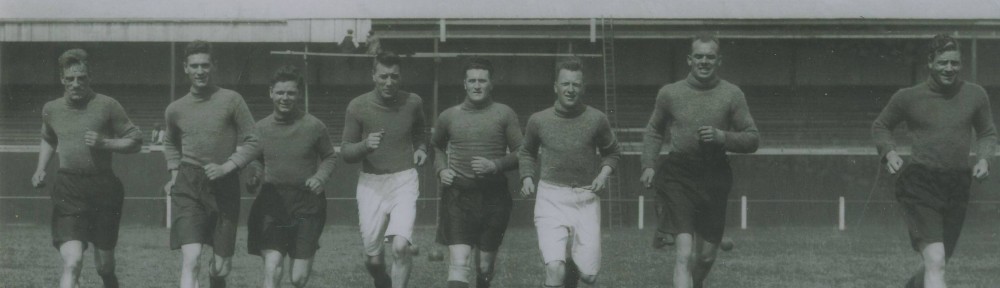
It’s interesting to see the edge of the central section of the wooden stand which was in place 10 years before the wing extension was built. This marked the end of the original stand which was the only seating available in the 1920s when Chester played in the Cheshire County League. The west wing was the first of the extensions to be built, in 1931, with the east wing added a few months later in time for Chester’s entry into the Football League. The banner photograph for this website shows work being completed on the second wing.

The final picture is taken from the Chester v Walsall League Cup programme, the first game in front of the new stand. It was taken 12 days before the start of the season. By now the old stand had been completely removed but there was still a certain amount of work that needed completing and very few seats were in place.

Once again if anyone has memories of the construction of the new stand I would be interested to hear from them. Even better, I would be fascinated to see any more pictures.

I will be adding more photos of the ground in future blogs but I have a long list of things I want to cover so I’ve no idea when this will happen.

Copyright © 2012 http://www.chesterfootballhistory.com All Rights Reserved