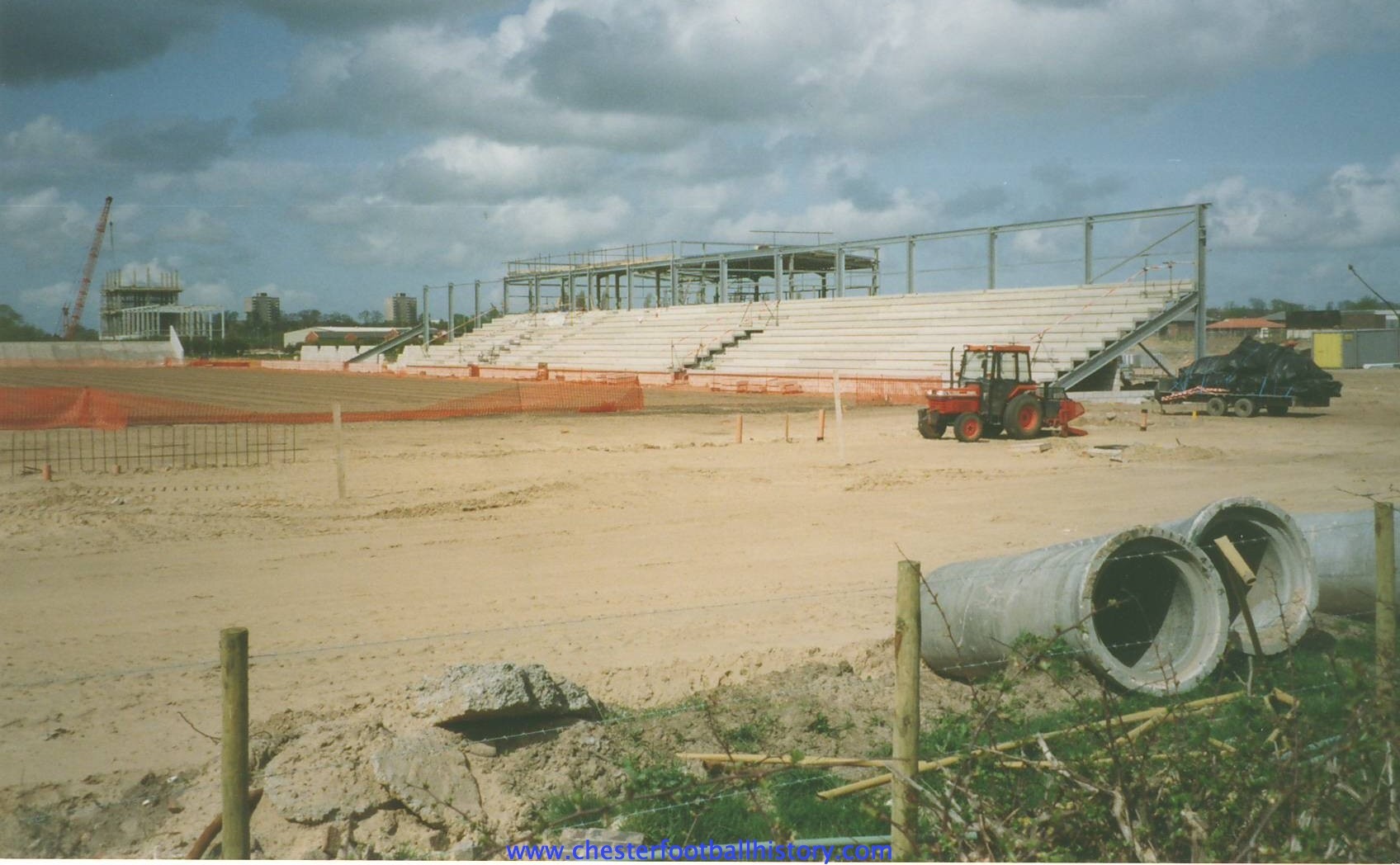
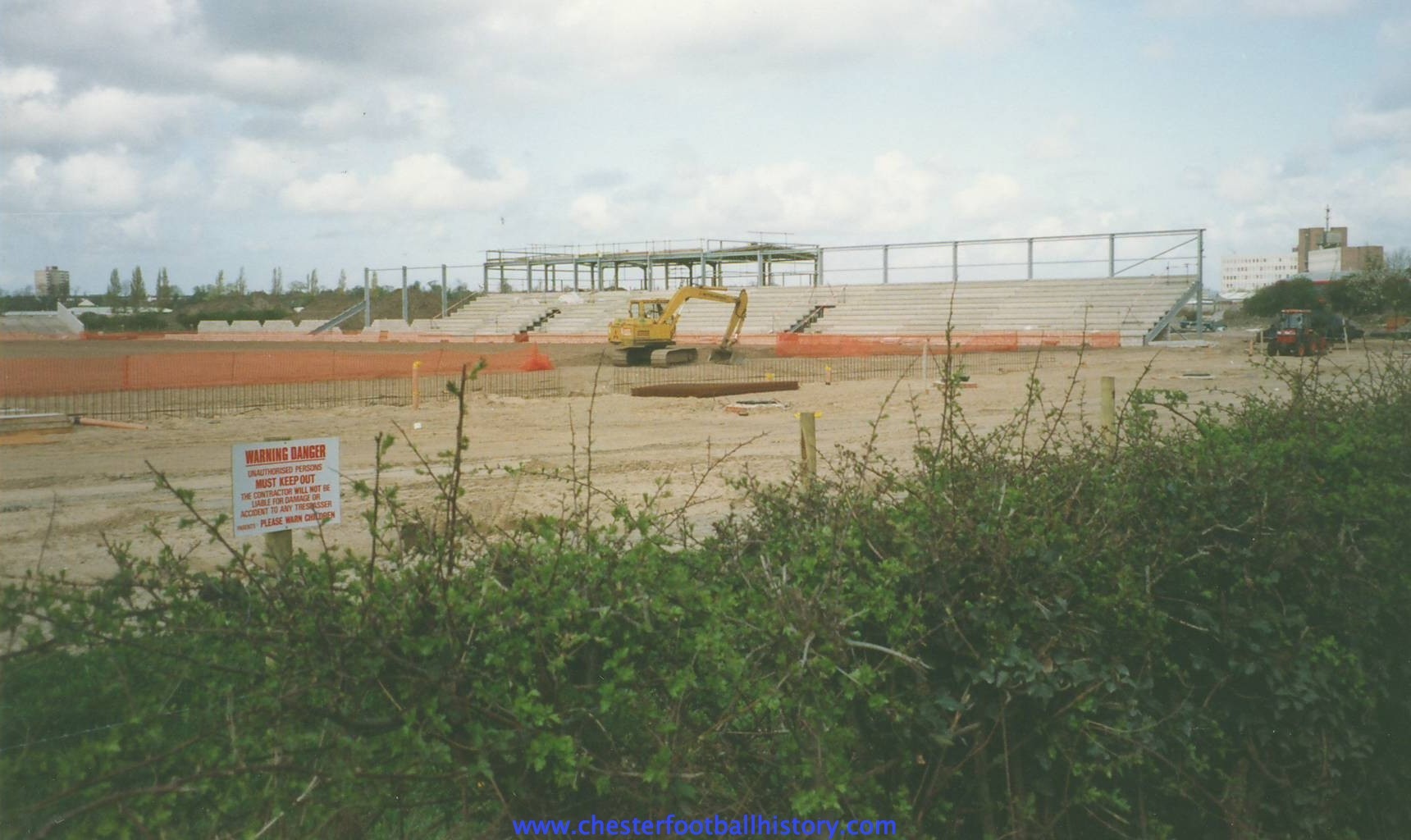
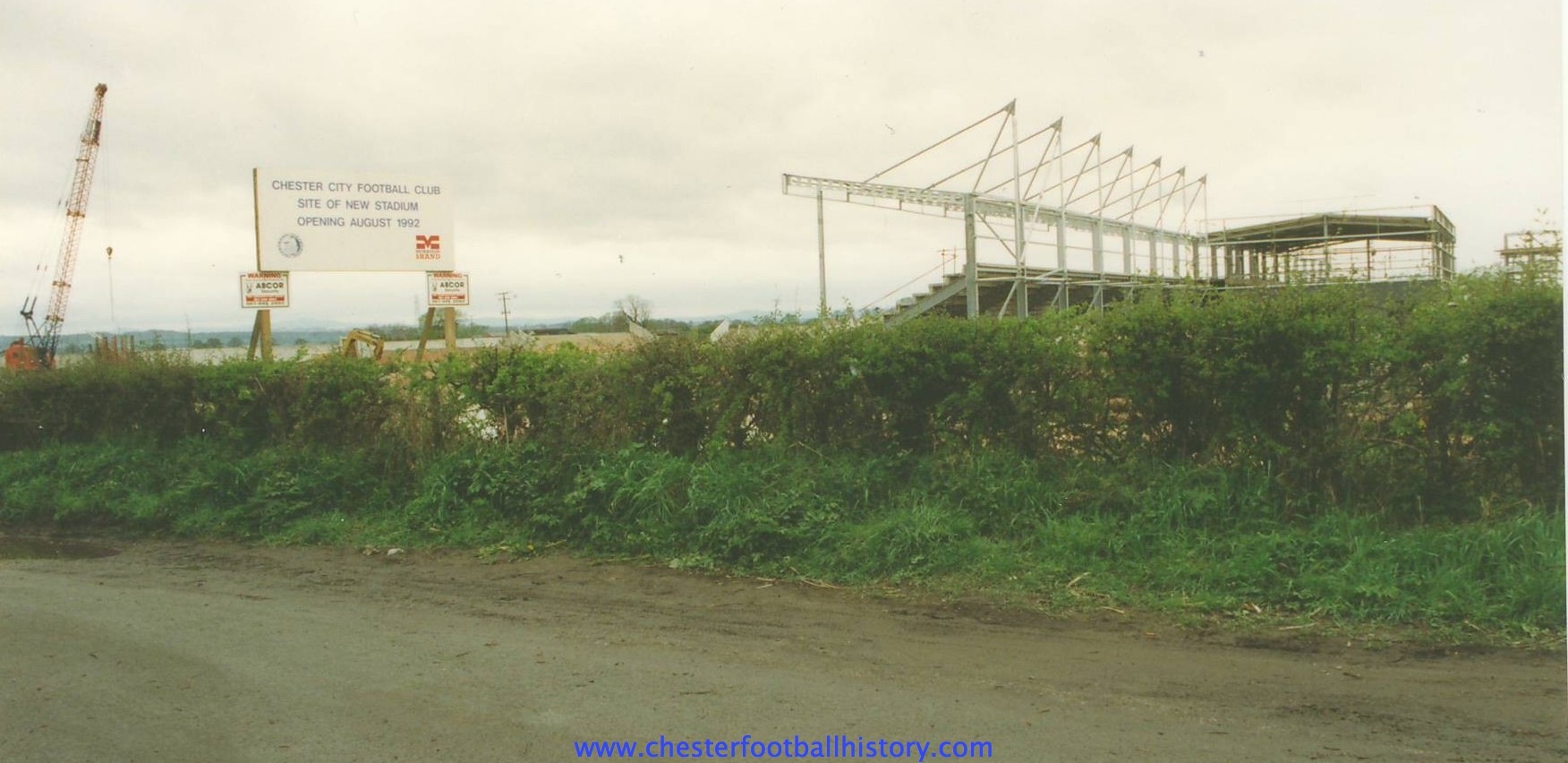
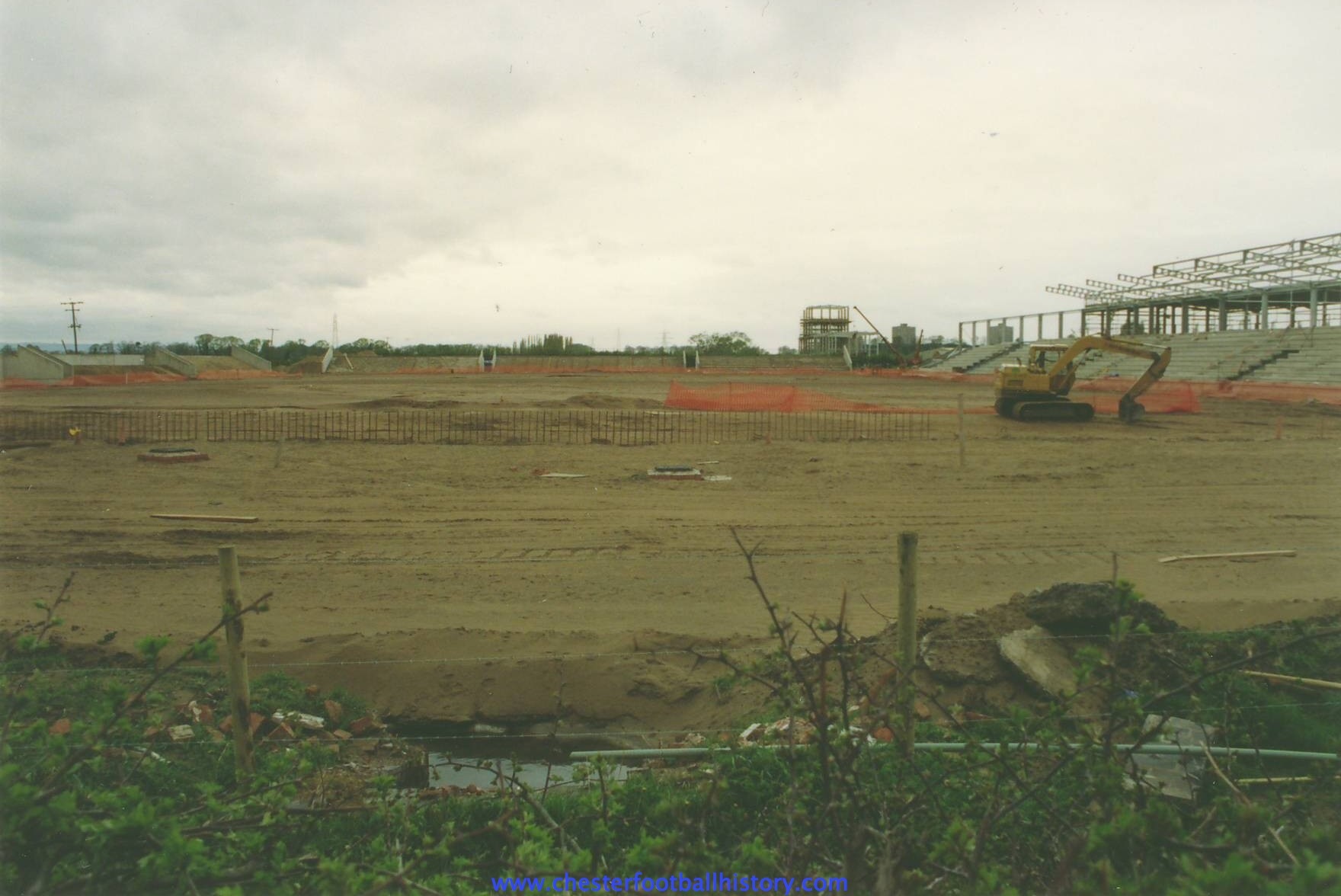
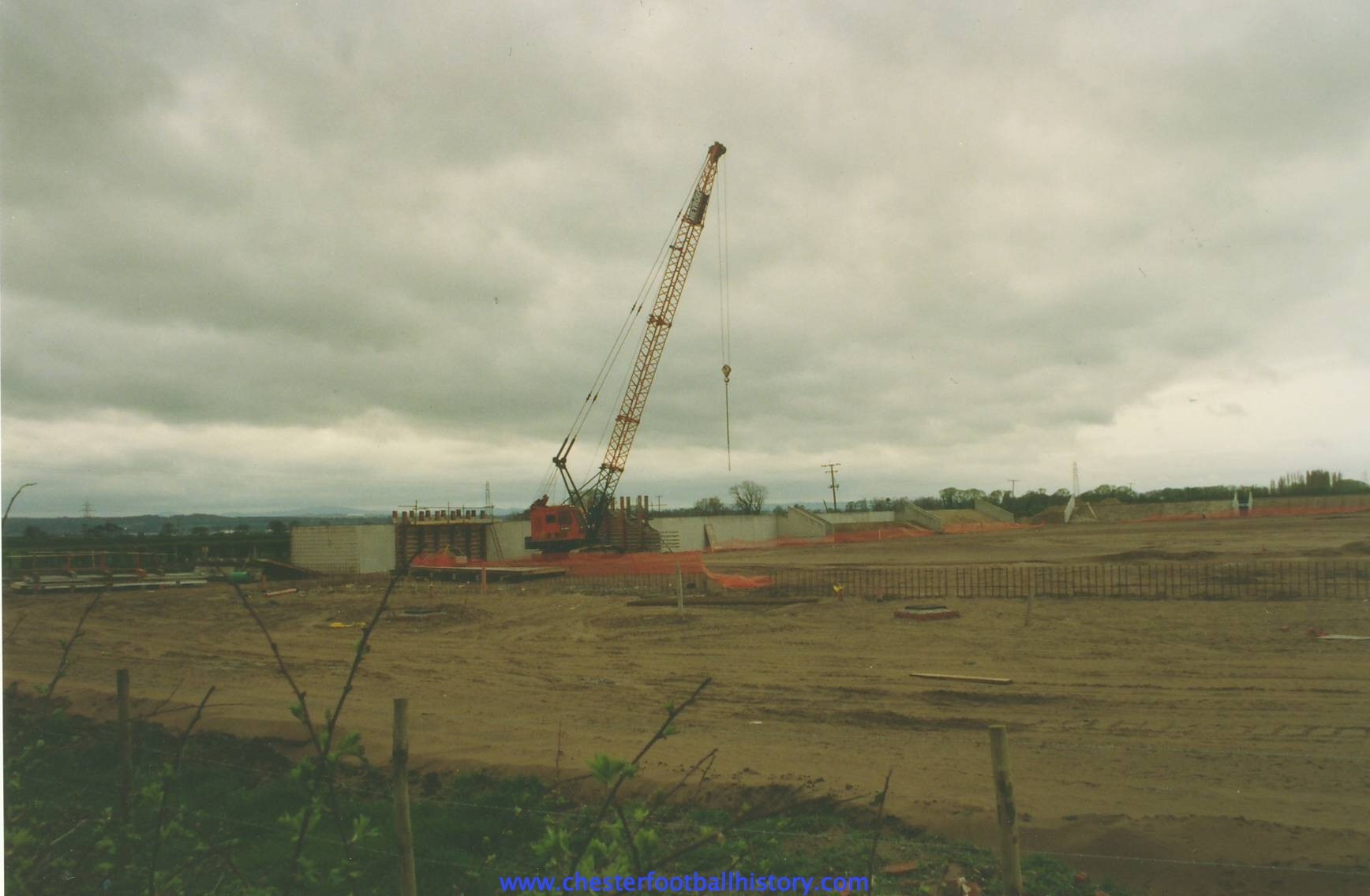
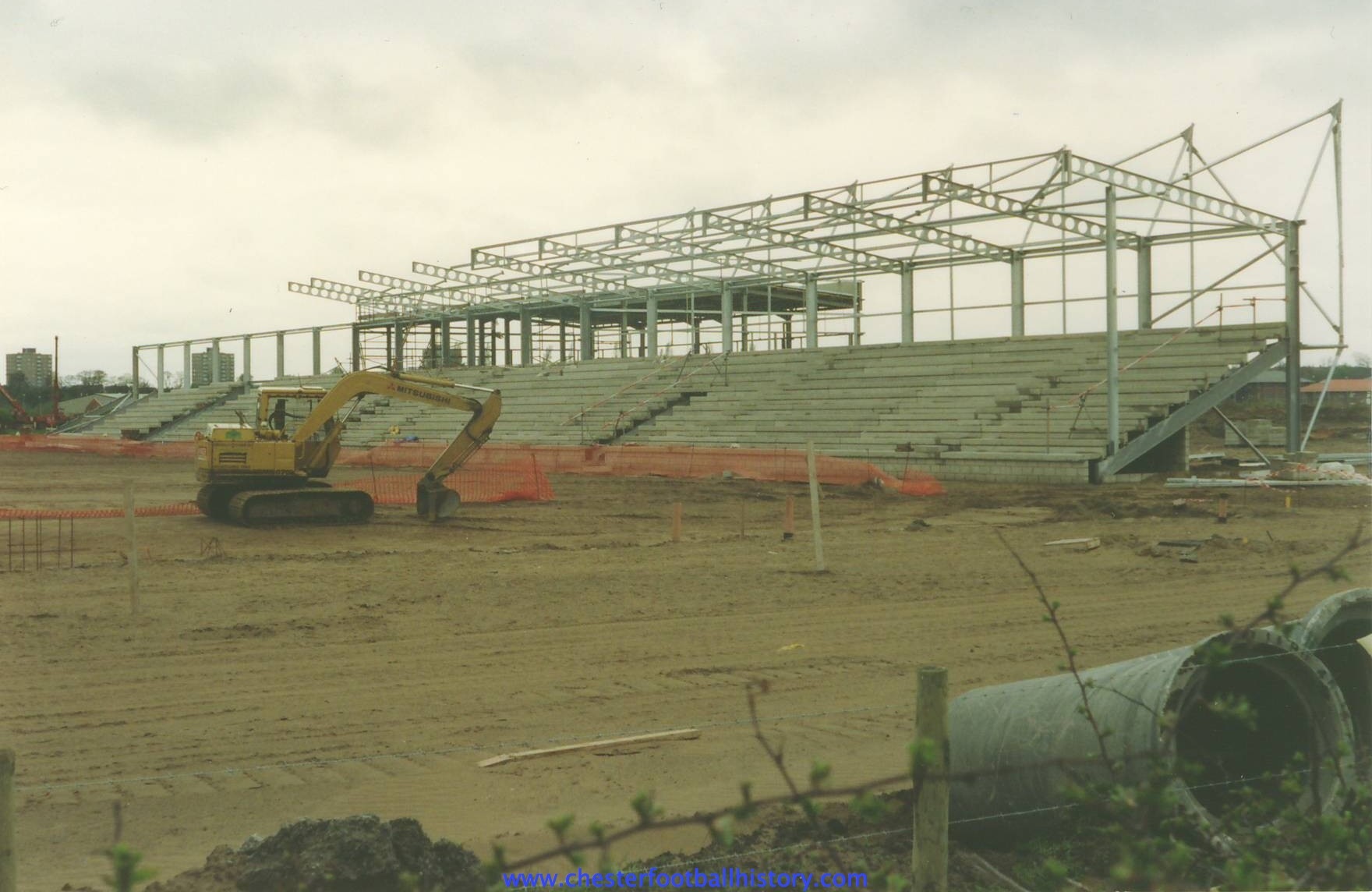
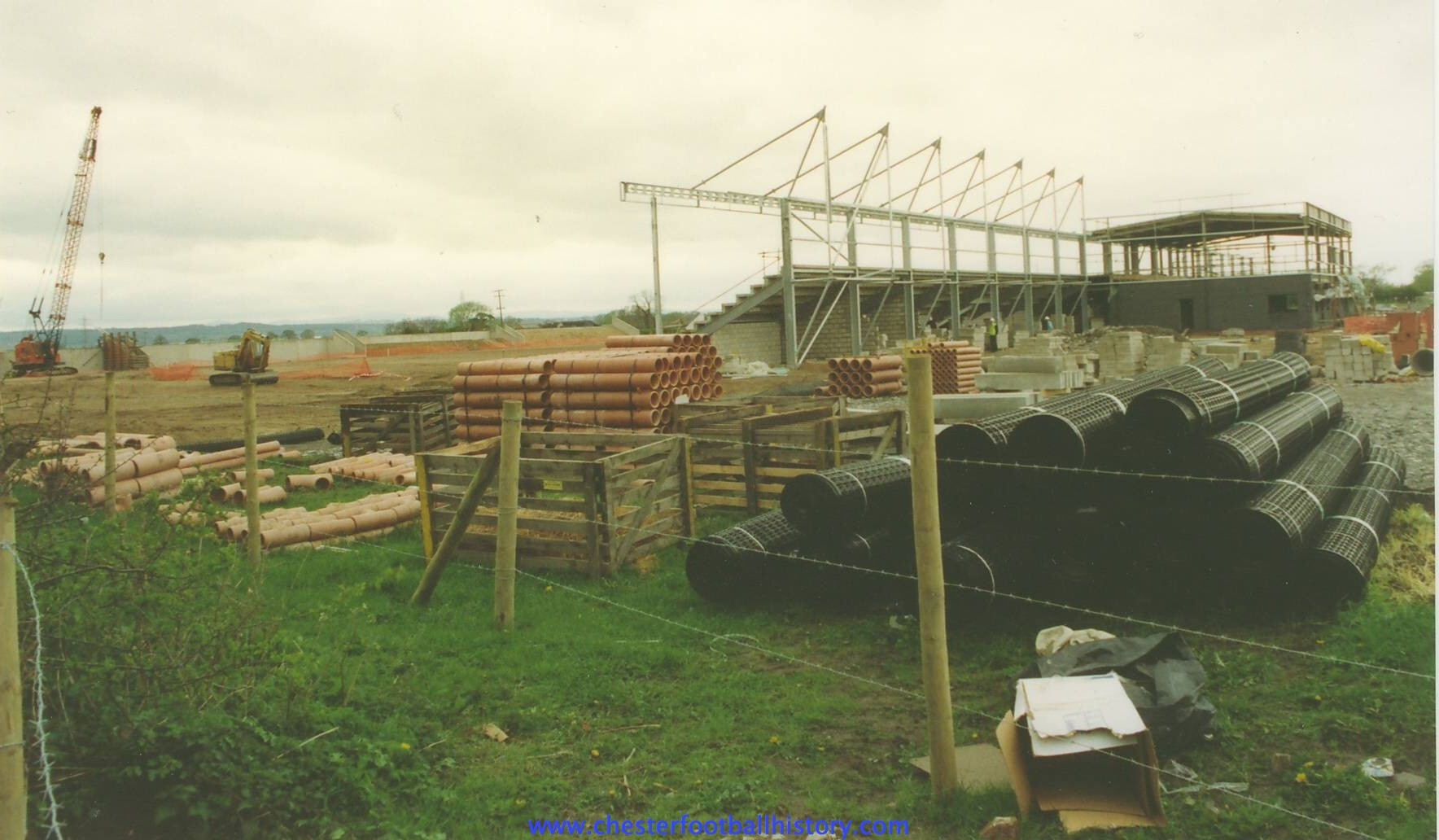
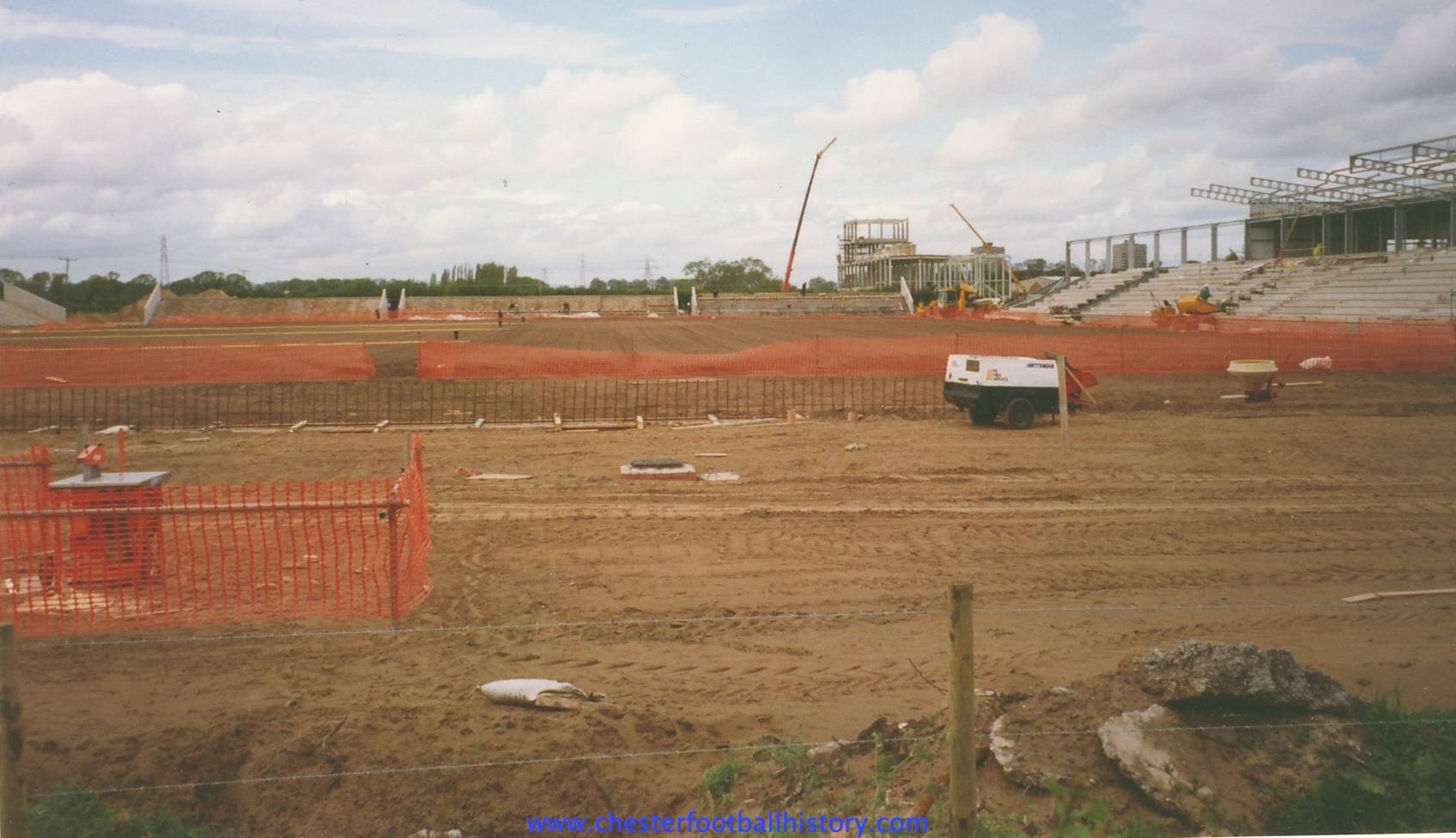
After work started on the new ground on February 3rd 1992 work progressed quickly and the following photographs were taken at various times between February and the start of May when the turf was laid.
It’s 20 years this year since the Deva Stadium was constructed with the £3 million ground completed in a mere 30 weeks. The first game took place on August 25th 1992, against Stockport County, in the Coca Cola League Cup and I have recollections of a chaotic opening night with reports of wet paint and club operations being run from portakabins in the car park.
No-one could ever call the Deva Stadium the most attractive ground in the country and at best it can be described as functional but after 20 years it does seem to have finally developed its own character and now feels as comfortable as an old shoe. I still think it must be the only ground in the country with its own micro-climate as a howling gale invariable sweeps the stadium on match day as the rest of the city experiences a zen-like calm.
One of the problems has always been the low capacity and it’s a shame that the proposals for a more practical 10,000 stadium couldn’t be implemented. Granted attendances may not have reached this level but at least it would have given more flexibility and reduced congestion when the ground reached more than two-thirds full. Remember Preston , Stockport and Scarborough?
When the subject of a move to the end of Bumpers Lane first arose in the latter half of the 1980s various pie in the sky proposals were put forward. The most ambitious being a 15,000-20,000 capacity ground as part of a sports complex with restaurant, leisure centre and athletics track. Gradually this was scaled down until the tight timescales meant we ended up with the basic 6,000 stadium we have today. Bearing in mind the current requirements for training facilities it’s interesting to note that one of the initial planning applications from developers Morrisons included two practice pitches occupying half the current car park area. This was rejected by the council who offered the land at a low rent on the condition that stringent parking criteria were met.
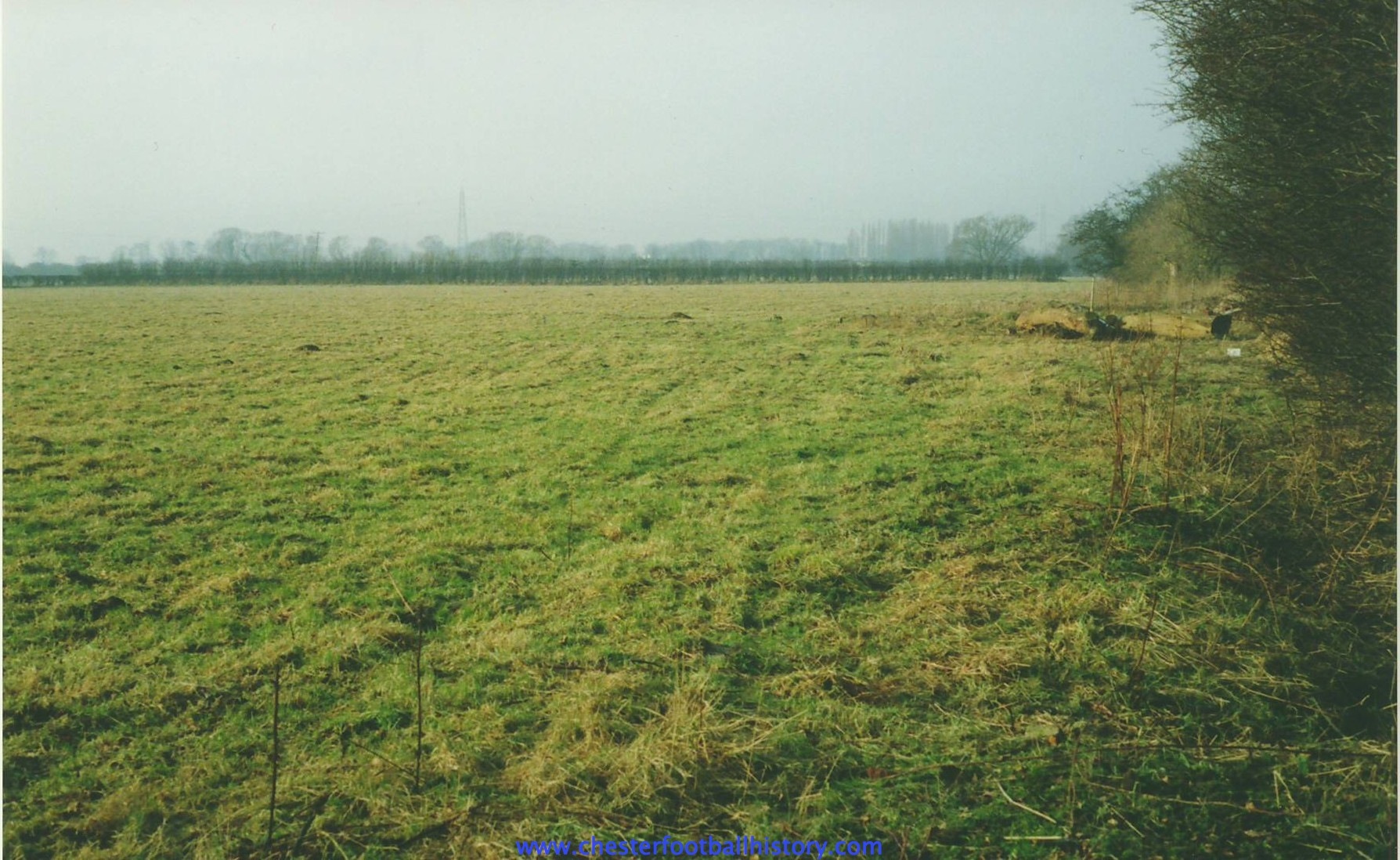
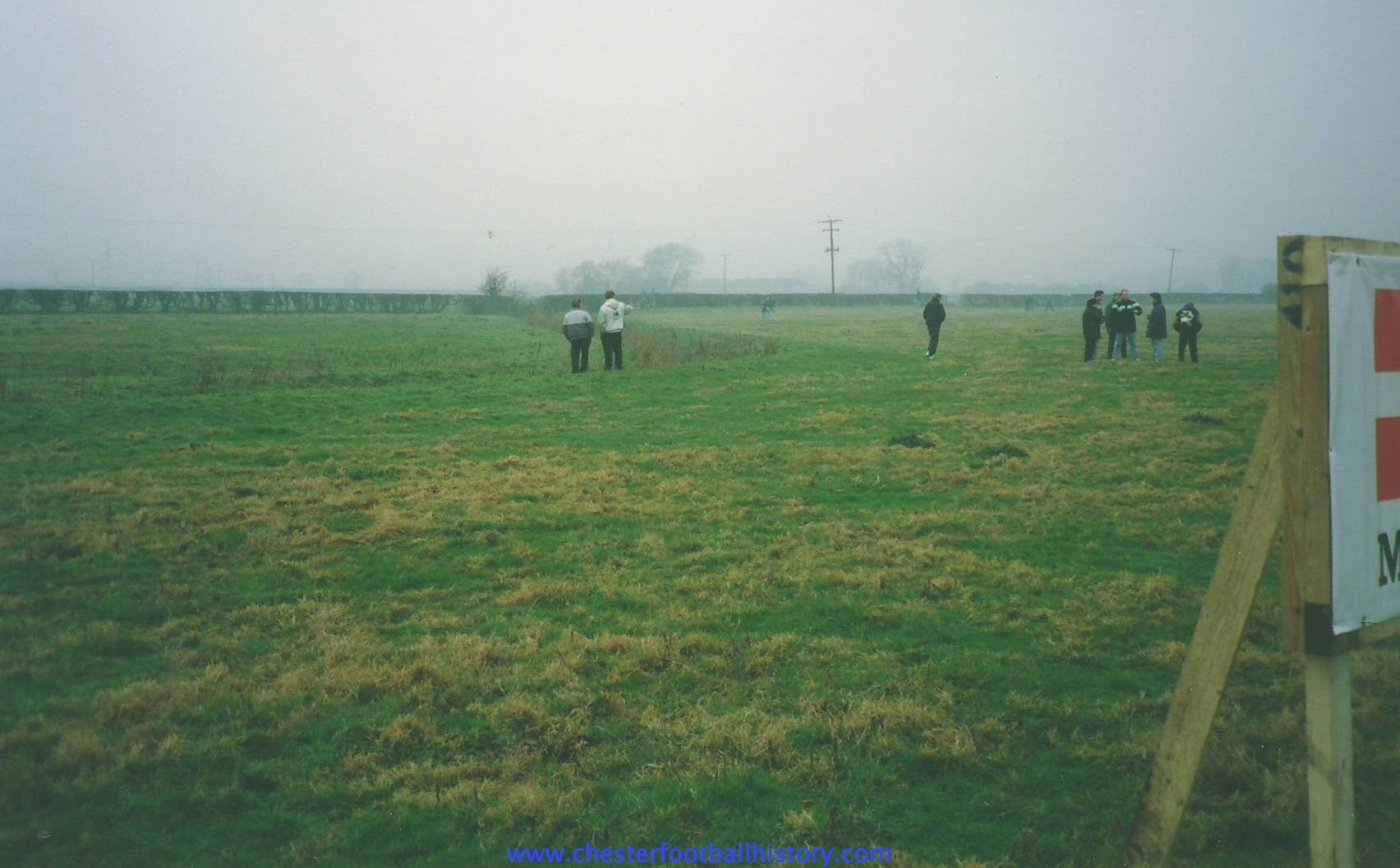
Over the next few weeks I intend posting a series of photographs showing the building of the ground which started on January 28th 1992 with a turf-cutting ceremony. The first four photographs were actually taken as far back as February 1991 when the prolonged political machinations were still ongoing and no firm planning application had been approved. All four were taken from the end of Bumpers Lane looking towards Blacon and Sealand.
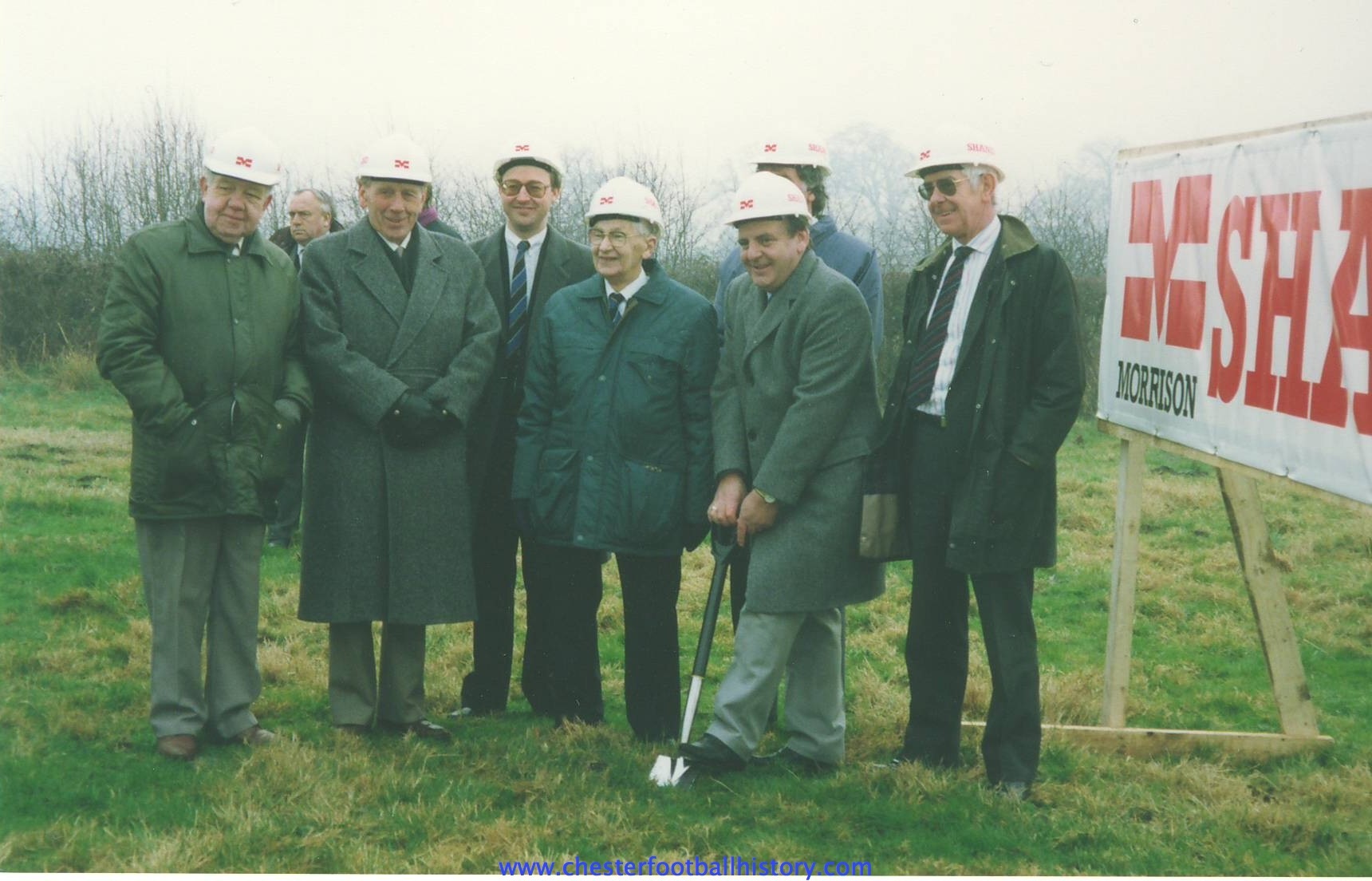
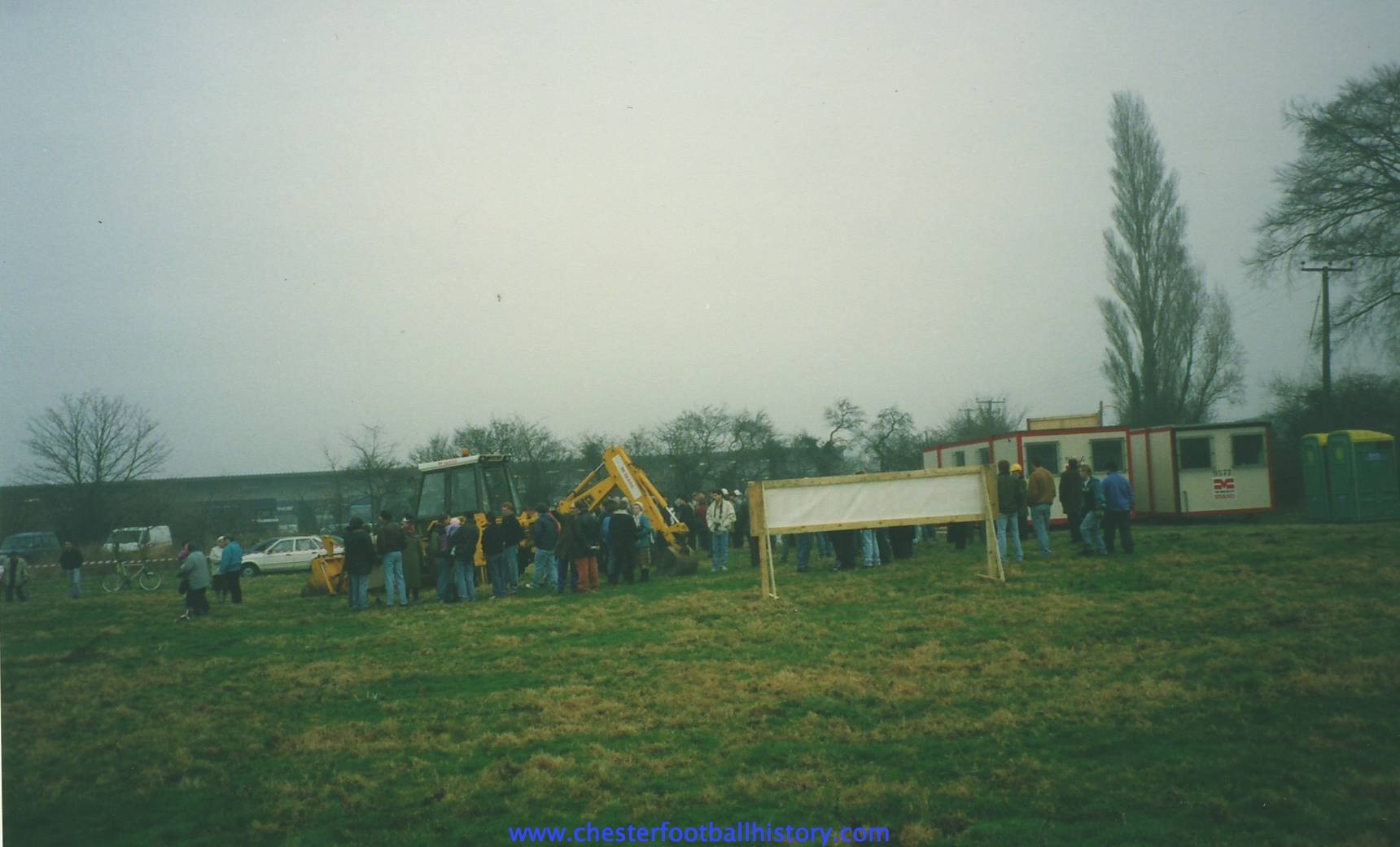
The second set of photographs were taken 12 months later at the turf-cutting ceremony.
Chairman Ray Crofts (with spade) alongside former chairman Reg Rowlands and vice-presidents Cliff Thompson (far left), Len Lloyd (second left). Also pictured are representatives from Morrisons while Harry McNally is partially hidden
Harry McNally digs the first sod with Les Perry from Blacon who won the special draw to make the first cut.
Ray Crofts with Les Perry
The cause of the drainage problems at the corner of the away end?
The ceremony was attended by more than 200 fans but the drama was still not over as an angry city council claimed that the whole event had been held on the land without permission as the rental agreement remained unsigned. The council were particularly annoyed that Morrison’s had started to move equipment on to the land and peg out the site and they only allowed the event to take place so as not to disappoint fans that had turned up. As a result an injunction was issued preventing any further work and the builders were evicted from the land immediately after the ceremony. Fortunately the problems were quickly ironed out and construction started for a second time on February 3rd.
Morrison’s themselves were desperate to get the ground completed as quickly as possible as they risked forfeiting a £500,000 bond left with the Football League if the new stadium was not completed by the start of the 1992/93 season. Construction moved swiftly on what was by now a very basic ground and many supporters regularly made the journey down Bumpers Lane, past the decaying skeleton of the Sealand Road ground, to take photographs of the new structure. Meanwhile, 40 miles away in Macclesfield, Harry McNally performed miracles by dragging the Blues away from a seemingly impossible situation in the third tier relegation zone.
I’ll post some more photos of the construction over the next few weeks. If anyone else has any interesting photos of the ground building please get in touch.
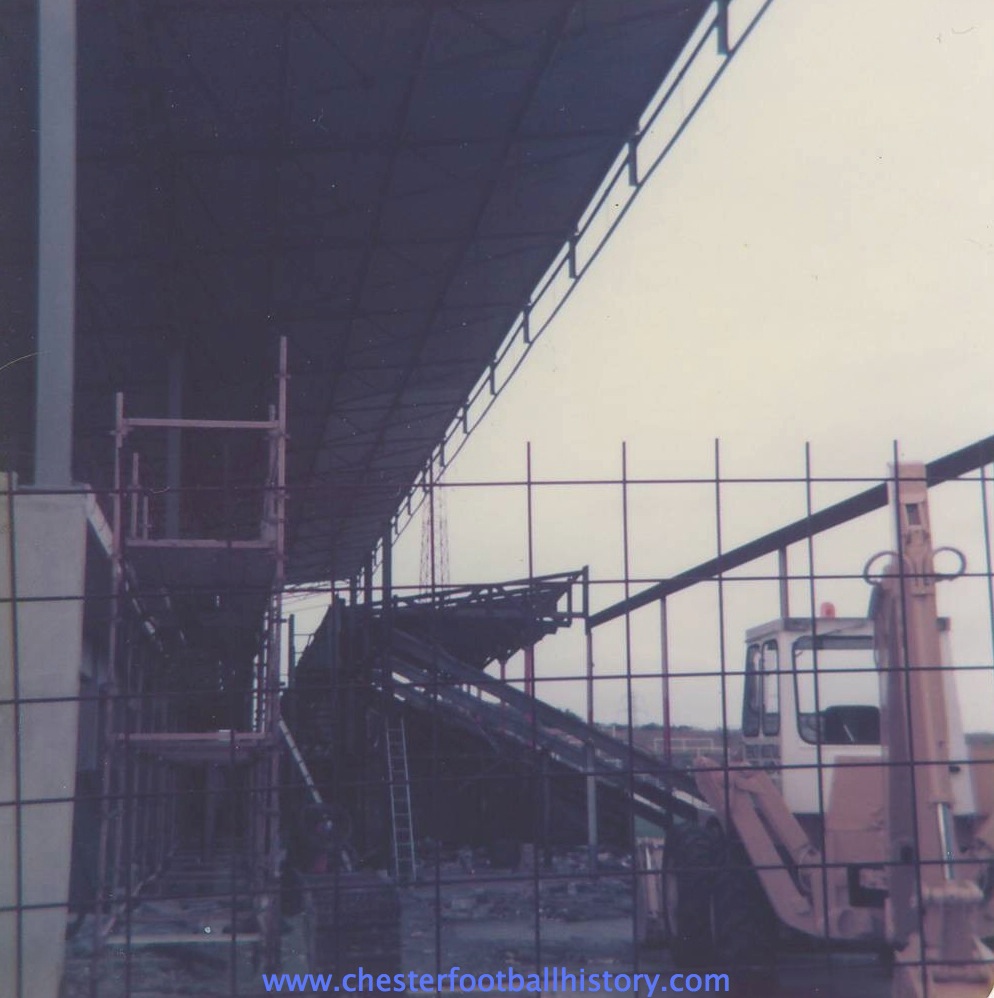
After posting the last photographs of the old Sealand Road ground I was provided with some more superb photos of the Stadium by Fraser Warburton. There are plenty of photos of the main stand being demolished but it’s rare to see pictures of its construction behind the old wooden stand.
Building work started on the new stand towards the end of the 1978/79 season and Fraser’s three photographs were taken in May 1979 after the final home game against Sheffield Wednesday. In the short term the method of construction proved beneficial as it allowed the ground to remain fully functional but when the wooden stand was demolished it created an awful no-mans land which destroyed the character of the ground. The overall appearance was hardly helped by the chicken wire fence erected parallel to the touchline in front of the stand.
The first photo is one of the best pictures I have seen and was taken from the corner by the open Kop end. It shows the east wing still in place in front of the new structure.
The second photo is a closer view of the new construction taken at the same time as the first picture.
The next picture is actually taken from the Cheshire Observer and although the quality is not particularly good I thought it was interesting because it was obviously taken after the first two photographs but before the final one. It shows the west wing of the wooden stand (nearest the Sealand Road End) was the first section to be demolished.
Fraser’s final picture shows that demolition had progressed slightly and most of the west wing had been cleared but the metal struts holding up the roof were still in place as was the metal crossbeam following the old roof line. In addition the new stand roof had now been erected.
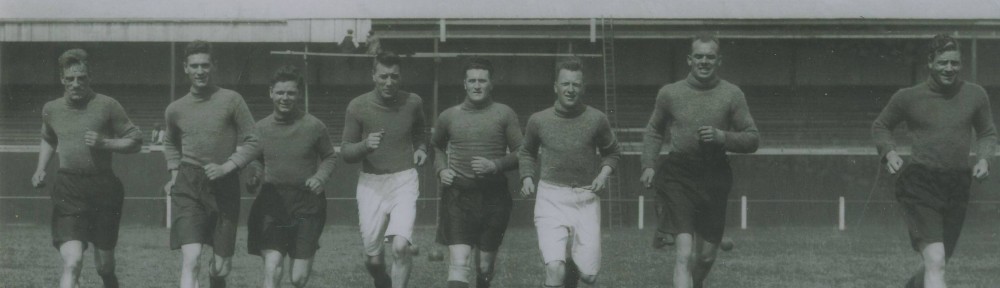
It’s interesting to see the edge of the central section of the wooden stand which was in place 10 years before the wing extension was built. This marked the end of the original stand which was the only seating available in the 1920s when Chester played in the Cheshire County League. The west wing was the first of the extensions to be built, in 1931, with the east wing added a few months later in time for Chester’s entry into the Football League. The banner photograph for this website shows work being completed on the second wing.
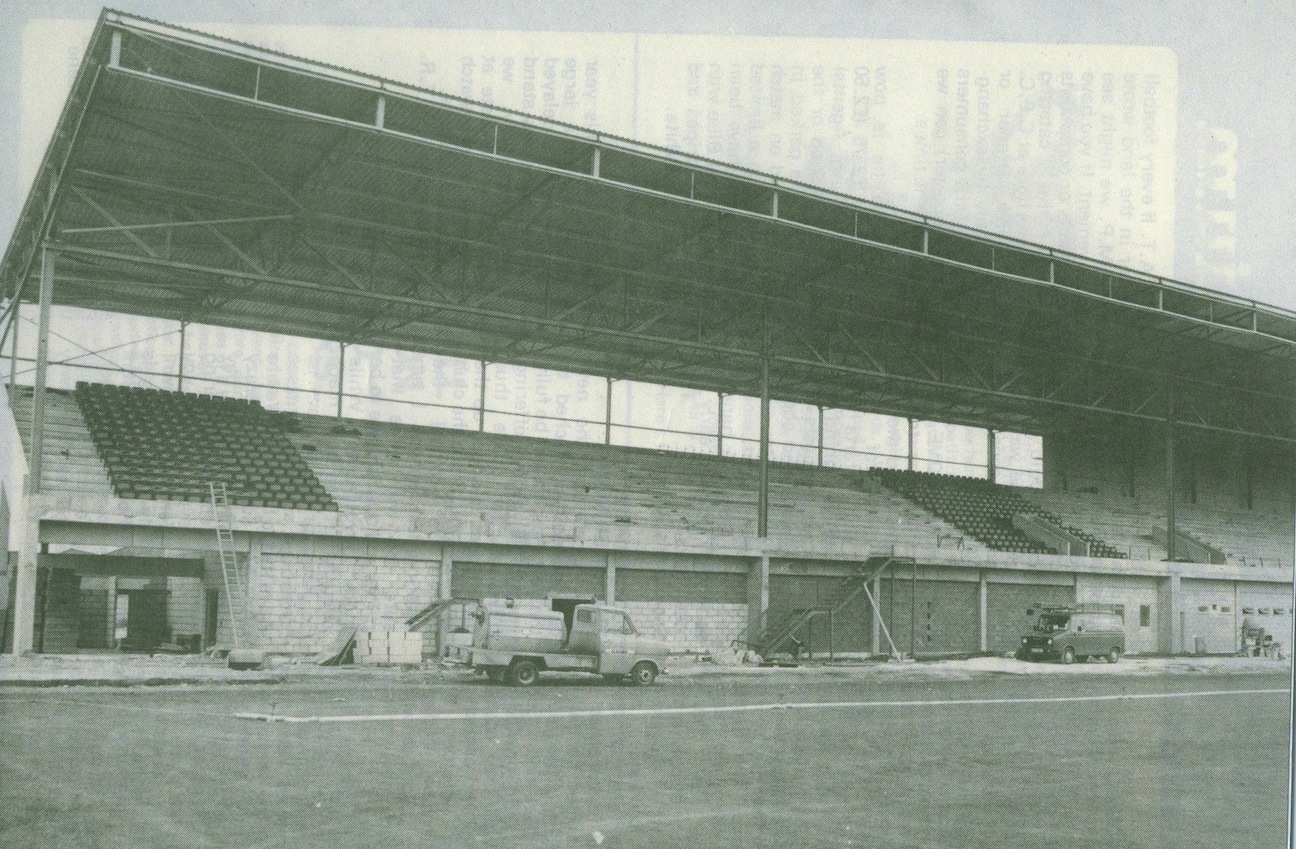
The final picture is taken from the Chester v Walsall League Cup programme, the first game in front of the new stand. It was taken 12 days before the start of the season. By now the old stand had been completely removed but there was still a certain amount of work that needed completing and very few seats were in place.
Once again if anyone has memories of the construction of the new stand I would be interested to hear from them. Even better, I would be fascinated to see any more pictures.
I will be adding more photos of the ground in future blogs but I have a long list of things I want to cover so I’ve no idea when this will happen.
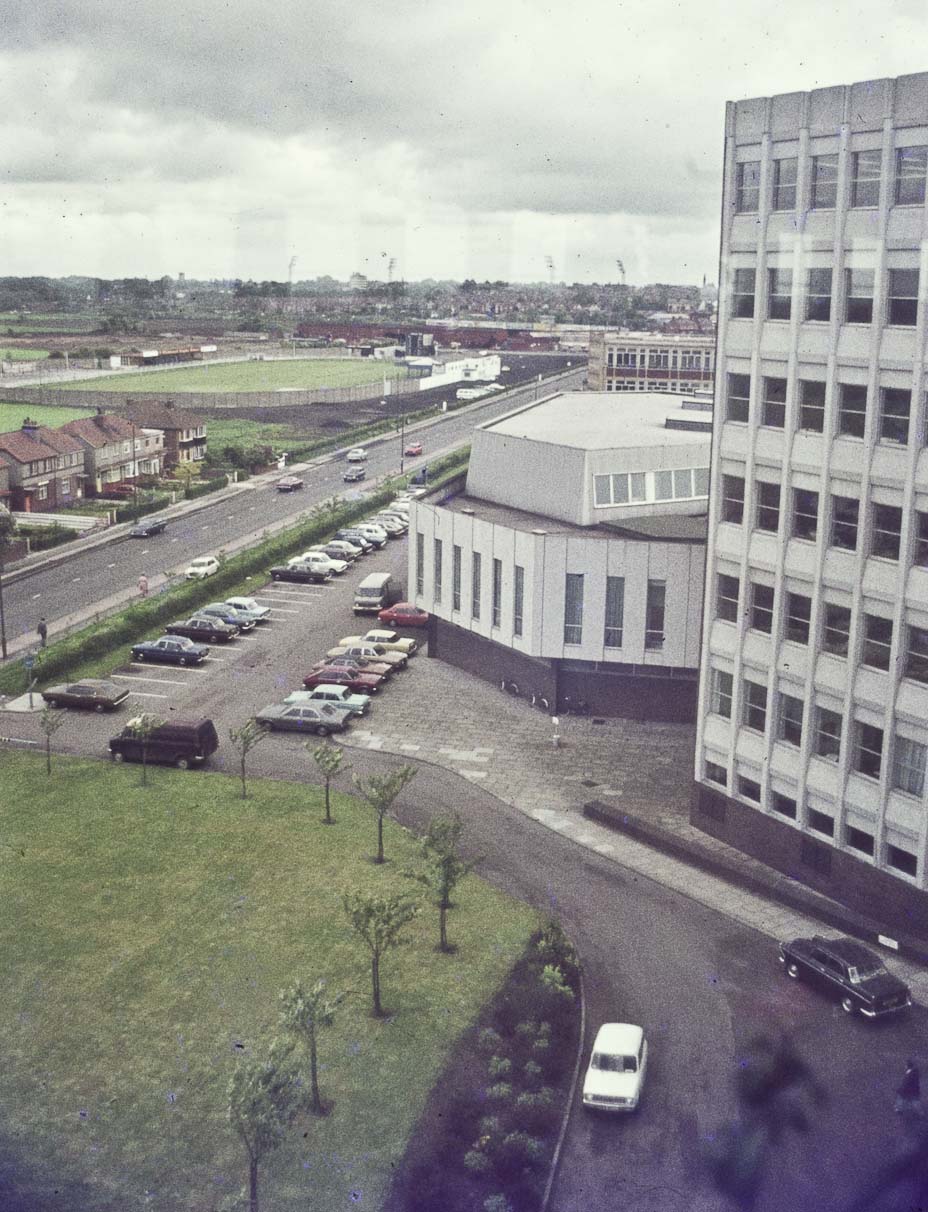
I came across a couple of fascinating photographs of the old Sealand Road ground recently and would like to thank former Manweb employee, Peter Thomas, for allowing me to use them. Peter’s pictures were taken from the top of the old Manweb building which was itself demolished at the turn of the century. I’ve added a couple of my own pictures, taken in 1990, which also show the outside of the ground from a slightly different viewpoint.
The two Manweb pictures show the view looking up Sealand Road towards the city centre. The patch of green on the left of Sealand Road is the Greyhound Stadium with the old football ground just above it. I think that the pictures were taken in the mid 1970s based on the work that appears to be taking place between the two stadiums. I believe that this is the construction of the small industrial estate that was built following the sale of the old training annexe in 1973. It also appears as if the picture was taken before the new office block was built at the front of the ground, around the time of promotion in 1975. You can just make out the old wooden office at the corner of the Main Stand and Sealand Road End. The old wooden main stand was replaced in 1979.
The Greyhound Stadium was itself demolished around 1986 while the football ground was vacated in 1990 and then eventually knocked down in 1992.
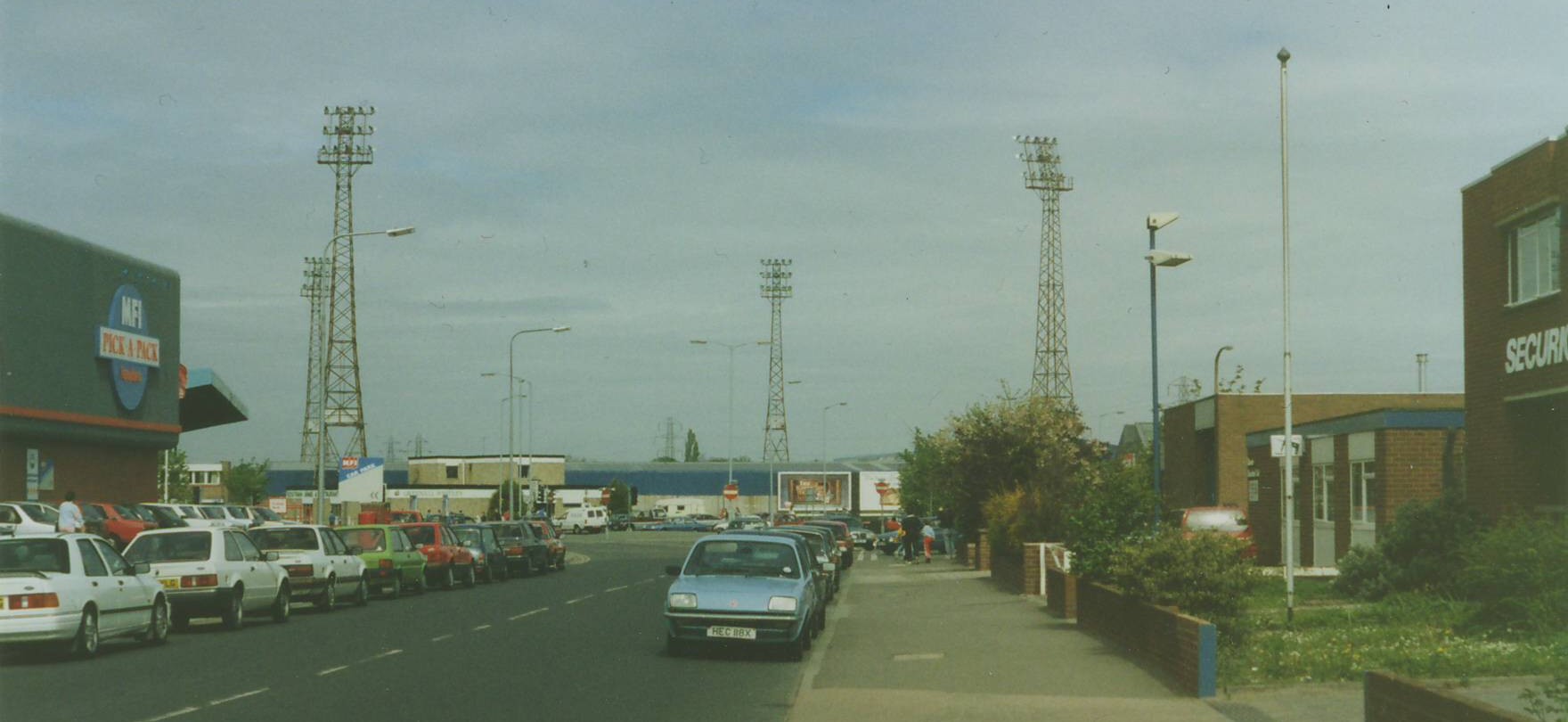
The third picture was taken from the inner ring-road in spring 1990 and shows how much the old ground used to stand out on the skyline.
The final picture is taken from Bumpers Lane before the final game against Rotherham United in April 1990.
If anyone else has any further thoughts on the dates of the photos taken from the top of the Manweb building I would be interested to hear any comments.














 Chester Football History