Olympian 2

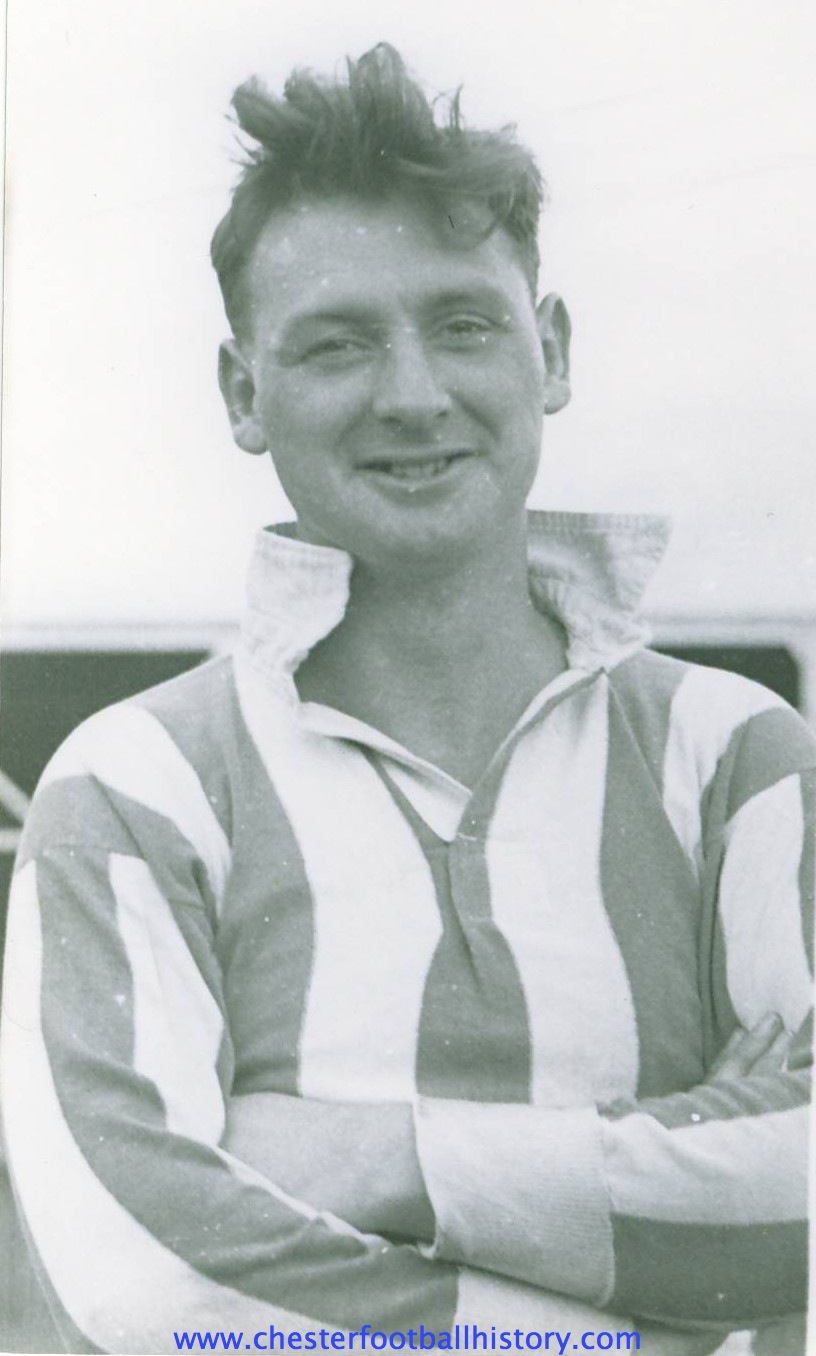
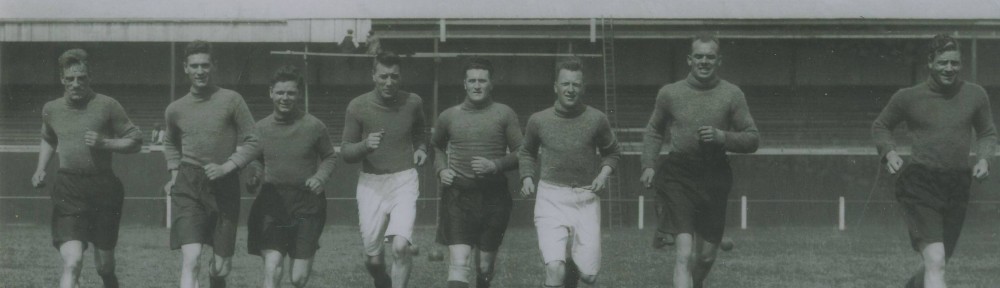
Following on from the Grenville Millington article, another former Chester player played a key role in the Great Britain team that reached the Semi-Final of the football competition at the 1948 Olympics in London. Eric Lee played in all of Britain’s fixtures in the competition and by all accounts emerged with a great deal of credit. Legendary former Manchester United manager Sir Matt Busby, who coached the Olympic team, rated him as potentially one of the best half-backs in the game at the time.

Eric was born in 1922 and signed for Chester after being spotted by manager Frank Brown as a 17 year old playing in local football for Hoole Alex. During the war he served in India and Burma and made his full debut for his home-town club in the first post-war fixture at York City in August 1946. Over the next 11 years Eric played 363 league games for Chester placing him fourth in the list of the club’s Football League appearances. In recognition of his service he was awarded a benefit game against Liverpool in 1952.

Eric Lee

Eric Lee

Throughout his entire time on the books at Sealand Road Eric remained as an amateur as he advanced his career in teaching. Chester themselves offered Eric a professional contract and at least one other unnamed club offered a similar deal but, perhaps with an eye to the future, he turned them both down. Although this decision cost Eric the opportunity of playing at a higher level it did open the door for him to represent his country at an amateur level. During the 1946/47 season he was a regular at left half for Chester where his performances earned an England amateur call-up against Wales.

By the following campaign Eric had started his teacher training at Loughborough College which restricted his appearances for Chester. These limitations did not always go down well at Sealand Road and it appears that there was some discussion and doubts about whether the Chester team should be disrupted to accommodate him.

Despite these doubts and a lack of match practice, a late call up to appear in a representative game against a University eleven in Bristol saw Eric impress the selectors who proceeded to pick him for an FA X1 in an Olympic Trial match at Portsmouth in February 1948. The FA X1 consisted of players from the likes of Yorkshire Amateurs, Bromley and Sutton and Eric captained the team that beat Scottish amateurs Queen’s Park 4-0. The Sporting Chronicle reported that Eric had a good game and he was chosen to play in another trial match at Hampden Park in May.

For the second trial Eric furthered his ambition to get into the Olympic team as he played for the Stripes against the Whites. In the first half he played at left half and switched to centre-half for the second 45 minutes as the Stripes won 4-1.

On June 19th Eric was selected at centre half for the final British Association Olympic trial team to play Holland in Amsterdam. Although the British team were beaten by a last minute goal Eric was reported to have played brilliantly and this was followed by the news that he was one of 23 players to report to coach Matt Busby for special training in readiness for the Olympic Games. This good news was accompanied by the announcement that he had also re-signed for Chester with the prospect of increased availability in the new season.

A final warm-up game was played against France, in Nantes, on July 25th before the Olympic competition opened with a First Round fixture against Holland at Arsenal on July 31st. Playing at centre-half Eric helped Britain to an unexpected victory over the Dutch team and five days later a 1-0 win over the French at Fulham earned the side a place in the semi-finals. The Daily Dispatch reported that Britain’s strength against the French had been in the half-back line and Eric was said to have played better than he did against the Dutch.

In the Semi-Final Yugoslavia deservedly triumphed over Britain by three goals to one but Eric emerged as one of the successes in the game and was described by one radio commentator as “iron-curtain Lee”. Two days later Denmark defeated the British 5-3 in the Third and Fourth place play-off game to deny the players a bronze medal.

After the tournament Eric returned to his teacher training at Loughborough while continuing to establish his reputation at Chester as an ice-cool player, calm under pressure and a master of the sliding tackle.

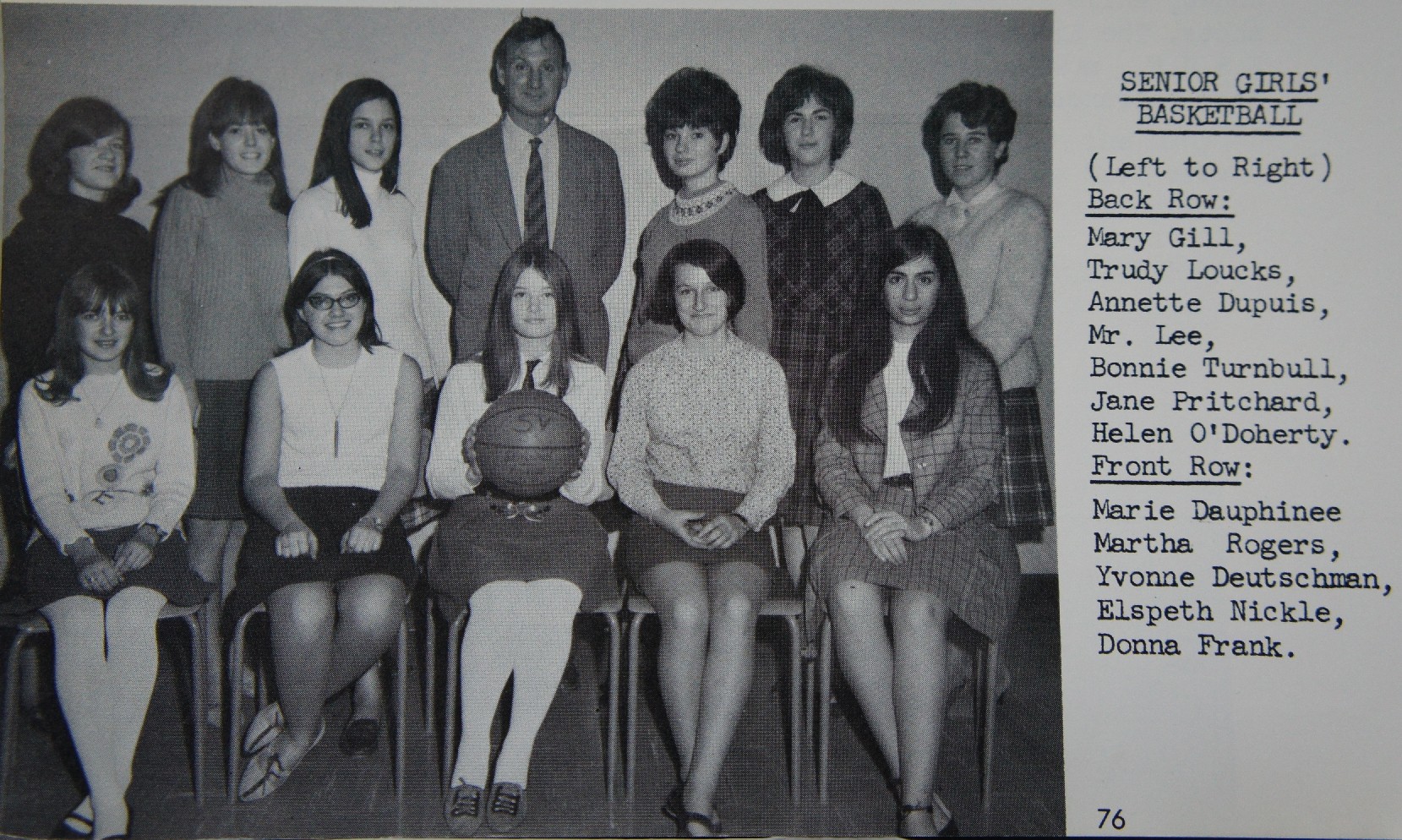
Eric left Chester in 1957 and emigrated to Canada where he took up a teaching job, initially in Manitoba before moving to Quebec. A Physical Education and geography teacher, Eric took up a position with Saguenay Valley High School in Arvida, Quebec in 1960 where he later became Principal. In 1970 he moved to Ottawa where he lived until his death in June 1999. The two photos below are taken from Saguenay Valley school yearbooks and I’m indebted to Francois Lafortune of Arvida for supplying the photographs and the information on Eric’s life in Canada.

As a postscript the Lee family had a more recent link to the Olympics with Peter, the youngest of Eric’s three sons, having an illustrious career as an ice hockey player. In 2006 Peter was assistant coach to the Switzerland Ice Hockey team at the Winter Olympics in Torino as well as at Vancouver in 2010.

PE Teacher Eric in the 1960s

Copyright © 2012 http://www.chesterfootballhistory.com All Rights Reserved
Olympian 1

In the lead up to the Olympics there has been a lot of discussion about the Great Britain team and the inclusion of players from Wales, Scotland and Ireland in the British squad. Ryan Giggs and Craig Bellamy have been mentioned as potential members of the team but Chester’s own Welshman, Queensferry-born Grenville Millington, has already beaten them to it having been part of the British squad that played in Bulgaria in a qualifier for the 1972 Munich Olympics.
 

Olympic badge

At the start of the 1970s Grenville was playing for non-league Rhyl having left Chester in 1970 after a single league appearance. The Lilywhites had a strong team having reached the Third Round of the FA Cup in 1971 and the semi-final of the Welsh Cup the following year, beating Chester on the way. Grenville himself was working at British Steel in Shotton and his performances at Belle Vue saw him earn a total of nine caps for the Welsh amateur team. Amongst these appearances were matches against a powerful England amateur side that drew him to the attention of the Olympic selectors. Grenville himself recalls:
 
“Charles Hughes was manager of the Olympic team and he came to watch Rhyl and also sent a couple of his representatives. As a result I got the call to go with the team to Bulgaria. We trained at Bisham Abbey. It’s a long journey from Rhyl to Chester and then down to Bisham on a Saturday after a game. There was training on a Sunday morning and afternoon before the trip back in the evening for work the following morning. I used to join up with a couple of Skelmersdale players at Chester station but most of the squad were based around London from teams like Hendon and Leatherhead. There were fifteen Englishmen and myself.”
 
With all the furore about non-English players I wondered if there had been similar concerns in 1972:
 
“There was quite a bit of fuss but it was different in those days. When I got there I was the only non-English player and also the youngest but they treated me very well. The manager and all the staff were English and the eight member committee consisted of five Englishmen and one each from Wales, Scotland and Ireland. Of course, if there was any voting the other nations would be out-voted so that’s probably why they haven’t been overjoyed to get involved this time because the English always had the monopoly.”
 
For the games the British team played Bulgaria in a two-legged qualifying game. The first leg was played at Wembley with Britain winning by a single goal but Grenville was not involved. However he was selected for the return leg in Sofia and featured for the Olympic team in two friendlies including a match against Motherwell.
 
“I was disappointed not to be in the squad for the home leg and I’m not sure how the Olympic selectors found their way to Rhyl from London to see me for the second game. It was fantastic for me to be involved though. I’d never flown before and it was the first time I had been out of the country. The ground in Sofia was packed because it was their main team and with Great Britain winning the first game it added to the atmosphere. I think they had been expected to win in England.
 

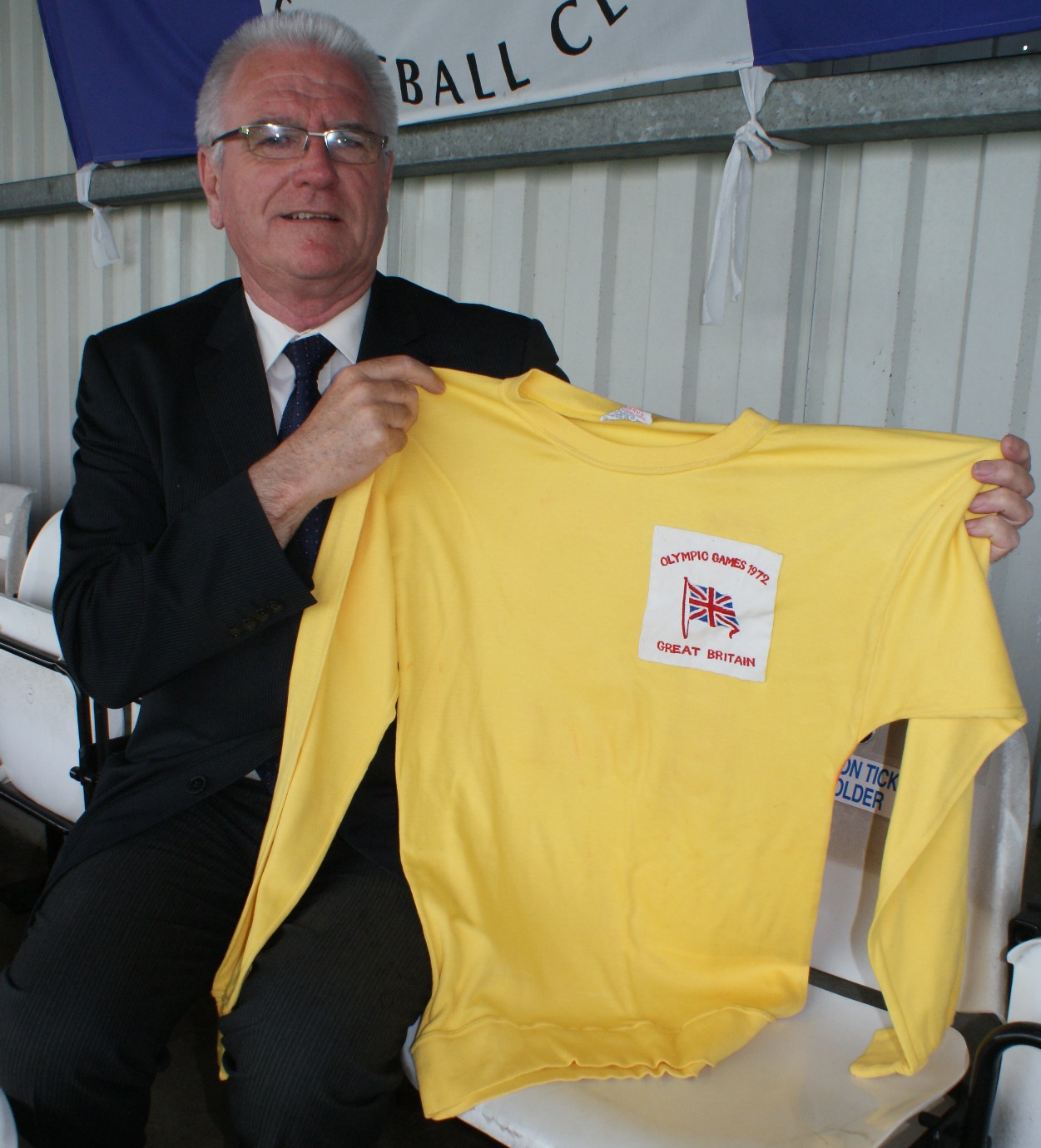
Grenville with his Olympic shirt

I was on the bench with John Swannell of Hendon, who was a very experienced goalkeeper, starting the game. Although we won the first game 1-0 we were beaten in the second leg 5-0. It sounds a bit harsh but the Bulgarian team was made up of players who were in the army. About three weeks later the Bulgarians played the England professional team and it was the same line-up. We were all amateurs but it wasn’t like that in Bulgaria. I was training after work and had to get permission from work to go whereas in other countries they were pros so it was no contest really. The players were shattered at the end of the game because the bulk of the team had been together for nearly three years. It was the end of the dream for them to play in the Olympics.”
 
After Grenville’s brief flirtation with Olympic glory he returned to Rhyl and then went to Brighton and Hove Albion on trial.
 
“I gave up my position at the steelworks to go down to Brighton which was a big move for me because at the time it was a job for life. I was down at Brighton for three months but it didn’t work out so I came back with the intention of joining the police force. However Ken Roberts rang me and asked if I would join Chester and be the understudy to John Taylor until the end of the season.  When he got injured I took over in goal and kept my place so I was offered a contract in the summer.”
 
The rest is history and Grenville went on to play more than 300 games at Sealand Road until 1983.
 
As for the Great Britain Olympic team. The early 1970s marked the dying days of amateur football in this country and the distinction between true amateurs and professionals was removed in 1974. For Britain this meant that the Munich games were the last occasion that the FA entered a football team for the competition. With the London games only weeks away, and Britain entering a team for the first time in 40 years, it’s nice to know that Chester has some connection to the event. I’ll be writing about an even stronger Olympic link in another article.

Copyright © 2012 http://www.chesterfootballhistory.com All Rights Reserved

Deva Stadium Part 1


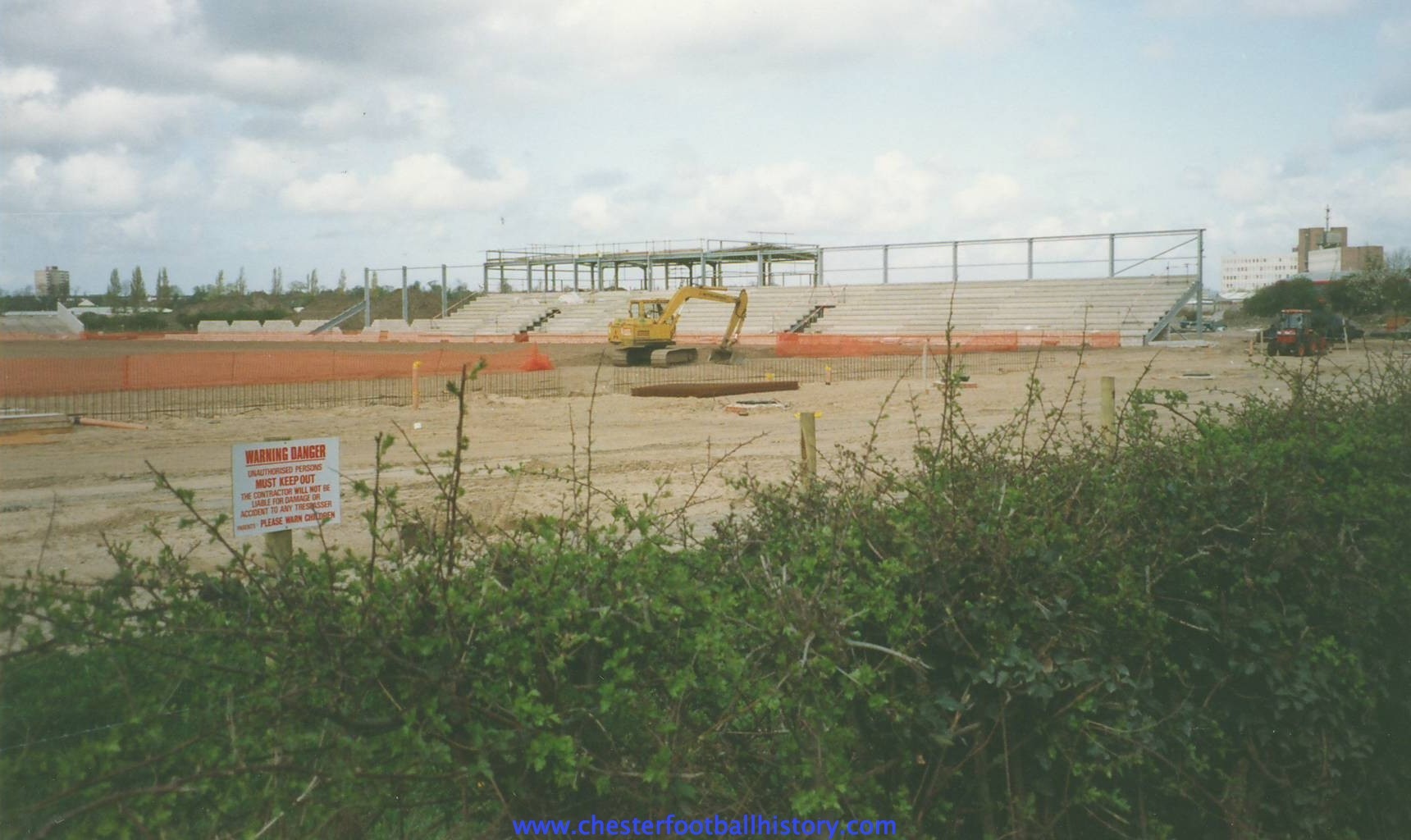
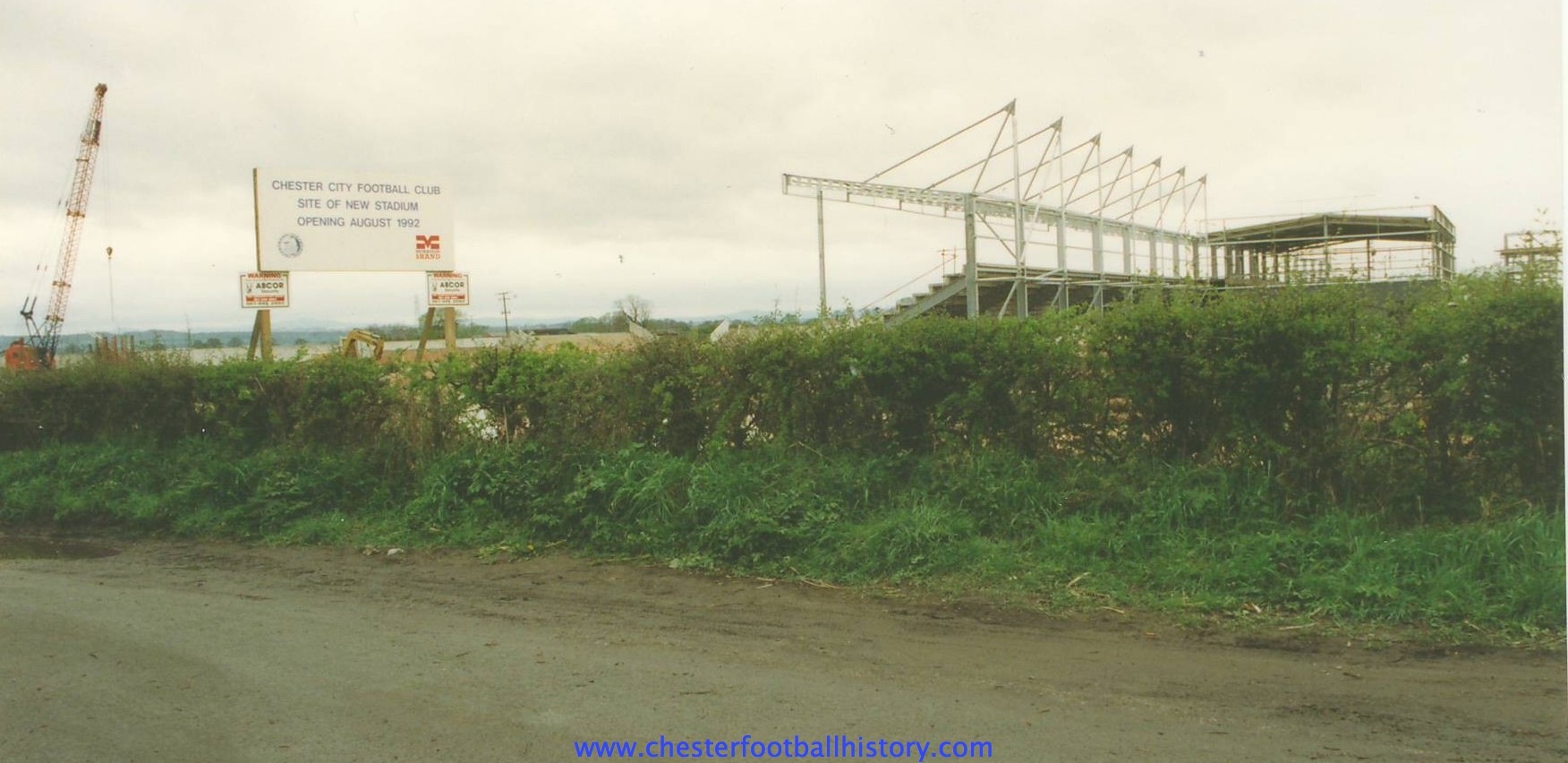
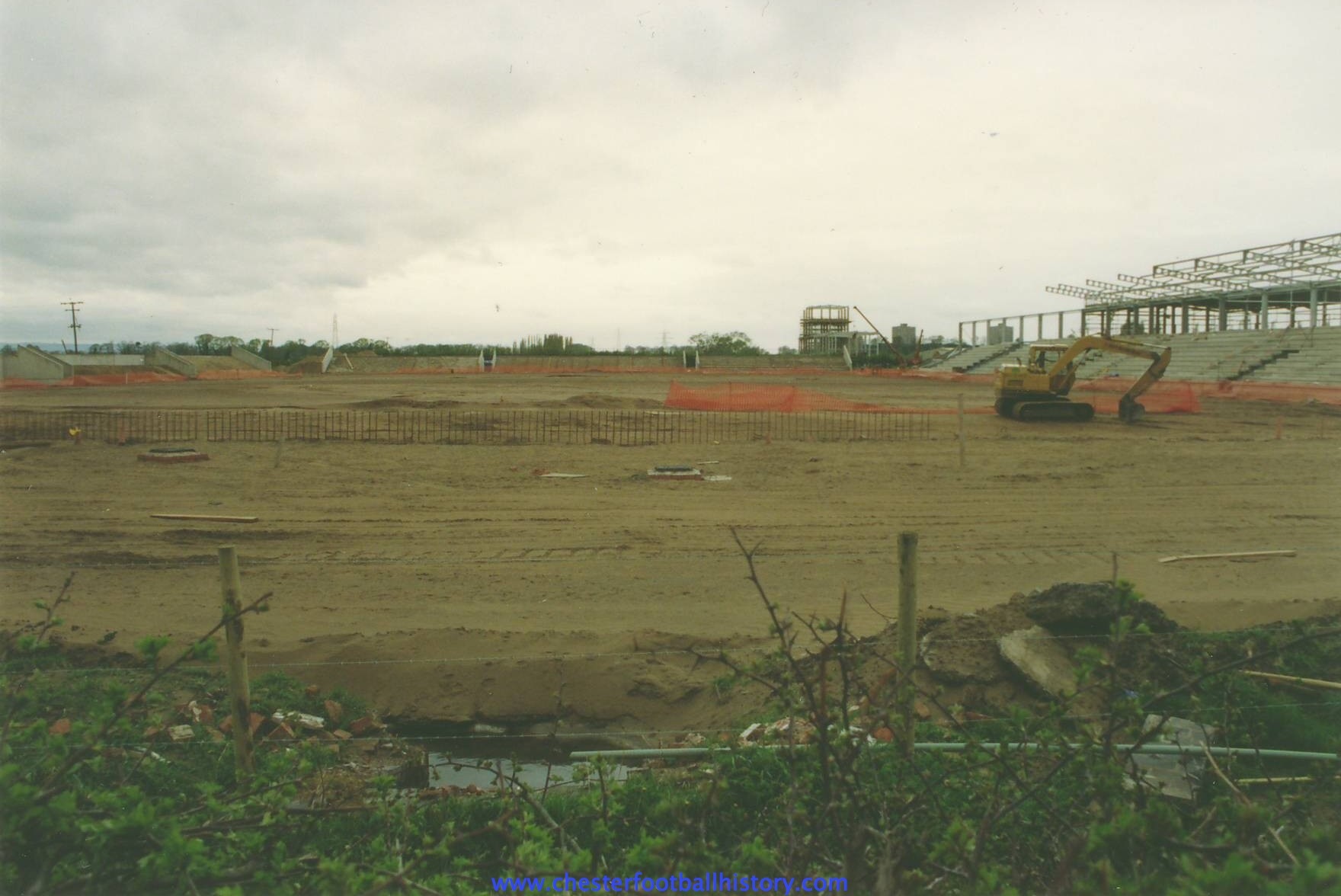
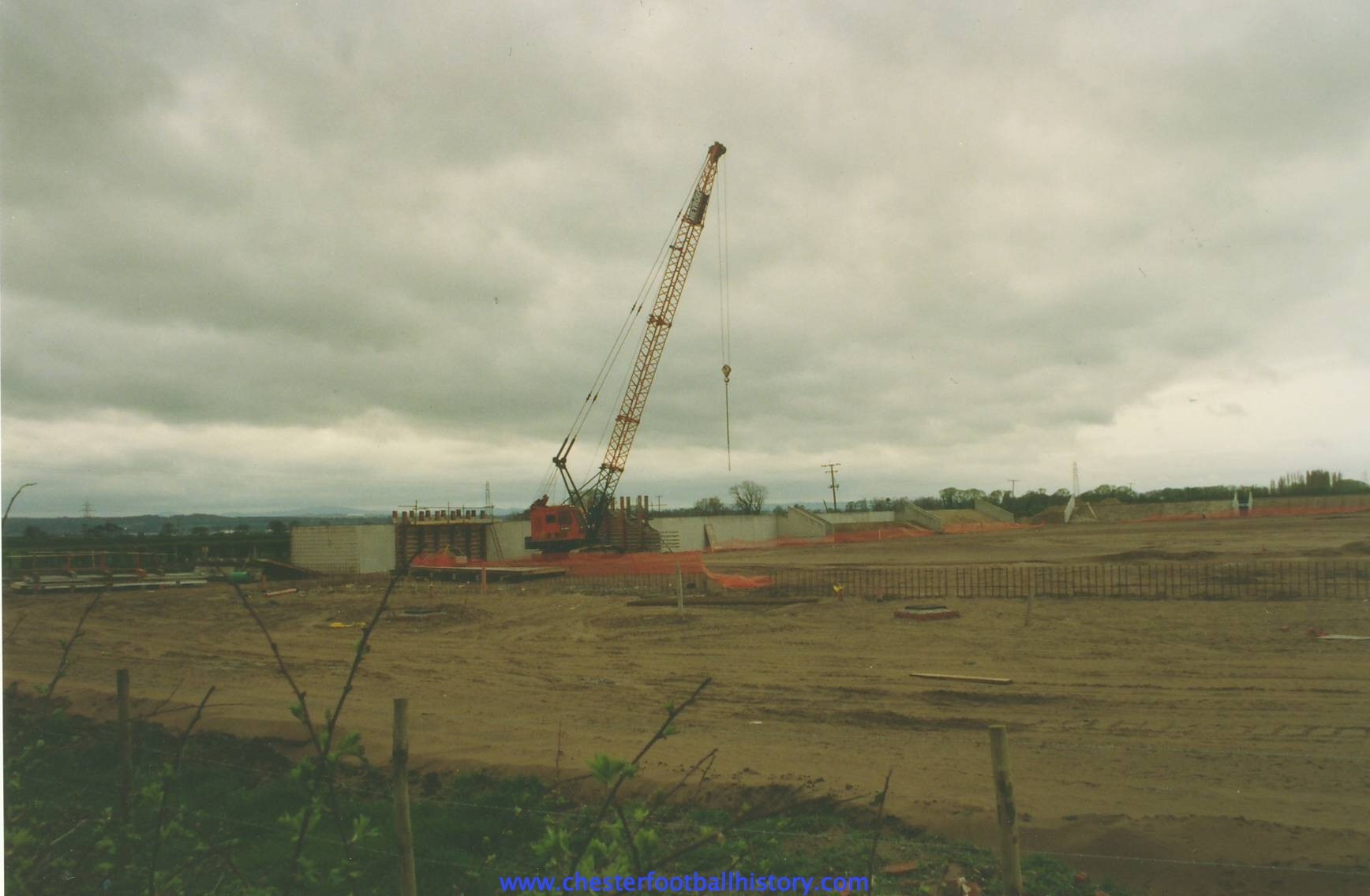
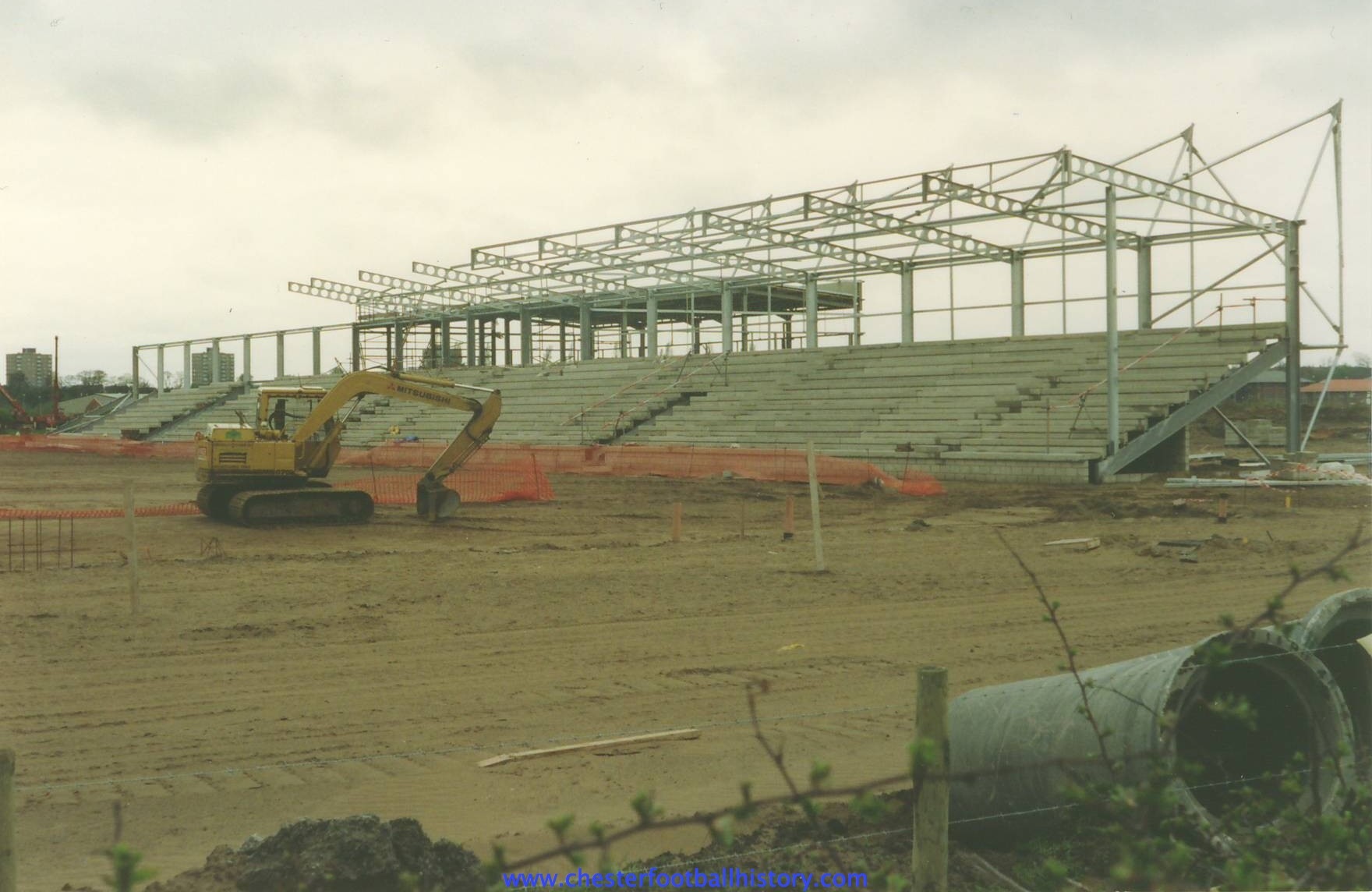
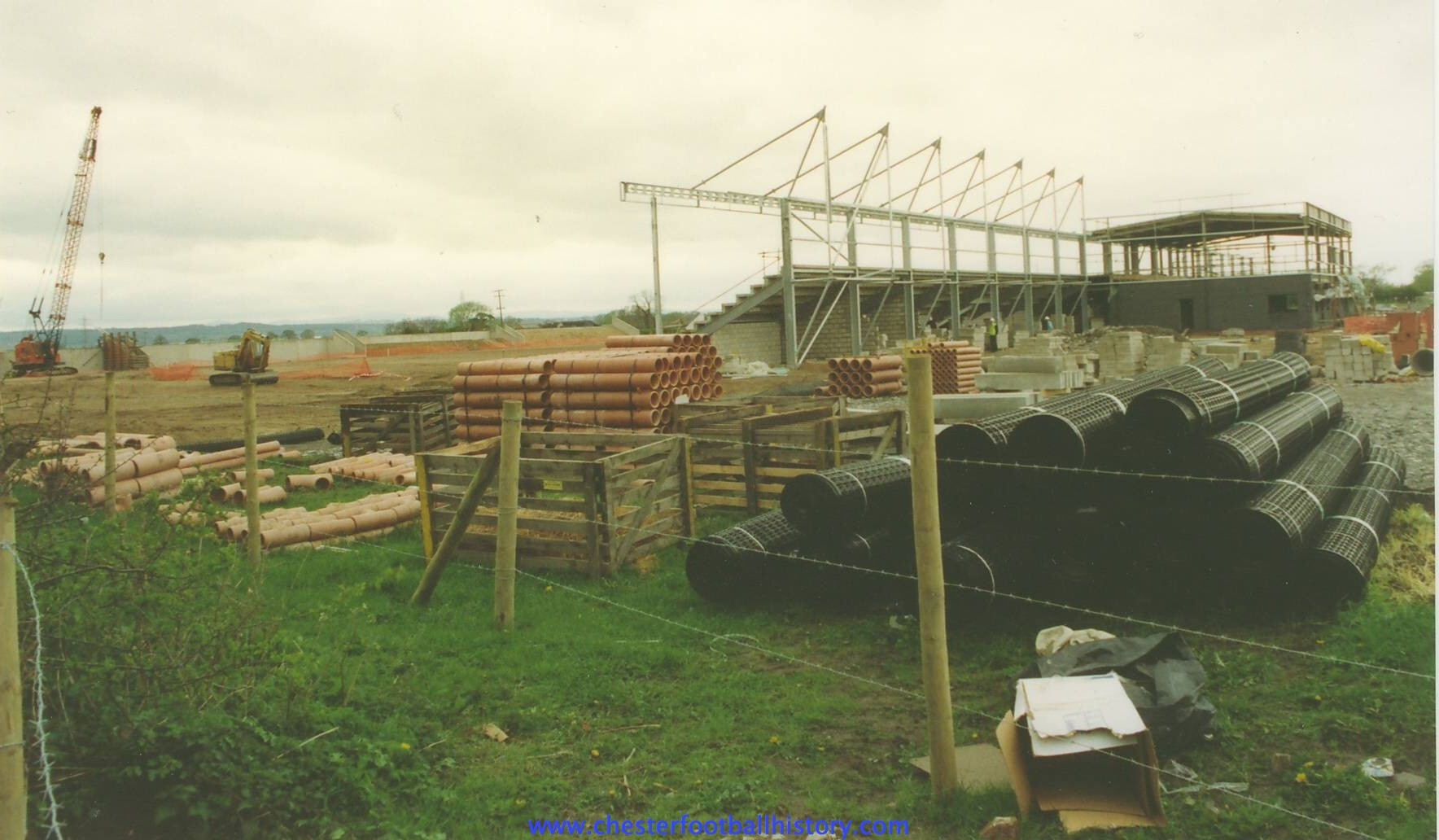
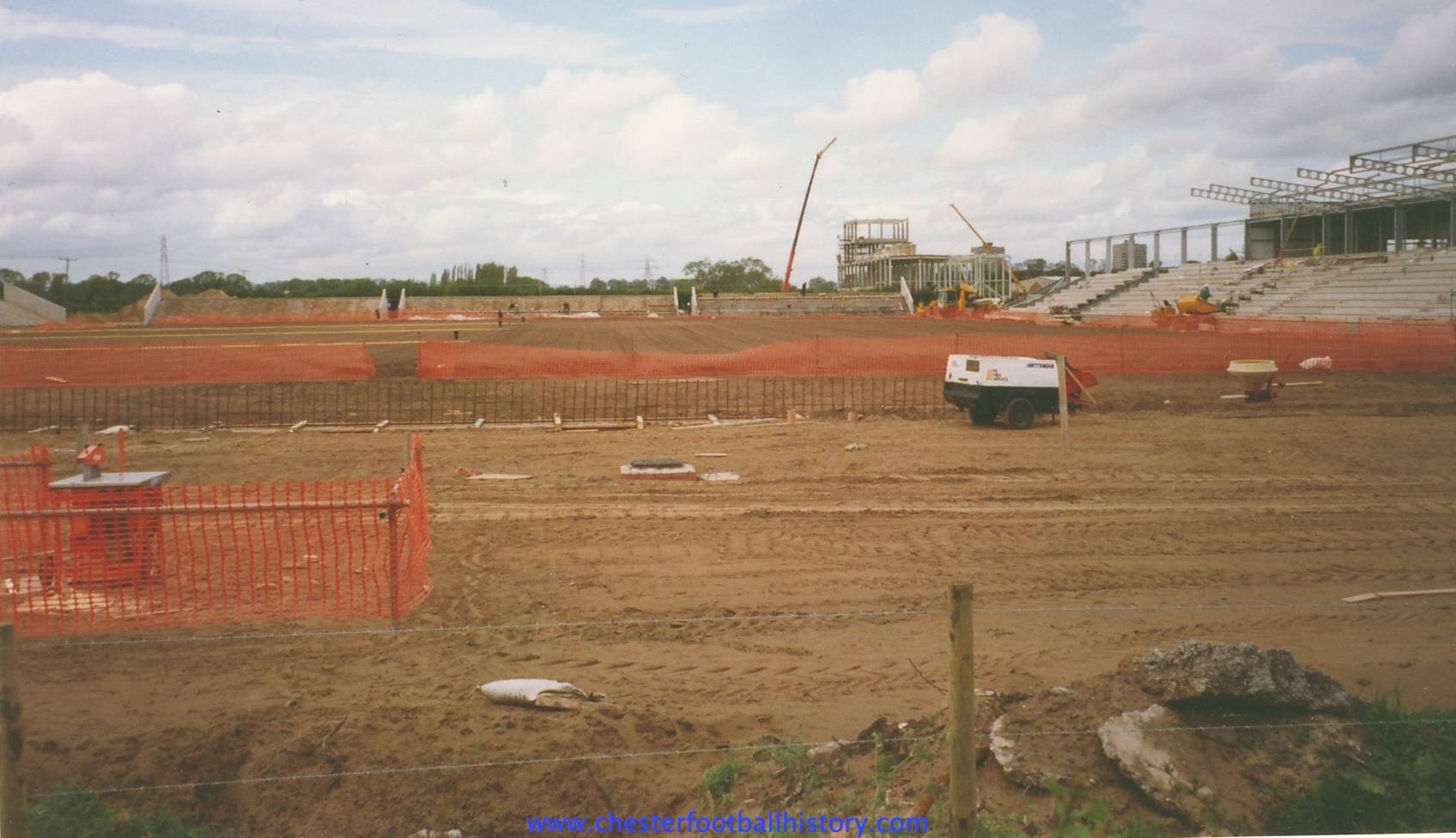
It’s 20 years this year since the Deva Stadium was constructed with the £3 million ground completed in a mere 30 weeks. The first game took place on August 25th 1992, against Stockport County, in the Coca Cola League Cup and I have recollections of a chaotic opening night with reports of wet paint and club operations being run from portakabins in the car park.

No-one could ever call the Deva Stadium the most attractive ground in the country and at best it can be described as functional but after 20 years it does seem to have finally developed its own character and now feels as comfortable as an old shoe. I still think it must be the only ground in the country with its own micro-climate as a howling gale invariable sweeps the stadium on match day as the rest of the city experiences a zen-like calm.

One of the problems has always been the low capacity and it’s a shame that the proposals for a more practical 10,000 stadium couldn’t be implemented. Granted attendances may not have reached this level but at least it would have given more flexibility and reduced congestion when the ground reached more than two-thirds full. Remember Preston , Stockport and Scarborough?

When the subject of a move to the end of Bumpers Lane first arose in the latter half of the 1980s various pie in the sky proposals were put forward. The most ambitious being a 15,000-20,000 capacity ground as part of a sports complex with restaurant, leisure centre and athletics track. Gradually this was scaled down until the tight timescales meant we ended up with the basic 6,000 stadium we have today. Bearing in mind the current requirements for training facilities it’s interesting to note that one of the initial planning applications from developers Morrisons included two practice pitches occupying half the current car park area. This was rejected by the council who offered the land at a low rent on the condition that stringent parking criteria were met.

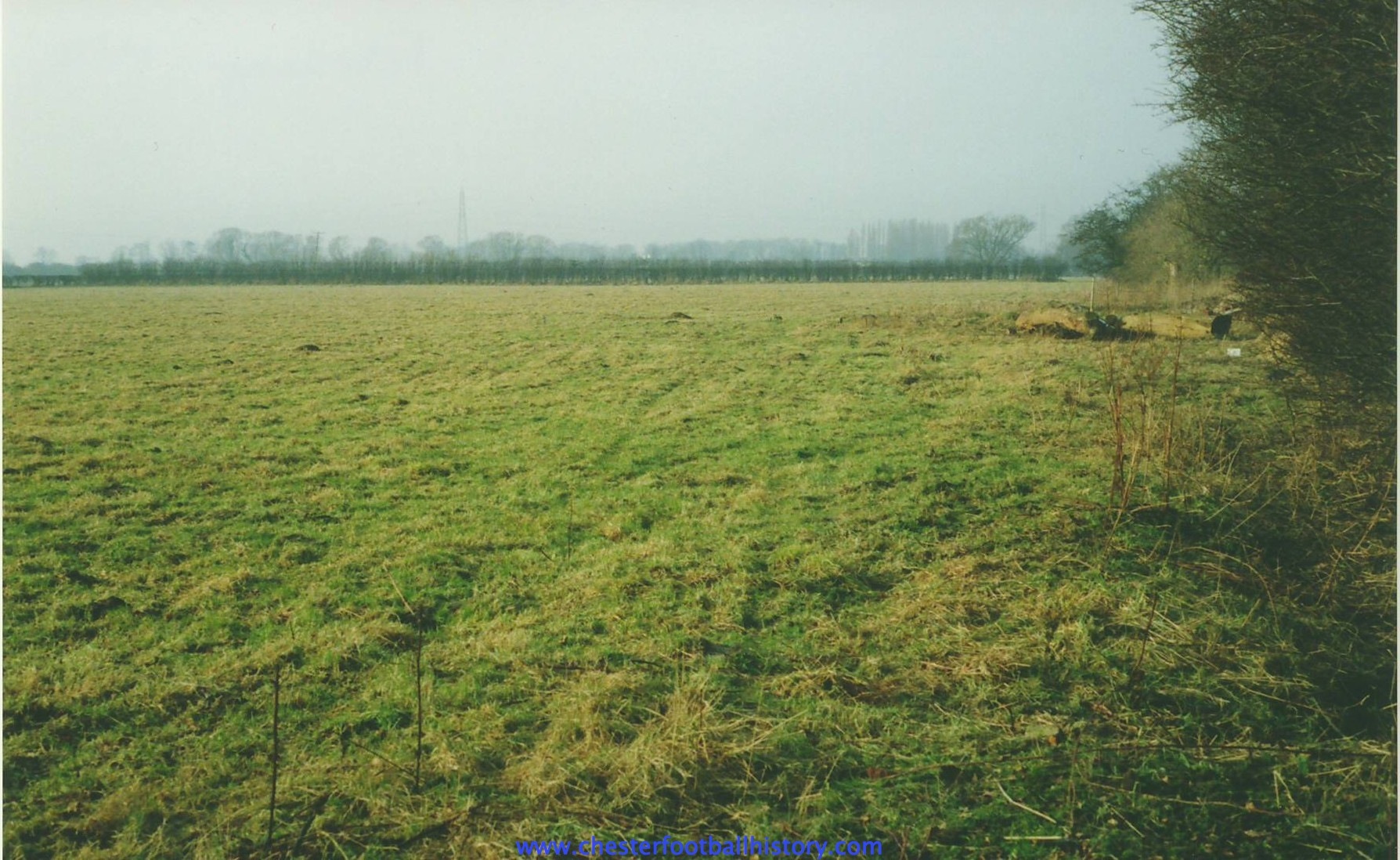
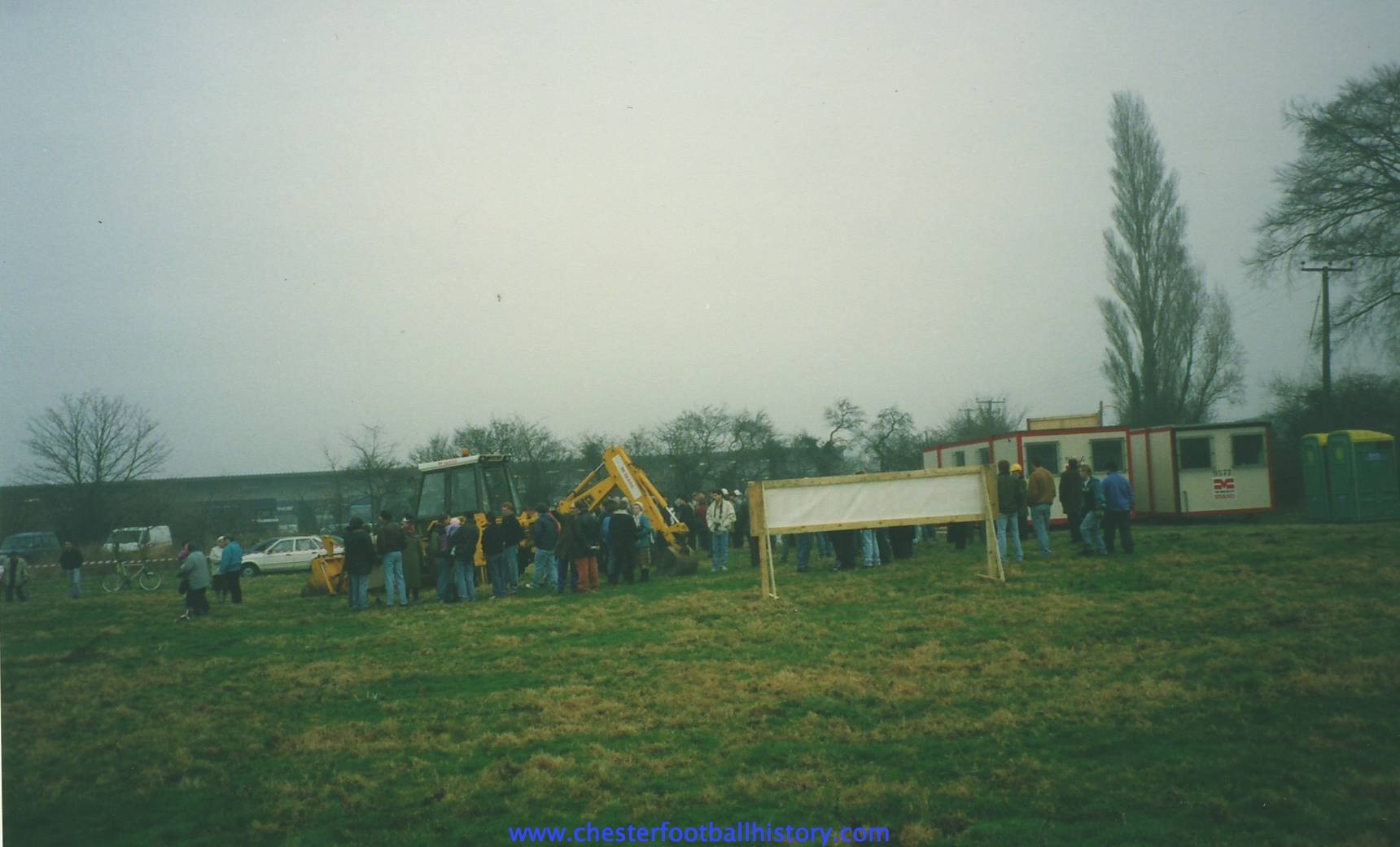
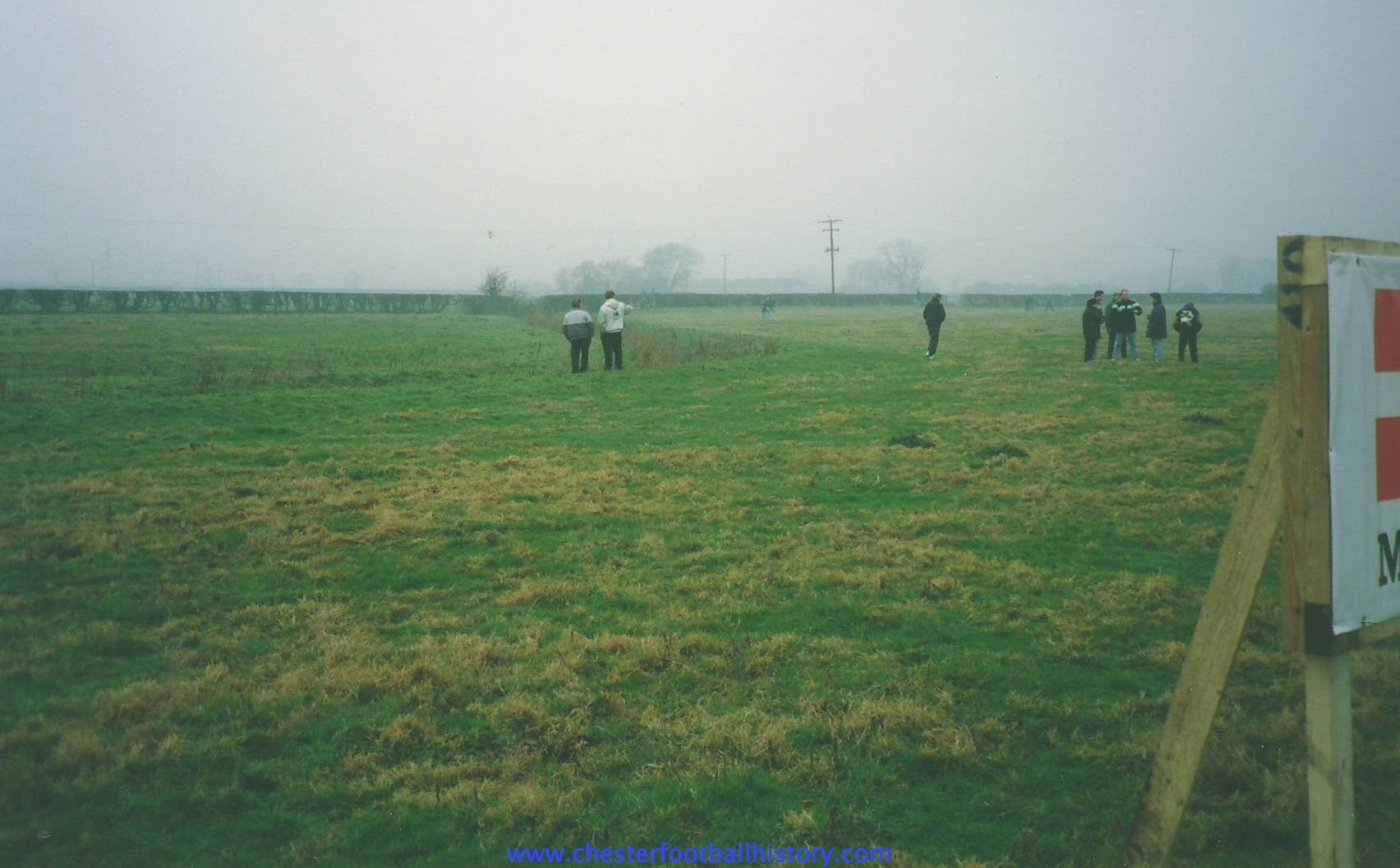
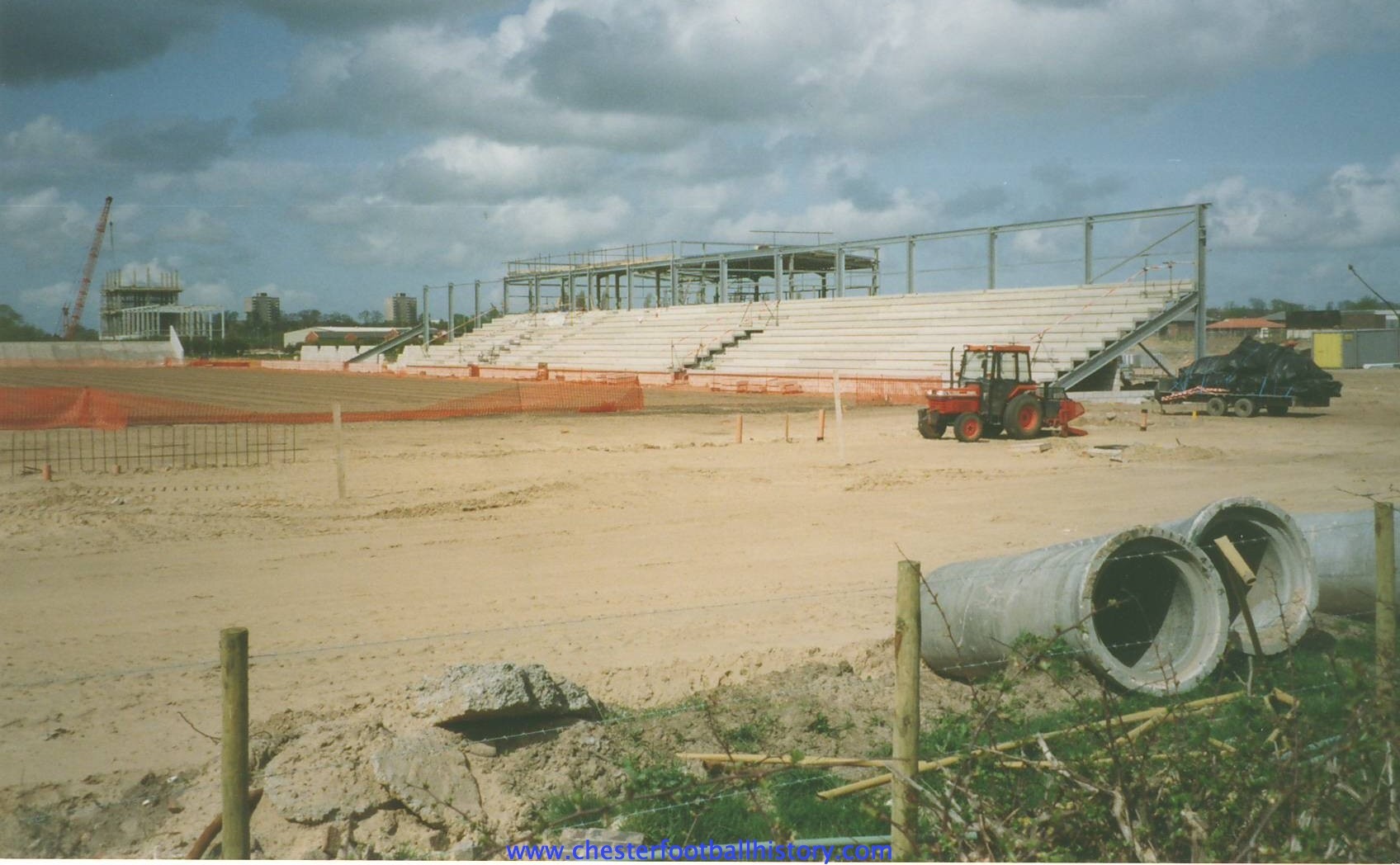
Over the next few weeks I intend posting a series of photographs showing the building of the ground which started on January 28th 1992 with a turf-cutting ceremony.  The first four photographs were actually taken as far back as February 1991 when the prolonged political machinations were still ongoing and no firm planning application had been approved. All four were taken from the end of Bumpers Lane looking towards Blacon and Sealand.

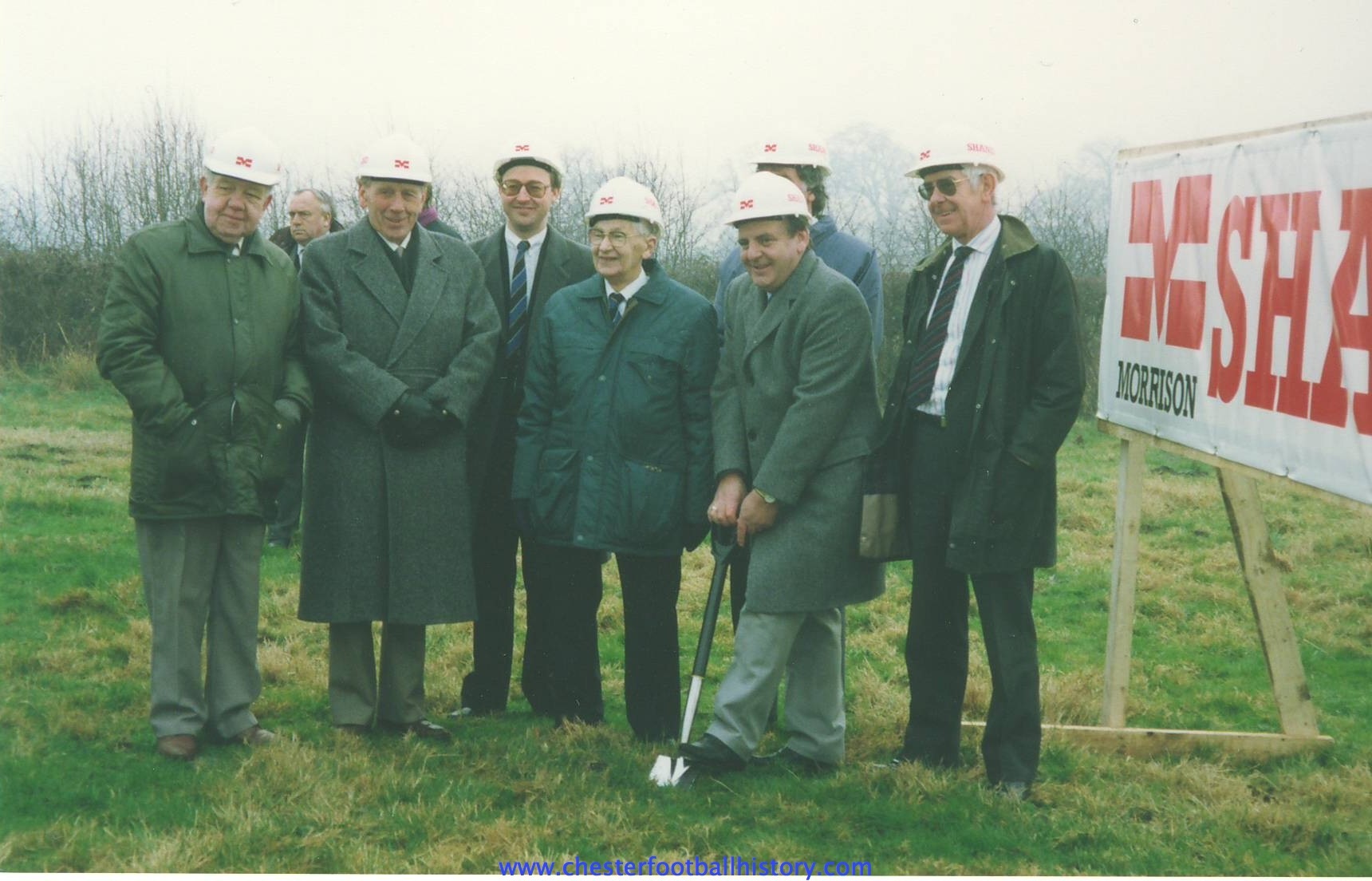
The second set of photographs were taken 12 months later at the turf-cutting ceremony.

Chairman Ray Crofts (with spade) alongside former chairman Reg Rowlands and vice-presidents Cliff Thompson (far left), Len Lloyd (second left). Also pictured are representatives from Morrisons while Harry McNally is partially hidden
Harry McNally digs the first sod with Les Perry from Blacon who won the special draw to make the first cut.
Ray Crofts with Les Perry
The cause of the drainage problems at the corner of the away end?

The ceremony was attended by more than 200 fans but the drama was still not over as an angry city council claimed that the whole event had been held on the land without permission as the rental agreement remained unsigned. The council were particularly annoyed that Morrison’s had started to move equipment on to the land and peg out the site and they only allowed the event to take place so as not to disappoint fans that had turned up. As a result an injunction was issued preventing any further work and the builders were evicted from the land immediately after the ceremony. Fortunately the problems were quickly ironed out and construction started for a second time on February 3rd.

Morrison’s themselves were desperate to get the ground completed as quickly as possible as they risked forfeiting a £500,000 bond left with the Football League if the new stadium was not completed by the start of the 1992/93 season. Construction moved swiftly on what was by now a very basic ground and many supporters regularly made the journey down Bumpers Lane, past the decaying skeleton of the Sealand Road ground, to take photographs of the new structure.  Meanwhile, 40 miles away in Macclesfield, Harry McNally performed miracles by dragging the Blues away from a seemingly impossible situation in the third tier relegation zone.

I’ll post some more photos of the construction over the next few weeks. If anyone else has any interesting photos of the ground building please get in touch.

Copyright © 2012 http://www.chesterfootballhistory.com All Rights Reserved

Green Day 2

Following on from the Everything’s Gone Green article and Fraser’s reminiscences I’ve uncovered additional information about the green kit and further evidence of its unpopularity, this time with the players.

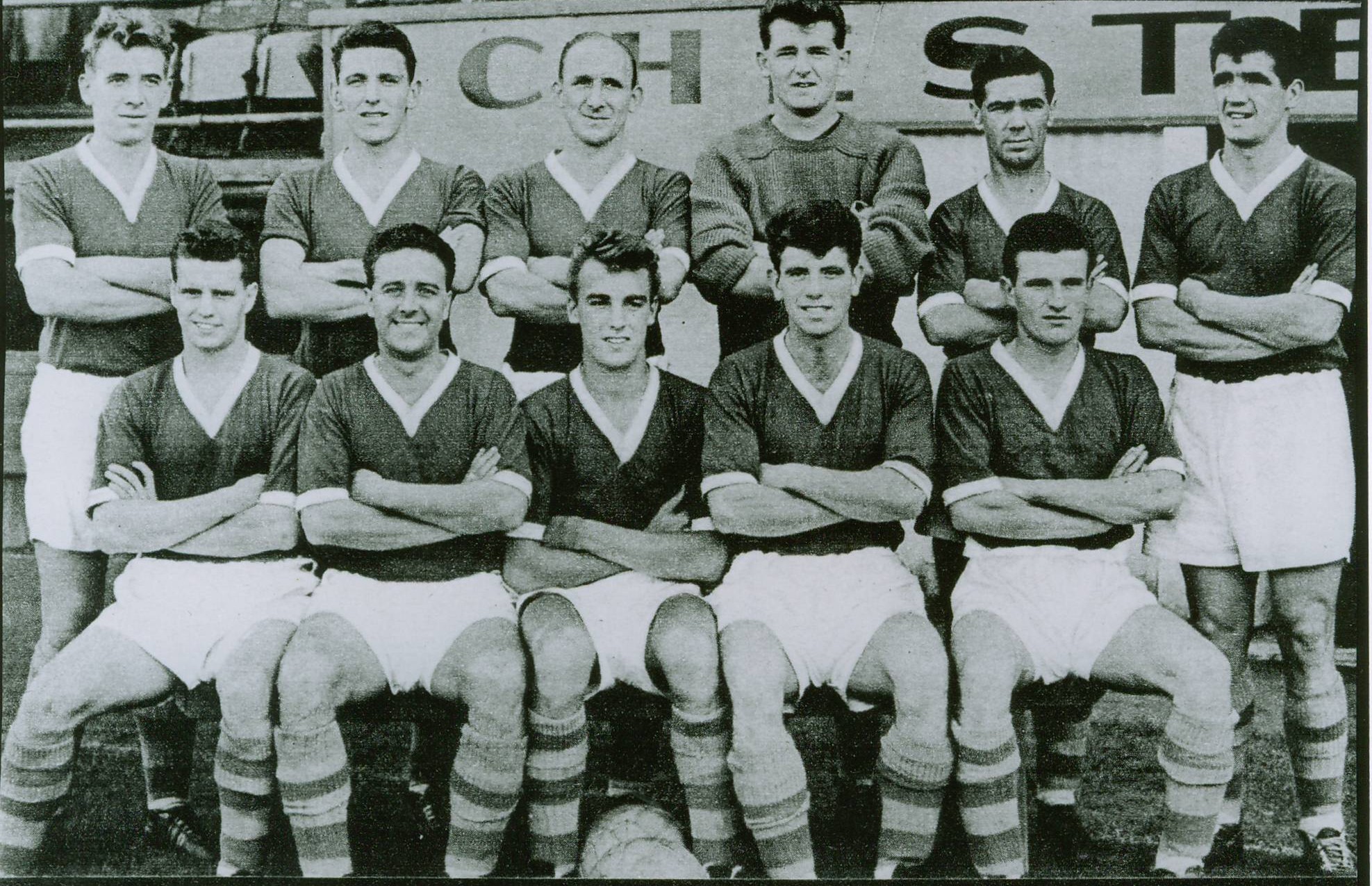
I mentioned that the introduction of the green and gold shirts coincided with Stan Pearson’s appointment as player-manager in March 1959 and I have now learnt that the colours were chosen by Stan’s wife. While it’s easy to appreciate the new manager wanting to create an impression it seems astonishing that the move away from the long established blue and white should happen in this way. Perhaps understandably this information was not publicised at the time and there is little doubt that a similar move today would be met with a massive outcry.

I was speaking to Ronnie Hughes at a charity game in Mold on Sunday and he described the shirts as terrible. Ronnie, who played more than 400 times for Chester between 1951 and 1962 said that the switch from blue and white did not go down well with the players and the dressing room was very quiet for two or three weeks after the announcement.

Full back John Evans was a regular in the Cheshire County League side until he made his full league debut in 1961. According to John the reserves used to inherit the first team’s shirt at the end of the season which were then passed down to the A team the following year and eventually used in training. He thought the shirts were awful and because the material was a mix of wool and cotton they didn’t feel good or wear well. In addition the colours were a dull green and faded in the wash so never looked smart. With such a negative feeling towards the colours it’s perhaps unsurprising that performances on the pitch also suffered. It’s easy to see why supporters should associate the green with bad luck and why they were hastily dropped after Pearson was sacked.

The green shirts were provided by Hack’s who had a shop in the arcade, on the right hand side as you enter from Bridge Street, and were regular kit suppliers for many years.

In the earlier article I included a photograph of a scarf which is on display at the Exacta and was donated by an old supporter. Both Ronnie and John remember that they were given similar scarves by the club one Christmas. John recalls that the players were always well looked after by the board of directors and received ties and scarves which were supplied by Bradley’s, an outfitters on Foregate Street. Meanwhile chairman Reg Rowlands always presented the players with a bowl of hyacinths from his florist’s shop at the festive period. Clearly a different era and difficult to imagine Manchester City handing similar gifts to Carlos Tevez and Mario Balotelli.

Copyright © 2012 http://www.chesterfootballhistory.com All Rights Reserved
Green Day 1

Thanks to Fraser Warburton for providing his memories of the green kit:

When I first starting watching Chester they played in green shirts, old gold trim and white shorts. This sounds very appealing and I was rather pleased as the colours were very unusual, in a period of unimaginative and somewhat plain strips, but it was not a pleasurable experience to see the kit in action.  The green, though by no means the dark ivy green of a hundred years or so ago, was by no means vibrant and was not as light as say Burscough’s kit. Neither did it have the brightening effect of a combination with white which we have seen in recent years with the hoops of  Yeovil and Northwich. The ‘old gold’ is an intriguing description, but was in practice a dark (you could almost say ‘dirty’) yellow, and had the effect of muting the green. It was the official kit for three seasons, from 1959 to 1962.  In the first two seasons it was combined with green and yellow hooped stockings, and in the last with yellow (‘old gold’). 

I don’t know whether statistics would prove that the winter of of 1960-1 was unusually wet, but my overriding memories of the time were of watching soaked and drab green shirts on a churned muddy pitch against the background of the weathered concrete and corrugated iron of the old stadium on an overcast day.  What wasn’t actually rusty was painted a dark rust-red colour; even the gravel on the Kop, where the flagged terracing finished, seemed to be crushed from the local sandstone.  Muddy green, brown, rust-red – it was like camouflage.

So where did the green come from?  For obvious reasons green isn’t the most practical colour to play a field-based sport in, and the few teams that use it tend to throw in generous dollops of white.  Was it a memory in the mind of a director of the older green kit?  Information was at a premium in those days, and no-one in my generation was aware that Chester had played in green until 1920.  But that was only forty years before 1959, when the colour was reintroduced.  Nowadays we’re well aware of Chester’s colours in the 1970s; in fact, next season’s kit is a bow to the 1974 strip.  So it could have been a harking back to the past. 

Or was it associated with Stan Pearson as manager?  It was certainly dropped pretty sharply when he left.  He was of course notably associated with Manchester United, and we have become aware in recent years that Newton Heath played in green and yellow.  But this is last recorded in 1896 and in seems unlikely that in those pragmatic and non-nostalgic days that Pearson would have been influenced by this.

It wasn’t very popular.  There was a feeling amongst the older generation that it was something of an aberration from the traditional colours of blue and white stripes, and even the younger supporters, who hadn’t seen the old strip, felt that it was a somewhat unnatural colour.  So the change to the iconic pinstripe in 1962-3 was generally welcomed. If nothing else it was brighter and cleaner.

News travelled slowly in those days.  Teams normally playing in predominantly blue colours still absentmindedly turned up with their change strip, which I remember annoyed me as a youngster.  I was, for instance, looking forward to seeing Hartlepools United playing in their blue and white stripes and was less than impressed when they trotted out in red.  By the time Chester readopted their blue and white in 1962 the penny had dropped that they played in green and we were treated to a succession of teams having to play in Chester’s old green shirts because they had brought only their (by now clashing) first choice colours.  Take a bow again, Hartlepools United.

On a personal level, the colours caused me some embarrassment.  In 1961 someone gave me a programme of a League Cup tie between West Ham United and Plymouth Argyle in which it was stated that Plymouth were the only team in the Football League to play in green. Ever sensitive to any slight to my beloved Chester, I fired off a somewhat snotty letter pointing out the true state of affairs and was a little ashamed to get a nicely conciliatory letter in reply.

Not a kit whose demise should be regretted.  But I’m still fond of it because that was my bonding experience with Chester.

Copyright © 2012 http://www.chesterfootballhistory.com All Rights Reserved