A Study of a Soccer Club – 1963

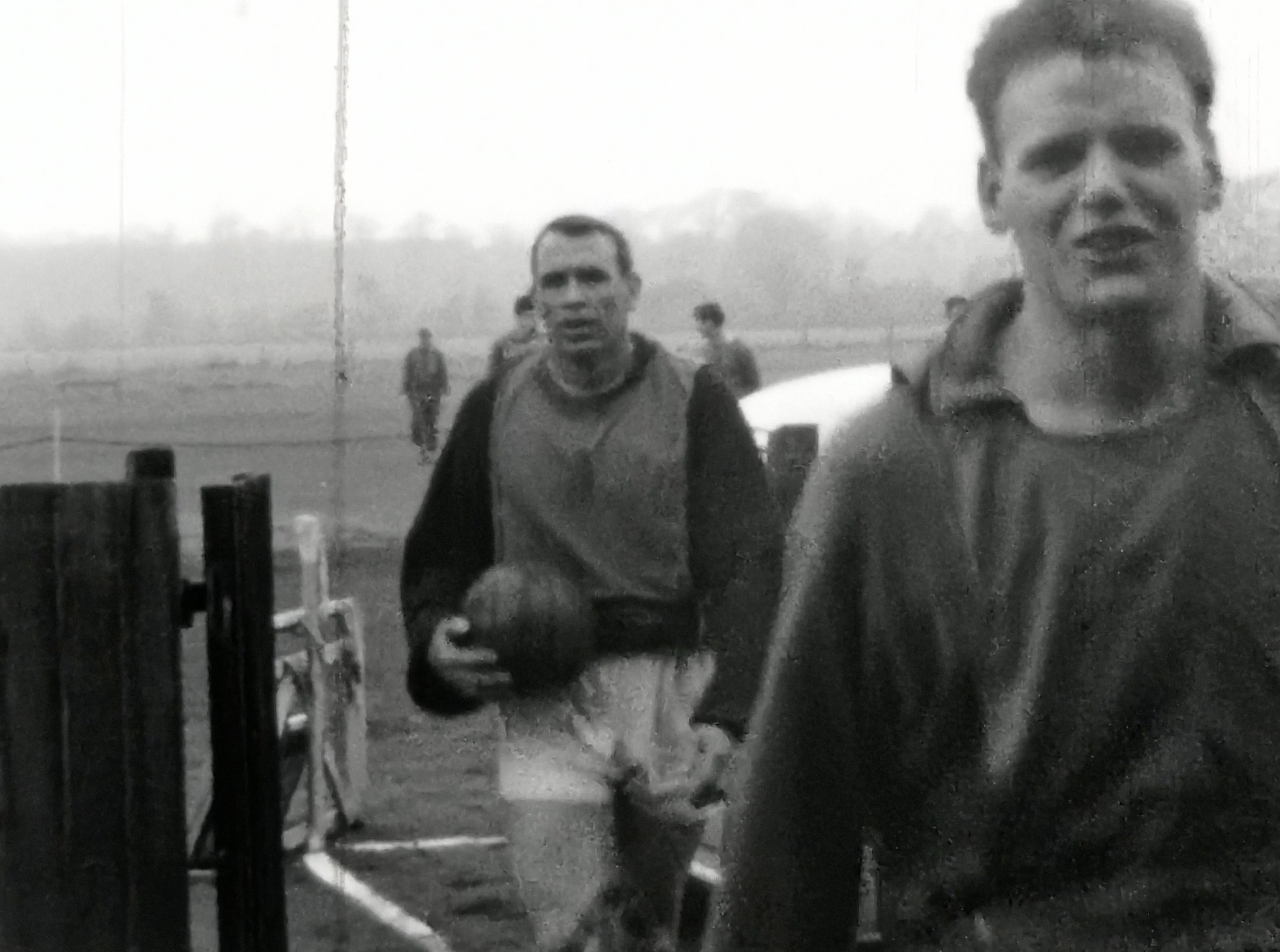
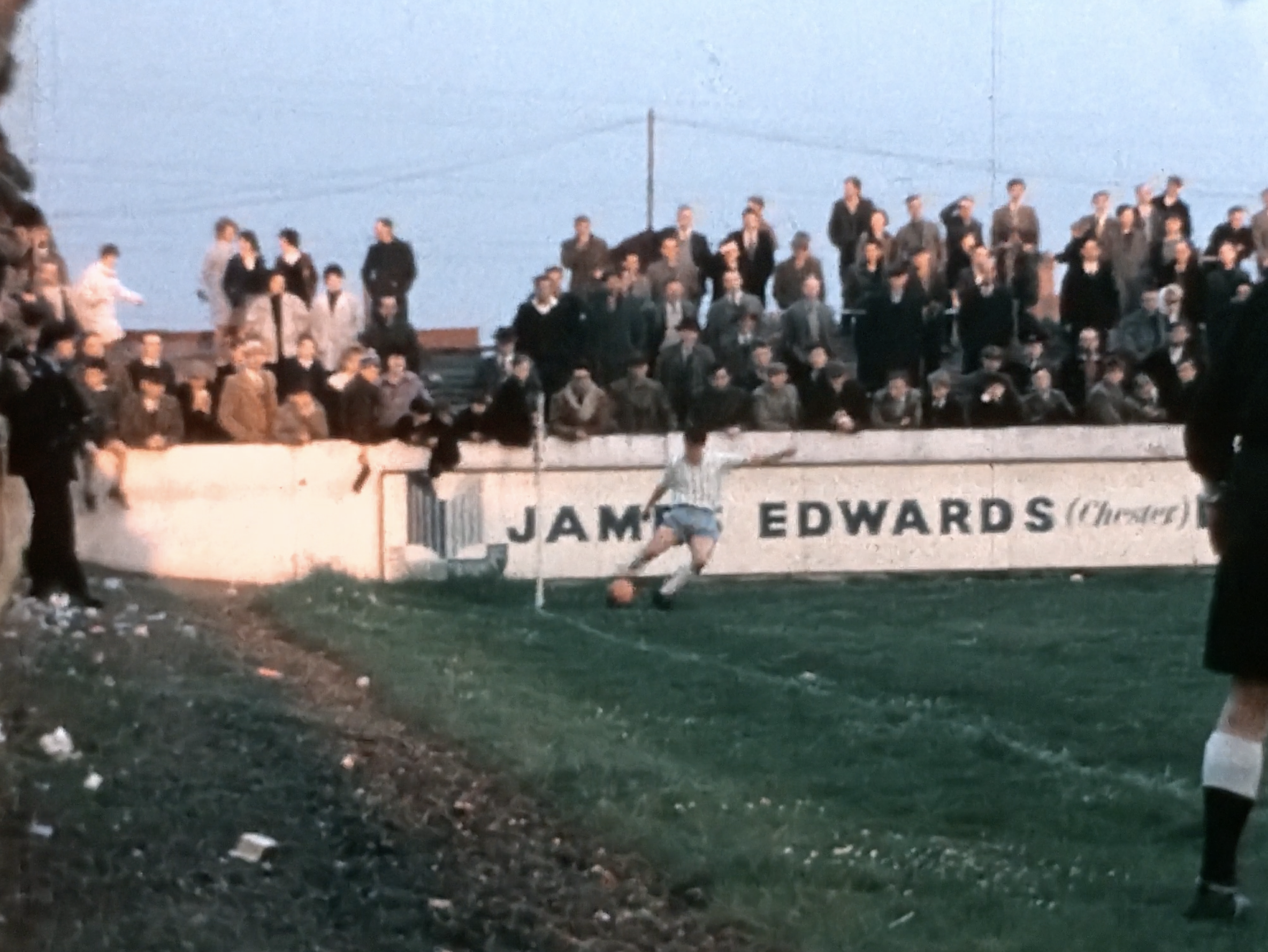
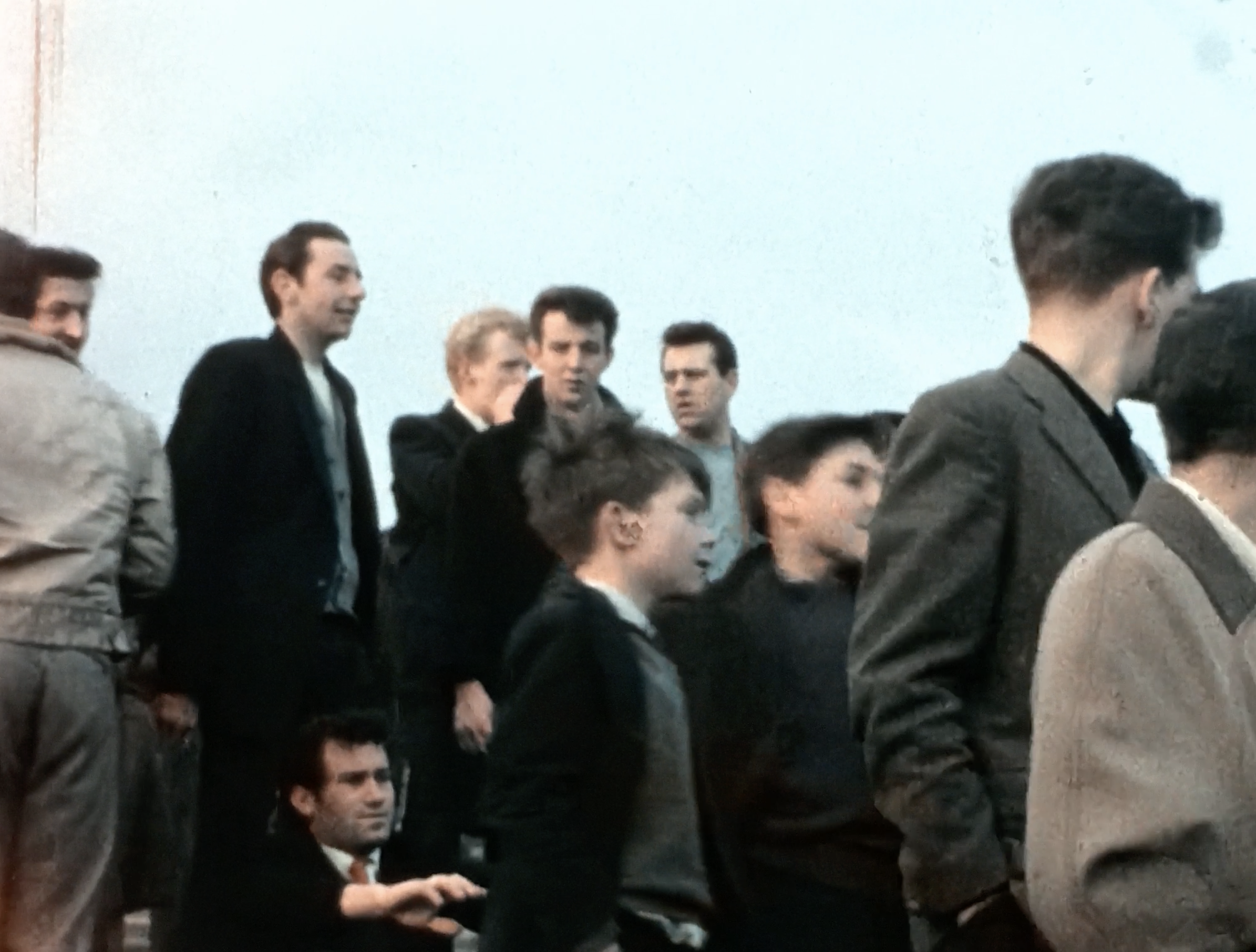
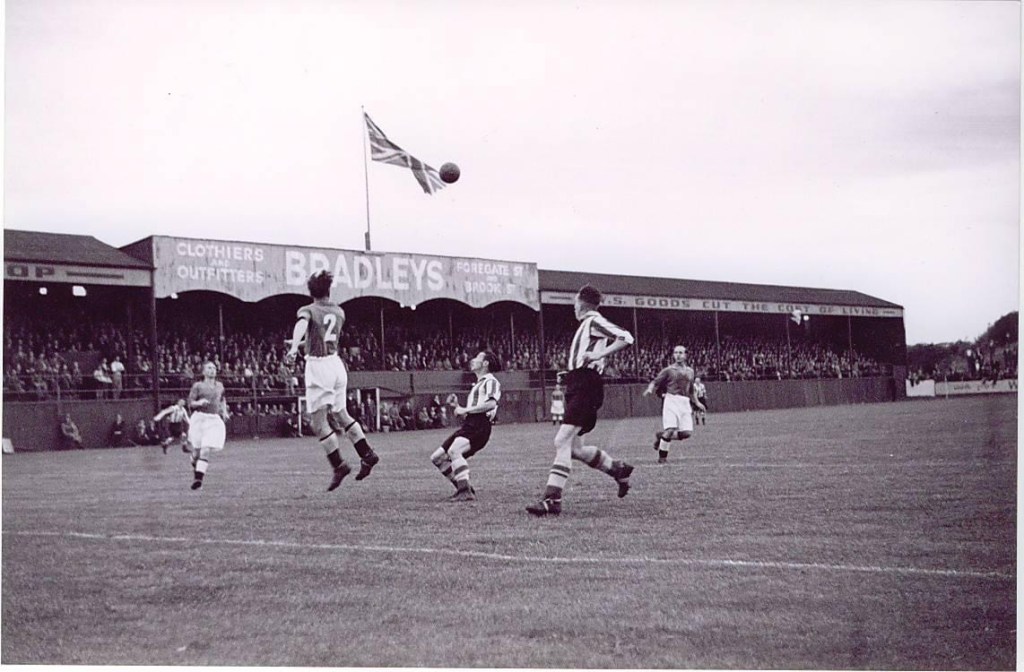
In May 1963 two students, Tom Carter and Rod Underwood, were given the task of producing a film as part of their teacher training course. As a last minute decision they bought a cheap cine camera and went down to the Sealand Road ground to film both inside and outside the ground. In addition they recorded a training session on the Annexe before ending with action from an evening game against Chesterfield.
After 60 years this superb 22 minute film has been unearthed and I will be showing it at a meeting of the Senior Blues at the football club on Friday March 5th at 10:30am. I hope to follow this up with a general showing at a later date.

What makes this film so special to my mind is that it is unedited. Although there are some experimental sections in the middle I feel that the film would have lost a lot of its impact if it had been edited down to a few minutes. The footage is certainly very raw but this is advantageous because you get so see unusual views of the whole stadium which would in all likelihood have been cut out.

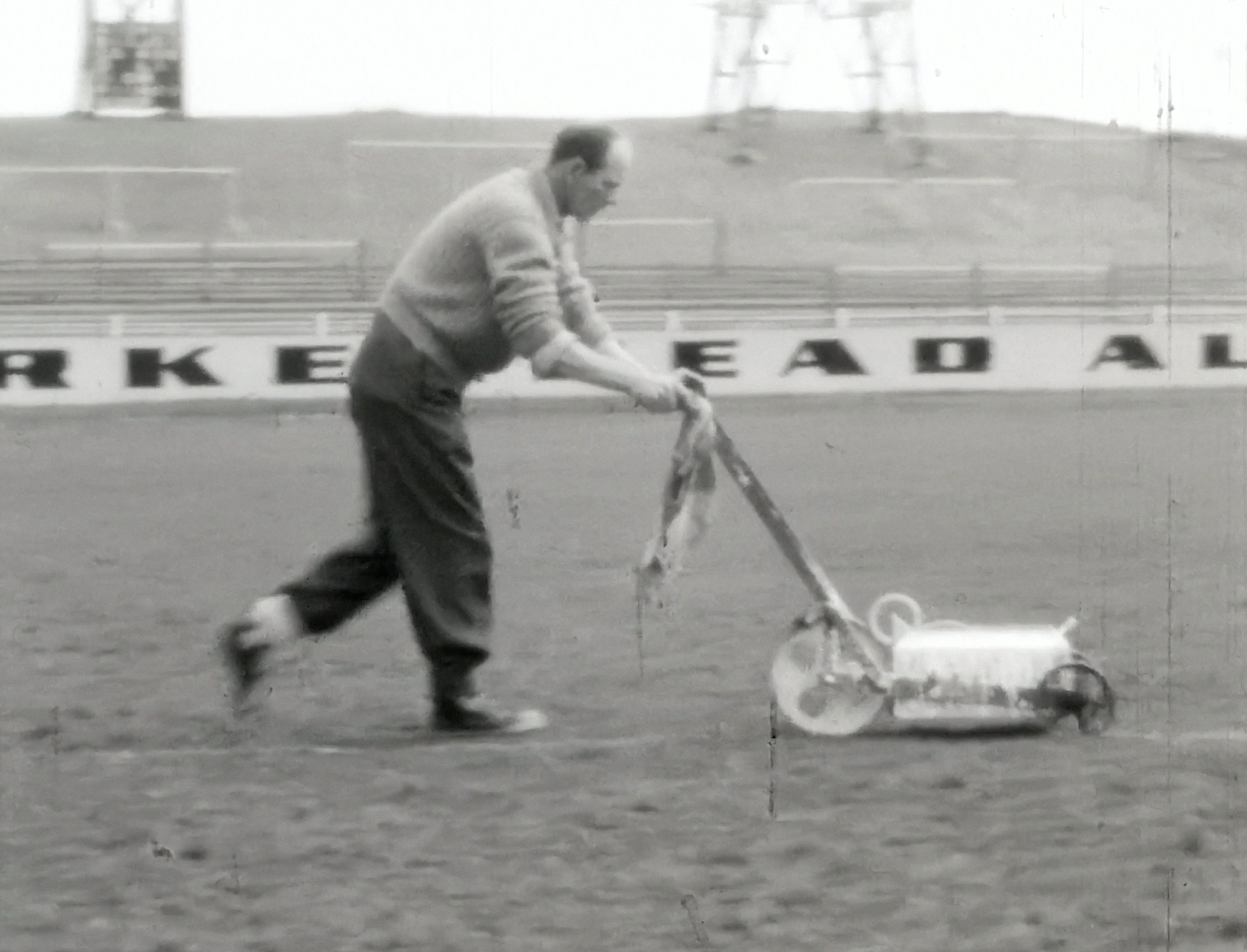
The film opens with footage of the pitch being marked out before moving to the outside of the ground. There are views of the back of the stand as well as the floodlights which were still a novelty as they had only been in place for three years.
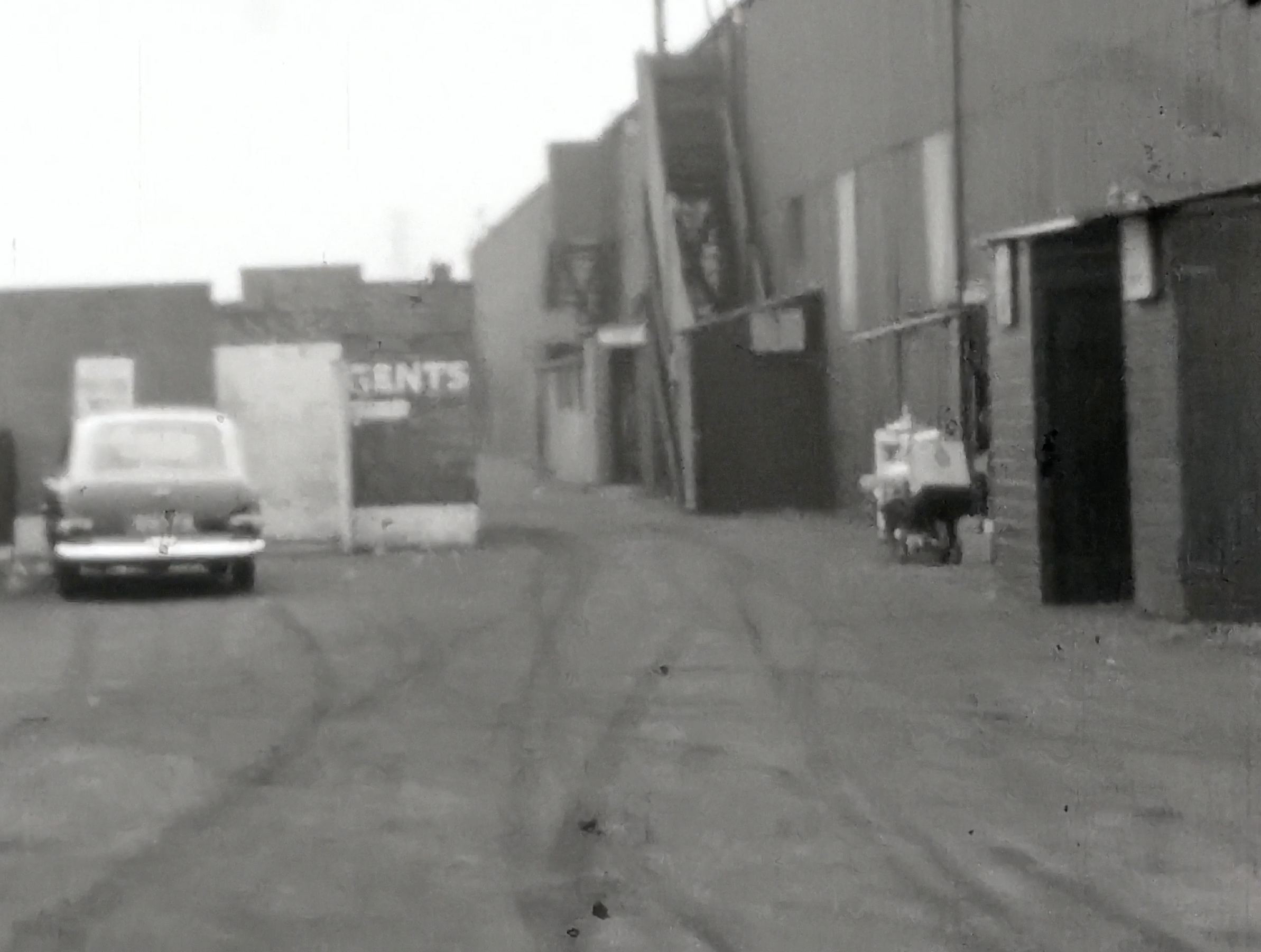
We then move to film of Bill Myerscough arriving at the Stadium in his Volkswagen Beetle before moving inside the ground to see the treatment room and a variety of views inside the old wooden stand.

After six minutes we move out to the Annexe to see the players training with the likes of John Molyneux, John Butler, John Hardie, Elfed Morris Colin Corbishley and Ron Hewitt amongst many others in view. There are great views of the back of the main stand with the greyhound stadium and buildings on Sealand Road also in evidence.
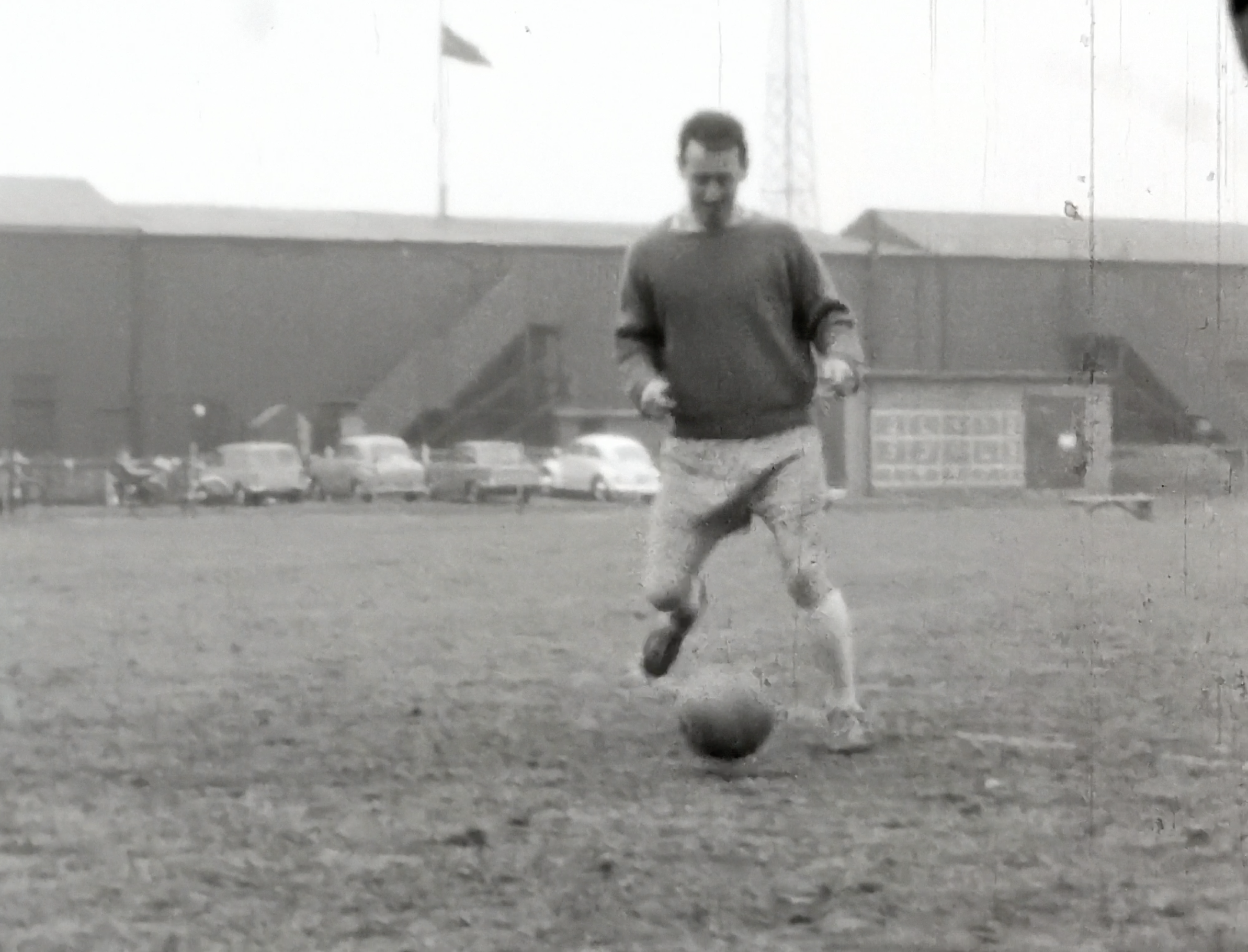
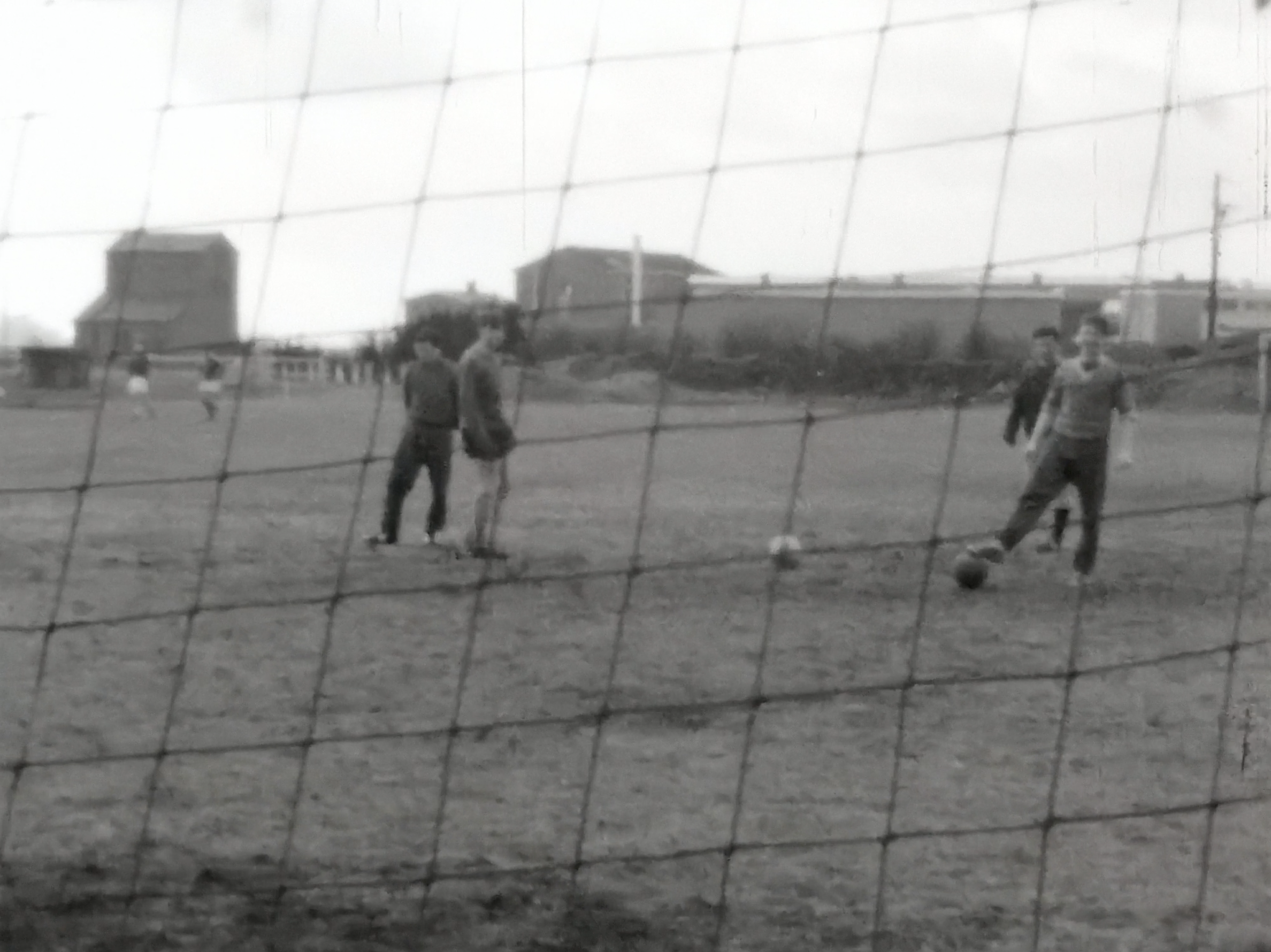
There is a glimpse of Bill Lambton during training and this marked the end of his 18 months as manager. The 1962/63 campaign culminated in another application for re-election as Chester finished 4th from bottom in Division 4. At one point in the film you can see ‘Iron Man Bill’s’ motto “Keep Fighting” on the dressing room door. His training methods were not popular with the players as they reflected his background as a Sergeant Major who had worked with the Army Physical Training Corps.

The next section of the film is more experimental before we switch to the final sequence which is eight minutes colour footage taken from behind the goal at the Kop end of the ground.

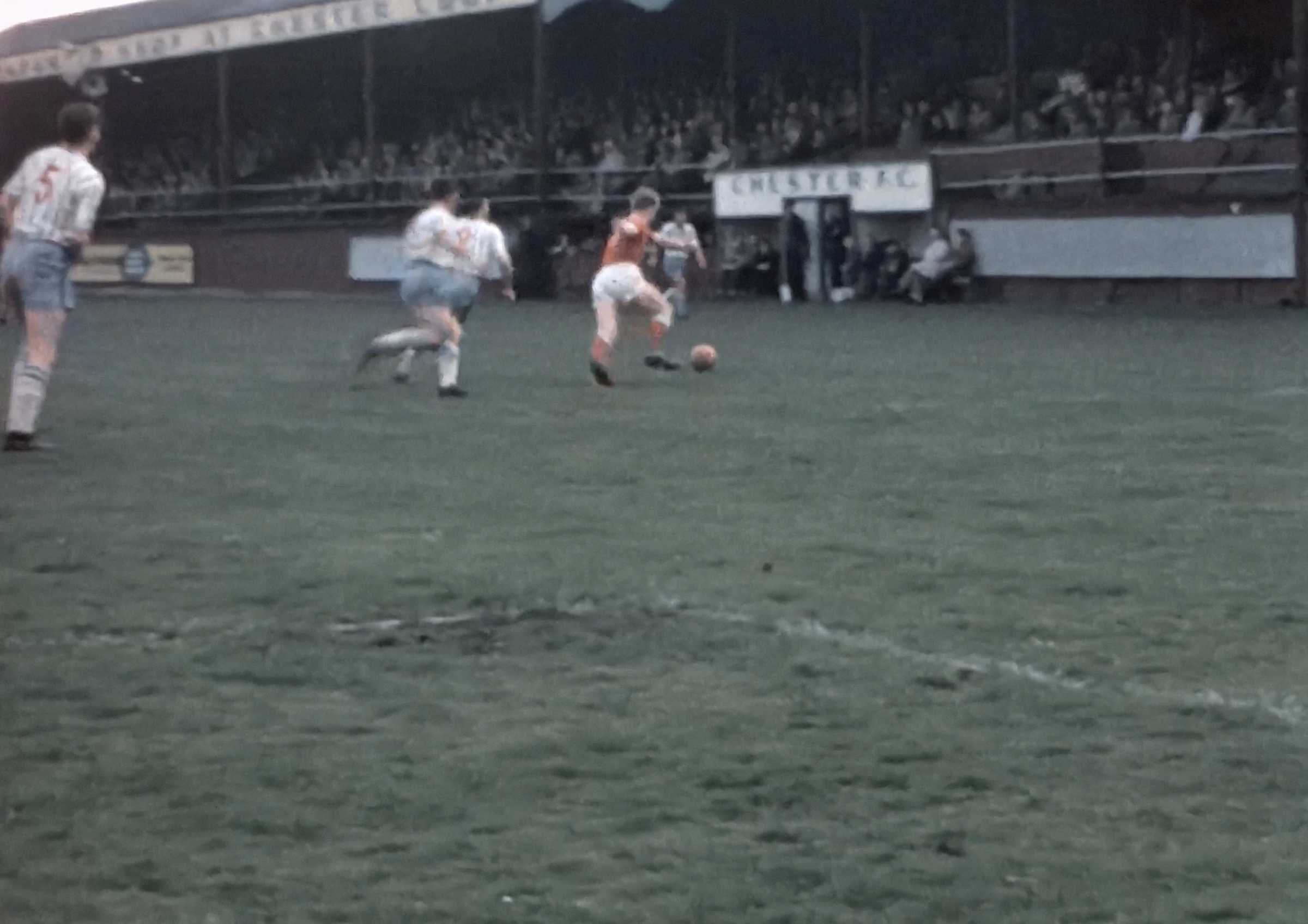
My research indicates that this is the last game of the season, a midweek fixture against Chesterfield on May 22nd, with the Spireites playing in an unfamiliar red kit. The visitors won the game 2-0 and there is a view of the first goal within the footage. The attendance was 3920.
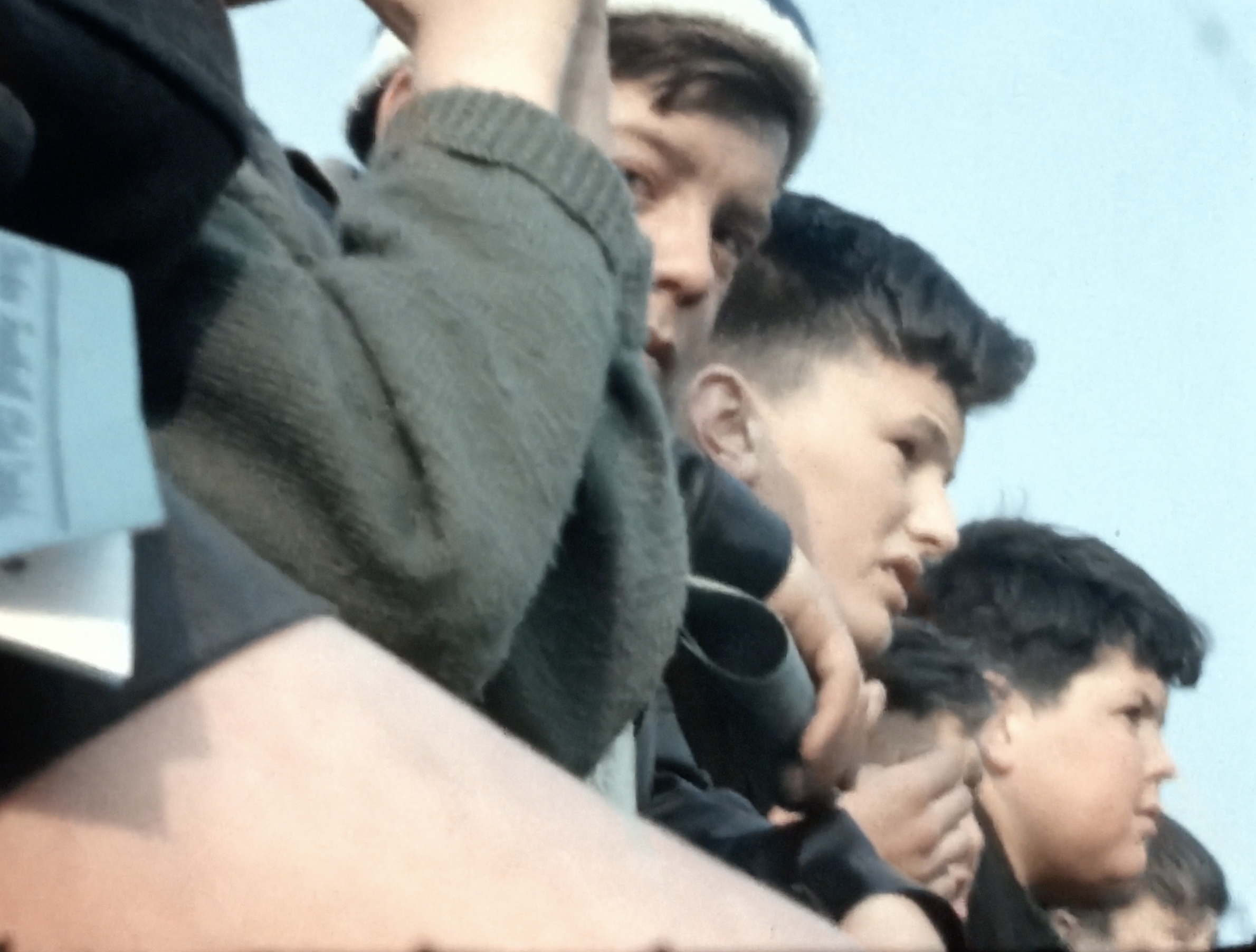
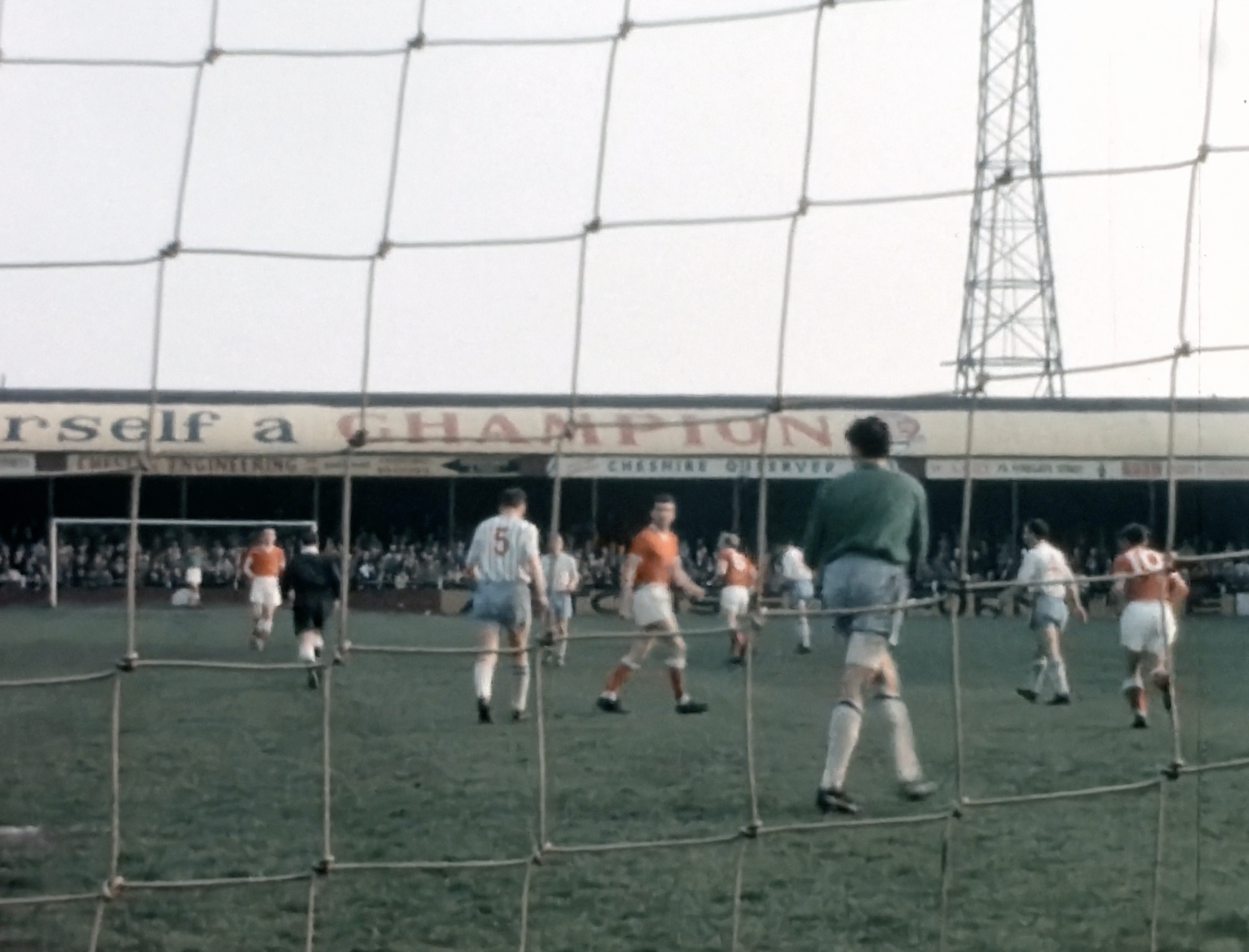
In the second half Chester are attacking the Kop with little success. The Cheshire Observer is particularly scathing of the performance calling it poor in both attack and defence with Chesterfield deserving their 2-0 victory. As an attacking force reporter Ralph Houdley stated that at no time did the forward line show any signs of being capable of winning the game. After Chesterfield had scored their second goal centre half John Butler was moved to the attack at which point Chester looked more threatening and the defender can be seen up front in the later stages of the film.

All in all it is a gem of a film and captures the era superbly. It is interesting to see different training methods and the action is very different from the current day especially the speed in which the goalkeeper releases the ball. The views of the ground will certainly bring back memories for supporters who watched the club in the 1960s.

Copyright ©  Chas Sumner http://www.chesterfootballhistory.com All Rights Reserved

Football League Application Brochure 1931

When Charlie Hewitt was appointed as Chester’s first Secretary-Manager in 1930 the club made the decision to go all out for Football League status.

Ambitious plans were put in place with admission prices increased to fund exciting new signings like ex Scottish internationals Dave Morris and Phil McCloy, Bobby Irvine the former Everton and Ireland international and crucially, Arthur Gale from West Bromwich Albion. Gale, a schoolmaster from Bury went on to score 73 goals in 39 league games as the Chester public responded to Hewitt’s exciting team.

With attendances soaring there was a real buzz in the city and the excitement was reflected in ambitious ground developments included completely covering the Sealand Road End and extensions to the main stand.

As part of the push for admission to the Football League the directors personally visited all the 1st and 2nd Division clubs and also produced an impressive 16 page booklet outlining Chester’s case. Priced at one shilling and printed by Taplen and Paddock with a card cover it appears to have been available for general purchase.

The booklet was published in April 1931, after the last home game of the season, and amongst the most fascinating details are a list of attendances and gate receipts for all home fixtures ranked from highest to lowest. Uniquely the table also publishes the weather conditions for each game and it is interesting to note that the game against Nantwich in January was played in heavy snow and still attracted an attendance of 4,043.

Highest attendance of the season was for the top of the table clash against Port Vale Reserves on Good Friday. The game coincided with the unveiling of the extension to the main stand and there were 13,000 in attendance beating the record of 11,507 set only a week earlier when Cardiff City were the visitors for a Welsh Cup 6th Round tie.

The new stand extension can be seen in one of the photos in the brochure and it was during the close season that the stand was further extended towards the Kop. The brochure itself puts the ground capacity at 16,000.

Meanwhile the Sealand Road End had been completely covered and that roof remained in place until 1987. I’m sure many people will remember being showered by rust when a stray shot hit the roof.

Also included in the brochure was information sent by the London Midland and Scottish Railway Company showing rail times and prices to all the teams in the Third Division North. Interestingly the train company states that it would be possible to arrange special trains for nearer places and matches starting late.

The brochure put forward an excellent case with a section on the city itself as well as mentioning how well the ground was served by a frequent bus service and a car park capable of holding 200 cars. As for the ground itself, mention is made of the Grand Stand equipped with electric lighting and telephone along with players’ dressing rooms that were centrally heated and possessing excellent bath accommodation. Accounts also show the club made a profit of £2250 between August 1930 and April 1931.

As a ‘special feature’ attention was drawn to amplifying equipment used to broadcast music and news with the club claiming that this innovation was the first of its kind on any football ground in England.

The booklet clearly helped Chester’s case and two years after they had recorded no votes at all they were elected into the Football League although it needed a second ballot before they took the place of Nelson.

Sealand Road Floodlights – Part 1

One of the most distinctive features of the old Sealand Road ground was the impressive set of floodlight which bowed down over the Stadium. The lights were state of the art when they were constructed in 1960 and the fact that they were ever erected at all was almost entirely down to the efforts of the Chester FC Supporters Association. 

Although there had been experiments with floodlights going back to the 19th century it wasn’t until the 1950s that they began to be widely installed at grounds. In the 1930s Arsenal had placed permanent lights at Highbury but the Football League only allowed there use in friendlies and unofficial games. It wasn’t until 1956, when Portsmouth hosted Newcastle United at Fratton Park, that the first Football League match was played under lights. 

Chester’s first experience of floodlit football occurred when the youngsters played a Youth Cup 2nd Round tie at Preston North End in November 1954 with the Deepdale side winning 4-1. The following October the seniors played their first game under lights, winning a thrilling Lancashire Cup encounter at Accrington Stanley’s Peel Park ground by three goals to two. 

The Chester board of directors, under chairman Sam Argyle, recognised that times were changing and at the AGM in August 1956 the subject of floodlights was raised. The club realised they would be invaluable for training and allow later kick off times for cup ties and attractive friendlies against foreign opposition. However, Argyle explained that a sub-committee established to look at the cost of floodlights felt that a sum of at least £9,000 was currently beyond the club’s financial capabilities.

Under the circumstances this announcement was hardly a surprise given recent financial tribulations. In March 1955 the board had called a crisis meeting at the Town Hall amidst a real fear that the club would be forced out of the Football League. The club was in the red to the tune of around £7,500, a situation not helped by falling attendances caused by a bottom place finish in the Third Division North in 1953/54, a position set to be repeated in 1954/55. An attempt to raise £3,000 through a share issue had received a very muted response as local businesses showed little enthusiasm. At the Town Hall meeting a call was made to urgently raise £5,000 through a 100,000 shillings fund. This received a positive initial response but by the end of the season only £1,750 had been reached. 

Despite the doom and gloom there was one very positive consequence of the 1955 meeting and that was the formation of the Chester FC Supporters Association. The group was a merger of the Supporters Club and Supporters Committee and charged a 2s 6d subscription. By the end of the 1954/55 season membership had already reached 2,500 and the group would have a considerable impact over the subsequent years. When the dynamic Association celebrated their fourth anniversary in 1959 it was reported that they had raised a phenomenal £21,072 for the club which included the original shilling fund as well as money from a hugely successful weekly football pool. 

The Supporters Association had a strong bond with the board of directors so although Sam Argyle had announced that floodlights were financially out of reach in August 1956 the board must have felt some cause for future optimism through the strength of this new group and their fund raising activities. In addition attendances had shown an improvement during the 1955/56 campaign and the club had made a small profit to reduce the overall overdraft to just under £5,000. The summer had also seen the appointment of ex Chelsea centre-half John Harris as player manager and the return of popular Welsh international winger Billy Foulkes so there were reasons for positivity on the field of play.

One idea being considered was to ask 60 supporters to contribute £150 each repayable over 5 years with 5% interest and although this failed to get off the ground the first steps towards illuminating the ground took place in October 1956. 

With half the squad either amateur or part time the club were experiencing difficulty giving them the necessary ball practice so the club planned to install a modified form of floodlighting to aid those who could only train in the evening. The idea was to illuminate one end of the ground by putting lights on the grandstand and on the shelter on the popular side. If the light wasn’t sufficient there was an intention to increase the number. This was intended as the start of a scheme to illuminate the whole ground and the cost of “hundreds” was aided by a donation of £750 from the Supporters Association. 

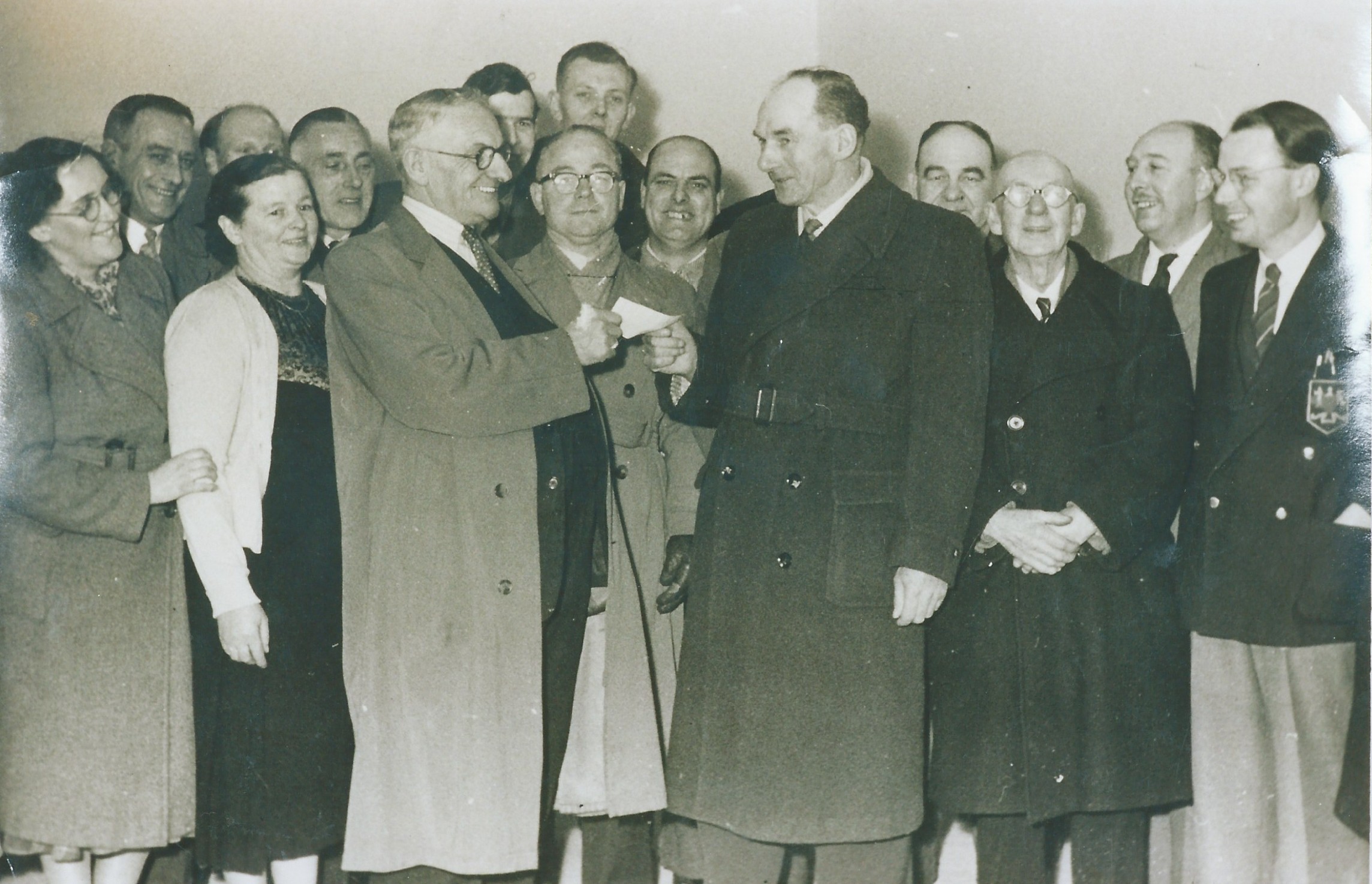
Supporters Association chairman Reg Moore (right) hands over a cheque for £750 to Chester FC chairman Sam Argyle in November 1956

The official switch on took place in November with one of the directors stating that they were “almost good enough to play a match” but it was clear that more substantial floodlighting was needed if Chester wanted to keep up with the rest of the Football League. 

The first training session under the training lights in November 1956 – Chester Chronicle cutting

Copyright ©  Chas Sumner http://www.chesterfootballhistory.com All Rights Reserved

Sealand Road Re-creation

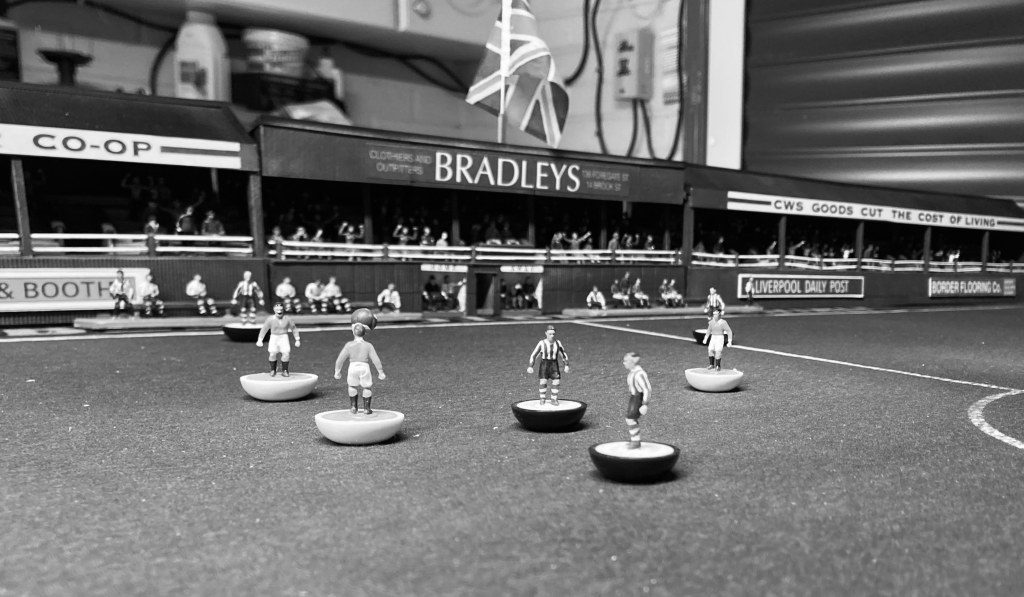
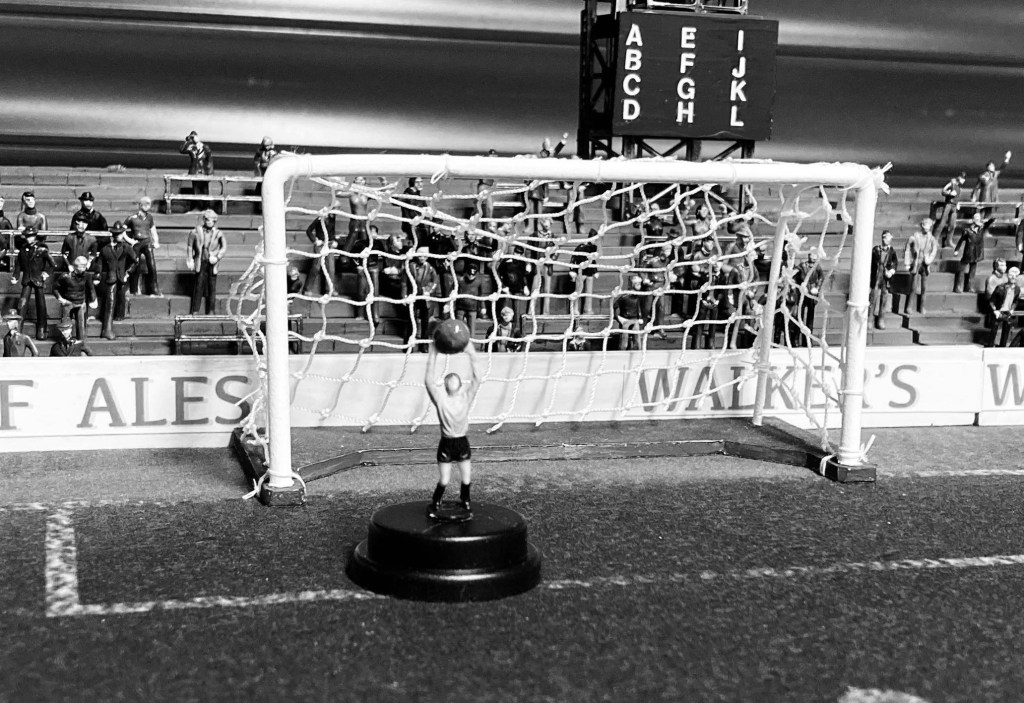
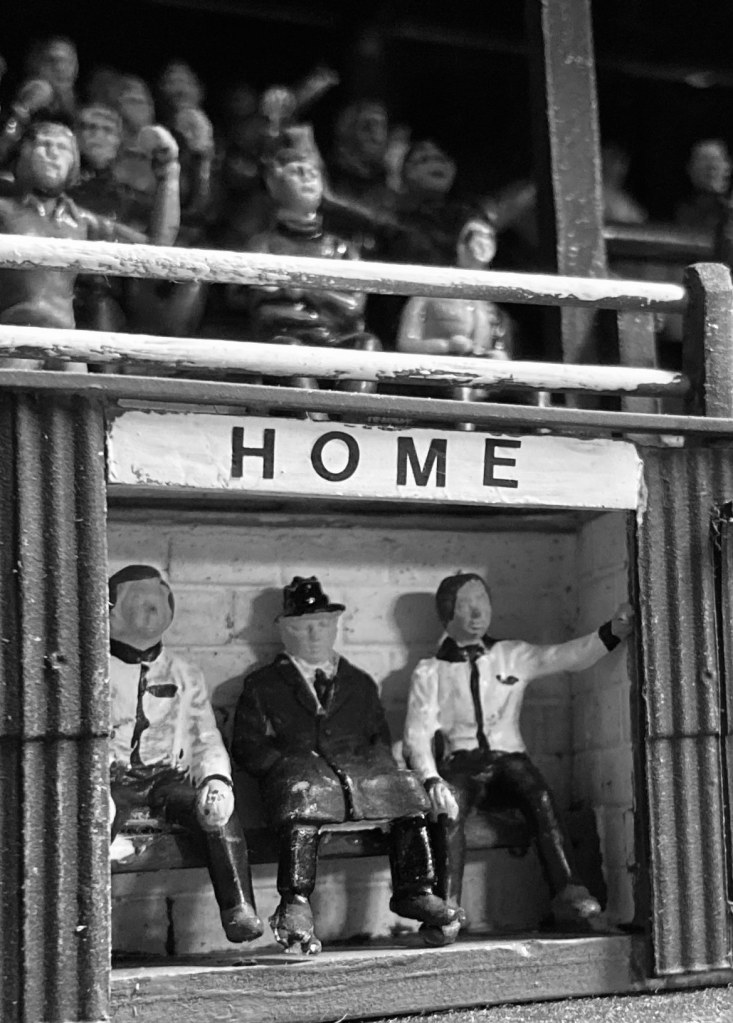
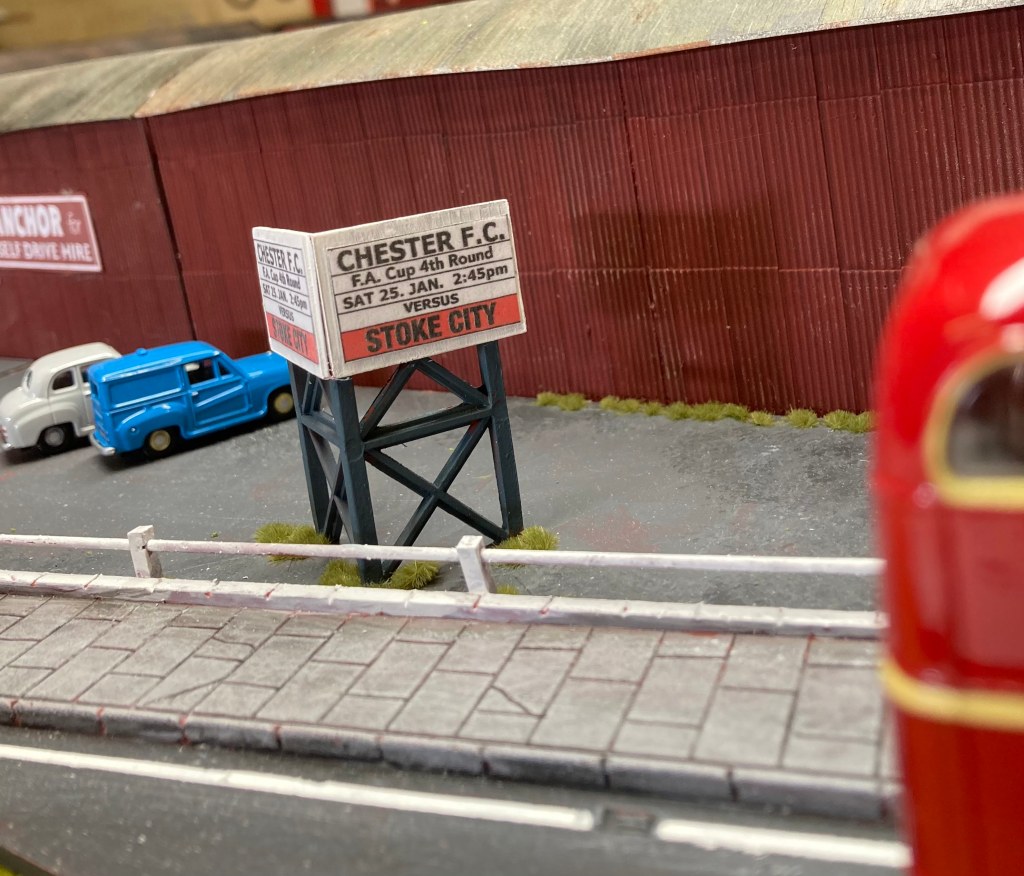
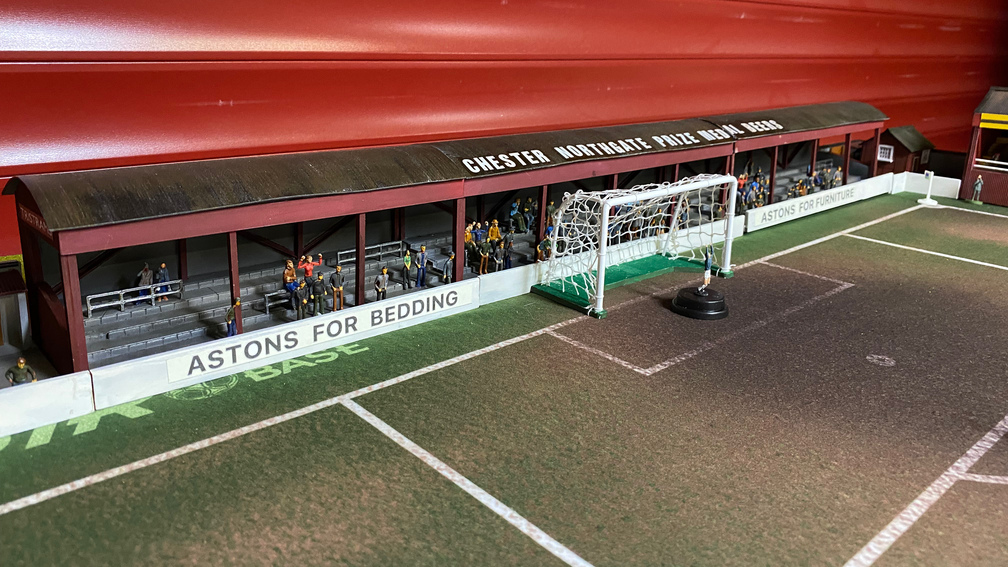
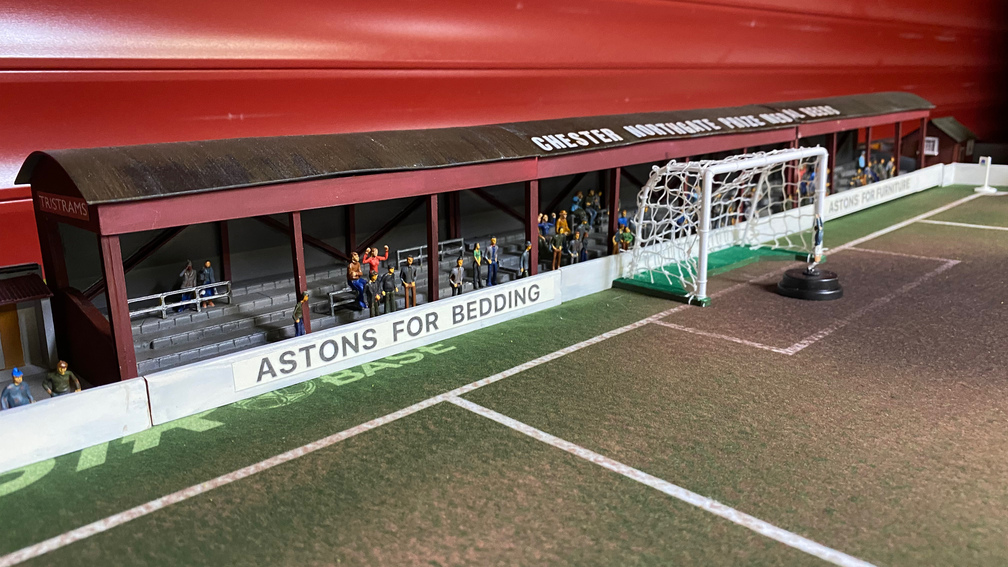
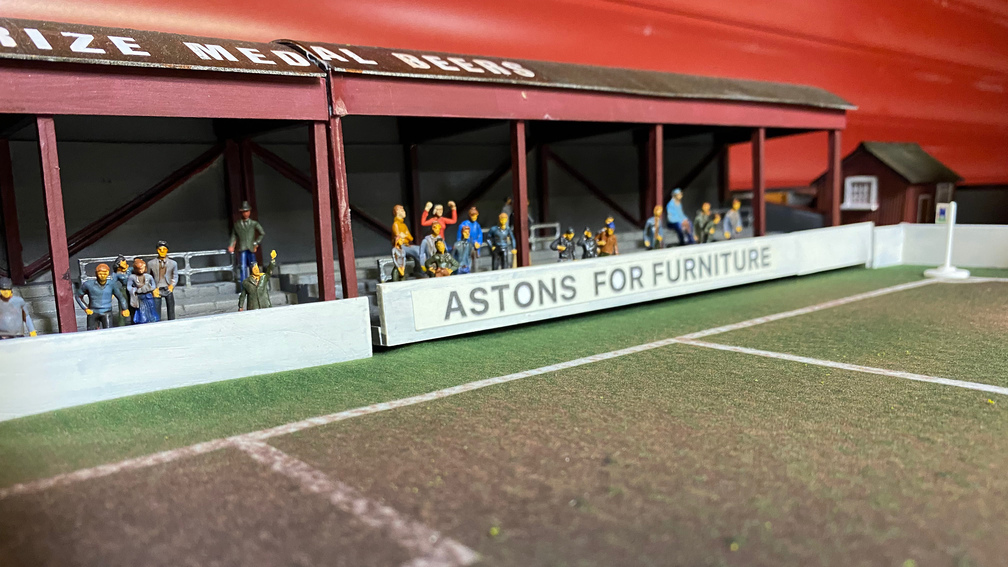
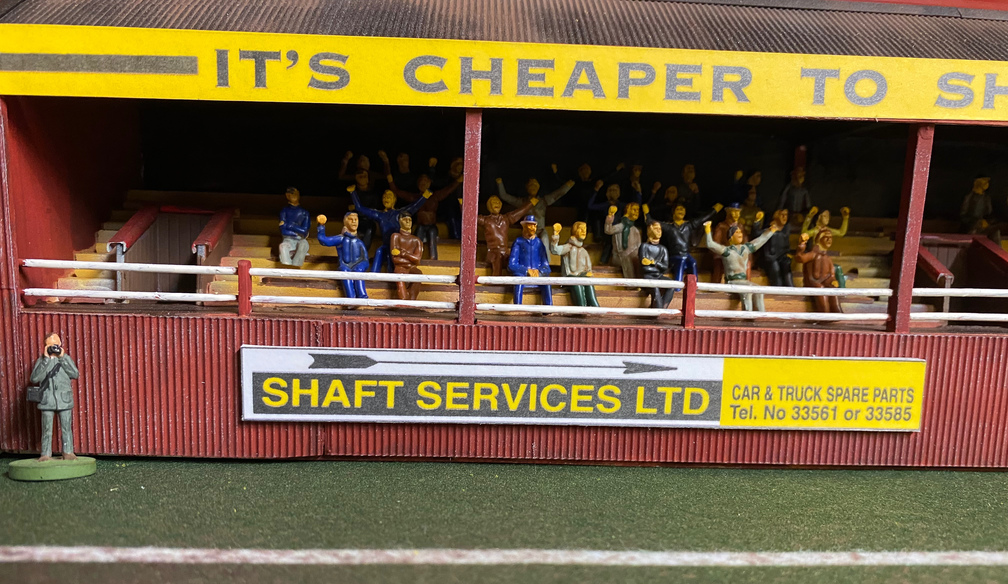
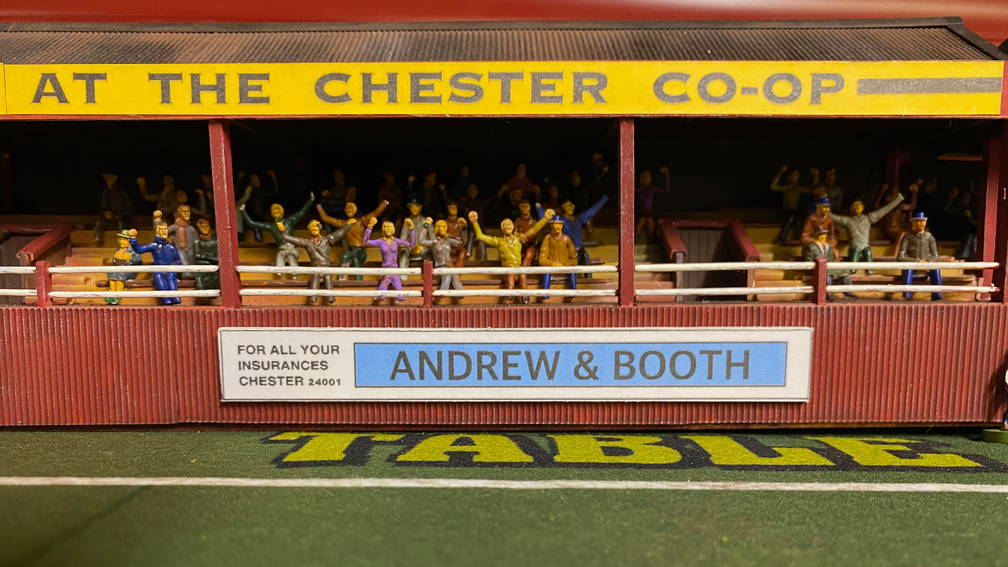
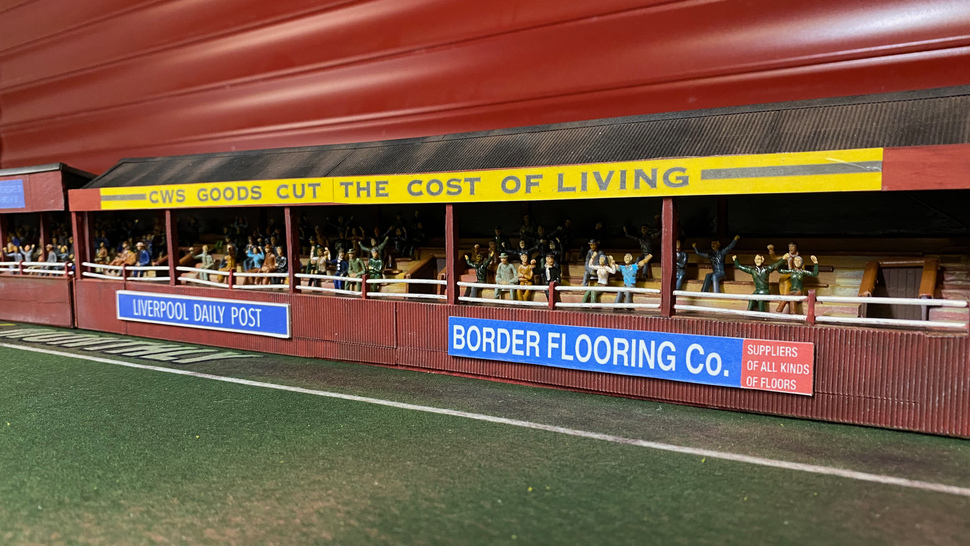
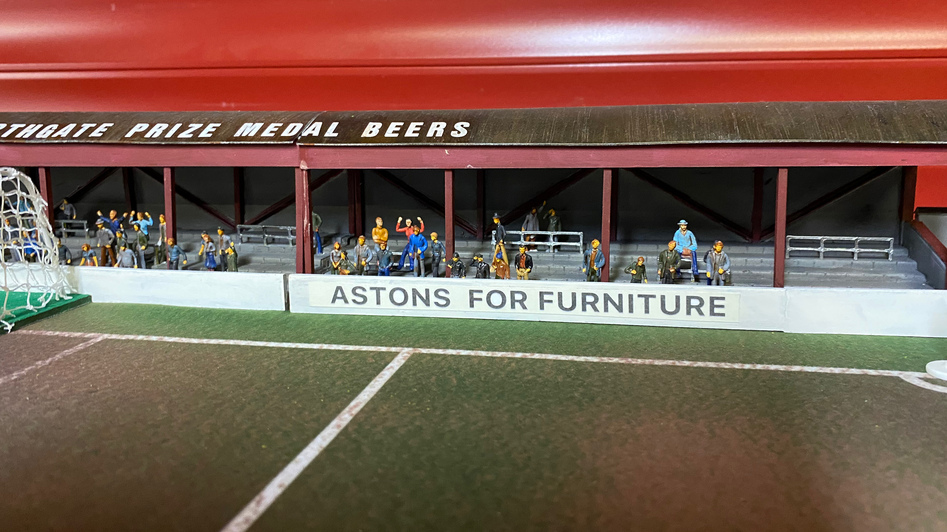
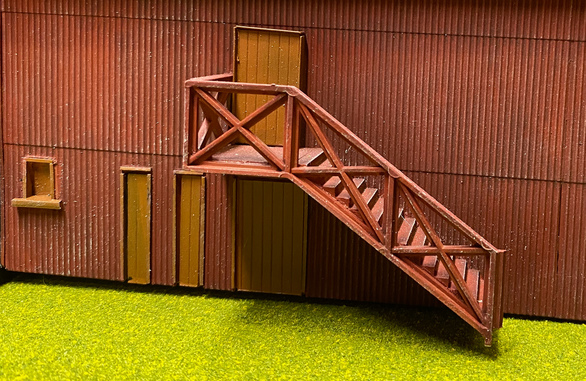
A few weeks ago I published a post displaying pictures of the Sealand Road model created by Derek Astbury. Derek is the son of former player Tommy Astbury, who played 303 league games for the clubs in the 1940s and 1950s. He has now re-created a selection of pictures taken from his late father’s collection, the Chester City Images of Sport book and the Chester Football History Facebook page.

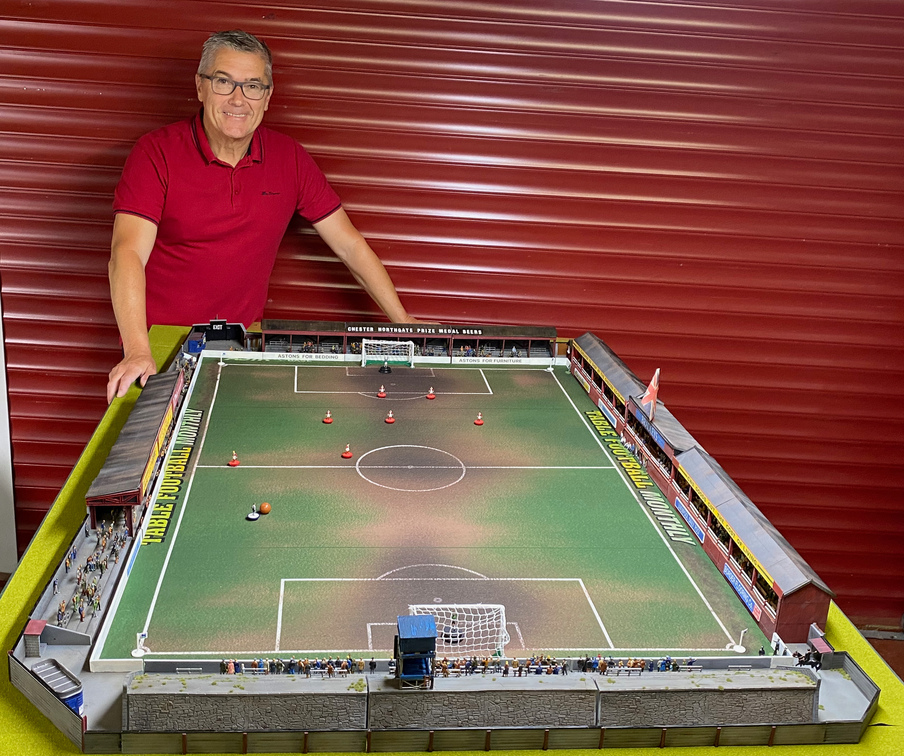
Sealand Road Model

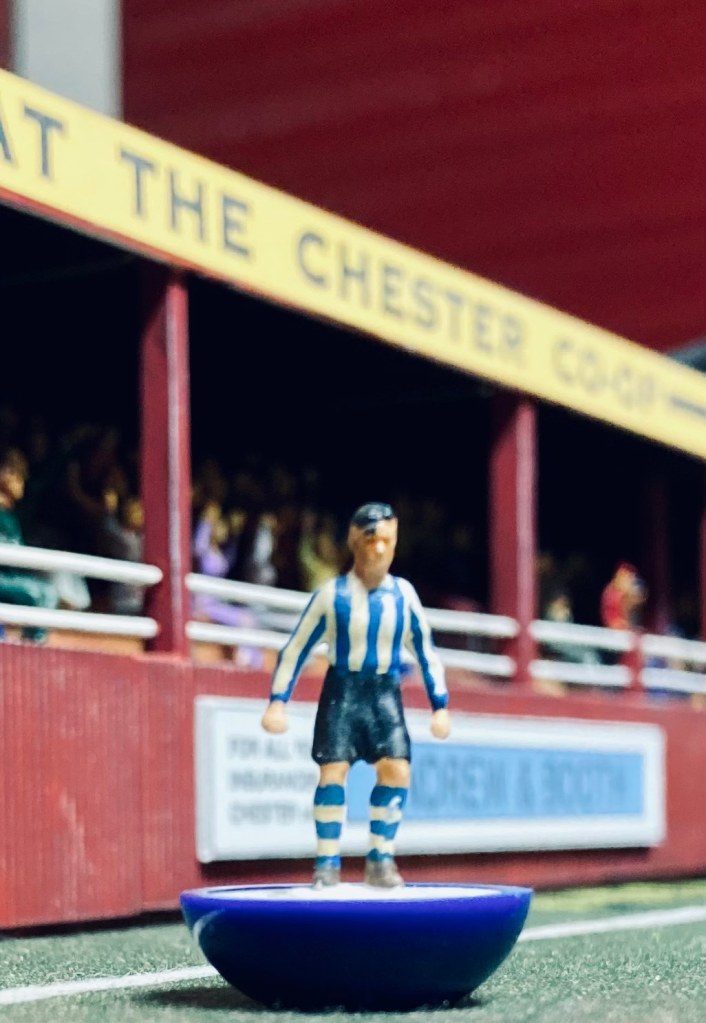
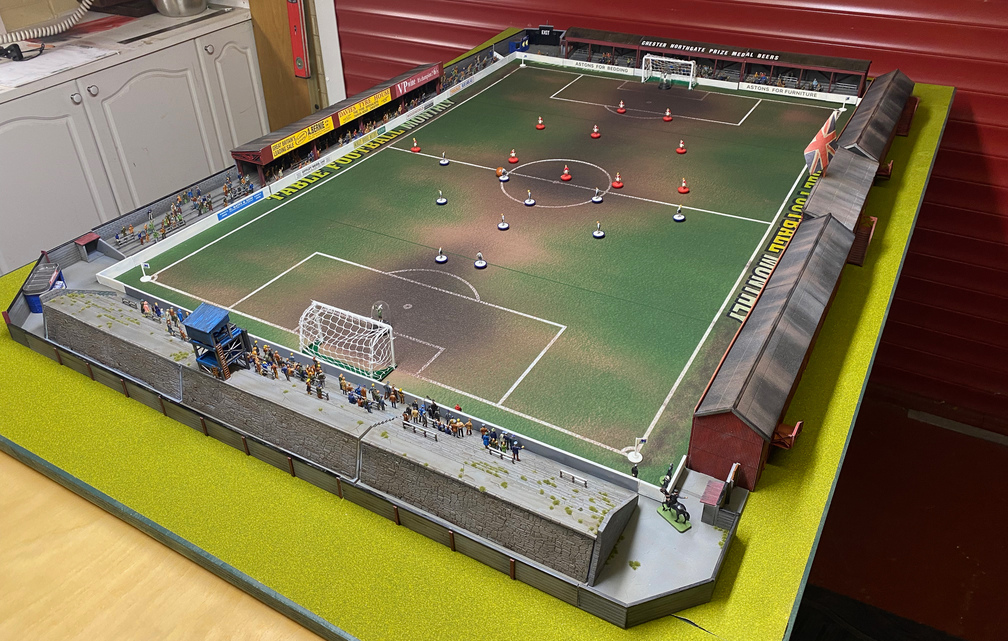
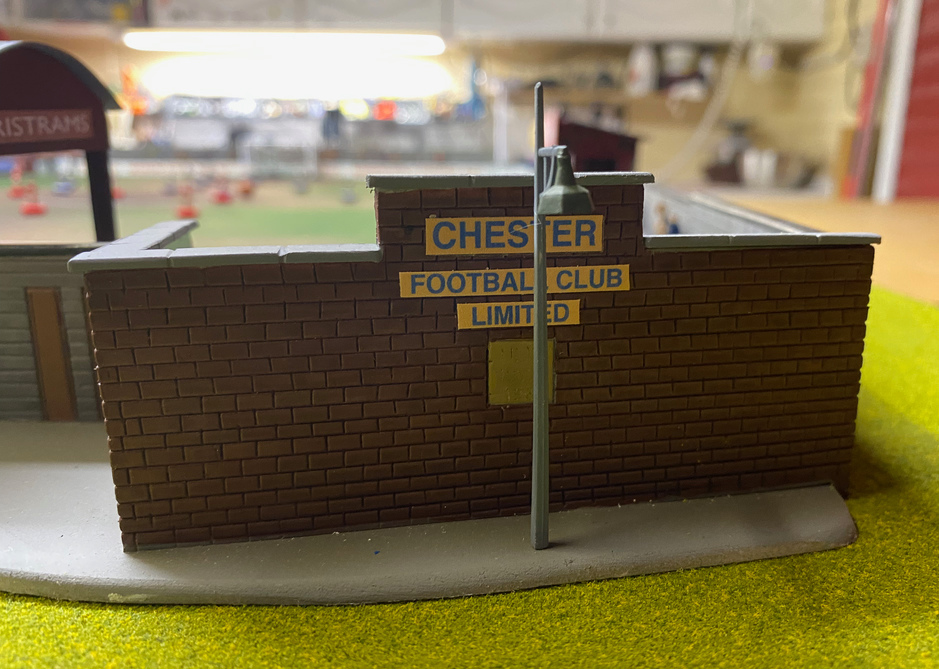
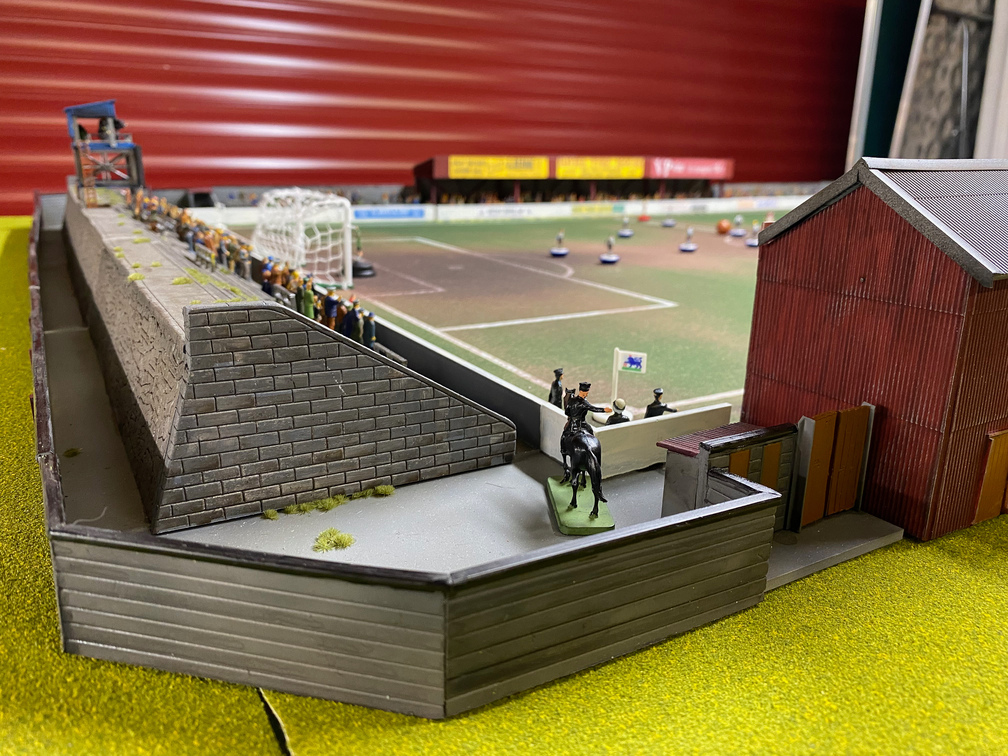
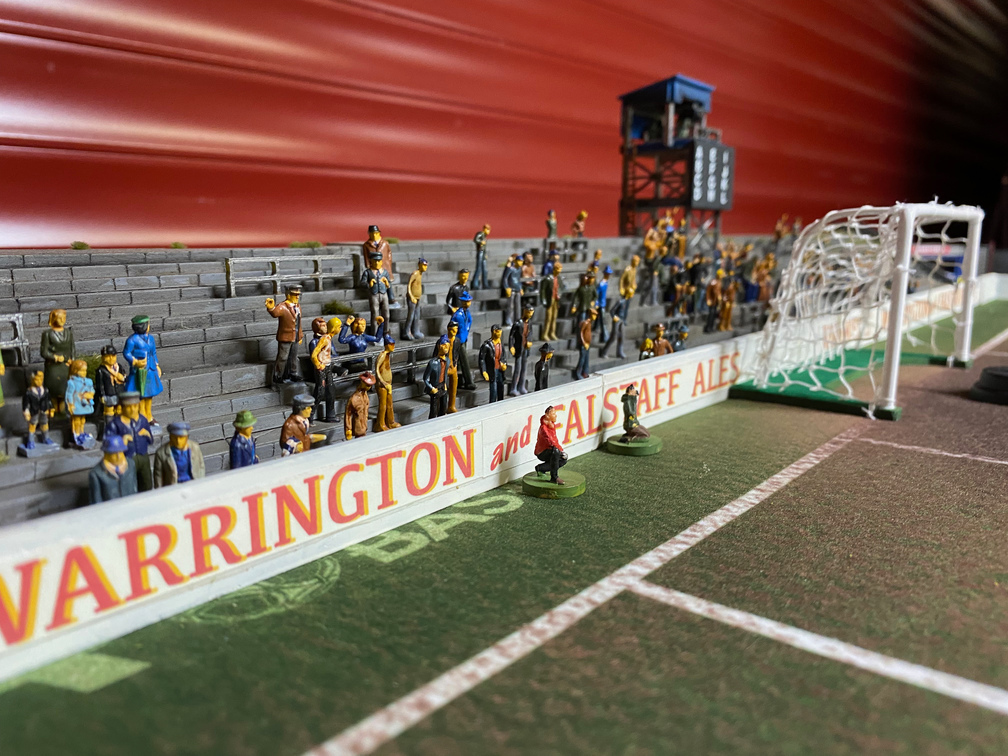
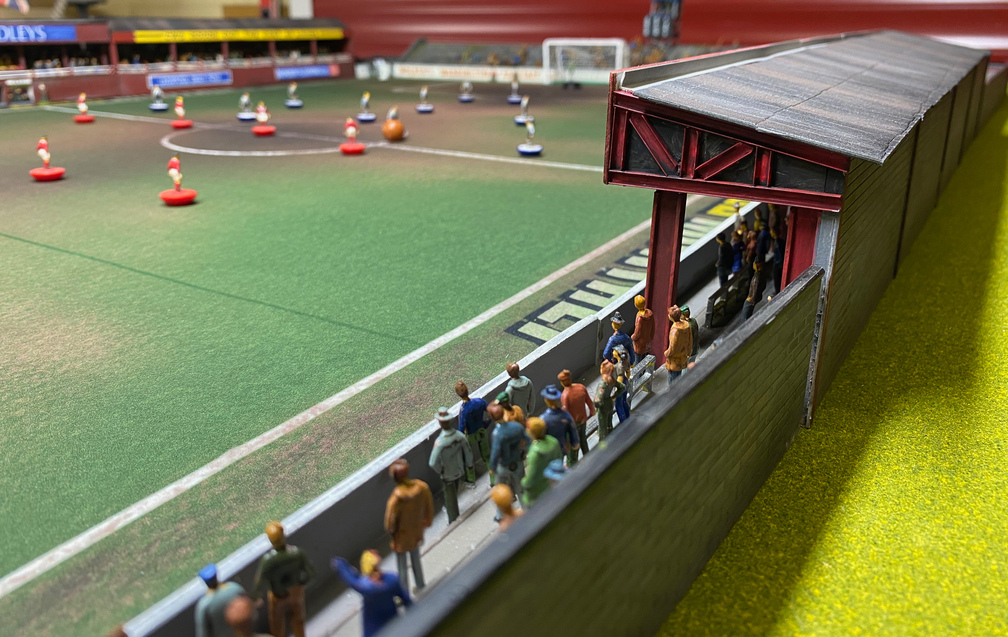
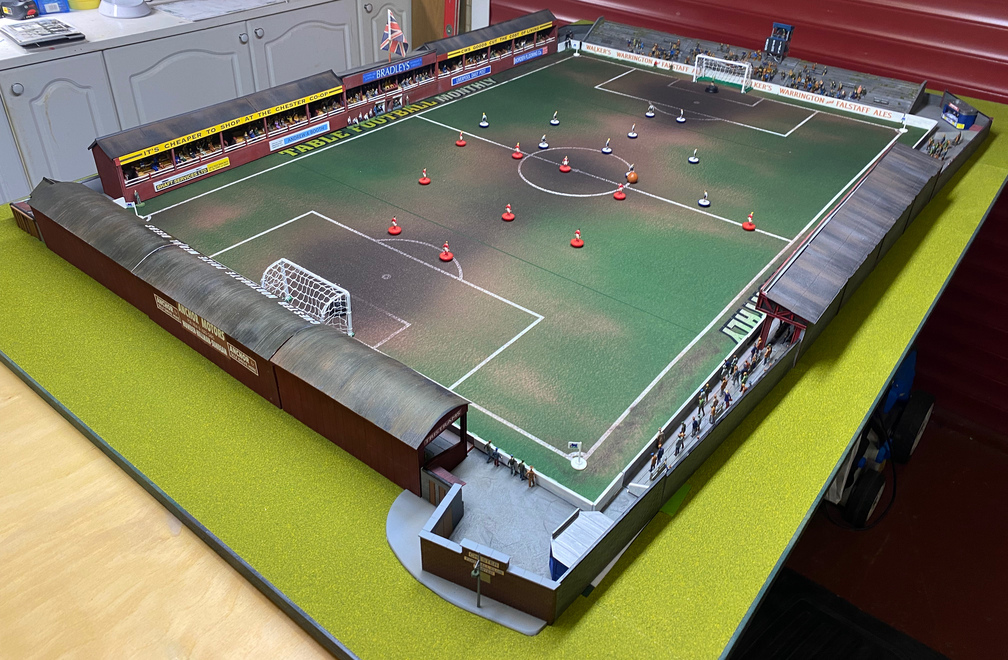
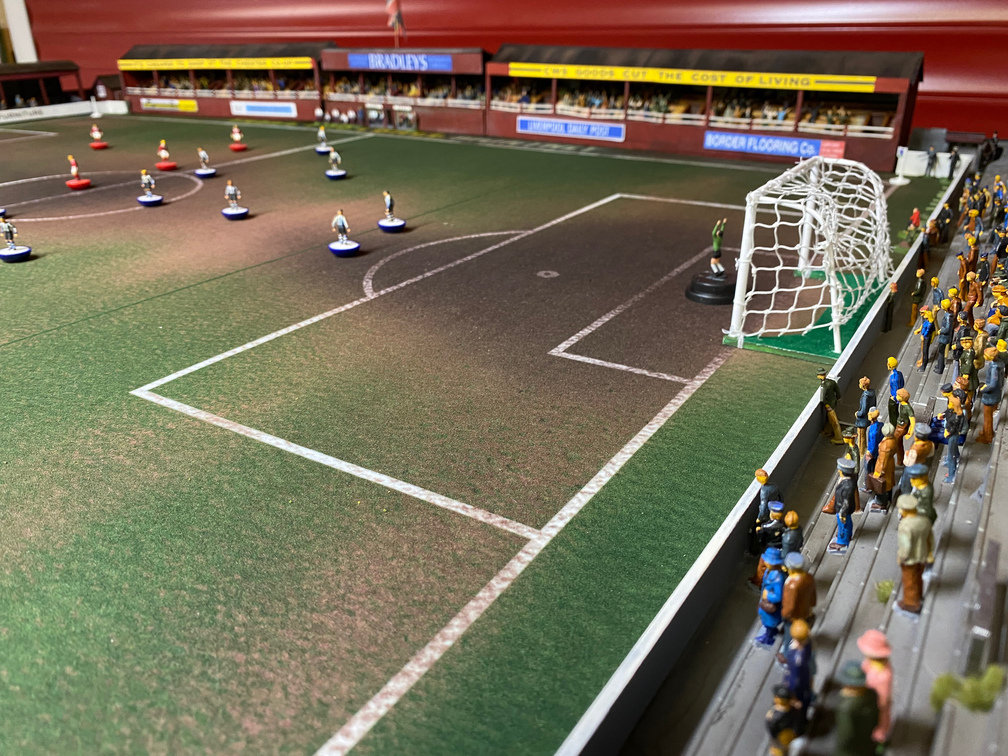
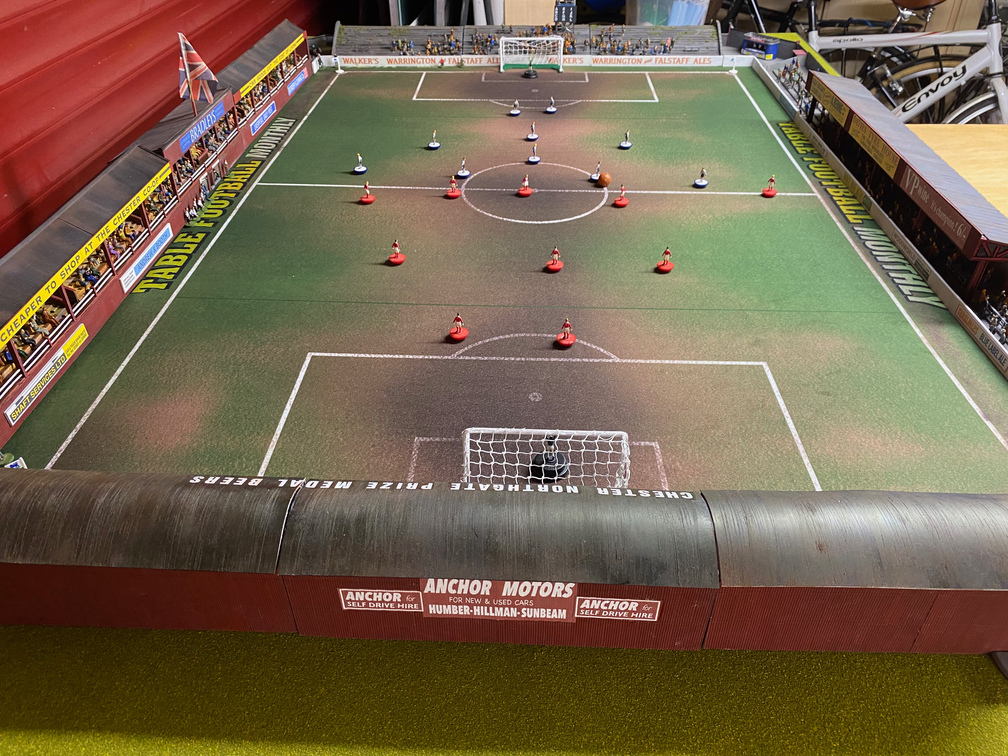
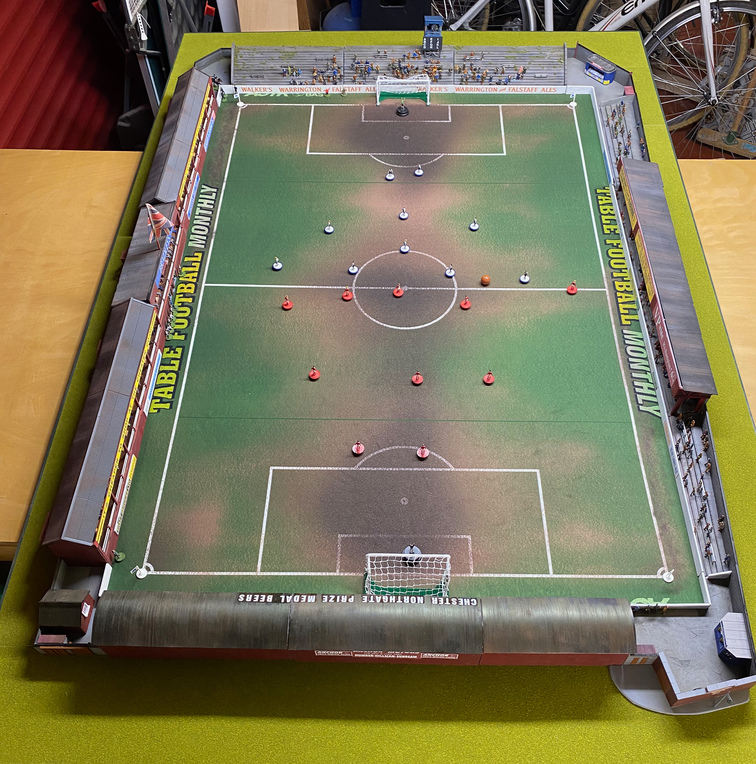
Derek Astbury, the son of former Chester player Tommy Astbury, has used lockdown to construct a superb model of the old Sealand Road stadium based on how the ground looked when his father was playing for the club in the 1940s and 1950s. Measuring 6ft by 4ft it took six months to build and it is hoped that it can be shown at the Deva Stadium some time in the future. I would urge anyone to go and see it if the opportunity arises.

Derek explains how he tackled the project:

“I retired just before the first lockdown and during the early months did what most people were doing i.e sort out family photos/ tidy the attic etc. While doing this I came across some old subbuteo equipment and after watching a YouTube programme I discovered there was an internet community of 50-60 year olds revisiting the game.

I decided to buy some players online to paint myself and found that there were some in vintage style kits and the idea was born. I would paint Chester FC from the time that my dad played together with other teams he played against. I thought I could then display them with a programme of the match for example Bolton Wanderers for his testimonial, Hull City (Raich Carter) and Stoke City (Stanley Matthews).

Then I moved on to the Stadium itself which I started to construct on January 21st using 3mm plastic sheet that was destined for the skips where I used to work. I have been building on and off since then on the occasions it has been warm enough in my garage to let my fingers work.
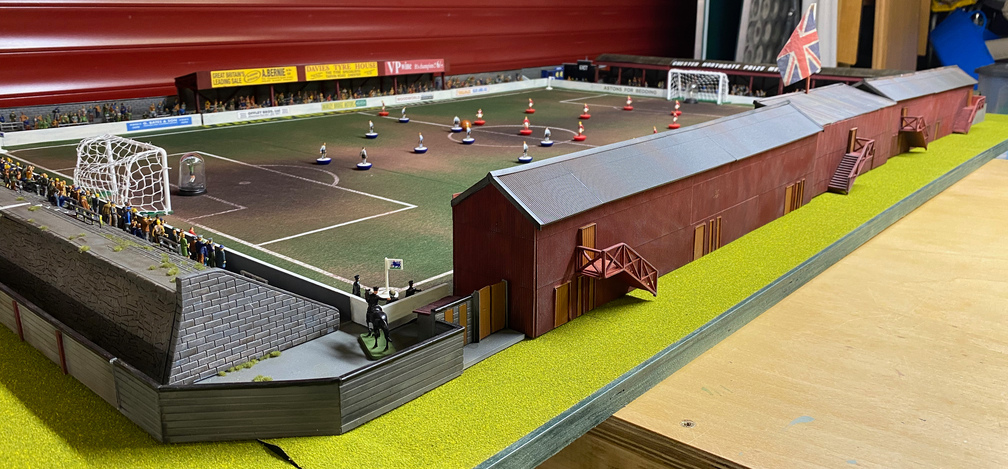
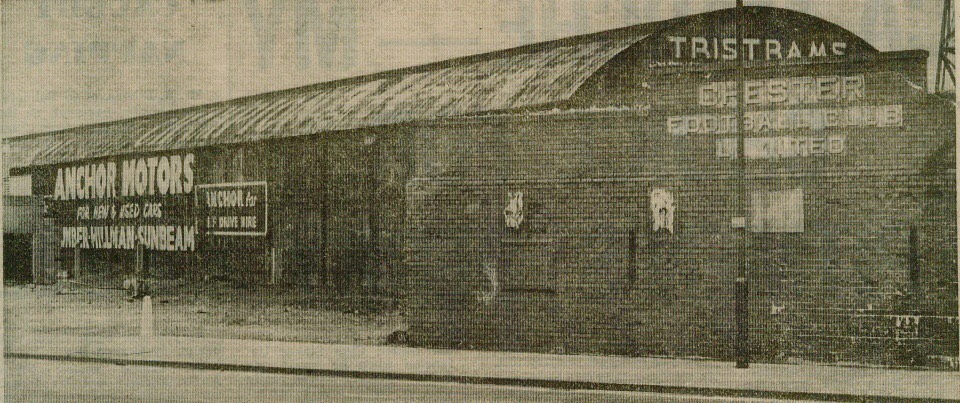
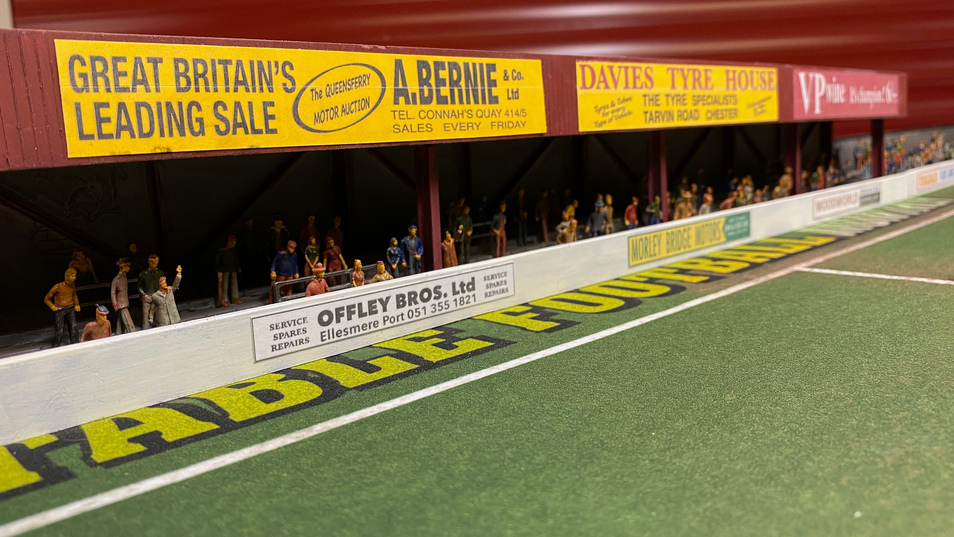
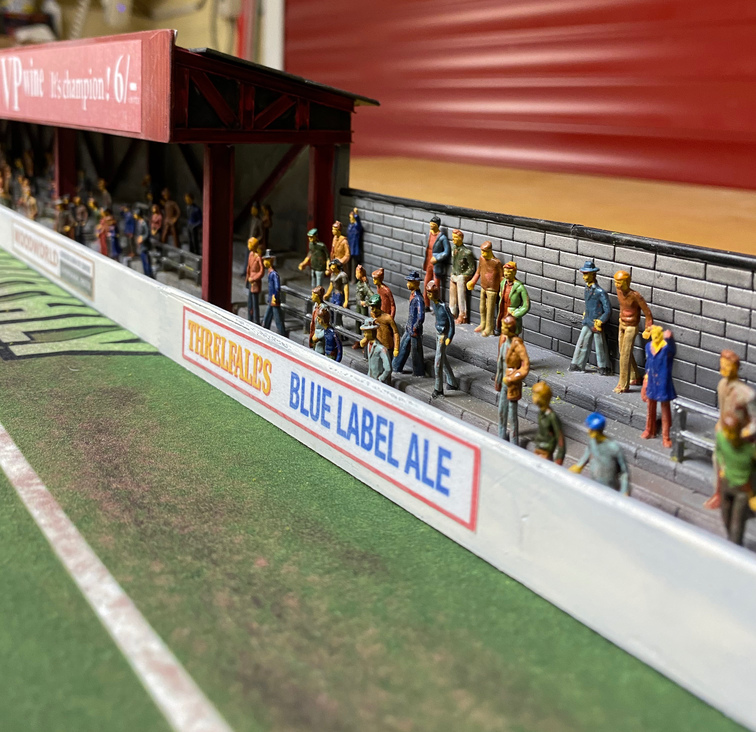
I have had the Images of Sport Book for many years and most of my reference has come from that as well as the Chester Football History Facebook page and my dad’s scrapbooks and photos. I did start to look at photos differently ie not at the subject but at the background details to see what the stands looked like and what adverts were on display. Most of the photographs are taken inside the ground so getting the outside details was quite a struggle. Even people who had been to the ground many times didn’t know what the other side of the Kop looked like.

Some things came as a surprise to me during the build research. One was the office building between the Main Stand and the Barn at the Sealand Road End. Another was the fact that the Popular Side was wider at the Kop end. I only realised this when I saw an aerial shot and had to start again on this stand. I also decided that I had to include the lamppost in front of the plaque on the front wall. Other problems for me were that the photos of the era were in black and white so I had to do some further research on colours (or guess!). The VP Wine advert on the Popular side just looks maroon to me.

It was also important to me that the game of subbuteo still remained playable and the stands were not too big to reach over. This means there are not the correct amount of seats in the stands or steps on the terraces so I couldn’t fill them with the 20,000 spectators that saw the Chelsea FA Cup game. From the positive comments I have received so far I think I have managed to capture the essence of the Sealand Road Stadium.