Unknown's avatar

About kwchas

I am the historian and statistican for Chester Football Club and have written a number of books on the subject. The most recent of these is 125 Years On The Borderline - The Complete History of Chester City Football Club 1885-2010

Summertime Blues

While writing this weeks column for the Leader a couple of things struck me about Saturday’s big kick-off.

First of all, ignoring the new\reformed club argument, Chester will be playing in their fifth different league in five seasons and I’m struggling to think of any other club that can match this unique achievement. For the record the last five seasons read:

08/09 – Football League Two
09/10 – Blue Square Premier
10/11 – Evo-Stik North
11/12 – Evo-Stik Premier
12/13 – Blue Square North

I would be interested to know if anyone can think of any other club with a similar record.

Secondly, Chester has not won an opening day game since they beat Accrington Stanley 2-0 in 2006/07 which means it is now six seasons without a win. In fact, since the war, the record has not been particularly good with only 19 wins in 66 opening games so don’t expect big things on Saturday. Even these wins came in batches with six wins in an unbeaten run of eight seasons between 1965 and 1972 followed by a sequence of four successive victories between 1976 and 1979. Since the 3-2 win over Wimbledon in 1979 there have been only six wins in 32 seasons which is an extremely poor return.

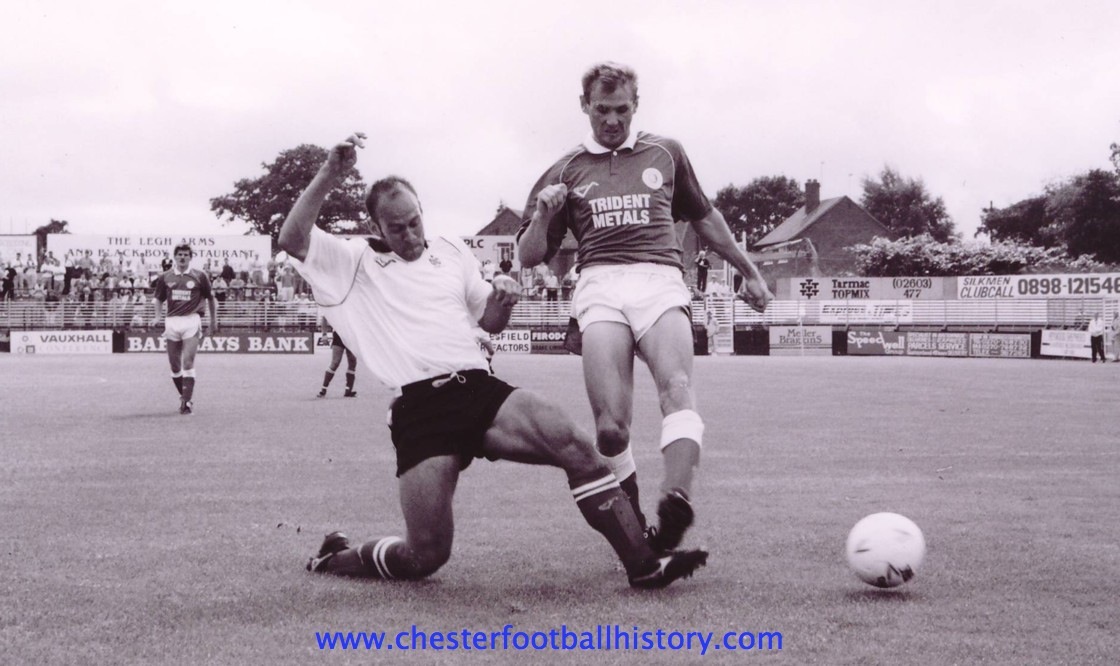
David Pugh in the opening day of the 1991 season at Moss Rose. Chester 2 Fulham 0.

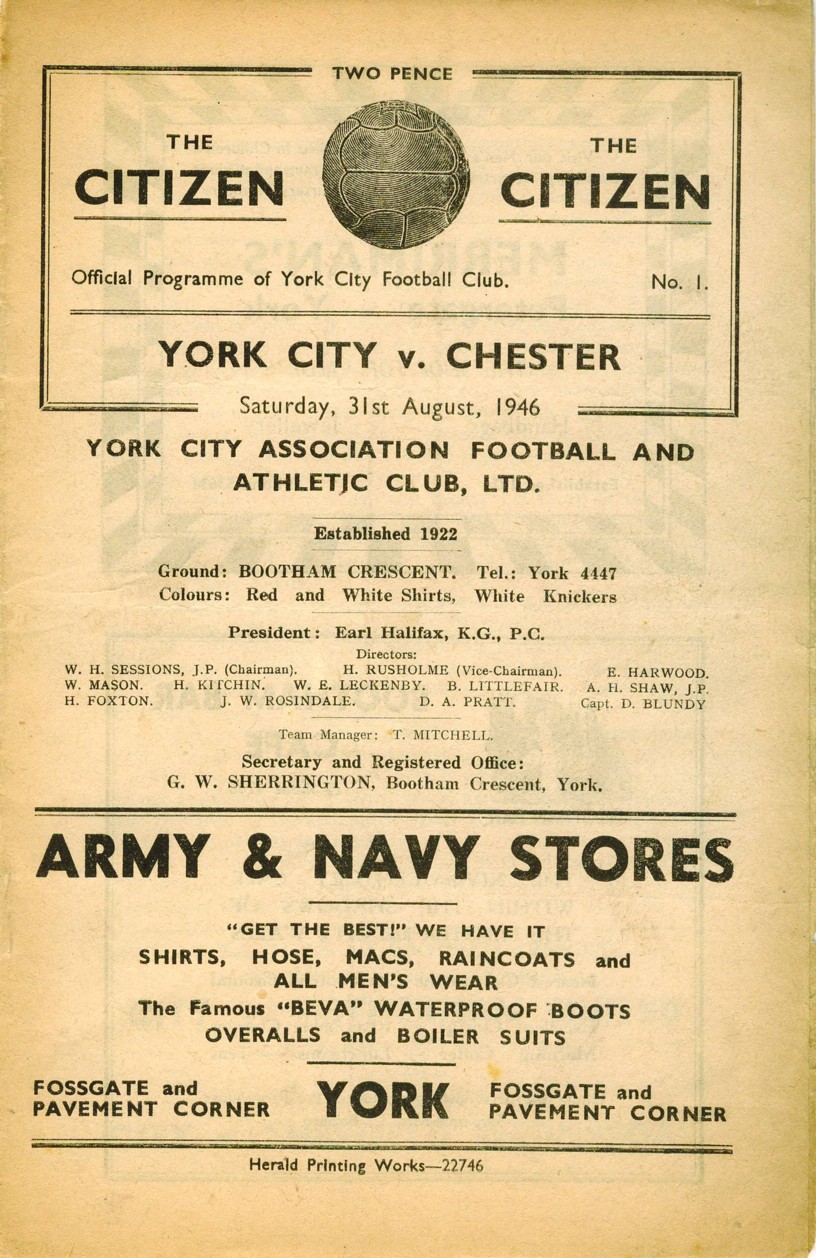
York City 4 Chester 4 in 1946

The overall post-war record is won 19 drawn 20 and lost 27. The game with the most goals was the very first match in 1946 when eight goals were shared at York. The biggest win was the 4-1 over Hereford United in 1977 which also marks the only time (besides the game at York) when Chester scored more than three goals. The biggest defeat was the never to be forgotten 6-0 hammering at Dagenham & Redbridge in 2008 when Simon Davies’ team imploded in spectacular style. There were also heavy defeats at home to Northampton Town in 1987 (a freakish 0-5) and, less surprisingly, 1-4 to Bradford City in Mike Pejic’s first game in charge in 1994. The most frequent result has been 1-1 on 10 occasions and both Chester FC games have ended in that scoreline.

Anyone looking for omens before Saturday’s game at Oxford City should be aware that the Blues have never won an opening game following promotion with a record as follows:

Crystal Palace 2 Chester 0. First game in Division Three

1975/76 Crystal Palace (a) 0-2
1986/87 Carlisle United (h) 2-2
1994/95 Bradford City (h) 1-4
2004/05 Notts County (a) 1-1
2011/12 Rushall Olympic (h) 1-1

Strangely Chester have never won an opening game in a season in which they have been promoted:

1974/75 Lincoln City (a) 1-2
1985/86 Halifax Town (h) 1-1
1993/94 Doncaster Rovers (h) 0-1
2003/04 Stevenage Borough (a) 0-0
2010/11 Warrington Town (a) 1-1
2011/12 Rushall Olympic (h) 1-1

Finally my own personal favourite opening day game would have to be the first Chester FC game at Warrington Town in 2010 which finished 1-1 and proved to be a memorable evening. In second place, for entirely different reasons,  would be the 1-0 win at Peterborough United in 2005 when Keith Curle put one over Mark Wright. This seemed a particularly joyous occasion at the time although it soon went downhill from there.

Honorary mentions should be also made of the 2-0 victory over Fulham at Moss Rose in 1991 when the announcement was made that Stuart Rimmer had rejoined the club.  The 1-0 win over Crewe in 1982 also sticks in the mind because it marked the end of a spectacularly dismal run of games which had ended in relegation from the old Division Three. At the time it at least promised the vague hope of a revival although in the end it was yet another false dawn.

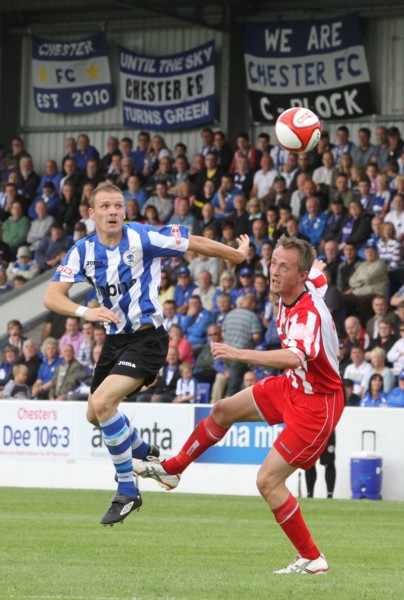
Simmo in action v Rushall Olympic in last season’s opener. Copyright © Rick Matthews

Copyright © 2012 http://www.chesterfootballhistory.com All Rights Reserved
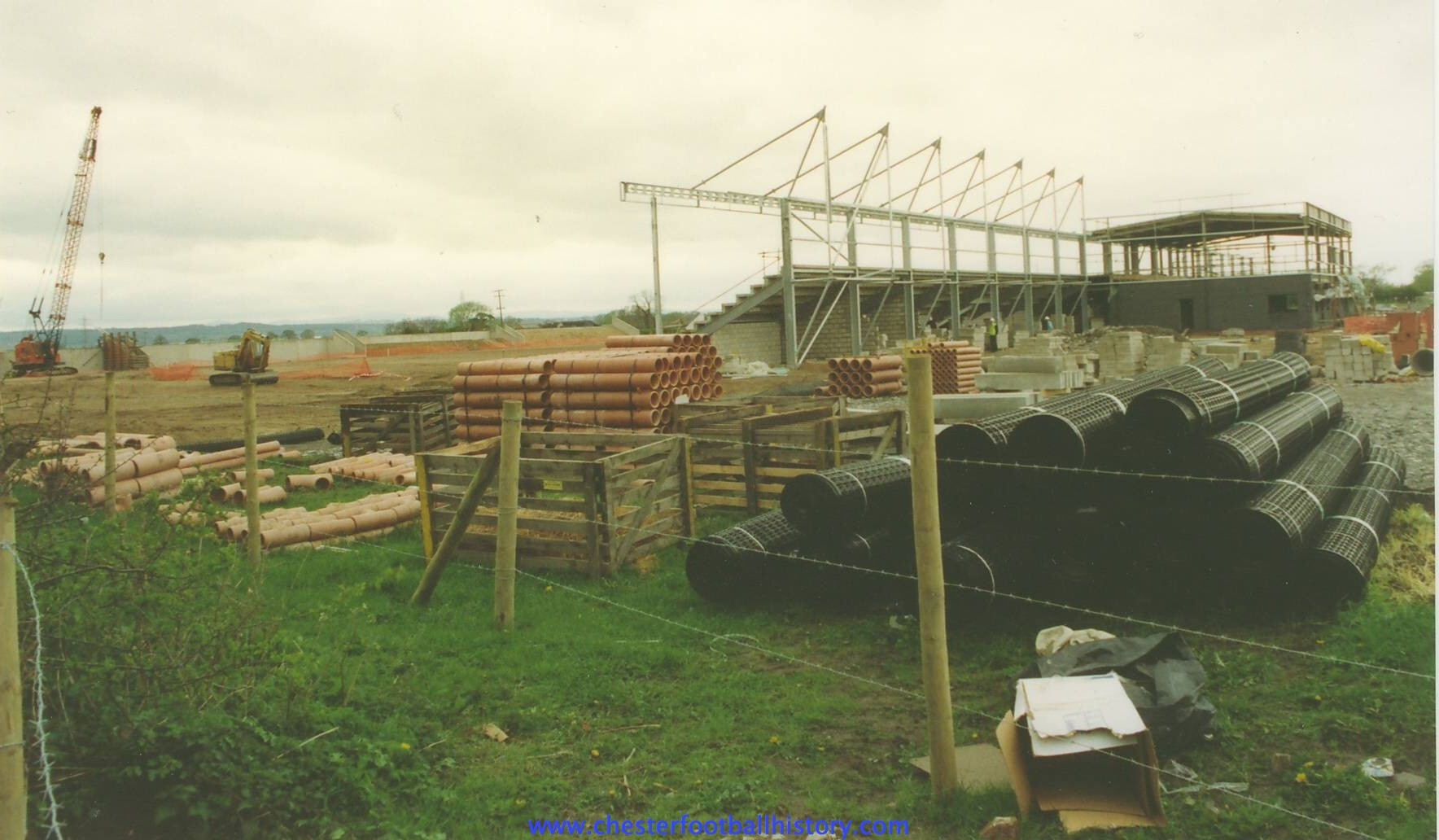
Deva Stadium Part 3

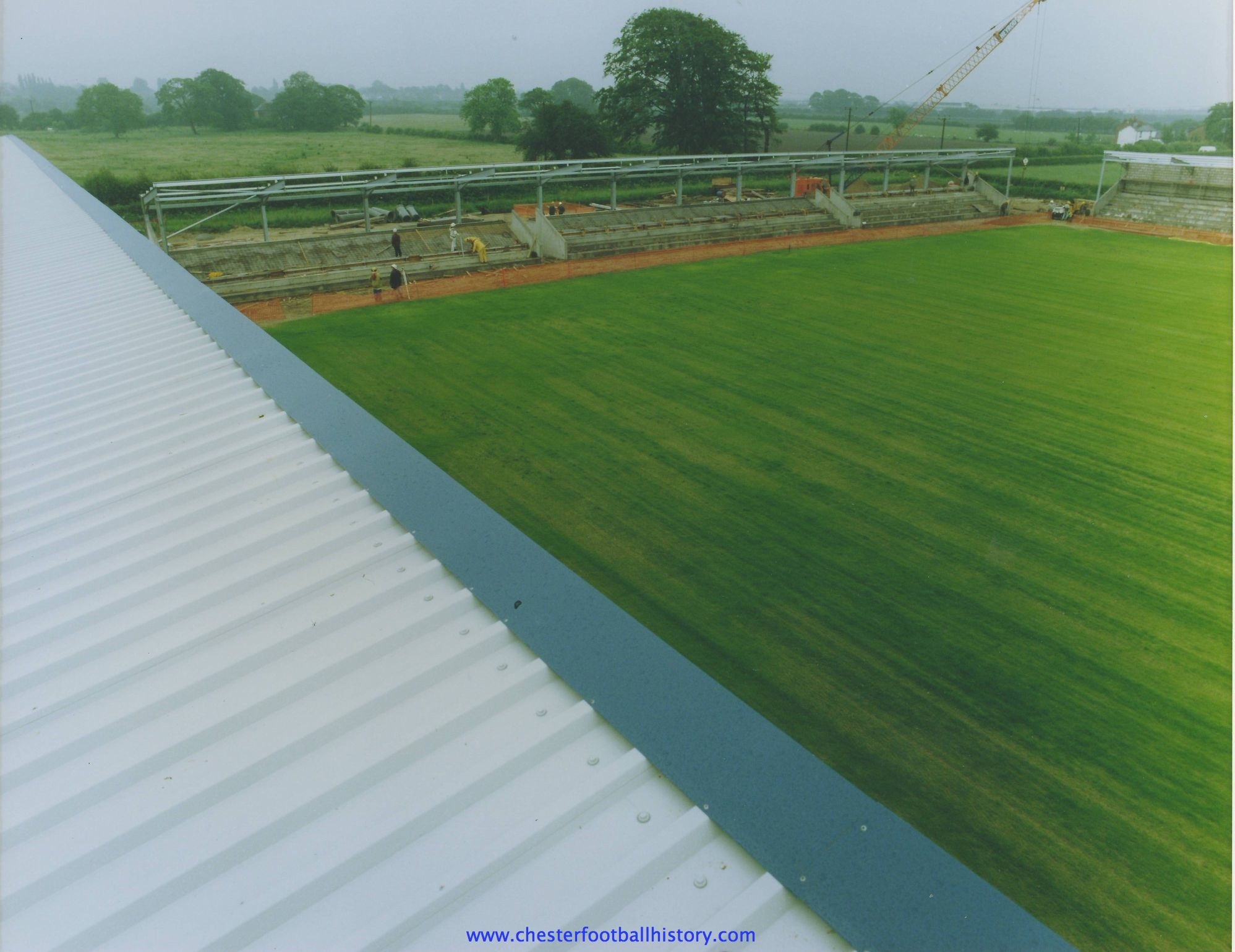
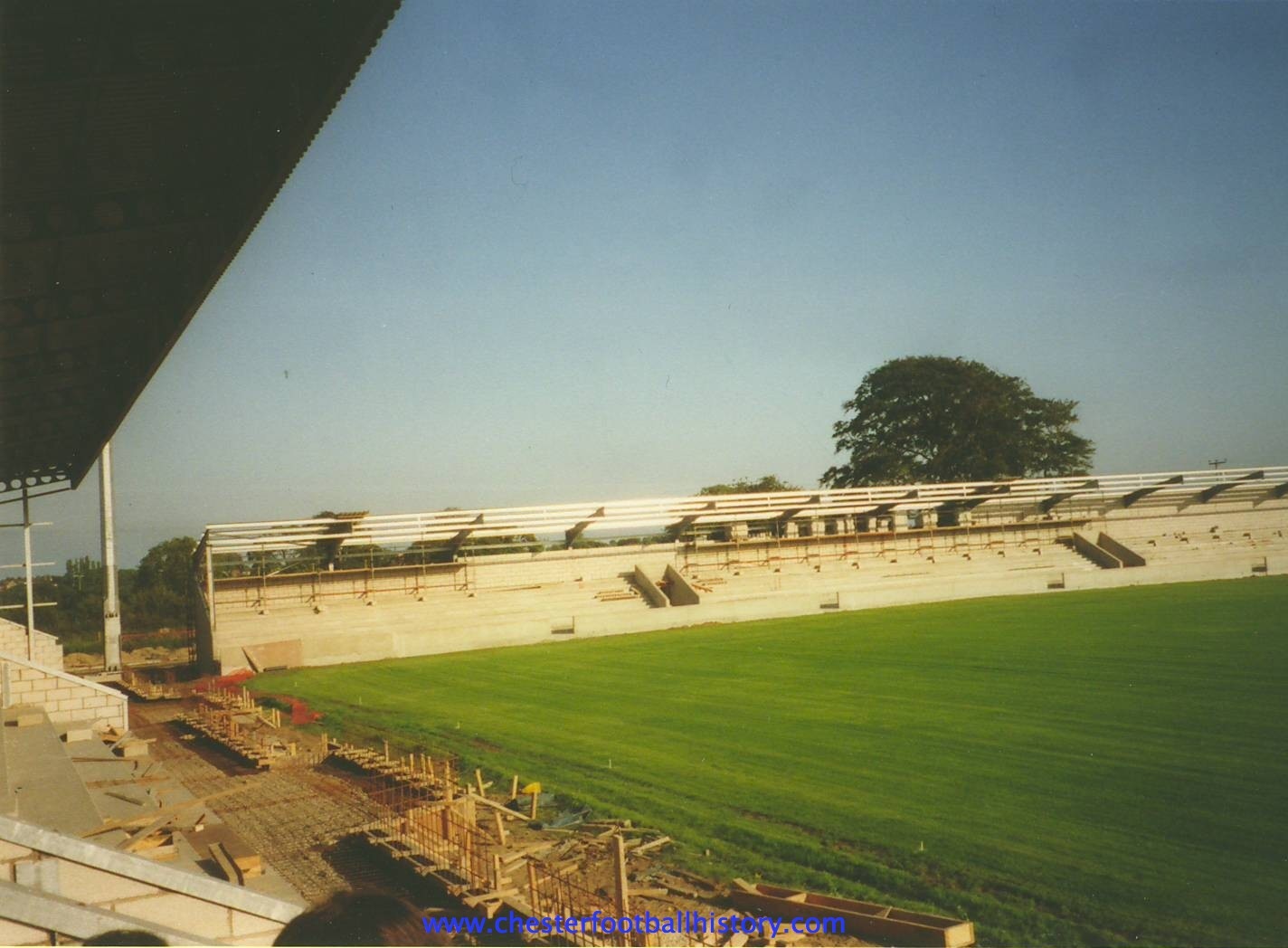
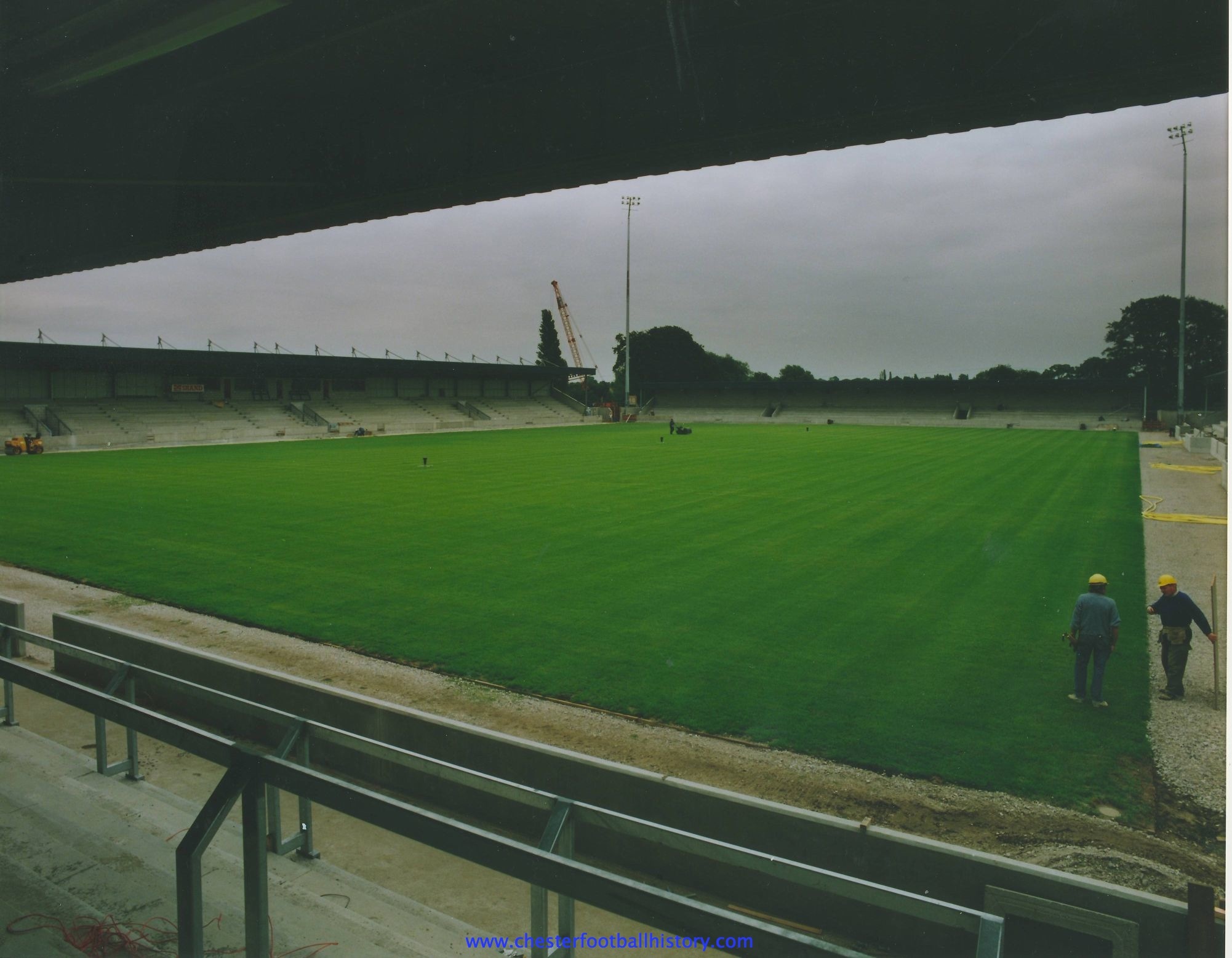
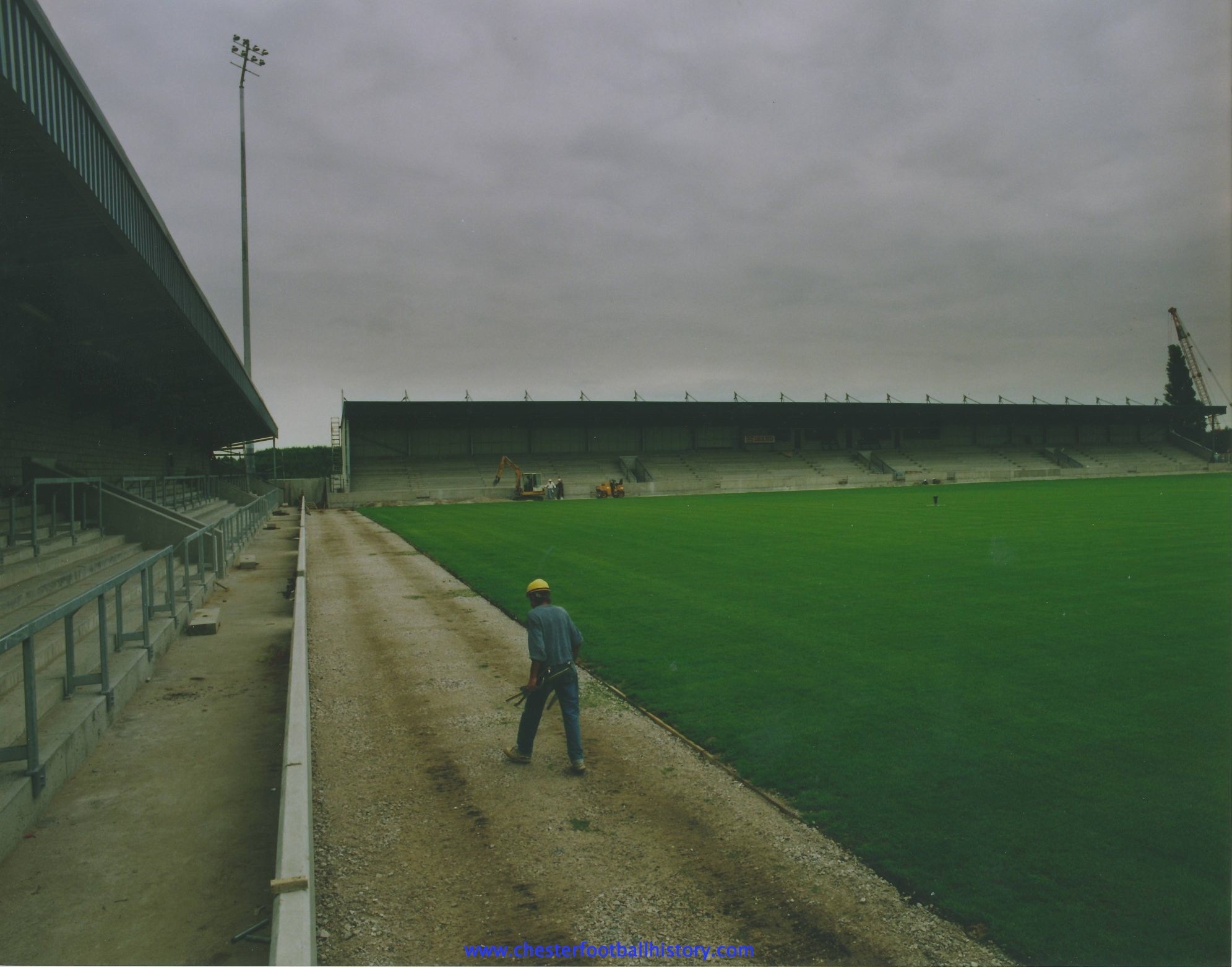
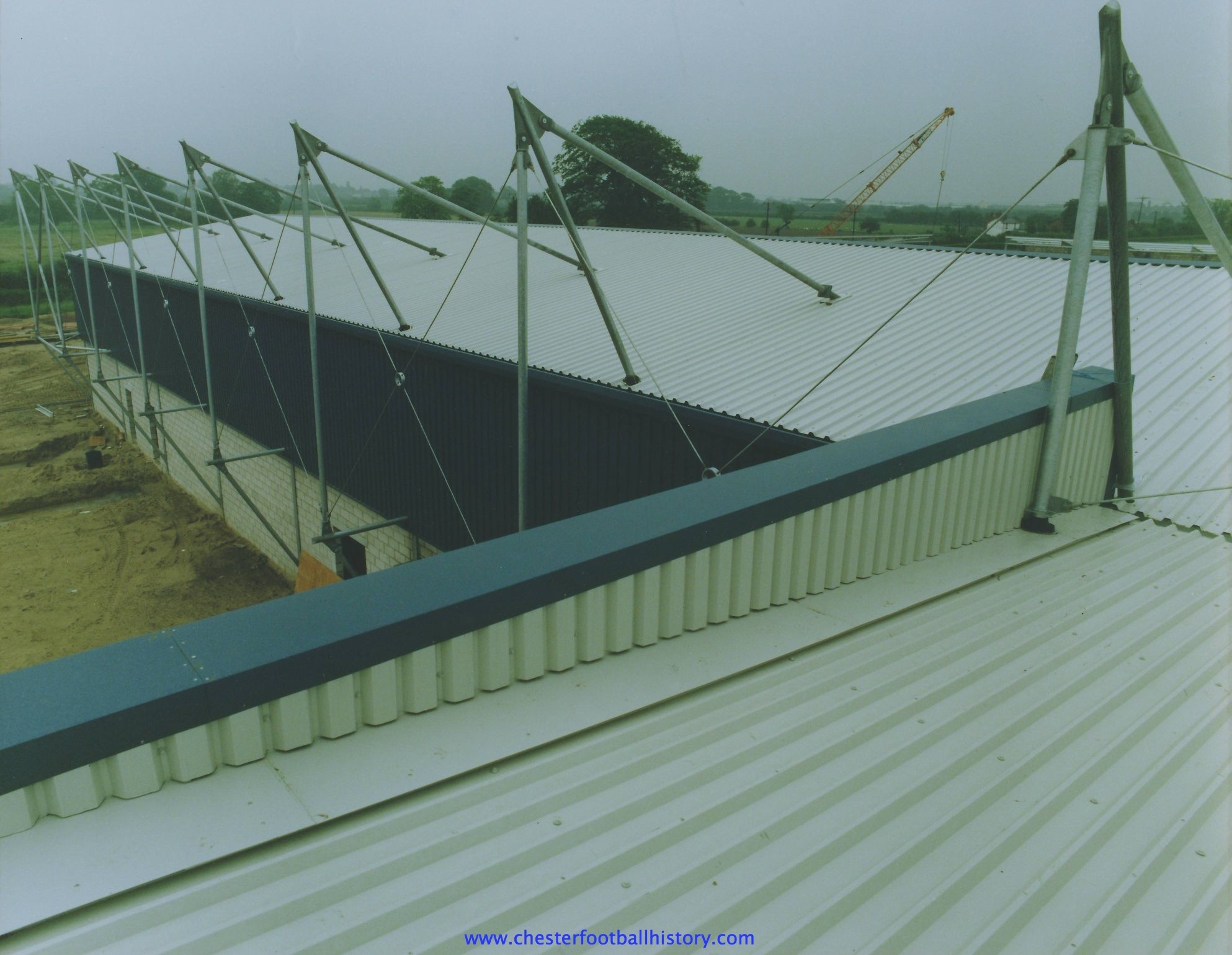
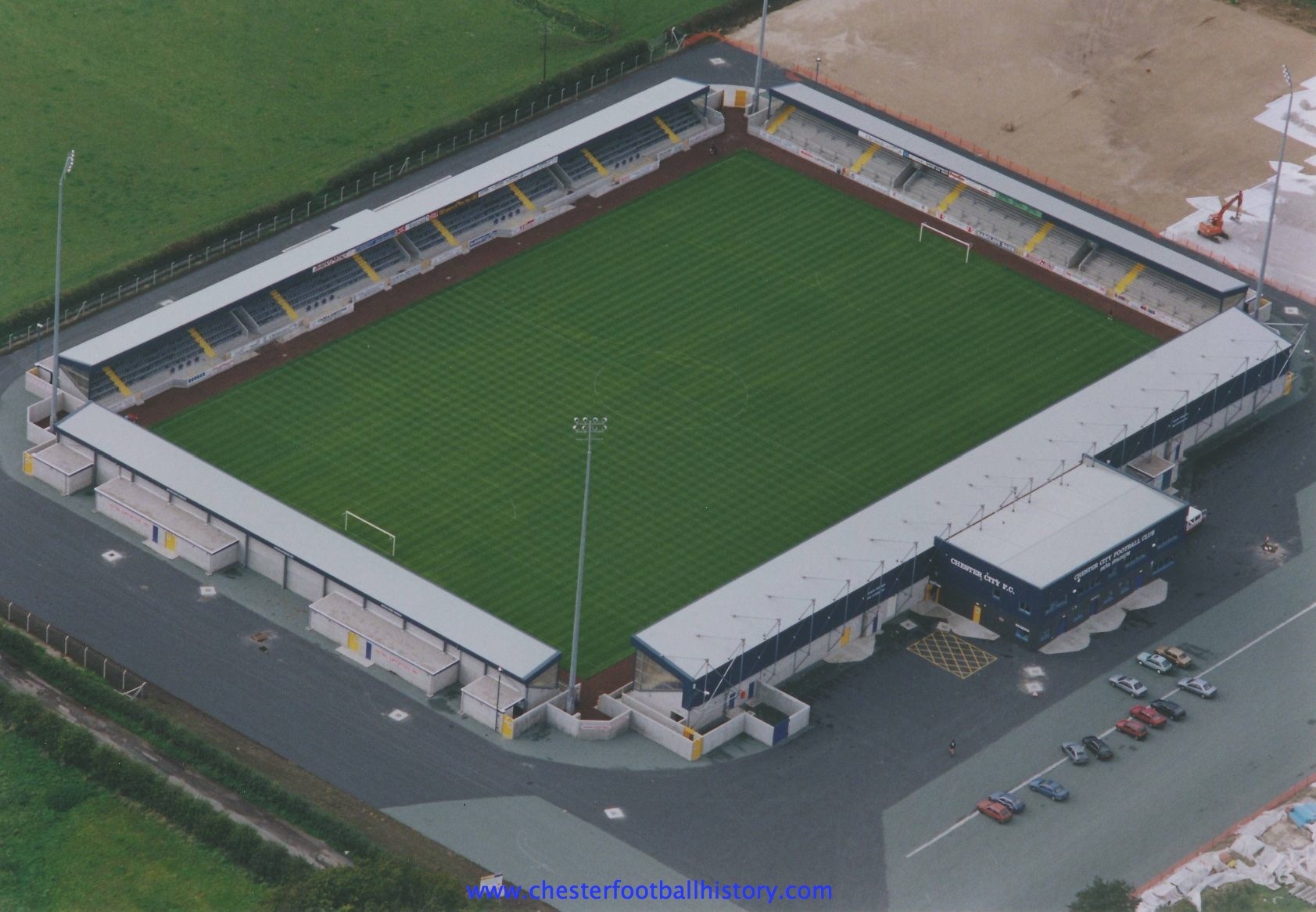
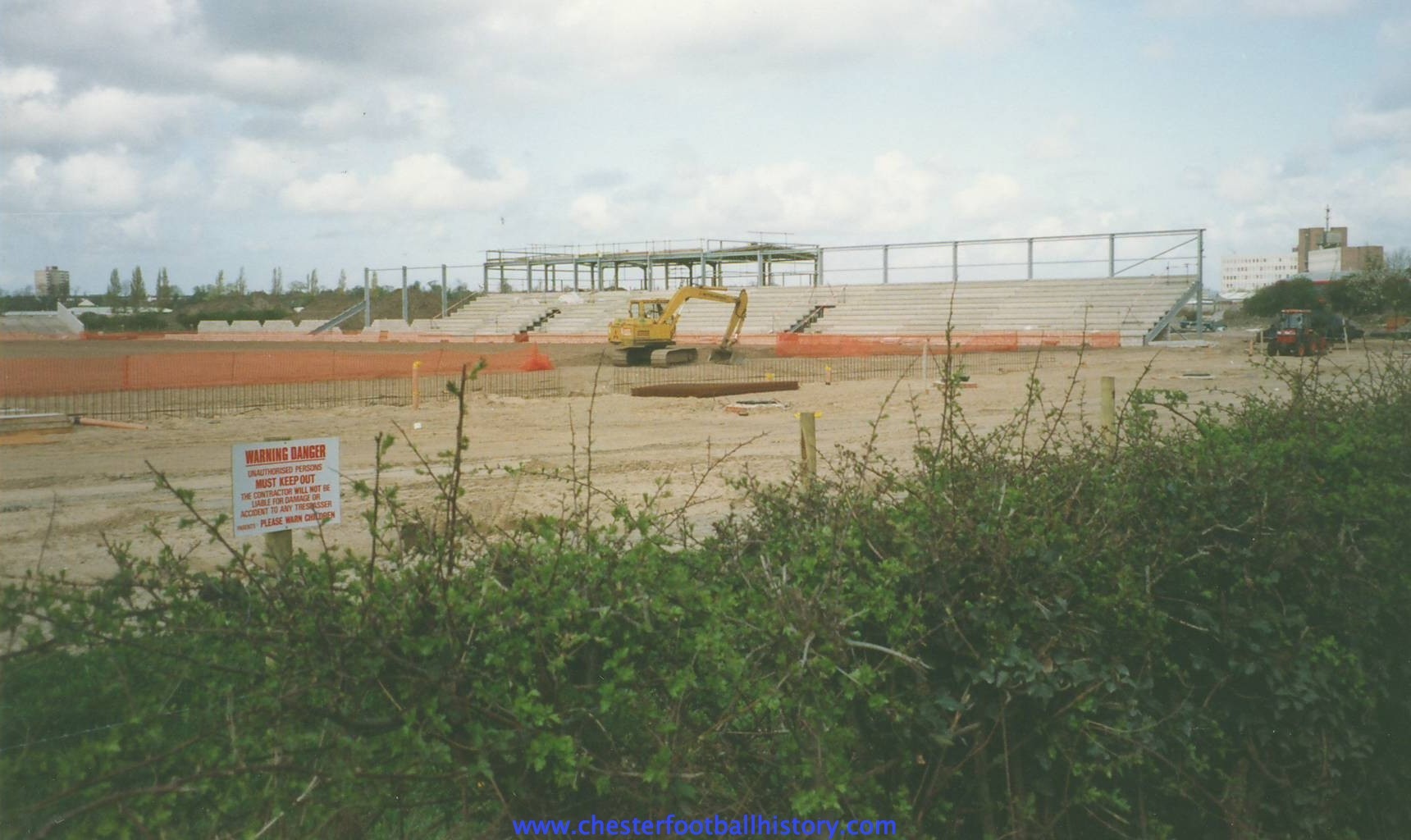
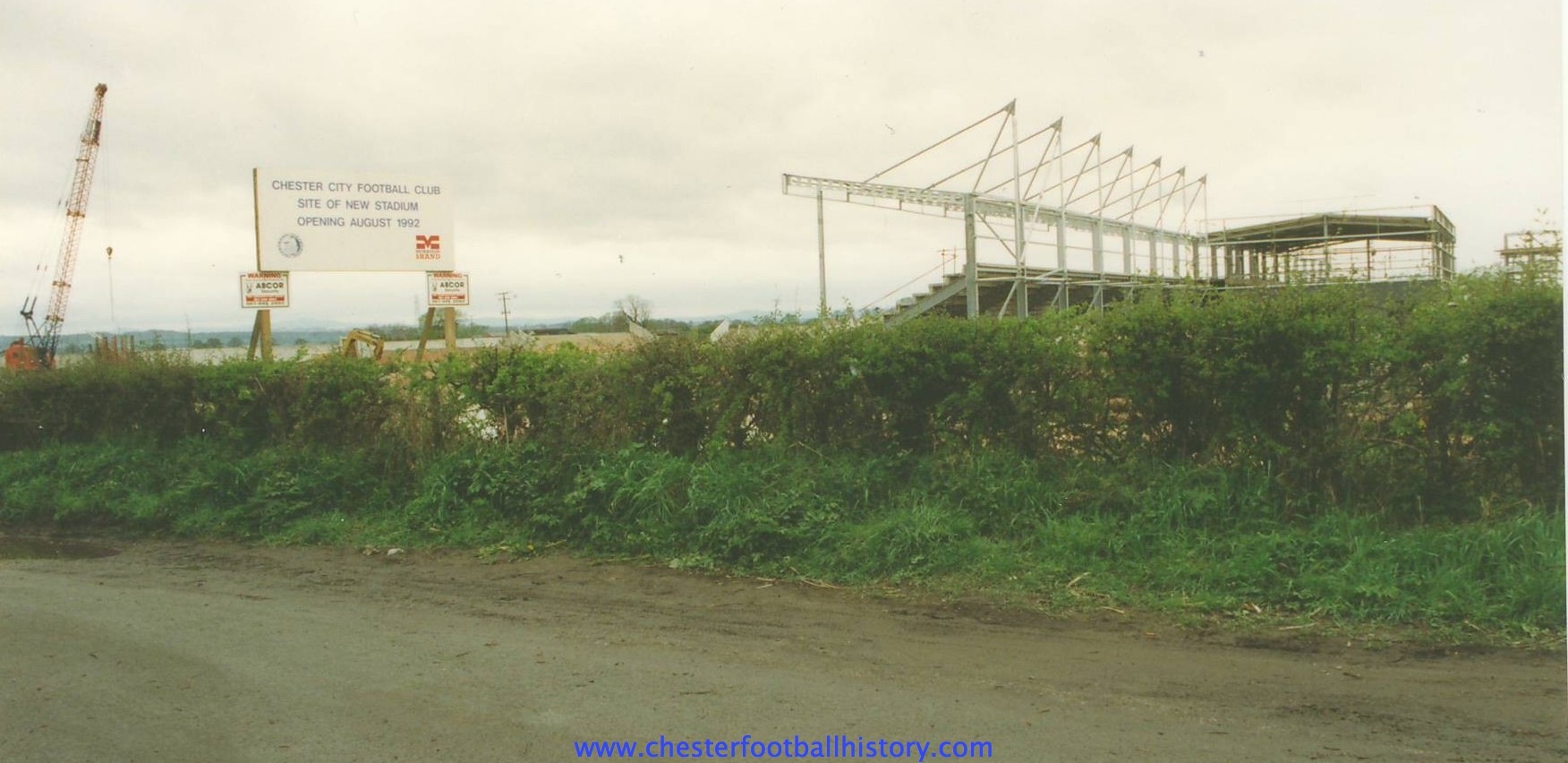
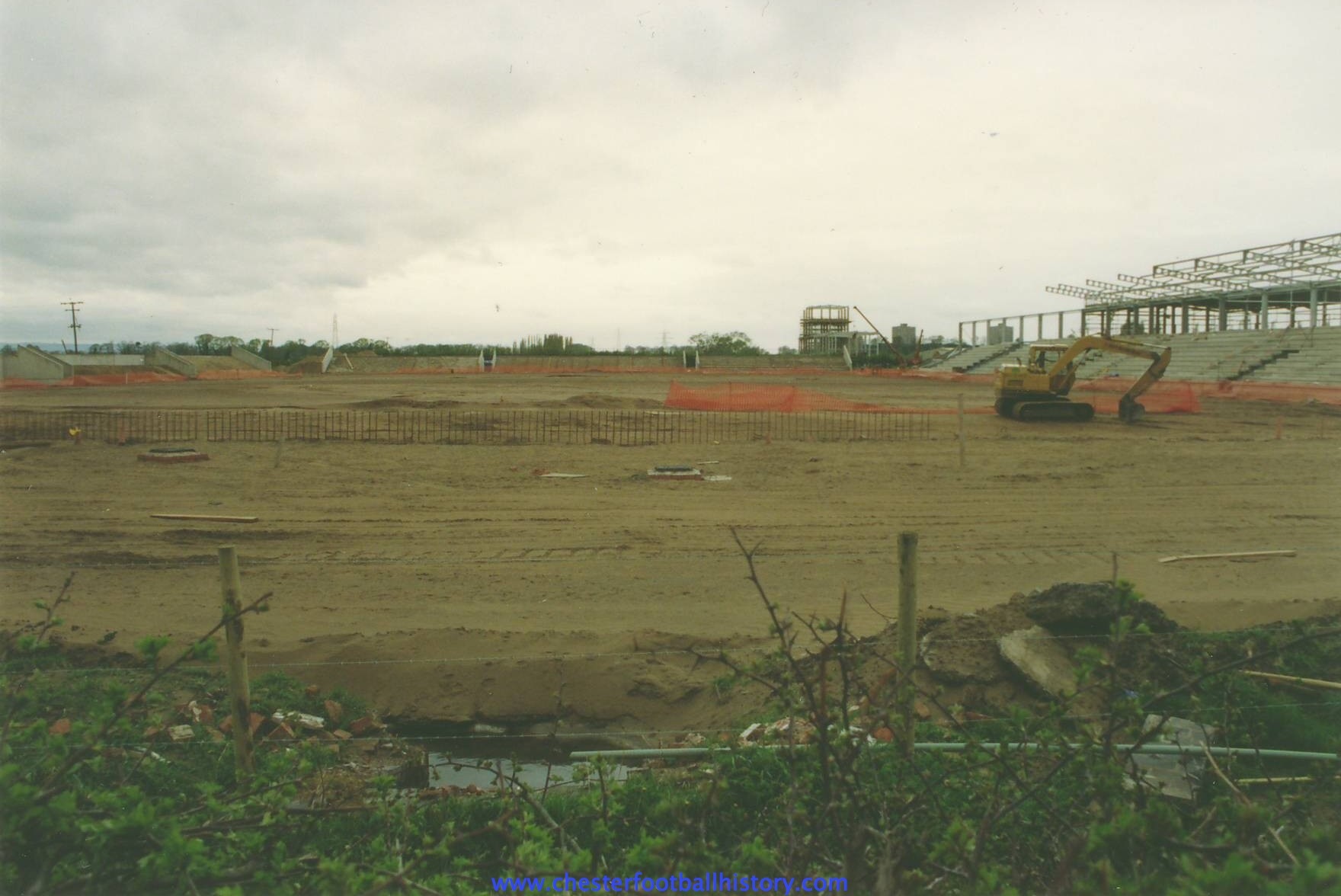
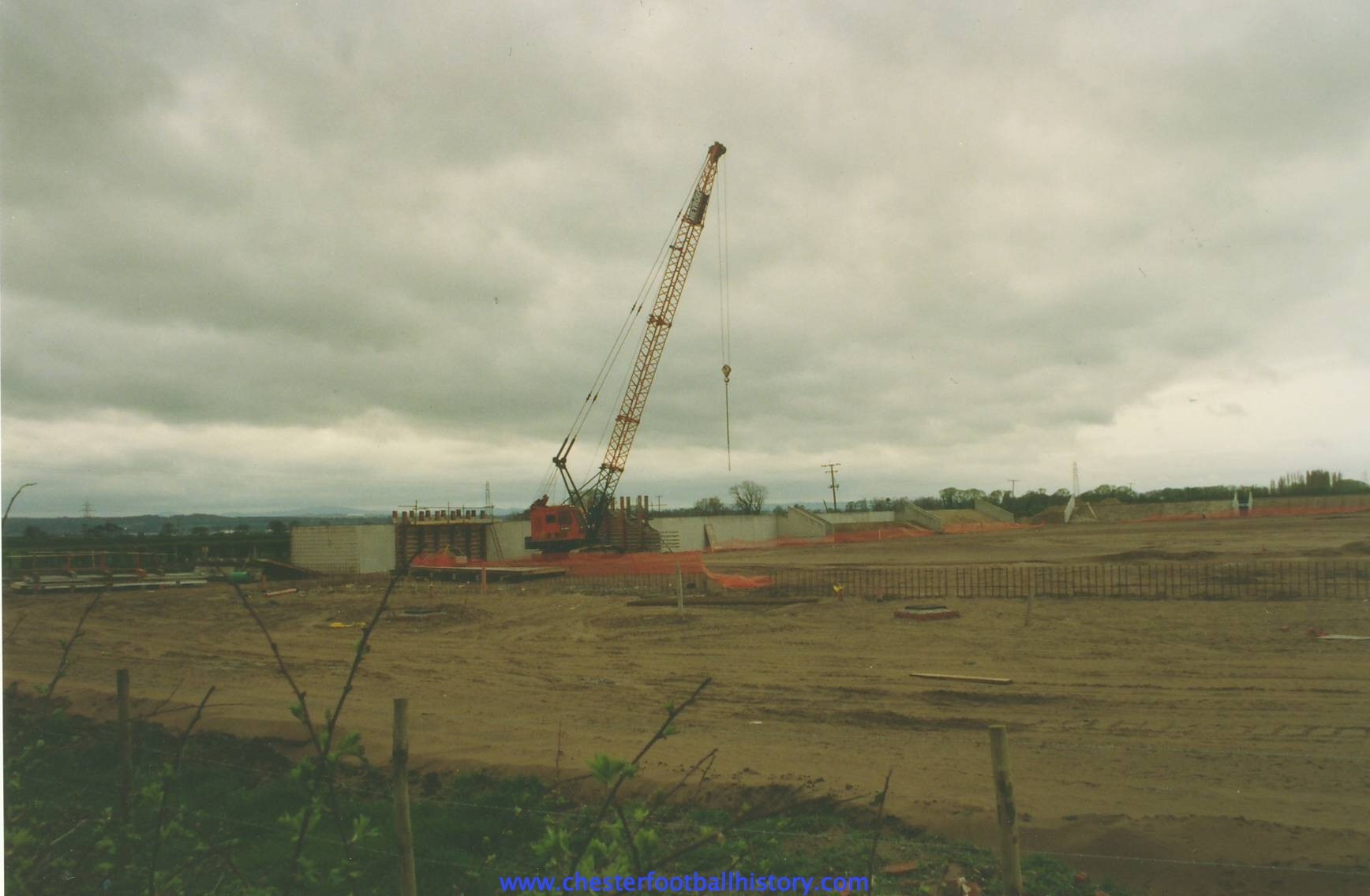
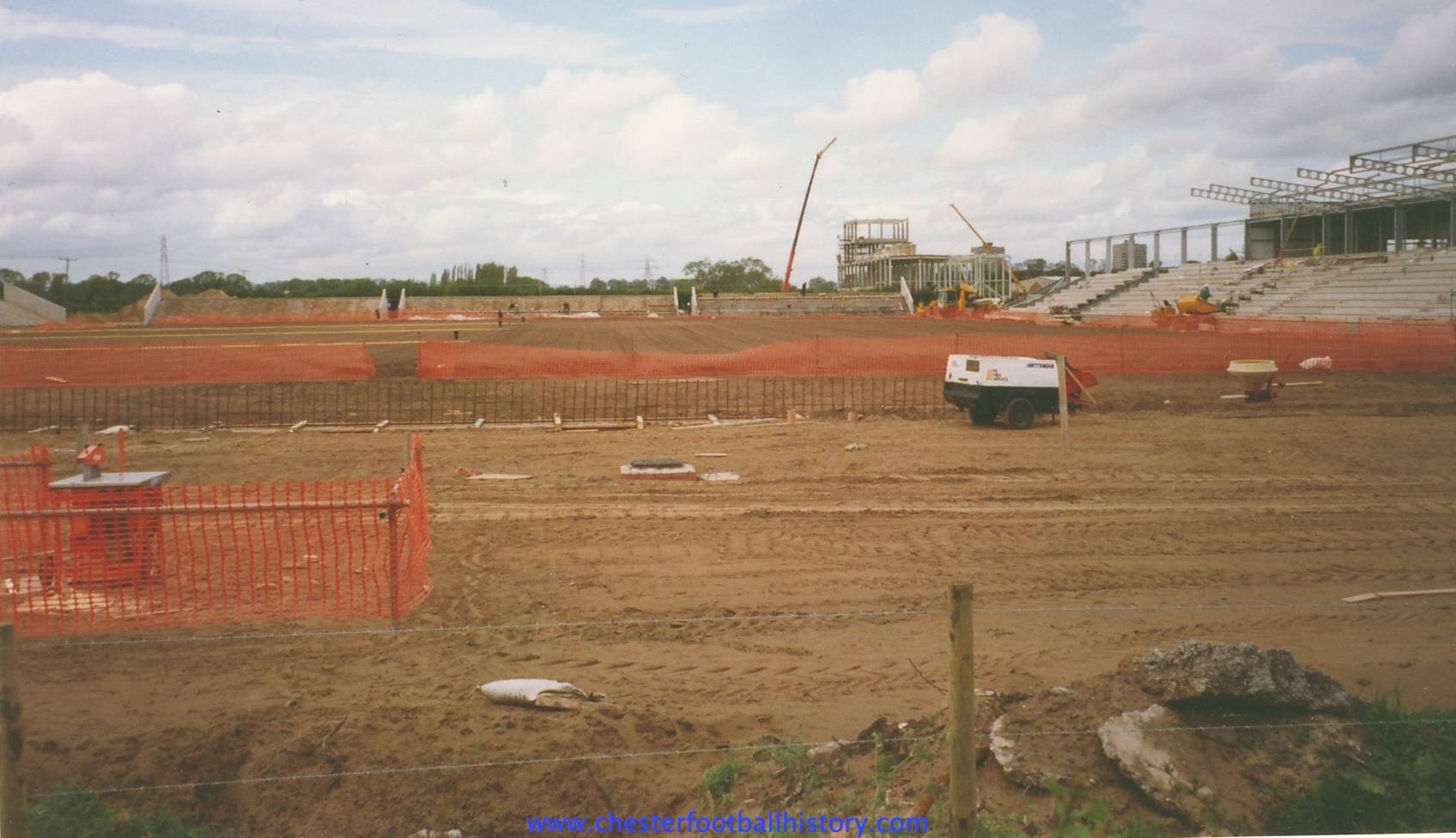
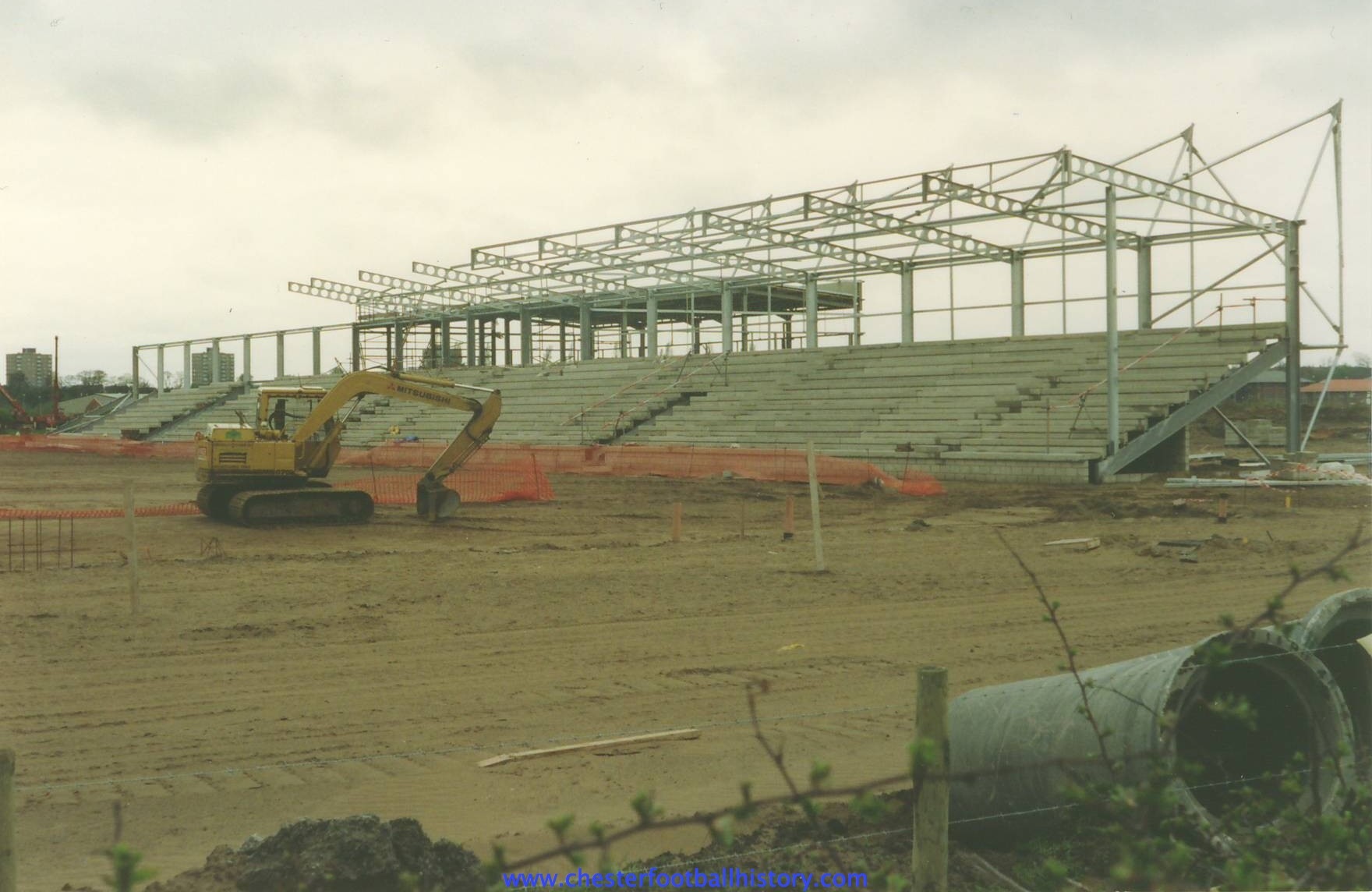
The final batch of pictures were taken after the turf was laid in May 1992 as the race to have the ground ready before the start of the season continued. Thanks to former programme editor John Martin for supplying many of these photographs which were taken by developers Morrisons. The remaining pictures were again provided by Fraser.

Of particular interest are the aerial views of the ground including a superb unique photograph showing both the Deva Stadium and the derelict Sealand Road ground. It is also possible to see the Stadium floodlights in one of Fraser’s pictures.


As a precaution Chester’s early season league fixtures had to be re-scheduled to allow for the ground to be completed and the season started with four away games where only one point was collected. The stadium staged it’s first game, in the Coca Cola Cup against Stockport, on August 25th and the first league game was played on September 5th against Burnley with Chester winning 3-0, Neil Morton had the honour of scoring the first league goal with Chris Lightfoot and Paul Comstive also on target.

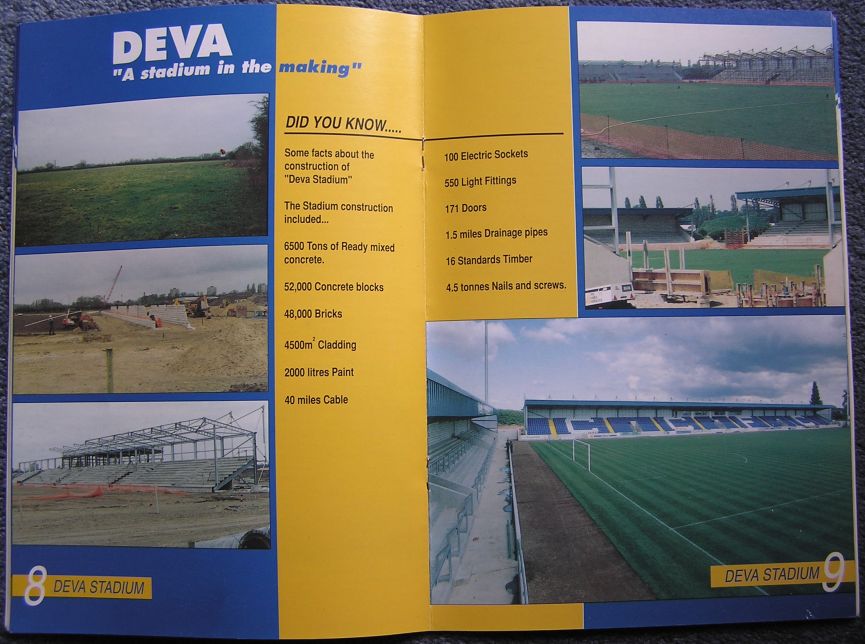
The first league programme included a centre stage spread listing the materials used in the construction and, taken with the complete sequence of photographs, they merely serve to emphasise what was in effect a rush job. The list was as follows:

6,500 Tons of ready mixed concrete
52,000 Concrete blocks
48,000 Bricks
4,500 sq metres cladding
2,000 litres paint
40 miles cable
100 Electric sockets
550 Light fittings
171 Doors
1.5 miles Drainage pipes
16 Standards timber
4.5 Tonnes nails and screws

Twenty years on older fans like me still mourn the loss of the Sealand Road ground and it’s a shame that the shambolic events surrounding the sale of the old stadium resulted in a cobbled together compromise. It could have been so much better.

Copyright © 2012 http://www.chesterfootballhistory.com All Rights Reserved
Deva Stadium Part 2

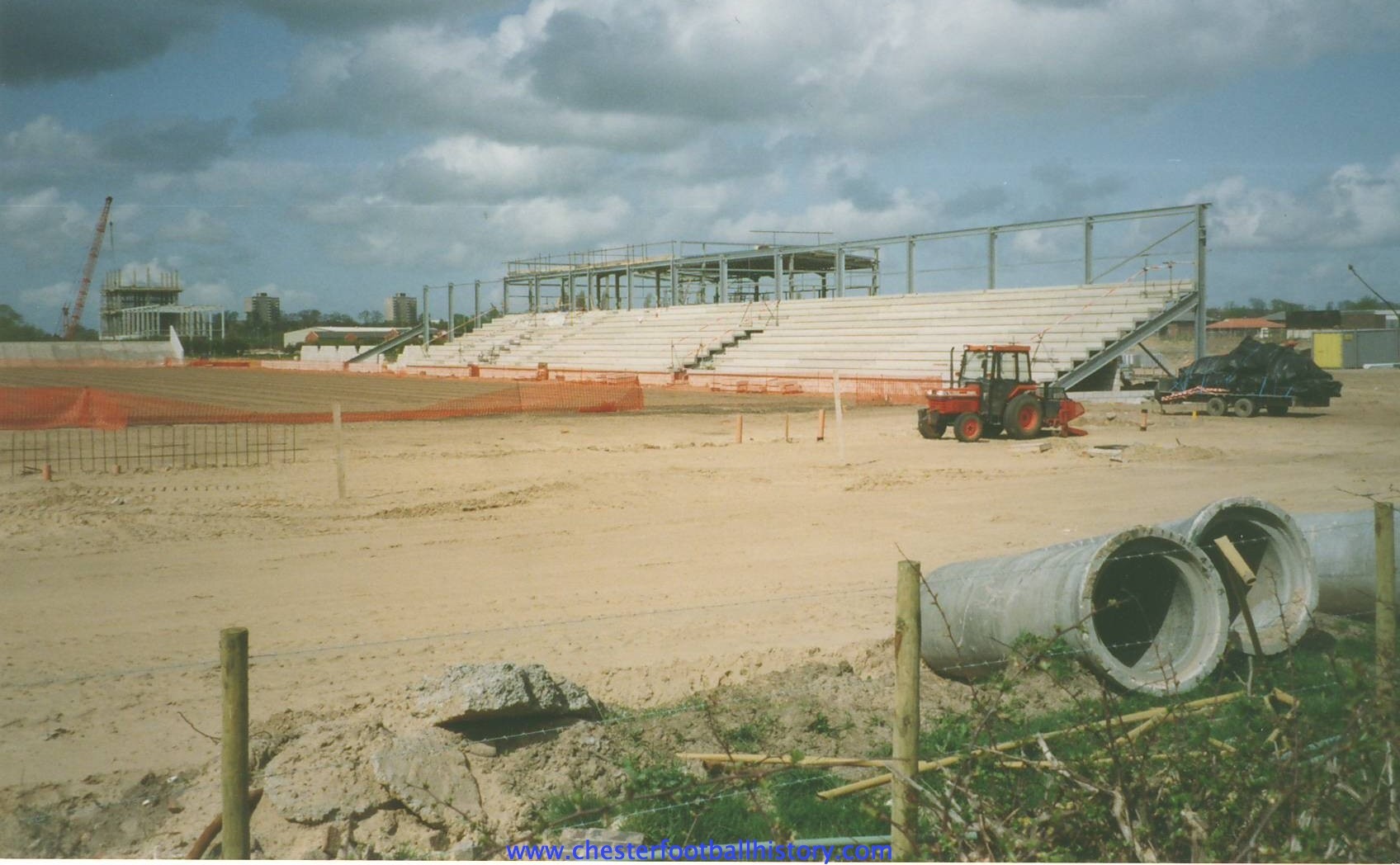
After work started on the new ground on February 3rd 1992 work progressed quickly and the following photographs were taken at various times between February and the start of May when the turf was laid.


Copyright © 2012 http://www.chesterfootballhistory.com All Rights Reserved

Olympian 2

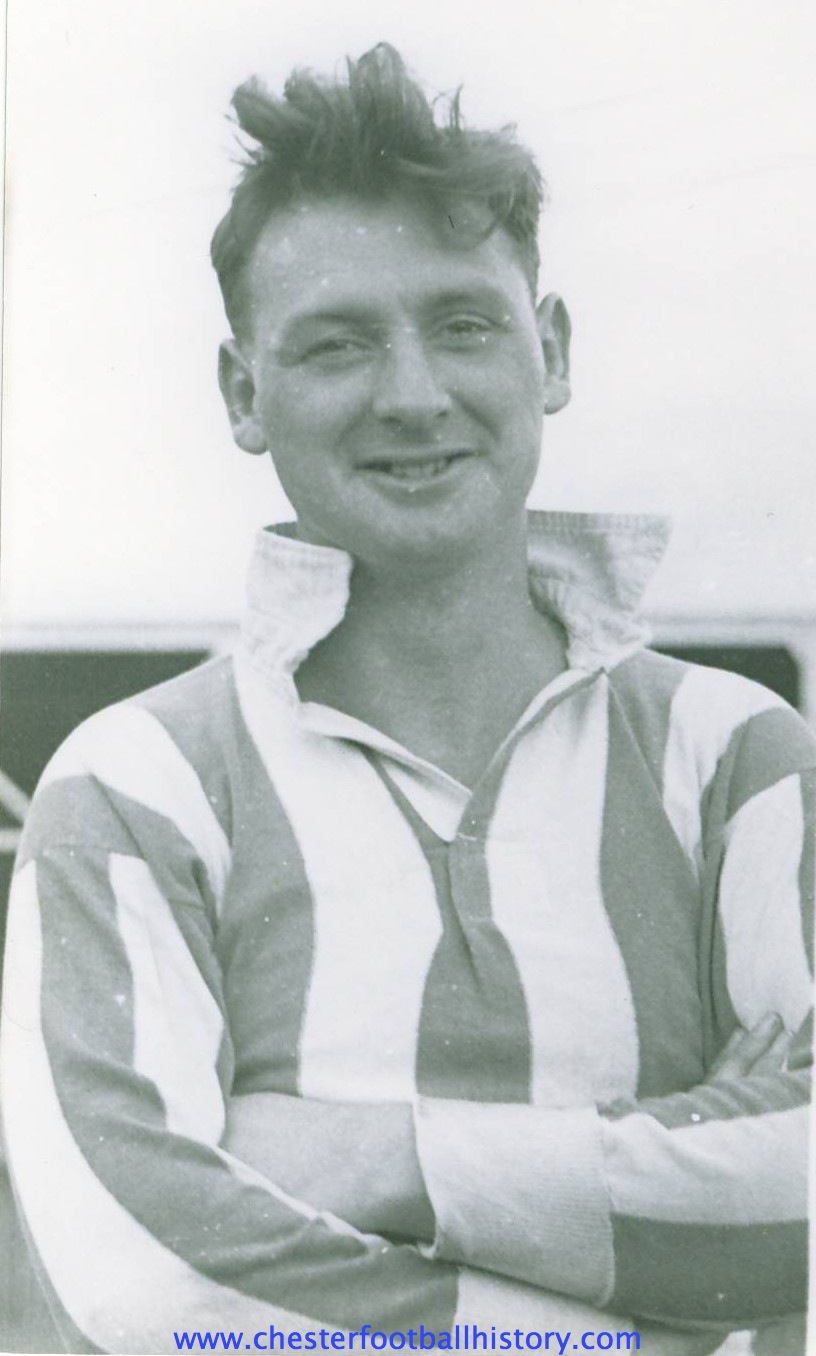
Following on from the Grenville Millington article, another former Chester player played a key role in the Great Britain team that reached the Semi-Final of the football competition at the 1948 Olympics in London. Eric Lee played in all of Britain’s fixtures in the competition and by all accounts emerged with a great deal of credit. Legendary former Manchester United manager Sir Matt Busby, who coached the Olympic team, rated him as potentially one of the best half-backs in the game at the time.

Eric was born in 1922 and signed for Chester after being spotted by manager Frank Brown as a 17 year old playing in local football for Hoole Alex. During the war he served in India and Burma and made his full debut for his home-town club in the first post-war fixture at York City in August 1946. Over the next 11 years Eric played 363 league games for Chester placing him fourth in the list of the club’s Football League appearances. In recognition of his service he was awarded a benefit game against Liverpool in 1952.

Eric Lee

Eric Lee

Throughout his entire time on the books at Sealand Road Eric remained as an amateur as he advanced his career in teaching. Chester themselves offered Eric a professional contract and at least one other unnamed club offered a similar deal but, perhaps with an eye to the future, he turned them both down. Although this decision cost Eric the opportunity of playing at a higher level it did open the door for him to represent his country at an amateur level. During the 1946/47 season he was a regular at left half for Chester where his performances earned an England amateur call-up against Wales.

By the following campaign Eric had started his teacher training at Loughborough College which restricted his appearances for Chester. These limitations did not always go down well at Sealand Road and it appears that there was some discussion and doubts about whether the Chester team should be disrupted to accommodate him.

Despite these doubts and a lack of match practice, a late call up to appear in a representative game against a University eleven in Bristol saw Eric impress the selectors who proceeded to pick him for an FA X1 in an Olympic Trial match at Portsmouth in February 1948. The FA X1 consisted of players from the likes of Yorkshire Amateurs, Bromley and Sutton and Eric captained the team that beat Scottish amateurs Queen’s Park 4-0. The Sporting Chronicle reported that Eric had a good game and he was chosen to play in another trial match at Hampden Park in May.

For the second trial Eric furthered his ambition to get into the Olympic team as he played for the Stripes against the Whites. In the first half he played at left half and switched to centre-half for the second 45 minutes as the Stripes won 4-1.

On June 19th Eric was selected at centre half for the final British Association Olympic trial team to play Holland in Amsterdam. Although the British team were beaten by a last minute goal Eric was reported to have played brilliantly and this was followed by the news that he was one of 23 players to report to coach Matt Busby for special training in readiness for the Olympic Games. This good news was accompanied by the announcement that he had also re-signed for Chester with the prospect of increased availability in the new season.

A final warm-up game was played against France, in Nantes, on July 25th before the Olympic competition opened with a First Round fixture against Holland at Arsenal on July 31st. Playing at centre-half Eric helped Britain to an unexpected victory over the Dutch team and five days later a 1-0 win over the French at Fulham earned the side a place in the semi-finals. The Daily Dispatch reported that Britain’s strength against the French had been in the half-back line and Eric was said to have played better than he did against the Dutch.

In the Semi-Final Yugoslavia deservedly triumphed over Britain by three goals to one but Eric emerged as one of the successes in the game and was described by one radio commentator as “iron-curtain Lee”. Two days later Denmark defeated the British 5-3 in the Third and Fourth place play-off game to deny the players a bronze medal.

After the tournament Eric returned to his teacher training at Loughborough while continuing to establish his reputation at Chester as an ice-cool player, calm under pressure and a master of the sliding tackle.

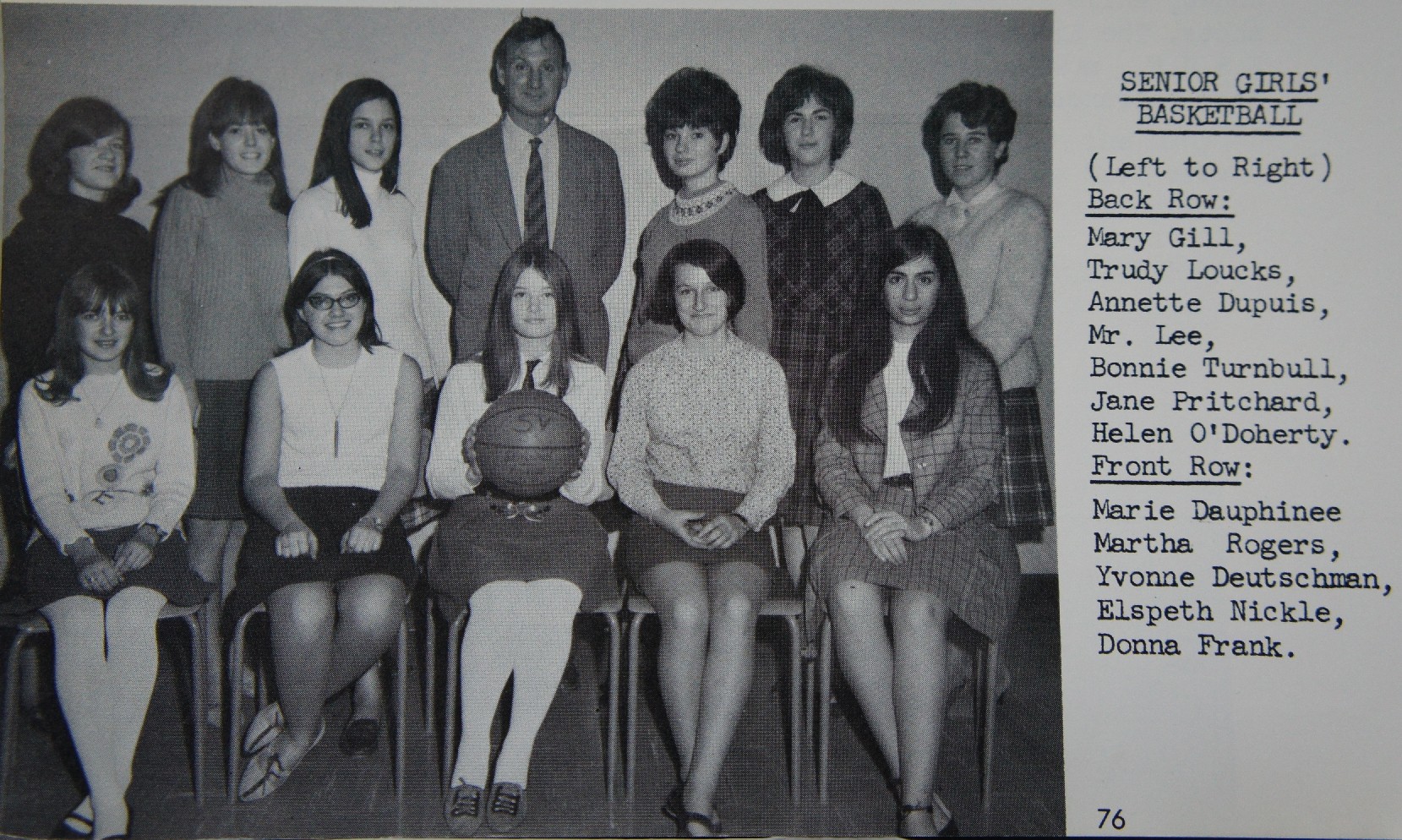
Eric left Chester in 1957 and emigrated to Canada where he took up a teaching job, initially in Manitoba before moving to Quebec. A Physical Education and geography teacher, Eric took up a position with Saguenay Valley High School in Arvida, Quebec in 1960 where he later became Principal. In 1970 he moved to Ottawa where he lived until his death in June 1999. The two photos below are taken from Saguenay Valley school yearbooks and I’m indebted to Francois Lafortune of Arvida for supplying the photographs and the information on Eric’s life in Canada.

As a postscript the Lee family had a more recent link to the Olympics with Peter, the youngest of Eric’s three sons, having an illustrious career as an ice hockey player. In 2006 Peter was assistant coach to the Switzerland Ice Hockey team at the Winter Olympics in Torino as well as at Vancouver in 2010.

PE Teacher Eric in the 1960s

Copyright © 2012 http://www.chesterfootballhistory.com All Rights Reserved
Olympian 1

In the lead up to the Olympics there has been a lot of discussion about the Great Britain team and the inclusion of players from Wales, Scotland and Ireland in the British squad. Ryan Giggs and Craig Bellamy have been mentioned as potential members of the team but Chester’s own Welshman, Queensferry-born Grenville Millington, has already beaten them to it having been part of the British squad that played in Bulgaria in a qualifier for the 1972 Munich Olympics.
 

Olympic badge

At the start of the 1970s Grenville was playing for non-league Rhyl having left Chester in 1970 after a single league appearance. The Lilywhites had a strong team having reached the Third Round of the FA Cup in 1971 and the semi-final of the Welsh Cup the following year, beating Chester on the way. Grenville himself was working at British Steel in Shotton and his performances at Belle Vue saw him earn a total of nine caps for the Welsh amateur team. Amongst these appearances were matches against a powerful England amateur side that drew him to the attention of the Olympic selectors. Grenville himself recalls:
 
“Charles Hughes was manager of the Olympic team and he came to watch Rhyl and also sent a couple of his representatives. As a result I got the call to go with the team to Bulgaria. We trained at Bisham Abbey. It’s a long journey from Rhyl to Chester and then down to Bisham on a Saturday after a game. There was training on a Sunday morning and afternoon before the trip back in the evening for work the following morning. I used to join up with a couple of Skelmersdale players at Chester station but most of the squad were based around London from teams like Hendon and Leatherhead. There were fifteen Englishmen and myself.”
 
With all the furore about non-English players I wondered if there had been similar concerns in 1972:
 
“There was quite a bit of fuss but it was different in those days. When I got there I was the only non-English player and also the youngest but they treated me very well. The manager and all the staff were English and the eight member committee consisted of five Englishmen and one each from Wales, Scotland and Ireland. Of course, if there was any voting the other nations would be out-voted so that’s probably why they haven’t been overjoyed to get involved this time because the English always had the monopoly.”
 
For the games the British team played Bulgaria in a two-legged qualifying game. The first leg was played at Wembley with Britain winning by a single goal but Grenville was not involved. However he was selected for the return leg in Sofia and featured for the Olympic team in two friendlies including a match against Motherwell.
 
“I was disappointed not to be in the squad for the home leg and I’m not sure how the Olympic selectors found their way to Rhyl from London to see me for the second game. It was fantastic for me to be involved though. I’d never flown before and it was the first time I had been out of the country. The ground in Sofia was packed because it was their main team and with Great Britain winning the first game it added to the atmosphere. I think they had been expected to win in England.
 

Grenville with his Olympic shirt

I was on the bench with John Swannell of Hendon, who was a very experienced goalkeeper, starting the game. Although we won the first game 1-0 we were beaten in the second leg 5-0. It sounds a bit harsh but the Bulgarian team was made up of players who were in the army. About three weeks later the Bulgarians played the England professional team and it was the same line-up. We were all amateurs but it wasn’t like that in Bulgaria. I was training after work and had to get permission from work to go whereas in other countries they were pros so it was no contest really. The players were shattered at the end of the game because the bulk of the team had been together for nearly three years. It was the end of the dream for them to play in the Olympics.”
 
After Grenville’s brief flirtation with Olympic glory he returned to Rhyl and then went to Brighton and Hove Albion on trial.
 
“I gave up my position at the steelworks to go down to Brighton which was a big move for me because at the time it was a job for life. I was down at Brighton for three months but it didn’t work out so I came back with the intention of joining the police force. However Ken Roberts rang me and asked if I would join Chester and be the understudy to John Taylor until the end of the season.  When he got injured I took over in goal and kept my place so I was offered a contract in the summer.”
 
The rest is history and Grenville went on to play more than 300 games at Sealand Road until 1983.
 
As for the Great Britain Olympic team. The early 1970s marked the dying days of amateur football in this country and the distinction between true amateurs and professionals was removed in 1974. For Britain this meant that the Munich games were the last occasion that the FA entered a football team for the competition. With the London games only weeks away, and Britain entering a team for the first time in 40 years, it’s nice to know that Chester has some connection to the event. I’ll be writing about an even stronger Olympic link in another article.

Copyright © 2012 http://www.chesterfootballhistory.com All Rights Reserved